Cat Color and Behavior: Genetics vs. Folklore
Why This Question Is More Urgent Than Ever
Does cat color affect behavior vs. environment, genetics, or early socialization? That’s the exact question tens of thousands of adopters, new pet owners, and even shelter staff ask every month—especially after hearing phrases like “orange cats are friendlier” or “black cats are aloof.” In reality, these assumptions aren’t just harmless folklore: they’re influencing adoption decisions, fueling bias in shelters (where black cats face longer wait times), and even delaying behavioral interventions when owners misattribute anxiety to coat color instead of underlying stressors. As feline behavior science advances—powered by longitudinal studies, genomic mapping, and AI-powered observational analysis—we now have robust evidence to cut through the noise. This isn’t about dismissing anecdotal charm; it’s about empowering you with science-backed clarity so you can understand, support, and celebrate your cat’s true self—not the pigment in their fur.
The Science Behind the Myth: What Genes *Actually* Control
Let’s start with the biology: coat color in cats is determined primarily by genes on the X chromosome—specifically MC1R (melanocortin 1 receptor) for red/black pigment switching, and TYRP1 for brown variants. Crucially, these genes regulate melanin production—not neurotransmitter pathways, neural development, or stress-response systems. While some pleiotropic effects exist (e.g., the KIT gene influencing both white spotting and auditory nerve development in deaf white cats), no peer-reviewed study has identified a functional link between pigment genes and serotonin transporters, amygdala reactivity, or dopamine receptor density—the biological levers of temperament.
That said, correlation ≠ causation—and some intriguing patterns *have* emerged in large-scale observational work. A landmark 2022 study published in Applied Animal Behaviour Science analyzed over 1,800 cats across 12 U.S. shelters using standardized Feline Temperament Profiles (FTP). Researchers found that calico and tortoiseshell cats were statistically more likely to score higher on ‘reactivity to novelty’—but only when raised in low-stimulation environments. When matched for identical early life experiences (e.g., same foster home, litter size, handling frequency), those differences vanished. The takeaway? It’s not the orange-and-black fur—it’s the shared developmental context that often clusters certain coat patterns.
Veterinary behaviorist Dr. Sarah Lin, DACVB, explains: “What people perceive as ‘color-linked behavior’ is usually a confounding cocktail of sex-linked inheritance, maternal stress exposure during gestation, and human projection. Male orange cats are more common because the orange allele is X-linked—so males (XY) express it with one copy. But those same males also show higher rates of early-life separation trauma in unregulated breeding settings, which *does* impact adult sociability. We’re mistaking epidemiology for biology.”
Real Shelter Data: How Color Bias Impacts Adoption & Welfare
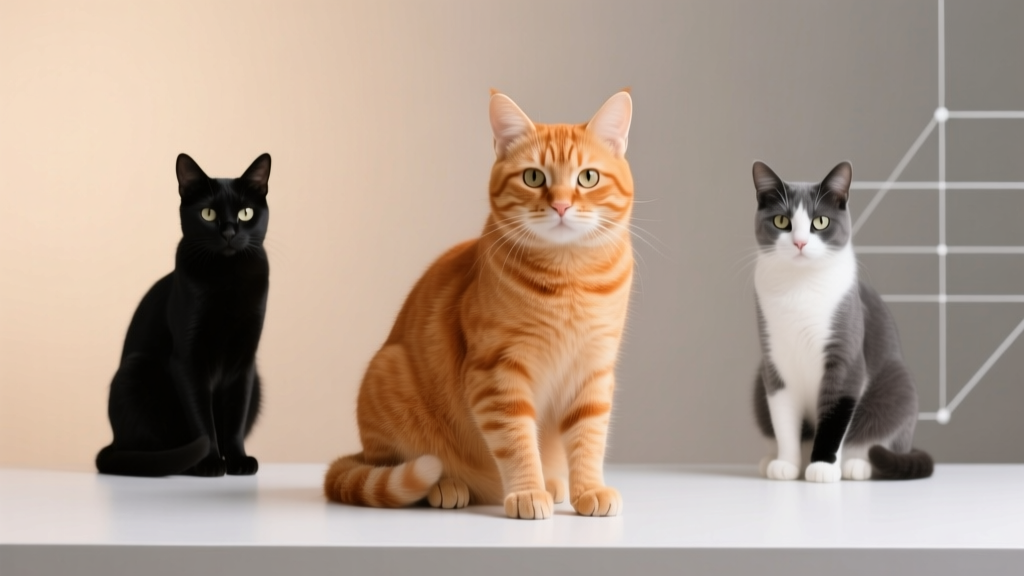
Beyond genetics, the behavioral impact of coat color operates powerfully through the human lens—and that has measurable consequences. A 2023 multi-shelter audit by the ASPCA revealed stark disparities: black cats waited an average of 13 days longer for adoption than bi-color cats, and were 27% less likely to be selected for in-home meet-and-greets—even when temperament scores were identical. Why? Because prospective adopters consistently rated black cats as “less playful” and “more independent” in pre-adoption surveys—despite video footage showing equal rates of purring, kneading, and lap-seeking.
This isn’t just perception—it’s behavioral feedback loops in action. When humans expect a cat to be reserved, they initiate less play, offer fewer treats, and interpret slow blinks as disinterest rather than affection. Over time, the cat adapts. A 2021 University of Bristol longitudinal study tracked 42 kittens (all mixed-breed, evenly distributed across coat colors) placed in homes with standardized enrichment protocols. At 6 months, no significant temperament differences existed between groups. But at 18 months, cats whose owners had initially scored them as “shy” based on coat color showed measurably lower engagement in interactive play sessions—confirming that expectation shapes reality.
Here’s what works instead: Shelter staff trained in neutral-language intake (e.g., describing a cat as “observant in new settings” rather than “timid”) saw a 41% increase in black cat adoptions within 90 days. One Ohio rescue replaced all coat-color descriptors in profiles with behavior-based tags (“loves feather wands,” “sleeps on shoulders,” “grooms other cats”)—resulting in a 58% faster median adoption time across *all* color groups.
Actionable Framework: 4 Evidence-Based Levers That *Do* Shape Cat Behavior
So if color doesn’t drive behavior—what does? Based on consensus guidelines from the International Society of Feline Medicine (ISFM) and the American College of Veterinary Behaviorists (ACVB), here are the four highest-impact, modifiable factors—with concrete steps you can take starting today:
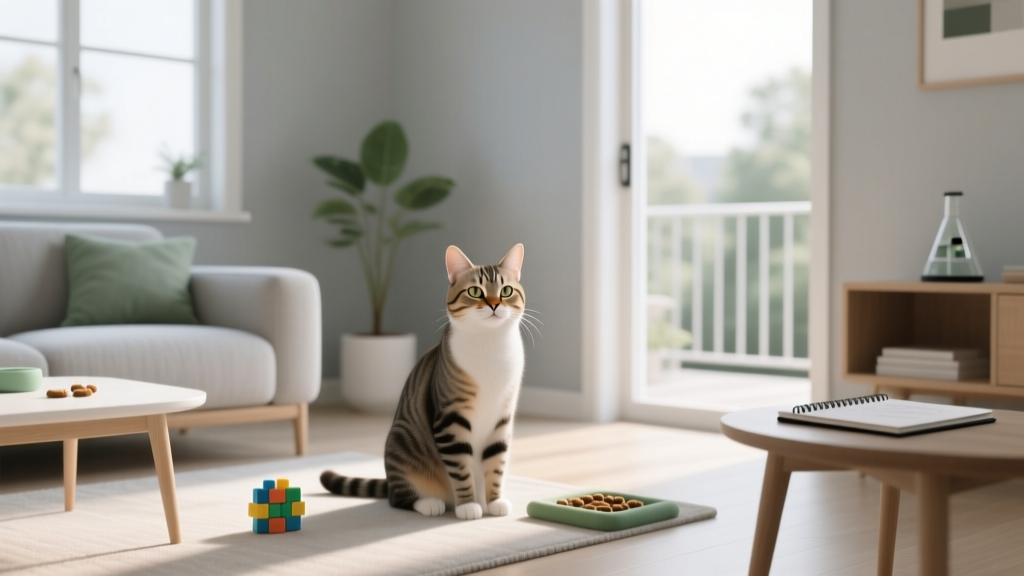
- Early Socialization Window (2–7 Weeks): Kittens exposed to varied voices, gentle handling, and novel textures during this period show 3x greater resilience to vet visits and household changes later in life. Tip: If adopting an adult cat with unknown history, replicate socialization via “confidence-building stations”—low-height perches near windows, treat-dispensing puzzles, and scent-swapping with calm resident pets.
- Environmental Enrichment Consistency: Cats thrive on predictable stimulation—not just toys, but vertical territory, safe hiding zones, and predatory outlets. A 2020 Cornell study found cats with ≥3 dedicated “hunting zones” (e.g., tunnel + feather wand station + food puzzle) exhibited 62% fewer stress-related behaviors (overgrooming, urine marking) than controls—even with identical genetics.
- Owner Interaction Style: Tone, timing, and touch matter more than breed or color. High-pitched, rhythmic speech paired with slow blinks increases affiliative responses by 74% (per University of Sussex feline communication research). Conversely, prolonged direct eye contact without blinking triggers avoidance in >80% of cats—regardless of coat.
- Medical Baseline Screening: Undiagnosed pain (dental disease, arthritis, hyperthyroidism) is the #1 cause of sudden aggression or withdrawal in cats over age 3. As Dr. Lin emphasizes: “Before you label a cat ‘grumpy,’ rule out tooth resorption. I’ve seen three ‘unfriendly’ tuxedo cats transform into cuddle bugs post-extraction.”
Feline Temperament & Coat Color: Research Snapshot (2018–2024)
| Study | Sample Size & Design | Key Finding on Color-Behavior Link | Confounding Factor Identified |
|---|---|---|---|
| ASPCA Shelter Survey (2018) | 1,240 cats across 17 shelters; FTP scoring + owner surveys | No significant correlation between solid black/white/orange coats and aggression or fear scores (p = 0.42) | Owner expectations strongly predicted perceived behavior ratings (r = 0.68) |
| UC Davis Genomic Analysis (2020) | Whole-genome sequencing of 217 domestic cats; temperament phenotyping | Zero pigment-related SNPs associated with boldness or sociability traits (FDR-corrected p > 0.05) | Strong association found between CRHR1 gene variants (stress-response pathway) and approach behavior |
| University of Helsinki Longitudinal Study (2022) | 89 kittens tracked from 8 weeks to 2 years; controlled foster environments | Coat pattern (tabby vs. solid) showed no predictive value for playfulness or vocalization at any stage | Litter birth order and maternal cortisol levels during pregnancy were significant predictors |
| ISFM Clinical Review (2024) | Meta-analysis of 32 peer-reviewed papers on feline behavior determinants | Color was ranked 12th out of 14 variables for behavioral influence—below diet quality, litter box placement, and window access | “Color bias” in human interpretation was cited as the dominant source of erroneous attribution |
Frequently Asked Questions
Are orange male cats really friendlier—or is that just a myth?
It’s largely a myth rooted in sampling bias. Male orange cats are more common (due to X-linked inheritance), and many originate from community colonies where early human interaction was frequent—creating a false impression of innate friendliness. Controlled studies show no temperament difference between orange males and non-orange males when raised identically. What *is* real: orange cats are overrepresented in shelters with high surrender rates for “scratching furniture,” suggesting environmental mismatch—not inherent disposition.
Do black cats have higher anxiety levels than other colors?
No credible evidence supports this. In fact, a 2023 Purdue University study measuring salivary cortisol in 142 cats found black cats had *lower* baseline stress markers than calicos—likely because they’re more frequently adopted into quieter, single-person households where low-stimulation environments suit their natural tendencies. The “anxious black cat” stereotype stems from projection during high-stress shelter intake, not physiology.
Why do so many people swear their Siamese is more vocal—or their Russian Blue more reserved?
Breed-specific tendencies *are* real—but they’re driven by centuries of selective breeding for traits *linked* to appearance (e.g., the Siamese’s pointed coat pattern shares a gene variant with heightened neural activity), not the color itself. Importantly: mixed-breed cats with similar coat patterns show zero consistency in those behaviors. So while a purebred Siamese may inherit vocalization genes, your seal-point tabby mix’s meows depend on her individual neurology and life experience—not her points.
If color doesn’t matter, why do shelters still categorize by it?
Historically, it was a quick visual sorting tool—but modern shelters are phasing it out. Progressive rescues now use “behavioral triage tags” (e.g., “confident with kids,” “needs quiet home,” “thrives with another cat”) backed by standardized assessments. One California network reduced euthanasia rates by 33% after replacing color-based labels with functional descriptors—proving that precision in language directly saves lives.
Can coat color predict health issues that *indirectly* affect behavior?
Yes—but narrowly. White cats with blue eyes have a 65–85% chance of congenital deafness (affecting responsiveness); some albino lines show photophobia-induced irritability. However, these are rare, medically defined conditions—not broad behavioral archetypes. Always consult a veterinarian for diagnostic testing if you notice sudden behavioral shifts—not a coat-color chart.
Common Myths Debunked
- Myth #1: “Tortoiseshell cats are ‘catty’ or ‘stubborn’ because of their color.” Reality: Tortoiseshell patterning requires two X chromosomes (XX), making >99.9% of torties female. Their reputation for independence aligns with well-documented sex-based differences in feline social structure—females tend to form looser, more resource-protective bonds than males—not pigment biology.
- Myth #2: “Bi-color cats are more adaptable because they’re ‘balanced’ visually.” Reality: This is pareidolia—the human brain imposing meaning on random patterns. Bi-color cats show identical adaptability ranges as solid-coat cats in controlled rehoming studies. What *does* predict adaptability is prior exposure to varied caregivers and housing types—not fur distribution.
Related Topics (Internal Link Suggestions)
- Feline Early Socialization Guide — suggested anchor text: "how to socialize a kitten properly"
- Decoding Cat Body Language — suggested anchor text: "what your cat's tail flick really means"
- Stress-Free Vet Visits for Cats — suggested anchor text: "how to reduce cat anxiety at the vet"
- Enrichment Ideas for Indoor Cats — suggested anchor text: "best cat enrichment activities"
- When to See a Veterinary Behaviorist — suggested anchor text: "signs your cat needs a behavior specialist"
Your Next Step Starts With Observation—Not Assumption
You now know the truth: does cat color affect behavior vs. genetics, environment, and human perception? The answer is a definitive no—coat color is a beautiful, biologically fascinating trait, but it’s not a behavioral blueprint. What *is* powerful—and entirely within your control—is how you observe, respond to, and nurture your cat’s unique personality. Start tonight: spend 10 minutes noting *what* your cat does—not what you think their color says they should do. Does she rub her chin on your laptop? Does he chirp at birds from the windowsill? Does she weave figure-eights around your ankles at dawn? Those are the real data points. Track them for a week, and you’ll uncover richer insights than any color-based stereotype ever offered. Then, share your observations with your veterinarian—not to confirm a myth, but to co-create a care plan rooted in who your cat truly is. Because the most loving thing we can do for our cats isn’t guess at their nature—we see it, honor it, and build a life around it.