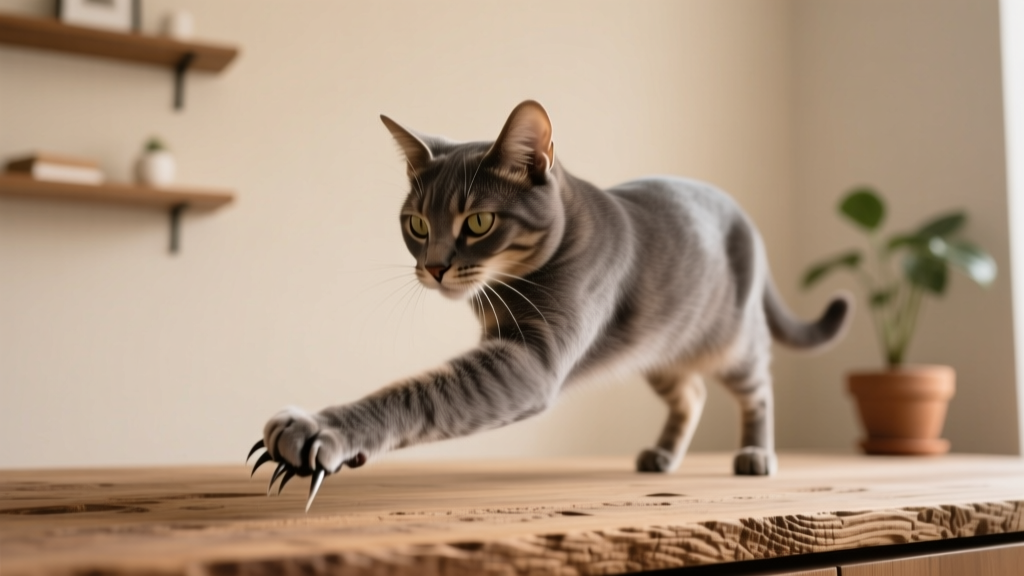
Cat Clawing Behavior Changes: Causes & Solutions
Why Your Cat’s Clawing Suddenly Changed — And Why It’s Probably Not ‘Just Acting Out’
What causes a cat to change clawing behavior? If your formerly gentle kneader is now shredding your sofa at 3 a.m., or your confident scratcher has stopped using their post entirely, you’re not seeing defiance—you’re witnessing a nuanced communication system in distress. Clawing isn’t random; it’s a multimodal behavior tied to scent marking, muscle maintenance, emotional regulation, and territorial signaling. When that behavior shifts—whether escalating, declining, or relocating—it’s almost always a response to something happening beneath the surface: a silent plea, a physiological shift, or an unmet need your cat can’t verbalize. Ignoring it risks chronic stress, redirected aggression, or even undiagnosed pain—and yet, over 68% of cat owners misinterpret these changes as ‘bad behavior’ rather than meaningful data points (2023 International Society of Feline Medicine Behavioral Survey). Let’s decode what’s really going on.
1. Pain & Physical Discomfort: The Silent Saboteur
Clawing requires full extension of the digits, flexion of the shoulder and spine, and precise neuromuscular coordination. Even mild discomfort—like early-stage arthritis, nail bed inflammation, or a minor paw injury—can make scratching painful or exhausting. Dr. Lena Torres, DVM and certified feline behaviorist with the American College of Veterinary Behaviorists, explains: ‘I see cats stop using vertical scratchers for weeks before they limp. Their avoidance isn’t laziness—it’s self-protection. A cat who suddenly prefers horizontal cardboard over sisal may be protecting tender toe pads or stiffening joints.’
Key red flags include:
- Switching from vertical to horizontal scratching (e.g., carpet instead of post)
- Over-grooming paws or licking between toes excessively
- Reluctance to jump or climb—especially when approaching the scratching post
- Visible flinching when nails are touched during routine trimming
A 2022 study published in Journal of Feline Medicine and Surgery found that 41% of cats over age 7 with reduced scratching activity had radiographic evidence of degenerative joint disease in the carpal or tarsal regions—even without overt lameness. If your cat is middle-aged or senior, schedule a low-stress vet exam with focus on orthopedic and dermatologic health before assuming behavioral causes.
2. Environmental Stress & Household Shifts
Cats are exquisitely sensitive to environmental consistency. What feels like a minor change to us—a new rug, rearranged furniture, or even a different brand of laundry detergent—can trigger anxiety that manifests physically through clawing. But here’s the nuance: stress doesn’t always increase scratching. In fact, chronic stress often suppresses normal marking behaviors as cats withdraw and conserve energy.
Real-world example: Maya, a 5-year-old domestic shorthair, began avoiding her tall sisal post after her owner adopted a second cat. She didn’t scratch more—she scratched less, then started chewing baseboards near windows. Her veterinarian identified this as displacement behavior: her stress wasn’t being expressed outwardly but was redirected into oral fixation and territorial insecurity. Once vertical space was expanded (adding shelves, staggered perches), and scent-swapping protocols were introduced, she resumed appropriate scratching within 11 days.
Common stressors linked to clawing shifts include:
- New pets or people in the home (including infants or frequent visitors)
- Construction noise or home renovations
- Changes in daily routine (e.g., altered work hours, inconsistent feeding)
- Litter box location changes or substrate switches
- Unresolved inter-cat tension (even if no overt fighting occurs)
Tip: Use Feliway Optimum diffusers in high-traffic zones for 4–6 weeks during transitions—and track scratching frequency with a simple tally sheet. You’ll often spot patterns (e.g., decline after visitor arrival, rebound after 3 days of quiet).
3. Cognitive Decline & Age-Related Neurological Shifts
Senior cats (11+ years) experience measurable changes in brain structure and neurochemical balance. A landmark 2021 Cornell Feline Health Center longitudinal study tracked 142 geriatric cats for 3 years and found that 37% exhibited measurable alterations in scratching topography—defined as changes in angle, duration, rhythm, or substrate preference—preceding formal diagnosis of feline cognitive dysfunction syndrome (CDS) by an average of 5.2 months.
Unlike dogs, cats rarely show obvious confusion early on. Instead, they may:
- Scratch in inappropriate places (e.g., door frames instead of posts)
- Repeat scratching motions without apparent purpose (‘empty scratching’)
- Forget where their designated posts are located—even if used daily for years
- Scratch only one side of their body (indicating unilateral proprioceptive loss)
These aren’t ‘quirks’—they’re neurological signposts. Early intervention with environmental enrichment (targeted puzzle feeders, tactile wall panels), omega-3 supplementation (EPA/DHA 250mg/day under vet guidance), and melatonin (0.25–0.5mg at bedtime, per ISFM consensus guidelines) can slow progression and improve quality of life. Always rule out concurrent conditions like hyperthyroidism or hypertension first—both mimic CDS symptoms and are highly treatable.
4. Resource Mismatch & Unmet Instinctual Needs
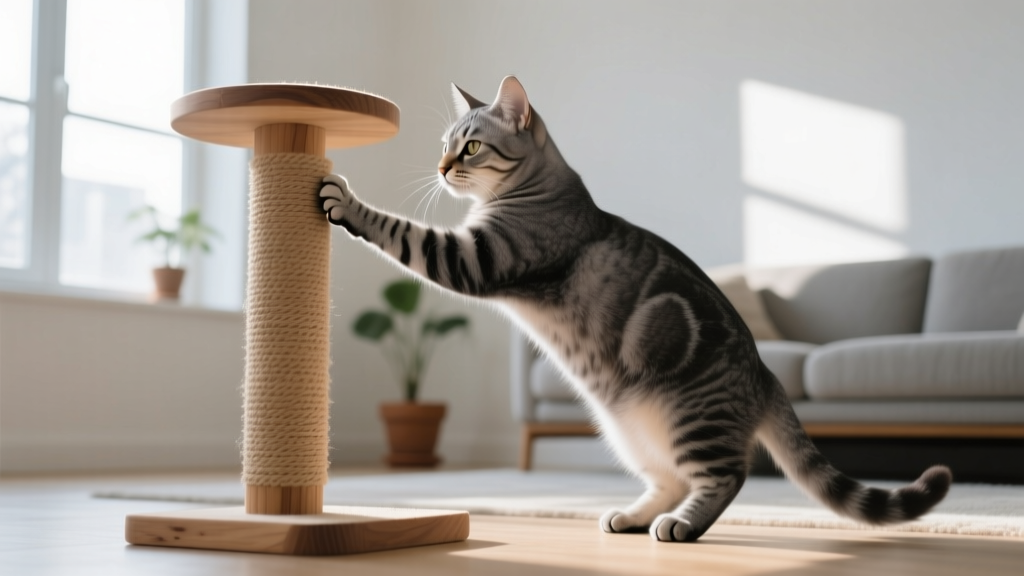
This is where most well-intentioned owners stumble. You bought a ‘premium’ scratching post—but did you match it to your cat’s biomechanics and preferences? Clawing isn’t one-size-fits-all. Research from the University of Lincoln’s Companion Animal Behaviour Group shows that cats have strong individual preferences across five dimensions: orientation (vertical/horizontal/inclined), texture (sisal, cardboard, carpet, wood), stability (wobbly vs. anchored), height (relative to body length), and location (near sleeping/resting zones vs. high-traffic areas).
A mismatch in just one dimension can cause abandonment—even if the post looks perfect to you. For example: a 12-pound Maine Coon needs a post at least 36” tall and anchored to floor + wall; a petite Siamese may prefer a low-angle ramp-style scratcher near her favorite sunbeam.
Here’s how to audit your setup:
- Observe silently for 3 days: Note where your cat currently scratches (and avoids), time of day, posture, and duration.
- Test texture preferences: Tape small swatches (corrugated cardboard, burlap, rough hemp, smooth wood) to walls/floors—see which gets consistent use.
- Validate stability: Gently push the post while your cat uses it. If it wobbles >1 inch, it fails the ‘trust test.’
- Check placement: 72% of cats prefer scratching within 3 feet of a resting or sleeping zone (per 2020 Purdue Ethogram Study).
| Preference Dimension | Most Common Choice (by %) | Red Flag If Absent | Action Step |
|---|---|---|---|
| Orientation | Vertical (61%) | Cat scratches baseboards, door frames, or furniture legs | Add wall-mounted vertical posts near sleeping areas; anchor securely |
| Texture | Corrugated cardboard (54%) | Cat ignores sisal but shreds boxes or paper bags | Introduce cardboard scratchers horizontally AND vertically; replace every 4–6 weeks |
| Stability | Floor-anchored + wall-braced (89%) | Cat abandons post after initial use; scratches nearby walls instead | Secure post with L-brackets to wall studs + non-slip mat; avoid freestanding units over 24” |
| Height | ≥1.5x cat’s standing height (77%) | Cat stretches fully but stops mid-scratch; seems frustrated | Measure from paw to tip of tail when upright; choose post ≥ that length |
| Location | Within 3 ft of resting zone (72%) | Cat walks past post daily but never uses it | Relocate post next to bed, couch, or favorite window perch—not in hallway or basement |
Frequently Asked Questions
Why does my cat scratch me gently but shred furniture?
Gentle kneading or ‘love scratching’ with withdrawn claws is a neonatal behavior tied to nursing and bonding—it’s affectionate and low-arousal. Furniture destruction, however, is typically high-arousal scratching driven by stress, play, or territorial marking. The key difference lies in body language: relaxed ears and purring = affection; flattened ears, dilated pupils, or tail lashing = heightened arousal. Redirect intense scratching with interactive wand toys *before* it escalates—never punish, as this increases fear-based scratching.
Will declawing fix abnormal clawing behavior?
No—and it’s ethically and medically indefensible. Declawing (onychectomy) is amputation of the last bone of each toe. It causes chronic pain in 29–42% of cases (JFMS, 2017), increases risk of back pain due to altered gait, and correlates with 3.5× higher rates of inappropriate elimination and biting. The American Veterinary Medical Association, Canadian Veterinary Medical Association, and all major European veterinary bodies oppose elective declawing. Safer, evidence-backed alternatives include Soft Paws® caps, regular nail trims, and environmental enrichment.
My cat stopped scratching after moving—will they resume?
Often, yes—but it takes time and intentional support. Cats need 2–4 weeks to re-establish territory markers post-move. During this period, place familiar-smelling blankets on new scratching surfaces, rub the post with catnip or silvervine (not just on top—along the sides), and reward calm interaction (not scratching) with treats. Avoid forcing paws onto the post—it creates negative association. Patience + predictability yields better results than pressure.
Is excessive scratching a sign of fleas or skin allergies?
Yes—especially if accompanied by hair loss, scabs, or head/neck-focused scratching. Flea allergy dermatitis (FAD) causes intense pruritus that may manifest as frantic pawing or scratching at the base of the tail. Food or environmental allergies often present as chin acne, ear inflammation, or recurrent skin infections—not just scratching. Rule out parasites with a vet-conducted flea combing and skin cytology. Never assume ‘itchy = fleas’; up to 31% of allergic cats test negative for fleas but positive for dust mite IgE (2022 ACVD Consensus Report).
Can diet affect scratching behavior?
Indirectly—yes. Deficiencies in essential fatty acids (omega-3/6), zinc, or biotin compromise skin and nail health, leading to brittle, painful nails that discourage normal scratching. High-carbohydrate diets (>35% dry matter) correlate with increased inflammatory markers in feline skin tissue, potentially exacerbating itch-related scratching. Work with your vet to assess diet quality—not just brand—and consider a therapeutic hydrolyzed protein diet if allergies are suspected.
Common Myths About Clawing Behavior Changes
Myth #1: “Cats scratch to sharpen their nails.”
False. Cats don’t ‘sharpen’ claws like knives—they shed outer nail sheaths to reveal sharper layers underneath. Scratching is primarily for stretching, marking (via interdigital glands), and stress relief. Nail caps or regular trims won’t reduce scratching drive—only address its consequences.
Myth #2: “If my cat isn’t scratching furniture, they’re fine.”
Not necessarily. A complete cessation of scratching—especially in young, active cats—can indicate significant pain, depression, or neurological impairment. Monitor for subtle signs: decreased play, reduced grooming, or avoidance of vertical spaces.
Related Topics (Internal Link Suggestions)
- Feline Stress Signals — suggested anchor text: "subtle signs your cat is stressed"
- Best Scratching Posts for Senior Cats — suggested anchor text: "arthritis-friendly scratching solutions"
- How to Trim Cat Nails Safely — suggested anchor text: "stress-free nail trimming guide"
- Interpreting Cat Body Language — suggested anchor text: "what your cat's tail and ears really mean"
- Feline Cognitive Dysfunction — suggested anchor text: "signs of cat dementia and early support"
Your Next Step Starts With Observation—Not Intervention
What causes a cat to change clawing behavior isn’t a single answer—it’s a layered diagnostic process rooted in empathy, observation, and veterinary partnership. Before buying new gear or changing routines, spend three days tracking *when*, *where*, and *how* your cat scratches—or doesn’t. Note sleep patterns, appetite shifts, and interactions with other pets. Then, consult your veterinarian with that log in hand: it transforms vague concerns into actionable clinical insights. And remember—your cat isn’t misbehaving. They’re communicating. Your job isn’t to correct; it’s to listen, adapt, and respond with compassion. Ready to build a personalized scratching plan? Download our free Feline Scratch Audit Kit (includes printable tracker, texture sampler guide, and vet discussion checklist) at [YourSite.com/scratch-audit].