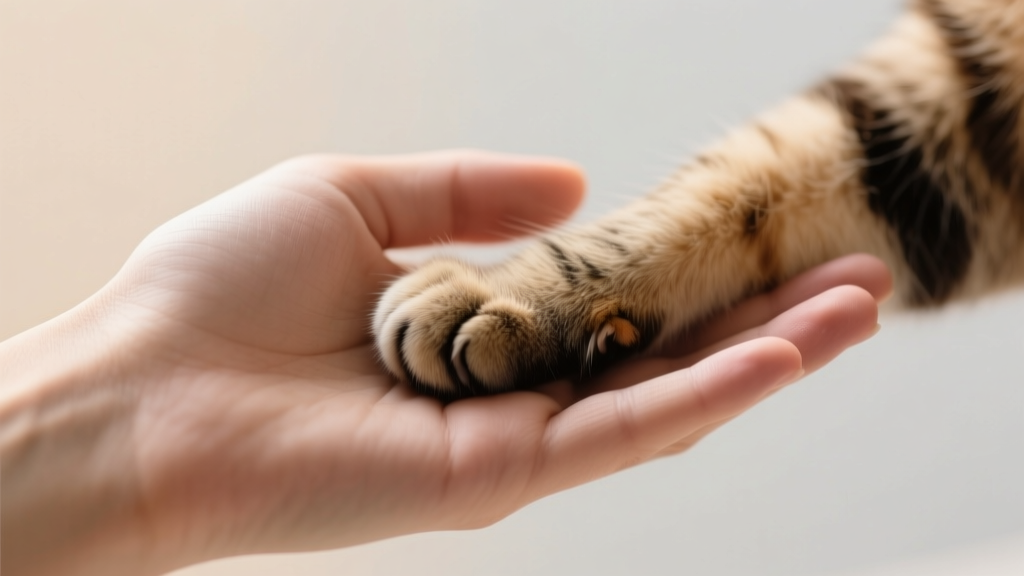
Cat Paw Holding Your Hand: Social Bonding Gesture
You’re on the couch, half-watching a show, half-dozing. Your cat hops up, circles twice like they’re inspecting the real estate, and settles beside you. You reach over to give a polite chin scratch. Then it happens: a soft paw slides onto your hand. Not a swat. Not a grab. More like… a tiny handshake. Sometimes there’s a gentle squeeze. Sometimes the claws peek out just enough to say, “I’m here,” and then tuck away again.
If you’ve ever frozen in place thinking, Is this affection? A request? A trap? you’re in excellent company. Cats “holding hands” with their paws is one of those quietly adorable behaviors that feels deeply personal—and it often is. The good news: we can make sense of it with a little feline psychology and a lot of everyday context.
Why Cats Hold Your Hand (The Science and Evolution Behind It)
Cats aren’t primates, so they didn’t evolve for hand-holding the way humans did. But they did evolve to communicate through touch—especially in close social groups like mother-and-kitten units and friendly cat colonies.
Here’s the evolutionary backdrop:
- Touch is a safety signal. Kittens pile together for warmth and protection, and they knead and cling to mom while nursing. Physical contact becomes associated with comfort, security, and “everything is okay.”
- Paws are multi-purpose tools. A cat’s paws explore texture, test stability, and control distance. When your cat places a paw on you, they’re using their most sensitive “sensor” to interact with you.
- Scent is social glue. Cats communicate heavily through scent glands—some of which are located between the toes. A paw resting on you can double as gentle scent-marking: “You’re part of my group.”
- Affiliative behavior strengthens bonds. In friendly cat relationships, you’ll see mutual grooming, nose touches, body rubs, and close resting. Paw contact can be part of that “we’re safe together” toolbox.
So while your cat isn’t copying human romance tropes, they are using a natural feline language of closeness and contact—one that just happens to look charmingly like hand-holding.
Different Contexts: What “Paw on Your Hand” Can Look Like
Not all paw-holding is the same. The meaning shifts depending on what happened right before, what the rest of the body is doing, and what your cat typically does when they feel relaxed versus stimulated.
1) The Sleepy Paw Drape
Scenario: Your cat is loafed or curled up, eyes at half-mast, purring quietly. Their paw flops onto your hand like it belongs there.
What it usually means: Comfort and security. This is the feline equivalent of leaning on someone during a nap. Many cats do this to maintain gentle contact—like a soft anchor—without fully waking up.
2) The “Don’t Stop Petting” Paw
Scenario: You pause mid-pet, and a paw reaches out to touch or lightly hook your hand back into place.
What it usually means: A request. Your cat has learned that using a paw gets results. If their face is relaxed and whiskers are neutral, they’re likely saying, “Yes, continue.”
3) The Greeting Tap (Especially When You Come Home)
Scenario: You sit down after being out, and your cat approaches, rubs your leg, then places a paw on your hand as if confirming your identity.
What it usually means: Social reconnection and investigation. Your scent has changed (outside smells, other people, the world), and that paw contact is both bonding and information-gathering.
4) The Playful Hold (With or Without Gentle Teeth)
Scenario: Your cat grabs your hand with both paws, sometimes bunny-kicks, sometimes adds soft mouthing.
What it usually means: Play or predatory practice—not exactly “hand-holding,” but it can start as a sweet paw touch and escalate if your cat gets overstimulated. Context matters a lot here.
5) The Alert Paw Pin
Scenario: Your cat is sitting upright, ears swiveling, eyes open wide. The paw rests on your hand while they scan the room.
What it usually means: Mild vigilance paired with trust. They may be using you as a “safe base.” Think of it as: “I’m watching, but I’m staying connected to my person.”
What It Says About Your Cat’s Mood and Feelings
Paw contact is a small behavior with big emotional nuance. Here are the most common “emotional translations,” along with body-language clues to confirm them.
- Affection and trust: Soft body, slow blinks, purring, relaxed tail. Your cat feels safe enough to be vulnerable near you.
- Comfort-seeking: Paw contact during storms, after a scare, or at bedtime. Often paired with kneading or tucking close.
- Attention-requesting: Paw taps plus direct eye contact, a little chirp/meow, or walking on your keyboard. “You, now.”
- Gentle boundary-setting: A paw placed on your hand without claws, sometimes paired with turning the head away. This can mean, “That’s enough,” in a polite, non-escalated way.
- Overstimulation warning: Paw clamps down, tail flicking, skin twitching, ears rotating sideways (“airplane ears”). Your cat might be shifting from enjoying touch to needing space.
The key is to read the whole cat, not just the paw. The paw is the punctuation mark; the body language is the full sentence.
Related Behaviors You Might Notice (Same Social Language)
If your cat is a paw-holder, you may also see these “affiliative” behaviors that serve similar social functions:
- Kneading: Often tied to comfort and kittenhood memories. Some cats knead on you and then rest a paw on your hand like a finale.
- Head bunting (bunting): Rubbing cheeks or forehead on you to exchange scent and reinforce social bonds.
- Slow blinking: A visual sign of relaxation and trust—sometimes offered right before the paw reaches out.
- Following you room to room: Social proximity seeking. The paw-hold can be the “I’m with you” version of that.
- Sleeping near your hands or face: Cats often choose sleeping spots based on safety and warmth—and, yes, attachment.
When Paw Holding Is Normal… and When It Might Be a Concern
In most cases, a cat placing their paw on your hand is perfectly normal and sweet. Still, it’s worth knowing when a change in touch behavior might signal something else.
Usually normal
- It happens during calm moments (cuddling, resting, gentle petting).
- Your cat’s body is loose and relaxed.
- They release easily when you move.
- It’s consistent with their personality (some cats are simply “touchy”).
Potential concern (check the context)
- New clinginess or constant pawing paired with hiding, appetite changes, or restlessness (possible stress or medical discomfort).
- Pawing at you plus vocalizing at night when this is new (could be anxiety, cognitive changes in seniors, or a schedule shift).
- Paw holding that turns into hard gripping, biting, or scratching frequently (often overstimulation or play aggression—manageable, but worth addressing).
- Sensitivity when the paw is touched (limping, pulling away, or guarding could indicate pain, nail issues, or an injury).
If the behavior changes suddenly or comes with other symptoms (reduced eating, lethargy, litter box changes), a vet check is the safest next step. Cats are masters of subtle signals, and touch behavior can be one of them.
How to Respond (and Encourage the Sweet Version)
If you love the paw-holding and want more of it—without accidentally encouraging claw-y escalations—try these cat-friendly approaches.
1) Reward calm contact
When your cat places a relaxed paw on your hand, respond with something they enjoy: gentle verbal praise, a slow blink, or a few seconds of soft petting in their preferred spot (often cheeks or under the chin). If treats are part of your routine, you can occasionally reinforce the moment with a tiny treat—especially for shy cats building trust.
2) Respect the “pause” signal
If the paw lands on your hand and your cat’s body stiffens or the tail begins to flick, stop petting for a moment. Many cats use the paw as a polite way to manage intensity. Backing off teaches them they don’t need to escalate to swatting to be heard.
3) Redirect playful grabbing
If the paw-hold turns into wrestling, don’t punish—redirect. Keep a wand toy or kicker toy nearby. The message is: hands are for gentle contact; toys are for bunny kicks.
4) Make your hand predictable and safe
Avoid sudden grabs, forced holding, or touching sensitive areas (belly, paws) unless your cat clearly enjoys it. Cats repeat behaviors that feel safe. If your cat learns that reaching a paw out leads to calm, predictable responses, they’re more likely to do it again.
5) Try “hand proximity” bonding
Some cats want closeness but not full petting. Rest your hand near them without moving. If they choose to place their paw on you, that’s consent-driven affection—cat gold.
Fun Facts and Research Tidbits
- Cat paws are sensory powerhouses. They contain sensitive receptors that help cats detect texture and vibration. Your hand is warm, slightly textured, and smells like “you”—very interesting in cat terms.
- Scent marking isn’t just rubbing cheeks. Cats have scent glands in multiple places, including around the paws. A gentle paw rest can be part bonding, part “you belong to my home team.”
- Affiliative touch supports social stability. Studies of cat social groups show that friendly cats maintain bonds through proximity and non-aggressive contact (like allogrooming and resting close). Paw contact fits beautifully into this pattern.
- Cats learn what works. If pawing reliably gets your attention, your cat may use it as a trained communication tool. In other words, you may have accidentally taught your cat to “hold hands.”
FAQ: Cat Paw Holding Your Hand
1) Does my cat holding my hand mean they love me?
Often, yes—at least in the feline sense of trust and social bonding. Look for relaxed posture, purring, slow blinks, and choosing to stay near you. Paw holding is usually a sign your cat feels safe and connected.
2) Why does my cat hold my hand and then bite me?
This is commonly play escalation or overstimulation. If petting is involved, your cat may go from “pleasant” to “too much” quickly. If it happens during high energy moments, they may be treating your hand like prey. Redirect to a toy and keep petting sessions shorter with pauses.
3) My cat only holds my hand at night—why?
Nighttime is quieter and feels safer, and many cats become more affectionate when the household settles. It can also be a comfort routine: your cat checks in, makes contact, and relaxes. If the behavior is new and urgent (with loud vocalizing), consider stressors or a vet check.
4) Is my cat trying to stop me from moving?
Sometimes. Cats love controlling resources—your attention, your warmth, your lap availability. A gentle paw on your hand can be a subtle “stay here” request, especially if you’re about to get up or stop petting.
5) Should I hold my cat’s paw back like a handshake?
Lightly resting your hand is fine if your cat stays relaxed, but many cats dislike having their paws constrained. Let your cat lead. If they pull away, respect it. If they press their paw into your hand and purr, you’ve been granted temporary membership in the Paw-Holding Club.
6) Why does my cat use claws when holding my hand?
A tiny bit of claw may be accidental—cats flex their toes when relaxed, kneading, or adjusting their grip. If claws are frequent or painful, trim nails regularly, offer soft blankets for kneading, and redirect any escalating play to toys.
That little paw on your hand is one of the sweetest examples of cats meeting us halfway in communication—part comfort, part connection, part “human, you’re mine.” If your cat does this (or has their own unique version), share your story with the Cat Lovers Base community at catloversbase.com. We’d love to hear how your cat says “I’m with you” in their own delightful way.