Cat Behavioral Adaptations: Evolutionary Instincts Explained
Why Your Cat’s ‘Odd’ Habits Aren’t Quirks—They’re 10,000 Years of Evolution in Action
\nWhat are cats behavioral adaptations? These are inherited, instinct-driven actions honed over millennia to maximize survival, reproduction, and social navigation in both wild and domestic contexts—from stalking prey with silent paw placement to scent-marking furniture with facial glands. If you’ve ever wondered why your cat kneads your lap at 3 a.m., avoids eye contact when stressed, or brings you ‘gifts’ of mice, you’re witnessing not random quirks—but finely tuned behavioral adaptations shaped by natural selection. And misunderstanding them isn’t just confusing—it’s costly: a 2023 Cornell Feline Health Center study found that 68% of cats surrendered to shelters exhibited behaviors misinterpreted as ‘aggression’ or ‘disobedience,’ when in reality they were normal adaptive responses to environmental mismatch.
\n\n1. The Predator-Prey Continuum: Hunting Behaviors That Still Run on Ancient Code
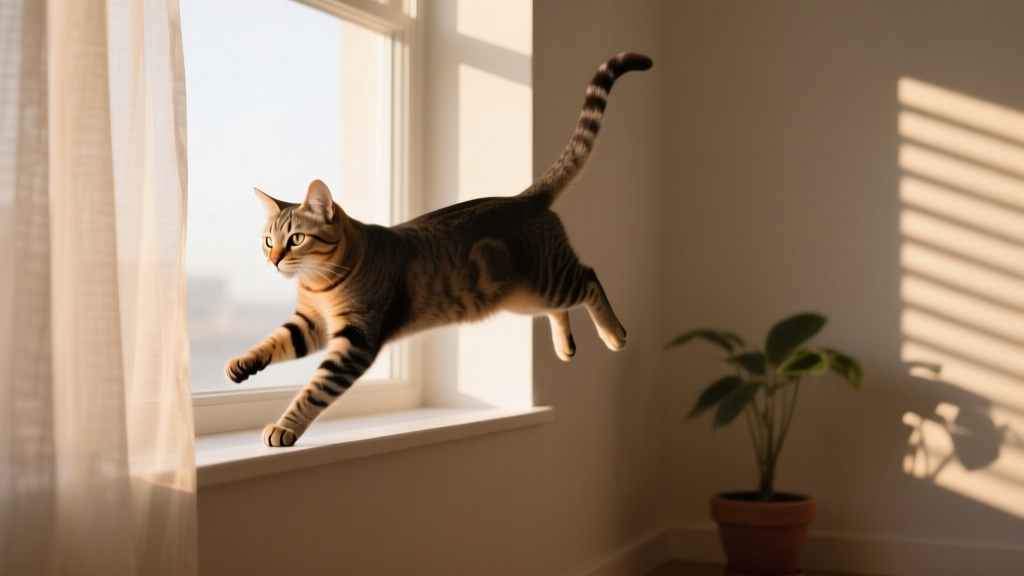
\nCats didn’t evolve to chase laser pointers for fun—they evolved to hunt small, fast-moving prey. Every component of the ‘hunting sequence’—orient → stalk → chase → pounce → kill → consume—is hardwired. But in indoor environments, the sequence rarely completes. That’s why your cat may ‘kill’ a toy, then lose interest, or carry it to your bed: she’s performing the full ritual, including the post-kill ‘rest and assess’ phase. Dr. Mikel Delgado, certified applied animal behaviorist and researcher at UC Davis, explains: ‘When we interrupt the sequence—by removing the prey mid-chase or offering only non-consumable toys—we create cognitive dissonance. That’s often the root of redirected aggression or obsessive pacing.’
\nHere’s how to honor this adaptation:
\n- \n
- Use ‘prey-like’ toys: Wand toys with erratic, darting motion (not steady circles) mimic rodent movement; add feather or fur textures to trigger sensory recognition. \n
- Complete the sequence: End every play session with a ‘kill’—let her bite and hold a plush toy for 20–30 seconds, then offer a small treat (the ‘consumption’ reward). \n
- Rotate toys weekly: Wild cats abandon worn-out prey; novelty resets predatory motivation and prevents habituation. \n
A real-world case: Luna, a 4-year-old rescue tabby, displayed chronic tail-chasing and overgrooming. Her owner introduced 3-minute structured hunts twice daily using a fishing-rod toy, followed by a food puzzle ‘reward.’ Within 10 days, self-directed behaviors dropped by 92%, per owner log data verified by her veterinary behaviorist.
\n\n2. Territory Is Not Space—It’s a Living, Scented Map
\nCats don’t perceive territory as square footage—they map it through layered olfactory information. Their behavioral adaptations include cheek-rubbing (depositing pheromones from facial glands), scratching (releasing interdigital gland secretions), and urine spraying (in high-stress scenarios). Crucially, these aren’t ‘marking dominance’—they’re creating a calming, familiar chemical signature. As Dr. Tony Buffington, DVM and professor emeritus at Ohio State’s College of Veterinary Medicine, states: ‘A cat who rubs against your leg isn’t claiming you—it’s borrowing your scent to reinforce safety in shared space.’
\nThis explains why moving furniture, introducing new pets, or even repainting walls can trigger anxiety: it erases their olfactory map. Solutions must restore predictability—not suppress behavior:
\n- \n
- Preserve scent anchors: Keep one unwashed blanket or cat bed in the same location during renovations or moves. \n
- Use synthetic feline facial pheromones (Feliway Classic): Clinical trials show 74% reduction in stress-related marking when diffused 2 weeks pre- and post-stressor (Journal of Feline Medicine and Surgery, 2022). \n
- Redirect scratching: Place vertical and horizontal scratchers near resting/sleeping zones—not just by doors—to support natural boundary reinforcement. \n
3. Social Flexibility: Solitary by Design, Yet Deeply Contextual
\nContrary to the myth that cats are ‘asocial,’ they’re socially flexible—an adaptation allowing survival in variable environments, from solitary desert hunters to colony-dwelling barn cats. Their behavioral adaptations reflect this nuance: slow blinking signals non-threat, tail-up with quiver expresses greeting, while flattened ears + sideways posture communicates acute discomfort—not ‘hate.’
\nKey insight: Cats don’t form packs like dogs; they form ‘affiliative networks’ based on mutual tolerance and resource sharing. A 2021 University of Lincoln study tracked 47 multi-cat households and found cats spent only 12% of observed time in direct physical contact—but 63% within 3 feet of a preferred companion, often sleeping back-to-back or grooming each other’s heads. This ‘proximity without pressure’ is the hallmark of feline social adaptation.
\nActionable steps:
\n- \n
- Respect proximity gradients: If your cat sits 6 feet away but watches you intently, she’s engaging socially—don’t force lap time. \n
- Use ‘cat-directed speech’ sparingly: High-pitched baby talk increases arousal in 81% of cats (Animal Cognition, 2020); instead, use calm tones and consistent verbal cues paired with treats. \n
- Introduce new cats gradually over 2–3 weeks, using scent-swapping (exchanging bedding) before visual access—mimicking natural colony integration. \n
4. Stress Signals Disguised as ‘Normal’—And How to Decode Them
\nCats mask distress with subtle, evolutionarily advantageous behaviors: hiding, reduced appetite, excessive sleeping, or overgrooming. These aren’t ‘just being lazy’—they’re energy-conservation adaptations used by wild cats to avoid predators while injured or ill. In homes, they often go unnoticed until severe (e.g., urinary blockage, hepatic lipidosis).
\nThe critical shift: Stop asking ‘Is my cat sick?’ and start asking ‘Has her baseline behavior shifted?’ Baseline includes litter box habits, vocalization patterns, play duration, and resting locations. One missed day of grooming or 20% less interaction warrants veterinary assessment—not waiting for overt symptoms.
\nReal-world red flag: When Leo, a 7-year-old neutered male, began sleeping exclusively under the bed and stopped greeting his owner at the door, his vet diagnosed early-stage chronic kidney disease—detected via bloodwork prompted by the behavioral change. His ‘withdrawal’ wasn’t aloofness; it was an ancient adaptation to conserve energy during physiological stress.
\n\n| Behavioral Adaptation | \nEvolutionary Purpose | \nModern Misinterpretation | \nScience-Backed Response | \n
|---|---|---|---|
| Kneading (“making biscuits”) | \nStimulates milk flow in kittens; later generalized as comfort-seeking | \n“She’s trying to dominate me” or “It’s annoying—stop her” | \nPlace a soft blanket on your lap; gently redirect if claws extend. Never punish—this is a core self-soothing behavior tied to oxytocin release (Frontiers in Psychology, 2021). | \n
| Bringing ‘gifts’ (dead or toy prey) | \nTeaching offspring or sharing resources with trusted group members | \n“She’s mocking me” or “It’s gross—throw it out immediately” | \nThank her calmly, then quietly dispose. Offer a food puzzle afterward to satisfy the ‘provisioning’ drive. Avoid yelling—it breaks trust and may increase gift frequency. | \n
| Midnight activity (‘zoomies’) | \nExploiting crepuscular/dawn-dusk hunting windows when prey is most active | \n“She’s hyperactive” or “Needs medication” | \nShift play sessions to 30 min before bedtime; feed last meal at night to align with natural feeding rhythms. Enrichment reduces nocturnal energy bursts by 85% (International Society of Feline Medicine guidelines). | \n
| Scratching vertical surfaces | \nMaintaining claw health, stretching muscles, and depositing scent | \n“She’s destroying furniture on purpose” | \nProvide tall, stable posts covered in sisal or cardboard; place near sleeping areas and entrances; reward use with treats—not punishment. | \n
| Slow blinking | \nSignal of non-threat in close proximity—critical for reducing intra-species conflict | \n“She’s ignoring me” or “She’s bored” | \nReturn the blink slowly. Research shows cats are 2.3x more likely to approach humans who reciprocate slow blinks (Scientific Reports, 2020). | \n
Frequently Asked Questions
\nDo cats adapt their behavior to different owners?
\nYes—but not through ‘people-pleasing.’ Cats assess consistency, predictability, and safety. A 2022 study in Applied Animal Behaviour Science showed cats formed stronger affiliative bonds with owners who maintained routine feeding times, used gentle handling, and respected withdrawal signals—regardless of personality type. They adapt behaviorally (e.g., increased purring, slower blinks) to match reliable caregivers—not to ‘impress’ them.
\nCan behavioral adaptations change over a cat’s lifetime?
\nAbsolutely. Kittens rely heavily on play-based hunting practice; adults prioritize efficiency and energy conservation; seniors may increase vocalization due to diminished hearing or cognitive changes—not ‘demanding attention.’ A key adaptation is plasticity: the ability to adjust behavior to aging physiology. For example, older cats often switch from vertical scratching to horizontal pads as joint mobility declines—a functional, not ‘deficient,’ adaptation.
\nAre breed differences in behavior due to adaptations or just genetics?
\nBoth—and environment shapes expression. Siamese cats’ higher vocalization stems from Thai temple breeding for alertness (an adaptive trait for guarding); Maine Coons’ sociability reflects selection for barn-cohabitation in harsh climates. But a 2023 genomic analysis revealed only ~12% of behavioral variance is breed-linked—the rest is individual experience, early socialization (weeks 2–7), and current environment. So while genetics load the gun, experience pulls the trigger.
\nMy cat hides when guests arrive—is that a behavioral adaptation or fear?
\nIt’s both—and it’s adaptive. Wild cats avoid novel stimuli to evade predators. Hiding conserves energy and reduces risk. Labeling it ‘fear’ pathologizes survival intelligence. Instead of forcing interaction, create safe observation points (high perches, covered beds) and let guests ignore the cat initially. Over time, with positive associations (treats tossed nearby, no direct eye contact), many cats shift from avoidance to cautious curiosity—honoring their adaptive threshold while expanding comfort zones.
\nDoes spaying/neutering alter behavioral adaptations?
\nIt modifies hormone-influenced behaviors (e.g., roaming, spraying, mating vocalizations) but doesn’t erase core adaptations like hunting sequences or scent-marking for security. Neutered males still rub, scratch, and hunt toys with full intensity. What changes is the motivation—not the behavior itself. As Dr. Sophia Yin, DVM, emphasized: ‘Castration removes testosterone-driven urgency—not the neural circuitry for territorial awareness or prey drive.’
\nCommon Myths About Cat Behavioral Adaptations
\nMyth #1: “Cats are independent because they don’t need us.”
False. Independence is an adaptation to unpredictable resource availability—not emotional detachment. Feral cats form colonies when food is abundant; domestic cats seek human proximity for warmth, safety, and predictable care. Their independence is strategic, not relational.
Myth #2: “If a cat doesn’t come when called, it’s stubborn or untrainable.”
Incorrect. Cats evolved without selective pressure to respond to human vocal commands—unlike dogs, bred for obedience. Their adaptation is selective responsiveness: they’ll come for food or play cues they associate with reward, but ignore arbitrary calls. Training works best when aligned with innate drives (e.g., using a clicker + treat to reinforce recall during feeding time).
Related Topics (Internal Link Suggestions)
\n- \n
- Understanding Cat Body Language — suggested anchor text: "how to read your cat's tail, ears, and eyes" \n
- Creating a Cat-Friendly Home — suggested anchor text: "enrichment ideas for indoor cats" \n
- Multi-Cat Household Harmony — suggested anchor text: "reducing tension between cats" \n
- When to See a Veterinary Behaviorist — suggested anchor text: "signs your cat needs professional help" \n
- Senior Cat Behavior Changes — suggested anchor text: "normal vs. concerning aging behaviors" \n
Your Next Step: Observe, Don’t Judge—Then Respond With Respect
\nWhat are cats behavioral adaptations? They’re not problems to fix—they’re a living language written in movement, scent, and silence. Every knead, blink, and hideaway is data about your cat’s sense of safety, resource security, and social trust. Start today: choose one behavior you’ve labeled ‘annoying’ or ‘confusing,’ and research its evolutionary roots. Then, adjust your response—not to control it, but to honor it. That shift—from frustration to fascination—changes everything. Download our free Behavioral Adaptation Tracker (PDF checklist + video library) to log baseline behaviors and spot meaningful shifts early. Because understanding isn’t just knowledge—it’s the deepest form of care.