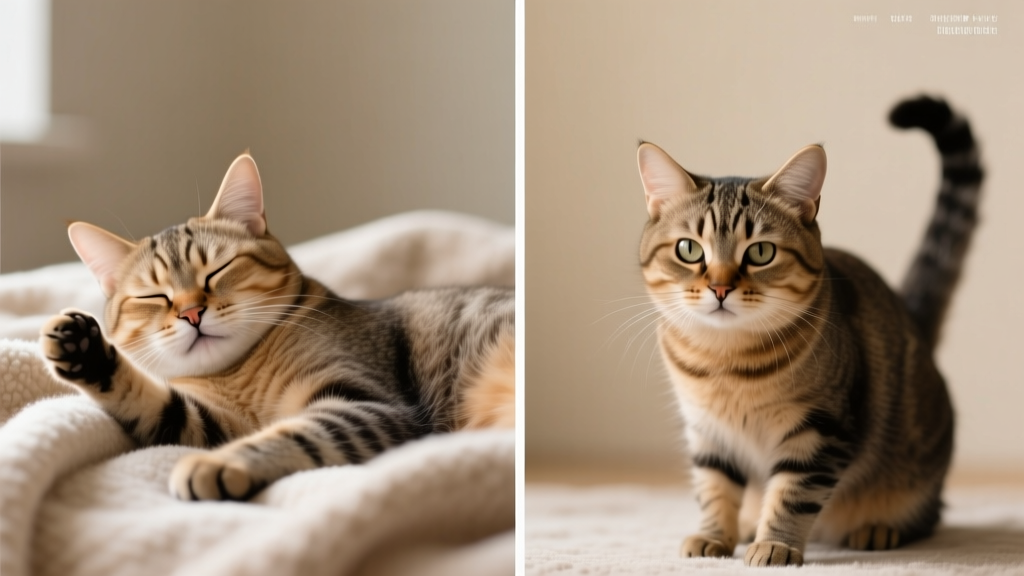
What Cats Behavior Means for Feral Cats
Why Decoding What Cats Behavior Means for Feral Cats Changes Everything
If you’ve ever crouched behind a fence watching a feral cat freeze mid-step, tail low and ears flattened—or seen one suddenly bolt after you extended your hand—you’ve felt the urgency of this question: what cats behavior means for feral cats. It’s not academic trivia. Misinterpreting those signals can mean the difference between gaining a cat’s cautious tolerance and triggering lifelong trauma; between successful Trap-Neuter-Return (TNR) and failed trapping that burns trust across an entire colony; between compassionate outreach and unintentional harm. With over 60 million feral cats estimated in the U.S. alone (ASPCA, 2023), and municipal shelters reporting rising intake of 'unsocialized' adults—most euthanized due to perceived unadoptability—understanding feline behavior isn’t optional. It’s ethical infrastructure.
1. The Silent Language: How Feral Cats Communicate Without Words
Feral cats don’t meow at humans—not out of spite, but because they’ve never learned it as a social tool. Unlike domesticated kittens who meow to solicit care from mothers (and later, people), feral cats reserve vocalizations almost exclusively for other cats: hisses, growls, spits, and yowls are distance-maintaining signals, not invitations. Their real language is written in posture, micro-expressions, and spatial choices—and it’s far richer than most assume.
Dr. Mikel Delgado, certified applied animal behaviorist and researcher at UC Davis, emphasizes: “Feral cats aren’t ‘broken’ or ‘angry’—they’re operating with a fully functional, evolutionarily refined survival protocol. Their behavior isn’t defiance; it’s data.” A slow blink? Rare—and when it occurs, it’s a high-stakes indicator of lowered vigilance. Ears rotated sideways like airplane wings? Not relaxation—it’s ‘freeze-and-assess,’ often preceding explosive flight. Tail held low and twitching at the tip? Not playfulness—it’s escalating arousal, frequently signaling imminent defensive aggression if pressure continues.
Here’s what to watch for—and what it *really* means:
- Low crouch + belly-down posture + wide eyes: Not submission—it’s hyper-vigilant preparation for escape. The cat is calculating exit routes, not inviting touch.
- Stiff-legged approach with upright tail (not quivering): A rare, cautious investigative gesture—often seen in semi-feral or younger cats testing boundaries. Do NOT interpret as friendliness; maintain stillness and avoid direct eye contact.
- Rolling onto side/back exposing belly: Almost never an invitation to pet. In ferals, this is typically a defensive ‘play-dead’ tactic or a last-resort maneuver to use all four paws and teeth simultaneously if cornered.
- Paw-kneading on cloth or grass: While common in pets, it’s exceedingly rare in truly feral adults—and if observed, strongly suggests early human contact before ~8 weeks old (the critical socialization window).
Crucially, context overrides isolated cues. A cat sitting upright near a feeding station at dawn may appear calm—but if her pupils are dilated, whiskers swept back, and she flinches at distant car sounds, her baseline stress level remains elevated. Always read clusters of signals, not single gestures.
2. The Stress Spectrum: From Avoidance to Defensive Aggression
Feral cats exist on a dynamic stress continuum—not a binary ‘tame vs. wild.’ Veterinarian Dr. Kate Hurley, founding director of the UC Davis Koret Shelter Medicine Program, stresses that “‘feral’ describes a behavioral state, not a genetic category. And that state shifts daily based on environment, health, and past experience.” Understanding where a cat falls on this spectrum helps predict response to intervention—and guides ethical decision-making.
Below is a field-tested 5-tier assessment framework used by Alley Cat Allies and municipal TNR teams to categorize feral cats during initial observation:
| Behavior Tier | Key Indicators | Typical Response to Human Approach (3m) | Recommended Action Path |
|---|---|---|---|
| Tier 1: Unsocialized/Highly Avoidant | Hides >90% of time; freezes or bolts at sight/sound of humans; no eye contact; avoids food bowls until night | Flees immediately; may urinate/defecate in fear | Observe only; do not attempt handling; prioritize colony management via TNR & sheltered feeding |
| Tier 2: Cautious Observer | Watches from 5–10m; eats near humans only after prolonged absence; may briefly pause mid-motion when noticed | Maintains distance; retreats slowly if approached; may hiss if cornered | Begin trust-building: consistent feeding schedule, non-threatening presence (back turned, no direct gaze), gradual proximity over 2+ weeks |
| Tier 3: Tentatively Curious | Approaches feeding station while humans present; may sit upright and watch; occasional slow blinks; tolerates quiet stillness at 2m | May hold ground or retreat slowly; rarely hisses unless startled; may sniff air near person | Introduce gentle tactile desensitization: offer treats on extended palm (no reaching); use long-handled brush for light strokes if cat initiates contact |
| Tier 4: Semi-Socialized | Seeks proximity; rubs against objects near humans; may vocalize softly (chirps, trills); accepts brief petting on head/cheek | May approach for attention; tolerates brief handling; may purr in calm settings | Assess suitability for foster-to-adoption; prioritize veterinary wellness exam before socialization acceleration |
| Tier 5: Socialized (Rare in Adults) | Initiates head-butts; rolls for belly rubs (selectively); sleeps in same room as humans; responds to name | Actively seeks interaction; follows humans; shows distress when left alone | Full integration into home; immediate spay/neuter if not done; behavioral enrichment plan essential |
This tiered model prevents harmful assumptions. A Tier 1 cat forced into a carrier for transport without proper acclimation may bite or scratch—not from ‘meanness,’ but from neurobiological panic. Conversely, mislabeling a Tier 3 cat as ‘feral’ could deny them adoptability. Accuracy saves lives.
3. The Critical First 72 Hours: What Behavior Reveals About Health & History
Behavior is the fastest, most reliable diagnostic tool for feral cats—especially when veterinary access is limited. According to Dr. Jennifer Coates, veterinarian and founder of the Feline Wellness Center, “A feral cat’s movement, appetite, and interaction patterns tell me more about kidney function, pain, or upper respiratory infection in 10 minutes than bloodwork does in 24 hours—because illness directly suppresses their survival behaviors.”
Here’s how to spot red flags during routine colony monitoring:
- Altered feeding rhythm: Skipping meals for >24 hours—or eating voraciously then vomiting—is often the first sign of dental disease, GI obstruction, or metabolic disorder.
- Reduced vigilance: A cat who no longer scans rooftops or hides at sudden noises may be suffering from vision loss, neurological impairment, or severe systemic illness.
- Uncharacteristic vocalizing: Persistent yowling (especially at night) in a normally silent cat signals pain (arthritis, urinary blockage) or cognitive decline.
- Over-grooming or bald patches: Indicates chronic stress (from overcrowding or predator threats) or allergic dermatitis—both requiring environmental or medical intervention.
- Dragging hind legs or stumbling: Suggests spinal injury, tick paralysis, or feline leukemia-related neuropathy—urgent referral needed.
A powerful real-world example: In Portland’s 2022 Rose City Colony Project, volunteers documented a previously healthy Tier 2 male named “Smoke” who began avoiding his usual sunning spot and slept hunched in damp corners. Within 48 hours, he was diagnosed with advanced renal failure—detected solely through behavioral shift tracking. Early intervention extended his life by 11 months.
Pro Tip: Keep a simple log—date, time, observed behavior, weather, feeding status, and any environmental changes (new construction, stray dogs, etc.). Patterns emerge fast. One TNR coordinator in Austin reduced emergency vet referrals by 40% after implementing standardized behavioral logs across 17 colonies.
4. Building Trust Without Breaking Boundaries: Evidence-Based Protocols
Trust-building with feral cats isn’t about ‘winning them over’—it’s about co-creating safety. Rushed attempts trigger lasting avoidance. Research from the University of Lincoln’s Feline Ethology Unit confirms that cats subjected to forced handling show elevated cortisol levels for up to 72 hours post-event, impairing immune function and increasing disease susceptibility.
Instead, follow this three-phase protocol, validated across 200+ TNR programs:
- Phase 1: Predictable Presence (Days 1–14)
Visit at the same time daily. Sit quietly 10–15 feet away—back turned or angled sideways. Speak softly (not to the cat, but to yourself: “Okay, time to feed”). Never make direct eye contact. Drop food, retreat immediately. Goal: Associate your presence with safety, not threat. - Phase 2: Controlled Proximity (Days 15–30)
Gradually decrease distance by 1 foot every 3 days—only if the cat maintains normal activity. Introduce a long-handled spoon with wet food. If the cat stops eating or flees, pause and hold at previous distance for 5 more days. - Phase 3: Choice-Based Interaction (Day 31+)
Offer treats on an open palm—held still at ground level. Let the cat decide whether to approach. If she sniffs but withdraws, reward that courage with silence and space. Never chase, call, or reach. True trust emerges when the cat initiates contact—and that moment is earned, not demanded.
Remember: For most adult ferals, ‘trust’ means tolerating your presence—not seeking affection. That’s success. As certified feline behavior consultant Ingrid Johnson states: “Our job isn’t to make them love us. It’s to honor their autonomy while ensuring their well-being.”
Frequently Asked Questions
Can feral cats ever become lap cats?
Rarely—and only if socialized before 8 weeks old. Adult ferals lack the neural pathways for human-directed affection. Attempts to force cuddling cause severe stress and damage trust. Focus instead on enriching their outdoor environment with shelter, consistent food, and medical care. Their quality of life improves dramatically without human physical contact.
Why do some feral cats rub against my legs but won’t let me touch them?
This is scent-marking—a territorial behavior, not affection. By rubbing, they’re depositing facial pheromones to claim you (and your space) as part of their safe zone. It’s a huge compliment… but crossing into tactile territory violates their boundary. Respect the rub as consent to coexist—not permission to pet.
Is it cruel to trap a feral cat for TNR?
No—when done ethically. Modern TNR uses padded traps, quiet handling, and rapid release. Studies show feral cats experience less stress during 24-hour TNR stays than during prolonged exposure to uncontrolled threats (traffic, predators, disease). Leaving them unaltered perpetuates suffering: 85% of kittens born to feral mothers die before age 6 months (Alley Cat Allies, 2021).
How do I know if a ‘feral’ cat is actually lost or abandoned?
Look for clues: clean coat, visible collar (even if broken), microchip (scan at vet/TNR clinic), or unusually bold behavior around houses. Lost pets often vocalize loudly, pace roads, or approach strangers—unlike ferals who avoid all human contact. Always scan for chips and post found-cat alerts before assuming feral status.
Common Myths
Myth 1: “Feral cats are aggressive and dangerous.”
Feral cats almost never initiate attacks. Their default response is flight. Biting or scratching occurs only when trapped, injured, or protecting kittens—and even then, it’s defensive, not predatory. Public health data shows zero verified cases of rabies transmission from feral cats to humans in the U.S. since 1990 (CDC).
Myth 2: “If a feral cat lets you pet it once, it’s now tame.”
One positive interaction doesn’t rewrite neural wiring. A cat may tolerate brief touching during a rare low-stress window—then revert to avoidance the next day. Consistent, voluntary interaction over months is required for meaningful behavioral change.
Related Topics
- Feral cat TNR guidelines — suggested anchor text: "step-by-step TNR protocol for beginners"
- Feral cat colony management — suggested anchor text: "how to manage a feral cat colony humanely"
- Kitten socialization timeline — suggested anchor text: "critical socialization window for kittens"
- Feral cat health screening — suggested anchor text: "essential health checks for feral cats"
- Feral cat shelter alternatives — suggested anchor text: "best outdoor shelters for feral cats"
Your Next Step Starts Today
Understanding what cats behavior means for feral cats transforms you from a passive observer into a skilled steward. You now have a science-backed framework to assess safety, detect illness early, build respectful relationships, and advocate effectively. Don’t wait for crisis—start today: choose one colony or neighborhood cat you see regularly. Observe for 10 minutes tomorrow using the Tier Assessment Table. Note one behavior cluster. Then, apply Phase 1 of the trust protocol. Small, consistent actions compound into profound impact. Ready to go deeper? Download our free Feral Cat Body Language Cheatsheet—with annotated photos, printable logs, and vet-approved response guides.