What Cats Behavior Means for Indoor Cats
Why Understanding What Cats Behavior Means for Indoor Cats Is Your #1 Priority Right Now
If you’ve ever watched your indoor cat stare blankly at a wall, suddenly sprint at 3 a.m., or avoid the litter box without explanation—you’re not alone. But here’s the critical truth: what cats behavior means for indoor cats is rarely random or ‘just weird.’ It’s a nuanced, species-specific language shaped by evolution, environment, and unmet needs. Unlike outdoor cats—who self-regulate through hunting, territory patrol, and social negotiation—indoor cats rely entirely on us to interpret their signals and adjust their world accordingly. Ignoring these cues doesn’t just cause frustration; it fuels chronic stress, which studies link to urinary tract disease (FLUTD), overgrooming, aggression, and even shortened lifespans. In fact, a 2023 Journal of Feline Medicine & Surgery study found that 68% of behavior-related vet visits involved indoor-only cats exhibiting symptoms rooted in environmental mismatch—not illness.
The Truth Behind Common Indoor Cat Behaviors (and What They Really Signal)
Most cat owners misread key behaviors because they project human emotions onto feline actions—or worse, assume cats ‘should adapt’ to apartment life. But cats don’t adapt—they accommodate until they can’t. Let’s decode what’s really happening:
- Purring ≠ Always Contentment: While kittens purr to bond with mom, adult cats purr when injured, anxious, or in labor. Dr. Sarah Heath, a European Veterinary Specialist in Behavioural Medicine, confirms: ‘Purring is a self-soothing mechanism—like humming while nervous. If your cat purrs while hiding, trembling, or flattened ears, it’s likely distress—not bliss.’
- Slow Blinking = Trust, Not Sleepiness: A slow, deliberate blink is a cat’s ‘I see you and I’m safe.’ When returned, it builds rapport. One shelter study showed cats who received reciprocal slow blinks were adopted 40% faster—proof this gesture functions as genuine social bonding.
- Scratching Furniture ≠ Disobedience: It’s scent-marking (via facial and paw glands), muscle stretching, and claw maintenance. Banning scratching without offering alternatives triggers redirected stress—often manifesting as inappropriate elimination or aggression.
- Bringing You ‘Gifts’ (toys, dead bugs, socks): This is a teaching behavior—not guilt or submission. Your cat sees you as an inept hunter and is attempting to train you. Punishing this kills trust; rewarding calm interaction reinforces safety.
Your Indoor Cat’s Behavioral Blueprint: The 4 Pillars of Environmental Enrichment
Veterinary behaviorists—including those at the American Association of Feline Practitioners (AAFP)—agree: every indoor cat needs predictable access to four non-negotiable pillars. Without them, ‘odd’ behavior isn’t quirky—it’s a cry for help.
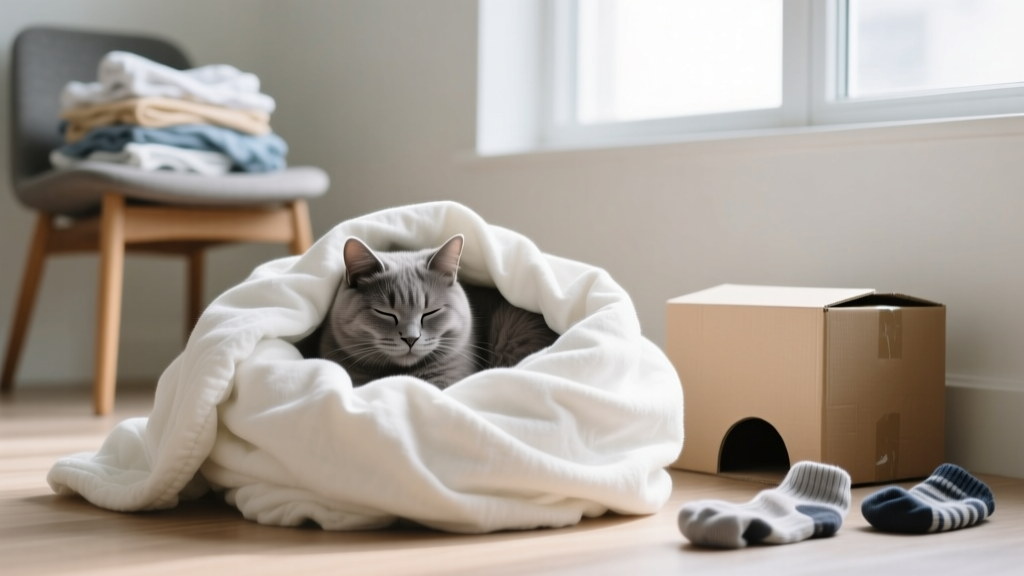
- Safe Havens: Cats need vertical space (cat trees, shelves) and enclosed hideouts (covered beds, cardboard boxes with one entrance). A 2022 Cornell Feline Health Center survey found cats with ≥3 elevated resting spots showed 52% lower cortisol levels than those with only floor-level bedding.
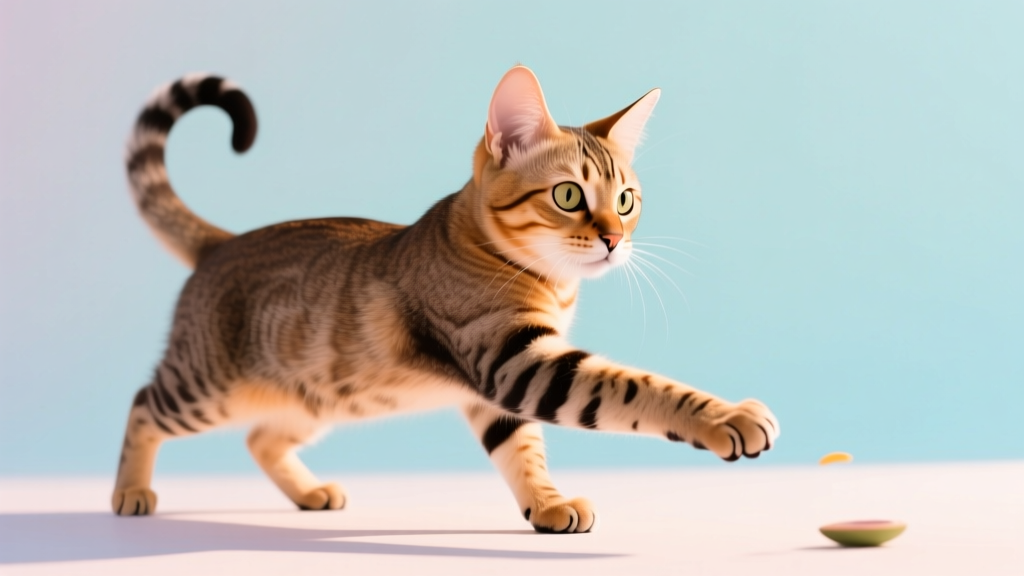
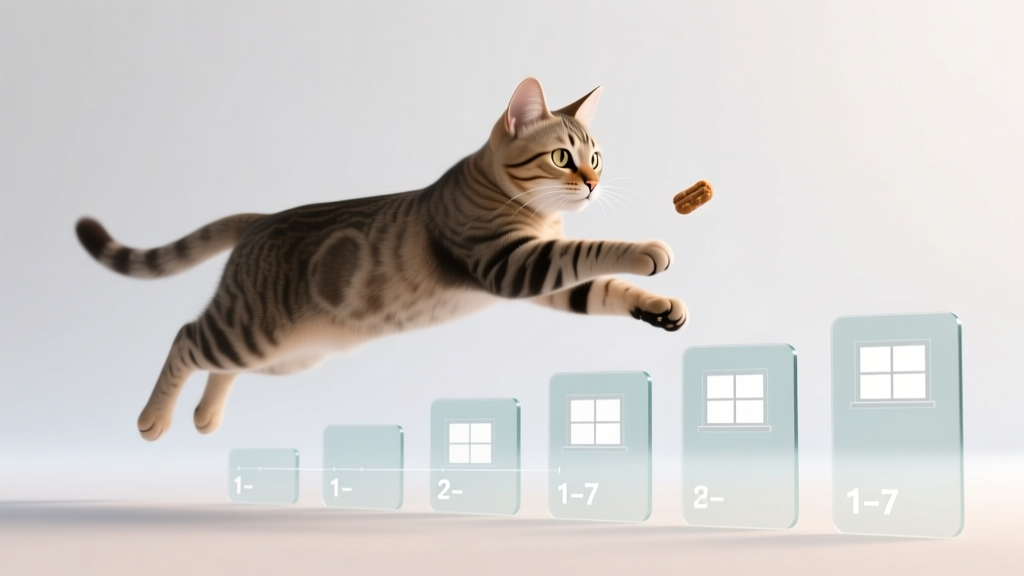
- Hunting Simulation: Daily 15-minute ‘prey sequence’ play sessions using wand toys mimic stalking-chasing-pouncing-killing. Skipping this leads to pent-up predatory energy—released as midnight zoomies or attacking ankles.
- Controlled Social Interaction: Not all cats crave petting—but all need choice. Offer chin scratches *only* when they rub against your hand first. Withdraw immediately if ears flatten or tail thumps. Forced affection spikes stress hormones.
- Consistent Routine & Predictability: Feed, play, and clean litter boxes at the same times daily. Sudden changes—even switching food brands—trigger anxiety. As Dr. Tony Buffington, DVM, PhD, notes: ‘Cats are time-place-event learners. Disrupt one variable, and the whole system wobbles.’
When ‘Normal’ Behavior Crosses Into Red-Flag Territory
Some behaviors seem harmless until they escalate. Here’s how to spot early warnings—and intervene before veterinary intervention is needed:
- Litter Box Avoidance: First rule out UTIs or arthritis (get urine tested!), but if medical causes are cleared, examine location, cleanliness, and substrate. Did you move the box? Add a lid? Place it near a noisy washer? 87% of cases resolve with environmental tweaks—not medication.
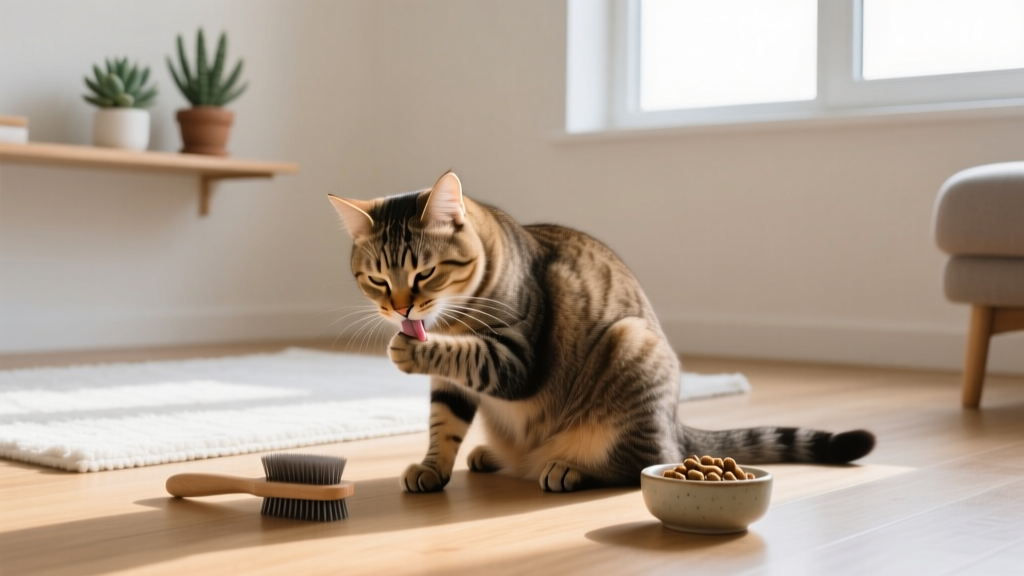
- Excessive Grooming (especially belly/legs): Look for bald patches or skin irritation. This often signals anxiety—not allergies. Try Feliway diffusers + scheduled play before grooming peaks (typically dawn/dusk).
- Aggression Toward Owners: Never assume ‘play aggression’ if bites break skin or target faces/hands. Record videos—vets now use them to distinguish fear-based vs. overstimulation triggers. A certified feline behaviorist can create a desensitization plan in under 3 weeks.
- Staring at Walls/Windows for >10 Minutes: Could indicate hyperesthesia (neurological sensitivity) or visual hallucinations from hypertension. Senior cats especially need blood pressure checks—silent hypertension affects 1 in 3 cats over age 12.
Behavior Decoding Table: What Your Cat’s Actions Really Mean & Exactly What to Do Next
| Action | Most Likely Meaning | Immediate Action | Long-Term Fix |
|---|---|---|---|
| Kneading with Paws (‘making biscuits’) | Comfort-seeking from kittenhood; indicates deep security or mild anxiety relief | Offer soft blanket or heated pad; gently stroke head if cat leans in | Ensure consistent safe spaces; add pheromone diffuser in primary resting zone |
| Tail Held Straight Up with Quiver | Excitement or greeting—often during joyful reunions | Return with slow blink + gentle chin scratch | Build positive associations: greet with treat *after* quiver occurs (reinforces behavior) |
| Chattering at Windows | Frustration from blocked predatory drive—not boredom | Redirect with laser pointer (followed by tangible toy ‘kill’) within 10 seconds | Add bird feeder *outside* window + indoor hunting games 2x/day |
| Suddenly Hiding for >24 Hours | Pain, fear, or acute stress (e.g., new pet, loud noise, illness) | Check for injuries, temperature, litter box use; offer food/water nearby | Install camera to monitor; consult vet if hiding persists beyond 48 hours |
| Rolling Onto Back (with relaxed limbs) | Extreme trust—inviting belly rub *only if* tail is still, eyes soft | Respect boundaries: pet only chest/cheeks unless cat nudges your hand | Never force belly access—this erodes trust permanently |
Frequently Asked Questions
Why does my indoor cat bite me gently during petting?
This is called ‘petting-induced aggression’—not anger, but sensory overload. Cats have ultra-sensitive nerve endings; stroking beyond their tolerance threshold feels painful. Watch for warning signs: tail flicking, skin twitching, flattened ears, or sudden stillness. Stop *before* biting starts. Shorter, gentler sessions focused on head/cheeks work best. According to Dr. Mikel Delgado, Certified Cat Behavior Consultant, ‘If your cat tolerates 30 seconds, start with 20—then gradually build up only if she initiates more.’
Is it normal for my indoor cat to ignore me for days?
Yes—if your cat eats, uses the litter box, plays occasionally, and shows no signs of illness, this reflects natural feline independence—not rejection. Cats are facultatively social: they choose interaction on their terms. Forcing attention (picking up, cornering) increases avoidance. Instead, sit quietly nearby reading—let them approach. Most re-engage within hours when they feel safe.
My cat stares at me intensely—does that mean something bad?
Not necessarily. A soft, unblinking stare with slow blinks means ‘I love you.’ A hard, dilated-pupil stare with rigid posture may signal fear or resource guarding (e.g., food bowl). Context matters: Is it during mealtime? Near a new object? Observe body language holistically—ears forward = curiosity; ears back = tension. When in doubt, give space and observe.
How do I know if my cat’s behavior change is medical vs. behavioral?
Rule out illness first. Any sudden shift—lethargy, appetite loss, vocalizing at night, litter box accidents, or aggression—requires veterinary evaluation. Bloodwork, urinalysis, and blood pressure screening catch hidden issues like kidney disease, hyperthyroidism, or dental pain. Only after medical clearance should you explore environmental causes. As the AAFP states: ‘No behavior is purely behavioral until medicine says so.’
Can indoor cats get depressed?
While ‘depression’ isn’t a clinical diagnosis in cats, they absolutely experience chronic stress and anhedonia (loss of pleasure in previously enjoyed activities). Signs include excessive sleeping, disinterest in toys, reduced grooming, and social withdrawal. Enrichment, routine, and sometimes anti-anxiety medication (under vet guidance) reverse this. A landmark 2021 study in Applied Animal Behaviour Science showed 79% of chronically withdrawn cats regained engagement within 6 weeks of structured enrichment plans.
Common Myths About Indoor Cat Behavior
- Myth #1: “Cats don’t need companionship—they’re solitary animals.”
Reality: While cats aren’t pack animals like dogs, they form complex social bonds—especially with humans and other cats they’ve chosen. Feral colonies show cooperative kitten-rearing and shared territory defense. Loneliness manifests as vocalization, destructive behavior, or over-grooming. - Myth #2: “If my cat eats and uses the litter box, they’re fine.”
Reality: Many stressed cats mask symptoms until crisis. A 2020 UC Davis study found cats with chronic low-grade stress had normal appetites and litter habits—but elevated cortisol and immune suppression. Subtle cues (avoiding eye contact, avoiding favorite spots, tense posture) matter more than basic function.
Related Topics (Internal Link Suggestions)
- Indoor Cat Enrichment Ideas — suggested anchor text: "12 science-backed indoor cat enrichment ideas"
- Best Litter Boxes for Multi-Cat Households — suggested anchor text: "litter box solutions for indoor cats"
- How to Introduce a New Cat Safely — suggested anchor text: "stress-free cat introduction guide"
- Signs of Pain in Cats (Often Missed) — suggested anchor text: "hidden cat pain symptoms"
- Feline Hyperesthesia Syndrome Explained — suggested anchor text: "why does my cat twitch and bite itself?"
Conclusion & Your Next Step
Understanding what cats behavior means for indoor cats transforms you from a passive observer into an empathetic cohabitant. Every tail flick, ear twitch, and vocalization is data—not drama. You now know how to read the signals, respond with precision, and proactively shape an environment where your cat thrives—not just survives. Don’t wait for problems to escalate. Your next step: Pick ONE behavior from the decoding table above that’s been puzzling you—and implement its ‘Immediate Action’ today. Then, this week, add one long-term fix (e.g., install a shelf, schedule daily play, or test a new litter box location). Small, consistent adjustments compound into profound well-being. And if uncertainty remains? Consult a certified feline behaviorist—not just a trainer. Their expertise is backed by ethology, not opinion. Your cat’s silent language is worth learning. Start listening.