Cat Behavior Risks: Vet-Reviewed Red Flags (2026)
Why Ignoring 'What Cat Behaviors Risks' Could Cost Your Cat Their Health — Or Your Peace of Mind
If you've ever asked what cat behaviors risks you should take seriously — whether it's your senior cat suddenly hiding for days, your usually affectionate kitten biting without warning, or your indoor-only cat frantically scratching at windows at 3 a.m. — you're not overreacting. You're noticing the earliest, most critical signals that something is off. Unlike dogs, cats mask pain and anxiety with chilling efficiency — a survival instinct that makes them masters of silent suffering. That means what looks like 'just being a cat' could actually be a cry for help: an undiagnosed urinary blockage, early-stage dementia, environmental stress triggering self-harm, or even neurological dysfunction. In fact, a 2023 study published in Journal of Feline Medicine and Surgery found that 68% of cats brought to emergency clinics for acute illness had exhibited at least one 'subclinical behavior change' in the prior 7–14 days — changes owners dismissed as 'normal quirks.' This article cuts through the myth of feline inscrutability and gives you a clinically grounded, vet-vetted framework to assess, prioritize, and respond to risky behaviors — before they become crises.
The 4 High-Risk Behavior Categories (And Why They’re More Urgent Than You Think)
Not all odd cat behaviors carry equal weight. Veterinarians and feline behavior specialists group concerning actions into four escalating categories based on frequency, duration, intensity, and physiological correlation. Understanding this hierarchy helps you triage — and avoid both panic and dangerous complacency.
1. Sudden Aggression Toward Humans or Other Pets
This isn’t about play-biting or territorial swats — it’s unprovoked, intense, or escalating aggression that breaks trust. A cat who used to tolerate handling but now hisses, lunges, or bites when touched near the lower back may be experiencing painful arthritis or spinal nerve irritation. According to Dr. Sarah Lin, DVM, DACVB (Diplomate of the American College of Veterinary Behaviorists), "Sudden onset aggression in cats over age 5 is the #1 behavioral red flag for underlying pain — especially dental disease, osteoarthritis, or hyperthyroidism. It’s rarely 'just personality.'" Real-world example: Luna, a 9-year-old domestic shorthair, began attacking her owner’s ankles every time she walked past the bedroom door. A full physical exam revealed severe periodontal disease causing chronic oral pain — the doorway triggered anticipation of toothbrushing, which she associated with discomfort. After dental extractions and pain management, the attacks stopped within 72 hours.
2. Elimination Outside the Litter Box — Especially With Posturing or Straining
When your cat urinates or defecates outside the box *while assuming abnormal postures* (e.g., squatting for >30 seconds without producing urine, vocalizing while straining, or repeatedly entering/exiting the box), this is a medical emergency — not a training issue. Urinary obstruction in male cats can be fatal within 24–48 hours. Even in females, recurrent inappropriate elimination is strongly linked to interstitial cystitis (a stress-induced bladder inflammation) or kidney disease. A landmark 2022 Cornell Feline Health Center survey showed that 83% of cats diagnosed with chronic kidney disease displayed litter box avoidance *before* bloodwork abnormalities appeared — often by 2–4 months.
3. Persistent Hiding, Withdrawal, or Social Detachment
Cats rest a lot — but true withdrawal is different. It’s when your cat stops greeting you at the door, abandons favorite sunspots, avoids eye contact, or hides for >12 consecutive hours without emerging to eat, drink, or use the litter box. This signals profound distress: pain, fear, cognitive decline, or depression. In senior cats (11+ years), hiding combined with vocalization at night is a hallmark of feline cognitive dysfunction syndrome (CDS). Dr. Lin notes: "We used to call it 'old cat syndrome.' Now we know it’s neurodegenerative — and early intervention with environmental enrichment and medication can slow progression by up to 40% in clinical trials."
4. Repetitive, Self-Destructive, or Disoriented Behaviors
This includes excessive licking leading to bald patches (psychogenic alopecia), tail-chasing, head-bobbing, walking in circles, staring at walls, or getting 'stuck' in corners. While some repetition is normal (e.g., kneading), these patterns become dangerous when they interrupt sleep, eating, or grooming — or cause injury. A 2021 study in Veterinary Record linked compulsive grooming in indoor cats to chronic stress from insufficient vertical space, lack of predatory outlets, and unpredictable household routines. One case study followed 'Mittens,' a 3-year-old rescue who developed bilateral forelimb hair loss after moving to an apartment with no window perches and two barking dogs next door. Environmental restructuring — adding three-tiered cat trees, scheduled interactive play with wand toys, and white noise machines — reduced licking episodes by 92% in 6 weeks.
Decoding Context: When Is a 'Risky' Behavior Actually Normal?
Not every strange action warrants alarm — and misreading context leads to unnecessary vet bills or delayed care. The key is evaluating behavior through three lenses: Onset (sudden vs. gradual), Consistency (does it happen only around specific triggers?), and Consequence (is it harming the cat, others, or property?). For instance, a cat who occasionally chatters at birds is exhibiting natural predatory drive — but if that chattering escalates into frantic pacing, pupil dilation, and refusal to eat when windows are covered, it points to frustration-induced stress. Similarly, nighttime zoomies are typical for young cats… unless they begin coinciding with vocalizations, disorientation, or accidents — then they may indicate hypertension or early dementia. Always ask: Is this new? Is it worsening? Is it interfering with core functions?
Your Clinical Risk Assessment Table: Prioritize Action Based on Evidence
| Behavior Observed | Urgency Level (1–5) | Most Likely Underlying Cause(s) | Immediate Action Required? | Time-to-Vet Window |
|---|---|---|---|---|
| Straight-leg urination posture + frequent trips to litter box with little/no output | 5 | Urinary obstruction (males), cystitis, urethral spasm | YES — ER IMMEDIATELY | Within 2 hours |
| Sudden biting/scratching during petting (especially flank/back) | 4 | Pain (arthritis, skin allergy, dental), hyperesthesia syndrome | Yes — schedule vet visit & video-record behavior | Within 48 hours |
| Hiding >12 hrs/day + refusing food/water + lethargy | 5 | Pain, infection, organ failure, severe anxiety | YES — urgent vet evaluation | Same day |
| Excessive licking causing hair loss + skin lesions | 3 | Stress, allergies, parasites, pain | Yes — rule out medical causes first | Within 5 business days |
| Staring at walls/vocalizing at night + confusion navigating familiar spaces | 4 | Feline cognitive dysfunction, hypertension, brain tumor (rare) | Yes — senior wellness panel + blood pressure check | Within 72 hours |
| Chasing tail/paws repetitively >20 min/day + ignoring treats/toys | 3 | Compulsive disorder, neurological issue, boredom | Yes — consult vet + certified feline behaviorist | Within 1 week |
Frequently Asked Questions
Can stress really cause life-threatening cat behaviors?
Absolutely — and it’s more common than most owners realize. Chronic stress dysregulates the feline hypothalamic-pituitary-adrenal (HPA) axis, elevating cortisol levels that suppress immunity, exacerbate inflammatory conditions (like cystitis), and accelerate kidney damage. A 2020 University of Edinburgh study tracked 127 stressed indoor cats over 2 years and found those with poor environmental enrichment had a 3.2x higher incidence of lower urinary tract disease and a 2.7x greater risk of developing diabetes mellitus. Stress doesn’t just 'make your cat grumpy' — it rewires physiology.
My cat is 'acting weird' but my vet says 'all labs are normal.' What now?
This is incredibly common — and frustrating. Bloodwork and urinalysis detect many diseases, but not all. Conditions like early-stage osteoarthritis, mild hyperthyroidism (especially in older cats), subtle dental pain, or neurological issues often fly under the radar on standard panels. Request advanced diagnostics: digital radiographs (for joint/spine issues), thyroid scintigraphy, dental X-rays under anesthesia, and a thorough orthopedic exam. Also, ask for a referral to a board-certified veterinary behaviorist — they specialize in linking behavior to invisible medical drivers and can design targeted observation protocols (e.g., home video diaries, activity monitors).
Is it safe to try calming supplements or CBD before seeing a vet?
No — not without veterinary guidance. Many over-the-counter 'calming' products contain ingredients like L-theanine or melatonin that interact unpredictably with medications or mask symptoms of serious illness. CBD oil lacks standardized dosing for cats, and unregulated products may contain harmful contaminants or THC (toxic to felines). Dr. Lin warns: "I’ve treated cats hospitalized for CBD-induced ataxia and liver enzyme elevation. Supplements should never replace diagnostics — they’re adjuncts, used only after ruling out medical causes and under direct supervision."
How do I tell if my cat’s aggression is fear-based vs. pain-based?
Look for body language cues: Fear-based aggression typically includes flattened ears, dilated pupils, low crouching, sideways posturing, and attempts to escape *before* biting. Pain-based aggression often occurs during handling (e.g., picking up, brushing), features rapid, targeted bites without warning, and may include vocalization *during* touch. But here’s the critical nuance: fear and pain frequently coexist. A cat in pain learns to fear human hands — so the aggression becomes both. That’s why professional assessment is essential: a vet must first rule out pain, then a behaviorist addresses learned fear responses.
Will punishing my cat for risky behavior help?
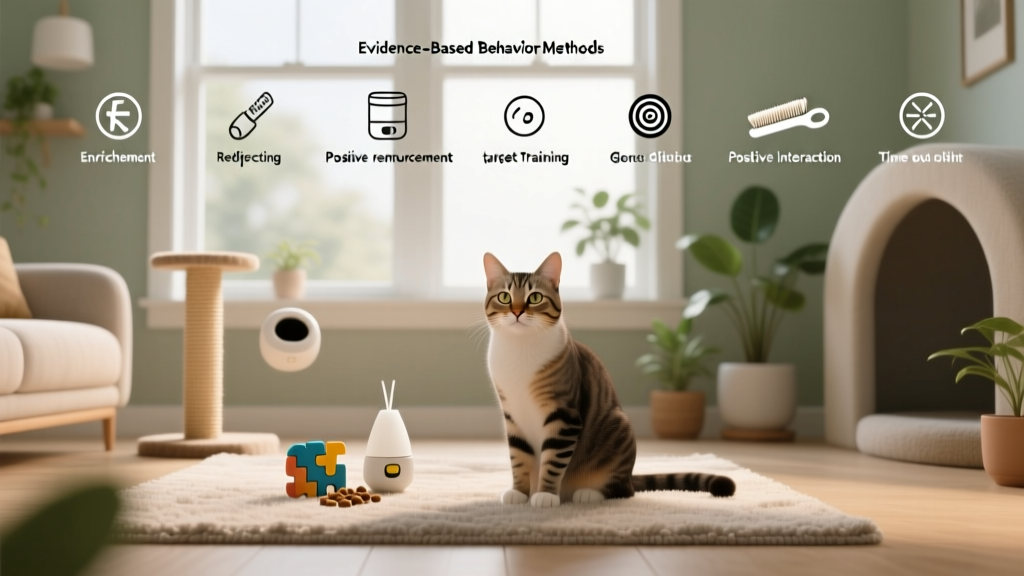
No — punishment is counterproductive and dangerous. Cats don’t associate punishment with the behavior; they associate it with *you*, eroding trust and increasing anxiety. Yelling, spraying water, or tapping the nose can escalate fear-based aggression or trigger redirected aggression toward other pets. Positive reinforcement (rewarding calm, appropriate behavior) and environmental modification (removing triggers, adding resources) are the only evidence-based approaches. As the American Association of Feline Practitioners states: 'Punishment has no role in feline behavior management.'
Debunking 2 Common Myths About Cat Behavior Risks
- Myth #1: “If my cat is eating and using the litter box, they can’t be seriously ill.” — False. Cats with advanced kidney disease, hyperthyroidism, or even certain cancers often maintain appetite and elimination until late stages. Behavioral shifts — decreased interaction, altered sleep cycles, or subtle mobility changes — frequently precede measurable lab abnormalities by weeks.
- Myth #2: “Older cats just get cranky — there’s nothing to do.” — Dangerous oversimplification. While aging brings changes, progressive irritability, confusion, or house-soiling are not inevitable. They’re treatable symptoms of CDS, hypertension, or pain. Studies show 70% of cats with CDS show measurable improvement in orientation and activity with combination therapy (selegiline, environmental enrichment, and antioxidant supplementation).
Related Topics (Internal Link Suggestions)
- Feline Cognitive Dysfunction Symptoms — suggested anchor text: "signs of cat dementia"
- How to Reduce Stress in Indoor Cats — suggested anchor text: "cat anxiety relief tips"
- When to Take Your Cat to the Emergency Vet — suggested anchor text: "cat emergency warning signs"
- Best Litter Box Setup for Senior Cats — suggested anchor text: "arthritis-friendly litter box"
- Understanding Cat Body Language Signals — suggested anchor text: "what does my cat's tail mean"
Conclusion & Your Next Step: Turn Observation Into Protection
Understanding what cat behaviors risks demand attention isn’t about becoming a DIY vet — it’s about becoming your cat’s most vigilant advocate. Every subtle shift in routine, posture, or interaction holds data. By learning to interpret that data through a lens of compassion *and* clinical awareness, you transform uncertainty into empowered action. Don’t wait for a crisis to start observing closely. Tonight, spend 10 minutes watching your cat: note where they choose to rest, how they greet you, how long they groom, whether their eyes track movement smoothly. Then, pick *one* behavior from our risk assessment table that resonated — and commit to documenting it for 48 hours with timestamps and context. If it meets the 'immediate action' threshold, call your vet tomorrow. If not, use that data to build a richer picture of your cat’s baseline — because the most powerful tool in feline healthcare isn’t a stethoscope or blood test. It’s your loving, attentive presence. Start there.