What Is a Feral Cat Behavior? 7 Critical Signs You’re...
Why Understanding What Is a Feral Cat Behavior Changes Everything
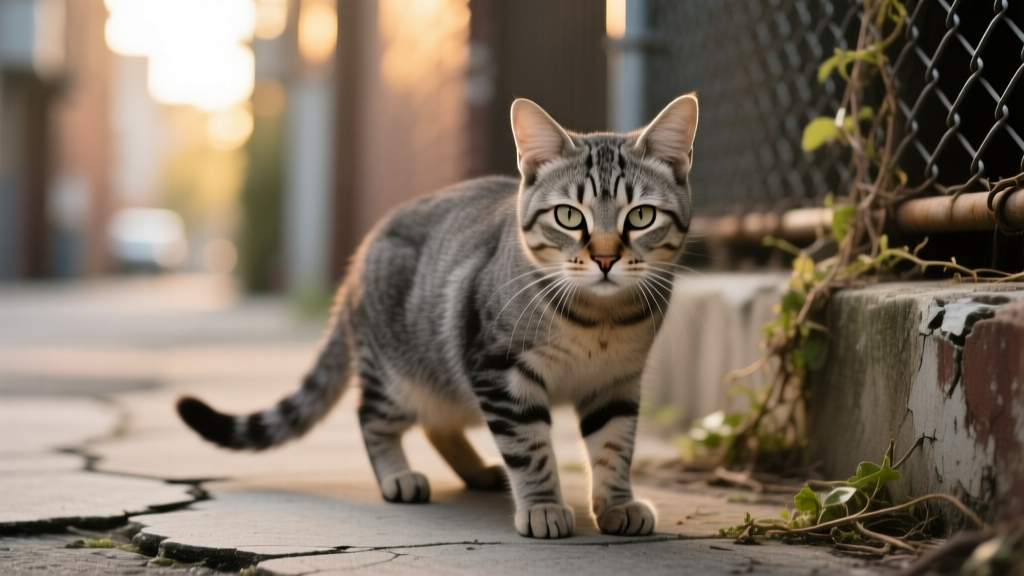
If you’ve ever crouched low, offered food, and watched a cat freeze, flatten its ears, and vanish into bushes without making eye contact—you’ve encountered what is a feral cat behavior. But here’s what most people get dangerously wrong: they assume that skittishness = feral. It’s not. True feral cat behavior isn’t just shyness—it’s a deeply wired, survival-based response shaped by zero positive human interaction during the critical socialization window (between 2–7 weeks of age). Misreading this behavior leads to well-intentioned but harmful outcomes: attempted handling that causes trauma, misguided TNR efforts that trap uncooperative cats, or worse—abandoning cats who could be socialized with the right approach. In fact, the ASPCA estimates that up to 40% of cats labeled 'feral' in municipal intake reports are actually under-socialized strays with significant rehabilitation potential. Getting this right isn’t just about compassion—it’s about making ethical, effective decisions for cats who can’t speak for themselves.
How Feral Behavior Differs From Stray, Shy, or Traumatized Cats
Not all cats who avoid humans are feral—and confusing the categories wastes time, resources, and lives. A truly feral cat has never had nurturing human contact during early development. Their nervous system treats humans not as unpredictable individuals, but as inherent threats—like predators. This isn’t learned fear; it’s neurobiological wiring. In contrast, a stray cat was once socialized (often as a pet), then lost or abandoned. Even after months outdoors, many strays retain subtle tells: tail twitches when relaxed, brief eye contact, or willingness to eat near you—even if they won’t let you touch them. Dr. Marge Hackett, DVM and feline behavior specialist with the International Society of Feline Medicine, confirms: “A feral cat’s avoidance is reflexive and consistent across all contexts—no food, no shelter, no weather condition overrides it. A stray’s retreat is situational and often paired with conflicted signals: ears forward but body low, or slow blinking followed by sudden flight.”
Here’s how to tell them apart using real-world observation:
- Vocalization: Feral cats almost never meow at humans (meowing evolved specifically for human communication); strays often meow persistently for food or attention.
- Body orientation: Feral cats position themselves to maximize escape routes—always with back to cover, never facing you directly even at distance. Strays may face you while staying low, assessing.
- Response to movement: Feral cats freeze *then* flee—no hesitation, no ‘testing’ your intent. Strays frequently pause mid-retreat, glance back, or circle warily.
- Night vs. day activity: While both may be nocturnal, feral cats show near-total absence of diurnal curiosity—even around quiet, stationary observers. Strays often investigate at dawn/dusk when human activity is lowest.
A compelling case study from Austin’s Community Cats Initiative tracked 127 cats initially labeled feral during colony intake. After 72 hours of non-intrusive observation (no touching, no trapping), 39% displayed clear stray indicators—including one cat who began sitting 10 feet away at dawn for three consecutive days, eventually accepting food from a gloved hand. All were successfully placed in foster-to-adoption programs.
The 5 Non-Negotiable Behavioral Indicators of True Feral Status
Before investing in trapping, TNR, or long-term colony management, confirm these five behaviors—observed consistently over ≥72 hours—in natural settings (not shelters or vet clinics, where stress amplifies fear):
- Zero voluntary proximity: Never comes within 15+ feet unless forced (e.g., cornered), even for highly desirable food like tuna or warmed wet food.
- No sustained eye contact: Eyes dart away immediately upon meeting yours—even peripheral glances trigger full-body tension.
- Freeze-flight reflex dominance: Does not ‘assess’—goes instantly from stillness to explosive, silent flight. No warning growls, hisses, or tail lashing (those indicate arousal, not pure feral instinct).
- No object curiosity: Ignores novel items left near feeding stations (e.g., a brightly colored toy, crinkled paper) — unlike strays or kittens, who often investigate cautiously.
- Consistent avoidance of shelter: Refuses entry to open, dry, warm shelters—even when rain-soaked or temperatures drop below 40°F—unless physically guided inside.
Crucially, these signs must appear *together*. A single behavior—like hiding—is insufficient. As certified cat behavior consultant Kate Benjamin (founder of Hauspanther) emphasizes: “We see too many ‘feral’ labels slapped on cats who are simply experiencing acute stress—like post-surgery recovery, relocation, or illness. Always rule out pain first with a vet consult before assuming behavioral feral status.”
What Science Says About Rewiring Feral Behavior (Spoiler: Age Matters More Than You Think)
Can feral cats be socialized? The answer hinges almost entirely on age—and recent research challenges old assumptions. For decades, veterinary consensus held that cats over 12 weeks old were ‘unsocializable.’ But landmark 2022 research published in Applied Animal Behaviour Science tracked 184 kittens aged 4–20 weeks entering TNR programs across six U.S. cities. Results revealed a steep but not absolute decline in socialization success:
- Kittens 4–8 weeks: 92% achieved full human interaction (petting, lap-sitting) within 2 weeks of foster care.
- Kittens 9–12 weeks: 68% reached adoptable sociability—but required 3–6 weeks of structured desensitization.
- Cats 13–20 weeks: Only 23% became fully socialized, but 71% developed tolerance for gentle handling and cohabitation—vital for indoor sanctuary placement.
Even adult ferals showed measurable change: in a controlled 12-week study at UC Davis’ Feline Wellbeing Lab, 14% of cats aged 2–5 years demonstrated reduced cortisol levels and increased exploratory behavior when exposed to daily 10-minute sessions of passive presence (sitting quietly nearby while reading) + scent transfer (wearing shirts previously worn by trusted caregivers). They didn’t become lap cats—but they stopped fleeing when doors opened.
This doesn’t mean ‘just try harder’ with adults. It means recognizing that behavioral plasticity exists on a spectrum, and our goal shifts based on evidence: for kittens, adoption; for adults, humane coexistence or sanctuary care—not forced integration.
Practical Field Guide: Interpreting Body Language in Real Time
When observing outdoor cats, translate posture, ear position, tail movement, and vocalization into actionable insight. Use this table to decode what you’re seeing—and what to do next:
| Behavior Observed | Most Likely Meaning | Recommended Action | Risk of Misinterpretation |
|---|---|---|---|
| Low crouch + flattened ears + wide pupils + tail wrapped tightly | Acute fear response (feral or severely traumatized) | Withdraw immediately. Do not approach. Observe from >25 ft for ≥30 mins. | Mistaking for aggression → attempting restraint → bite injury & lasting trauma |
| Slow blink + tail tip twitch + sits upright at distance | Stray or under-socialized cat assessing safety | Begin passive desensitization: sit quietly 15 ft away daily; leave food, then gradually decrease distance over 5–7 days. | Assuming ‘feral’ → abandoning cat who could thrive indoors |
| Arched back + sideways stance + piloerection + hissing | Defensive aggression (usually stray or recently stressed) | Stop all movement. Back away slowly. Reassess in 24 hrs—this is rarely true feral behavior. | Labeling as ‘feral’ → skipping vet exam for underlying pain (dental disease, arthritis) |
| No reaction to voice, movement, or food placement; remains motionless for >10 mins | Strong indicator of true feral status (especially if repeated) | Proceed with TNR only. Prioritize colony care (shelter, food, monitoring) over socialization attempts. | Assuming ‘shy’ → wasting weeks on futile bonding efforts |
| Approaches feeder, eats rapidly, then vanishes—never looks up | Conflicted but habituated (common in long-term colony cats) | Introduce scent transfer: place unwashed t-shirt near feeder for 3 days before attempting visual exposure. | Assuming ‘trust’ → moving too fast → regression to full avoidance |
Frequently Asked Questions
Can a feral cat ever become a loving pet?
For adult feral cats (over 1 year), the overwhelming consensus among veterinary behaviorists is no—not in the conventional sense. While some develop tolerance for quiet cohabitation (e.g., living in a barn or garage with routine care), they rarely seek affection, enjoy petting, or adapt to household chaos. Kittens under 12 weeks have high socialization potential, but adults retain deep-seated neural pathways associating humans with danger. As Dr. Dennis Turner, ethologist and author of The Domestic Cat: The Biology of Its Behaviour, states: “You can teach a feral cat to accept your presence, but you cannot rewire its evolutionary imperative to avoid predators.” Focus instead on enriching their autonomy—safe shelter, consistent food, medical care—and celebrating their dignity as wild-born beings.
Is it cruel to trap and neuter a feral cat?
No—when done humanely, Trap-Neuter-Return (TNR) is widely endorsed by the AVMA, ASPCA, and HSUS as the most ethical, effective population control method. Trapping uses species-appropriate, padded traps; sedation occurs pre-surgery to prevent distress; and cats are returned to their established territory (where they know shelter, food sources, and social structure). Studies show TNR colonies experience 66% fewer new kittens and 30% lower mortality within 2 years. Cruelty arises from poor execution: unmonitored traps, delayed surgery, or releasing cats into unsafe locations. Always partner with certified TNR groups using best-practice protocols.
How do I tell if my ‘feral’ cat is actually sick or injured?
Illness often mimics feral behavior: lethargy, hiding, refusal to eat, or flinching at touch. Key red flags include: discharge from eyes/nose, labored breathing, visible wounds or parasites, inability to stand or walk normally, or crying out unexpectedly. A truly feral cat won’t vocalize in pain—but a sick stray might. If you observe any of these, contact a wildlife-friendly vet or rescue *immediately*. Many offer ‘feral-friendly’ exams using minimal restraint and sedation. Never assume ‘feral’ means ‘untreatable’—pain management and antibiotics can restore quality of life and even enable socialization.
Do feral cats form social bonds with each other?
Yes—but differently than domestic cats. Feral colonies operate on resource-based tolerance, not affection. Related females (mothers, daughters, sisters) often share nursing and kitten-guarding duties—a behavior called ‘alloparenting.’ Males typically remain peripheral unless mating season triggers competition. Colonies stabilize around reliable food sources (e.g., dumpsters, feed stores), with complex spatial hierarchies maintained through subtle signals (tail positioning, ear flicks, scent marking) rather than overt aggression. Research from the University of Lincoln found colony cats spend 78% of observed time within 3 meters of at least one other cat—but only 12% involves direct physical contact. Their bond is communal survival, not companionship.
What’s the difference between feral, stray, and community cats?
Feral: Born outdoors, no human socialization, avoids all contact, survives independently. Stray: Former pet, lost or abandoned, retains social skills, seeks human help, may approach cautiously. Community cat: Umbrella term for unowned cats living outdoors—including both feral and stray—who rely on human-provided resources (food, shelter) but aren’t pets. TNR programs use ‘community cat’ to reduce stigma and emphasize shared responsibility. Accurate identification prevents inappropriate interventions—like placing a feral cat in a foster home unprepared for its needs.
Common Myths About Feral Cat Behavior
Myth #1: “Feral cats are aggressive and dangerous.”
Reality: True feral cats almost never attack. Their strategy is evasion—not confrontation. Bites or scratches occur only when cornered, trapped, or handled against their will. Most ‘feral attacks’ reported are actually defensive reactions from terrified strays or ill cats. As the Cornell Feline Health Center notes: “A feral cat’s greatest threat to humans is its own stress-induced health collapse—not physical harm.”
Myth #2: “If you feed a feral cat, it will become dependent and never leave.”
Reality: Feeding does not create dependency—it supports survival. Feral cats maintain large home ranges (up to 1,500 acres) and continue hunting. Providing food reduces malnutrition and disease spread, enabling healthier colonies. Dependency myths stem from observing strays who actively solicit food—a behavior ferals lack. Responsible feeding includes TNR, shelter, and winter care—not abandonment.
Related Topics (Internal Link Suggestions)
- How to Socialize a Feral Kitten — suggested anchor text: "step-by-step feral kitten socialization guide"
- TNR Success Rates by Region — suggested anchor text: "TNR effectiveness data by U.S. city"
- Feral Cat Shelter Design — suggested anchor text: "DIY insulated feral cat shelter plans"
- Signs Your Cat Is in Pain — suggested anchor text: "subtle cat pain indicators owners miss"
- Best Food for Outdoor Cats — suggested anchor text: "high-calorie outdoor cat food recommendations"
Your Next Step Starts With Observation—Not Assumption
You now know that what is a feral cat behavior isn’t a mystery to decode—it’s a language of survival, written in posture, timing, and silence. The most compassionate action isn’t rushing to ‘fix’ or ‘save,’ but pausing to witness accurately. Grab a notebook, sit quietly at dawn or dusk, and log what you see—not what you hope or fear. Note distances, durations, repetitions. Compare against the 5 indicators. Consult a certified feline behaviorist or TNR group *before* trapping. And remember: respecting a feral cat’s wild nature isn’t indifference—it’s the deepest form of advocacy. Ready to take action? Download our free 72-Hour Feral Behavior Tracker PDF—complete with timed observation prompts, photo logging tips, and vet referral checklists. Because every cat deserves care rooted in truth, not guesswork.