What Cat Behavior Means for Indoor Cats
Why Decoding What Cat Behavior Means for Indoor Cats Is Your #1 Welfare Priority Right Now
If you’ve ever watched your indoor cat stare blankly at a wall, suddenly sprint through the house at 3 a.m., or gently boop your nose with a paw—and wondered what cat behavior means for indoor cats—you’re not overthinking. You’re noticing the first signals of a species wired for complexity, confined to simplicity. Indoor cats live 2–3x longer than outdoor cats—but that longevity comes with a hidden cost: chronic understimulation, unmet predatory needs, and misinterpreted communication that fuels anxiety, urinary stress syndrome, and destructive habits. Unlike dogs, cats rarely ‘act out’ without cause; their behaviors are precise, context-dependent signals. And because indoor environments lack natural outlets—no hunting, no territory patrol, no scent-marking on safe perimeters—those signals get amplified, distorted, or suppressed. In fact, a 2023 Cornell Feline Health Center study found that 68% of behavior-related vet visits involved indoor-only cats exhibiting stress-induced behaviors mislabeled as ‘bad habits.’ This isn’t about training—it’s about translation. Let’s decode what your cat is truly saying.
The Silent Language: How Indoor Cats Communicate When Words Aren’t an Option
Cats don’t have a spoken language—but they have one of the most nuanced nonverbal communication systems in the animal kingdom. For indoor cats, every twitch, blink, tail flick, and posture shift carries layered meaning. But here’s the catch: many signals evolved for outdoor survival, so they’re easily misread in four walls. Take slow blinking—the ‘cat kiss.’ Most owners think it’s just relaxation. While true in low-stress contexts, slow blinking *also* serves as a de-escalation signal during mild tension (e.g., when a new pet enters the room). If your cat blinks slowly *while staring directly at you*, it’s offering trust—not just dozing off.
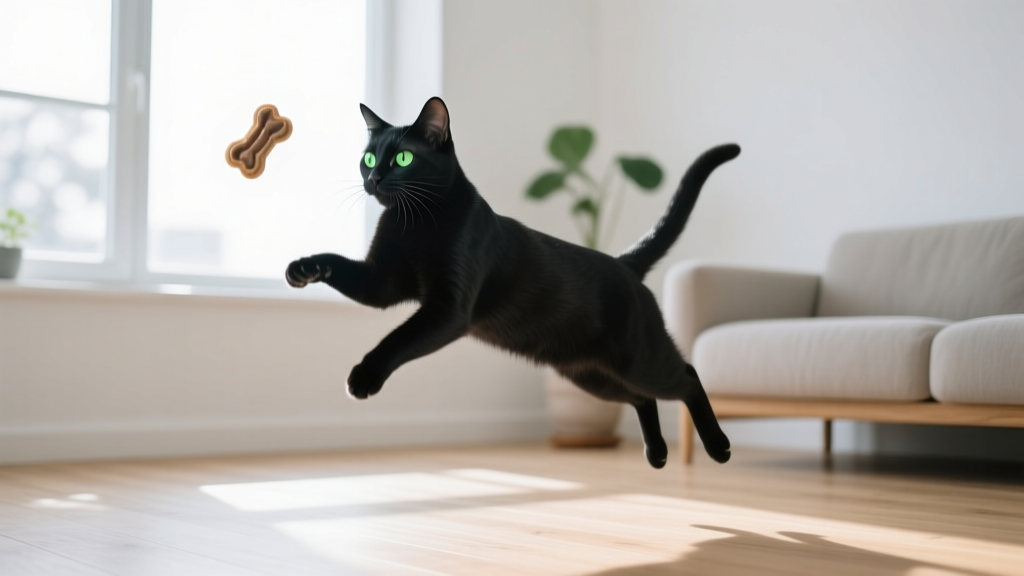
Then there’s the infamous ‘zoomies’—those 2 a.m. hallway sprints. Contrary to popular belief, this isn’t ‘crazy energy.’ It’s a truncated hunt sequence: stalk → chase → pounce → kill → eat → groom. Indoor cats rarely complete the full cycle. Without prey simulation (like wand toys that mimic erratic movement), they substitute with self-directed bursts—often triggered by pent-up predatory drive, not excitement. Dr. Sarah Hargrove, certified feline behaviorist and co-author of The Indoor Cat Ethogram, explains: ‘Zoomies aren’t random. They’re neurologically urgent. Suppress them long enough, and that energy reroutes into redirected aggression or overgrooming.’
One underrecognized cue? Ear position combined with pupil size. Forward ears + dilated pupils = high alert—possibly fear or fascination. But flattened ears + constricted pupils? That’s active threat assessment, often preceding a swat or bite. Many owners mistake this for ‘playful grumpiness,’ when it’s actually a last-resort warning before defensive action.
Stress Signals Disguised as ‘Normal’: The 5 Behaviors You’re Ignoring
Indoor cats mask distress masterfully—a survival adaptation that backfires in captivity. What looks like ‘just being a cat’ may be a silent SOS. Here are five high-frequency behaviors with clinical significance:
- Overgrooming limited to one area (e.g., inner thigh or belly): Often linked to localized pain (like bladder inflammation) or psychogenic alopecia. A 2022 Journal of Feline Medicine & Surgery study tied unilateral overgrooming to early-stage interstitial cystitis in 74% of cases.
- Sitting perfectly still for >15 minutes, eyes half-closed, tail wrapped tightly: Not rest—it’s freeze response. Common in multi-cat homes where subtle hierarchy stress exists but no overt conflict occurs.
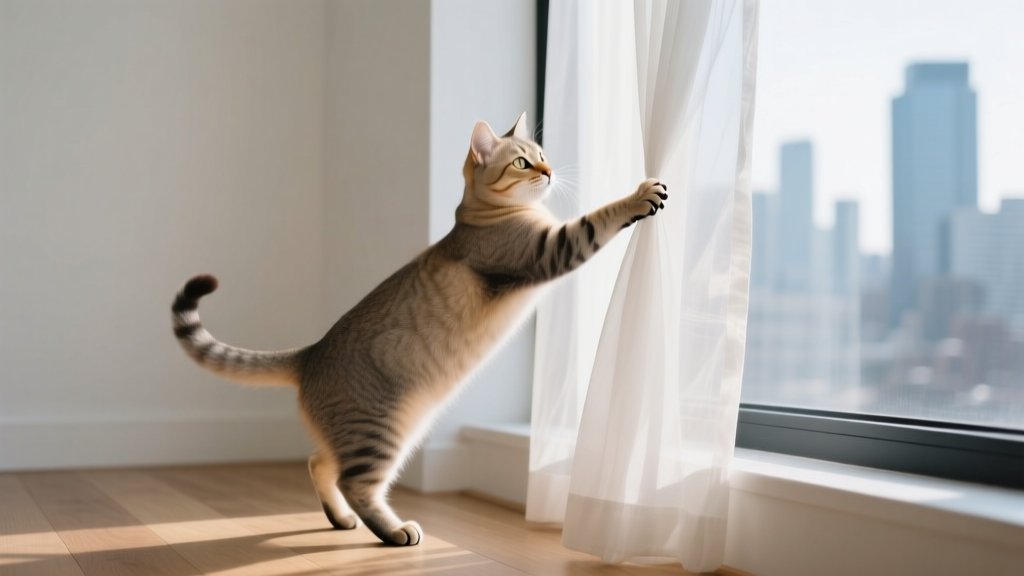
- Scratching vertical surfaces *only* near doors or windows: This isn’t ‘sharpening claws.’ It’s territorial marking via scent glands in paw pads—especially potent when visual access to outdoor stimuli (birds, squirrels) triggers frustration.
- Bringing ‘gifts’ (toys, socks, even hair ties) to your bed: This mimics maternal behavior. In kittens, it signals security-seeking. In adults, it’s often a request for shared safety—particularly after environmental changes (new furniture, work-from-home schedule shifts).
- Chattering at windows with rapid jaw movements: Long thought to be ‘frustration noise,’ new research from the University of Lincoln shows chattering correlates with increased salivary amylase—a stress biomarker—suggesting it’s a physiological release valve, not just vocalization.
Key takeaway: Context is everything. A single behavior isn’t diagnostic—but patterns across time, location, and triggers reveal truth. Keep a 7-day ‘Behavior Log’ (time, duration, antecedent, your action, outcome). You’ll spot trends no vet can see in a 12-minute exam.
From Confusion to Connection: 3 Science-Backed Translation Frameworks
Stop guessing. Start mapping. These frameworks, used by certified cat behavior consultants, turn observation into insight:
- The 3-Tier Motivation Filter: Ask, in order: Is this driven by survival (hunger, pain, fear), social (bonding, hierarchy, attention), or stimulation (boredom, predatory drive, sensory need)? Example: Kneading blankets isn’t ‘just cute’—it’s stimulation-seeking (mimicking kitten nursing) *unless* it happens right after vet visits (then it’s social comfort-seeking).
- The Environmental Audit: Map your home like a feline habitat planner. Note: vertical space (cat trees, shelves), escape routes (under beds, closets), resource placement (litter boxes far from food/water?), and sensory inputs (windows with bird traffic, HVAC vents creating drafts). Dr. Mikel Delgado, feline researcher at UC Davis, emphasizes: ‘Cats don’t adapt to our homes—they adapt *within* them. If we don’t design for their needs, their behavior adapts *for us*—often in ways we dislike.’
- The Time-of-Day Decoder: Indoor cats retain crepuscular rhythms (most active at dawn/dusk). Behavior spikes during these windows are rarely ‘problematic’—they’re biologically appropriate. Redirect, don’t suppress. Try interactive play sessions 20 minutes before sunrise and sunset to satisfy the hunt sequence.
Case in point: Luna, a 4-year-old Siamese mix, began urinating outside her litter box exclusively on the bathroom rug. Her owner assumed ‘spite.’ An environmental audit revealed the rug was placed directly under a skylight—creating intense midday heat and glare. Luna associated the bathroom with sensory overload. Moving the rug and adding a shaded, low-entry litter box in a quiet closet resolved it in 3 days. No medication. No punishment. Just translation.
What Cat Behavior Means for Indoor Cats: A Practical Interpretation Table
| Observed Behavior | Most Likely Meaning (Indoor Context) | Immediate Action Step | Long-Term Strategy |
|---|---|---|---|
| Excessive kneading on soft fabrics | Self-soothing due to mild anxiety or unmet tactile needs | Offer warm, textured blankets + gentle stroking *only if cat initiates contact* | Introduce daily ‘tactile enrichment’: crinkle balls, faux-fur tunnels, or brushing with a soft rubber mitt |
| Staring intently at walls or corners | Visual tracking of insects, dust motes, or shadows—or auditory detection of rodents/house sounds | Check for pests; add white noise machine if high-frequency sounds suspected | Provide visual enrichment: bird feeder outside window, fish tank (with cover), or rotating ‘window perch’ views |
| Bringing toys to food bowl | Resource guarding instinct activated by proximity of ‘valuable items’ (toys = prey surrogates) | Separate play zones from feeding zones by ≥6 feet | Use puzzle feeders *during* play to merge hunting + eating, satisfying both drives simultaneously |
| Low-pitched growling while being petted | Overstimulation threshold reached—not aggression, but neurological saturation | Stop petting immediately; offer chin scratch *only if cat rubs head against hand* | Train ‘consent-based petting’: 3-second strokes, pause, read body language—repeat only if cat leans in |
| Urine marking on vertical surfaces | Perceived territorial threat (new pet, visitor, construction noise) or hormonal signaling (if intact) | Rule out UTI with vet visit; use Feliway diffusers in marked areas | Implement ‘resource gradient’: multiple litter boxes (n+1 rule), elevated perches near entry points, consistent routine |
Frequently Asked Questions
Why does my indoor cat bite me gently during petting?
This is called ‘love biting’—but it’s less about affection and more about communication. Cats have a finite tolerance for tactile input. Gentle biting signals ‘I’m done,’ especially if preceded by tail flicking, flattened ears, or skin twitching. Never punish it. Instead, end petting *before* the bite occurs—watch for micro-signals like slowed purring or stiffening. Over time, you’ll learn their personal ‘petting quota.’
Is it normal for my indoor cat to ignore me for hours then demand attention?
Yes—and it’s healthy. Cats are facultative socializers, meaning they choose interaction on their terms. Ignoring you isn’t rejection; it’s autonomy. What *isn’t* normal: sudden withdrawal lasting >48 hours, loss of appetite, or hiding during daylight hours. Those signal pain or illness—not moodiness.
My cat knocks things off shelves constantly. Is this just mischief?
No. It’s object play fulfilling predatory sequence: bat → capture → examine. Indoor cats lack natural targets, so household items become substitutes. Provide ethical alternatives: treat-dispensing balls, feather wands with unpredictable movement, or cardboard boxes with holes for ‘ambush play.’ Boredom-driven knocking decreases 70% with 15 minutes of structured daily play (per ASPCA guidelines).
Why does my cat stare at me without blinking?
Unblinking stares are low-level threat displays—especially if combined with forward ears and direct eye contact. In feline language, prolonged direct gaze equals challenge. To diffuse: slowly blink, look away, then offer a chin scratch. This mirrors their peace-offering behavior and resets the interaction.
Do indoor cats get depressed?
They don’t experience clinical depression like humans, but they *do* develop ‘behavioral despair’—a state of learned helplessness from chronic understimulation or unresolved stress. Signs include apathy, reduced play, excessive sleeping (>20 hrs/day), and loss of curiosity. Enrichment isn’t optional; it’s neurological maintenance. As Dr. Tony Buffington, DVM and feline welfare expert, states: ‘A bored cat isn’t lazy. It’s suffering from sensory starvation.’
Common Myths About Indoor Cat Behavior
Myth #1: “Cats are solitary animals—they don’t need interaction.”
Reality: Domestic cats evolved from social colonies of African wildcats. While less dependent than dogs, they form complex, fluid social bonds—with humans and other cats. Studies show indoor cats with daily interactive play exhibit 42% lower cortisol levels than solitary-housed peers.
Myth #2: “If my cat eats and uses the litter box, they’re fine.”
Reality: These are baseline survival functions—not indicators of psychological well-being. A cat can have perfect health markers while experiencing chronic stress that manifests as subtle behavior shifts: avoiding certain rooms, grooming changes, or altered sleep cycles. Wellness includes emotional equilibrium.
Related Topics (Internal Link Suggestions)
- Indoor cat enrichment ideas — suggested anchor text: "12 science-backed indoor cat enrichment ideas that reduce stress"
- How to stop cats from scratching furniture — suggested anchor text: "how to stop cats from scratching furniture without declawing"
- Signs of stress in cats — suggested anchor text: "9 subtle signs of stress in cats you're probably missing"
- Best litter boxes for indoor cats — suggested anchor text: "best litter boxes for indoor cats based on feline behavior research"
- Cat body language guide — suggested anchor text: "cat body language guide: what tail flicks, ear positions, and pupil size really mean"
Conclusion & Next Step
What cat behavior means for indoor cats isn’t a mystery—it’s a dialogue waiting for translation. Every paw tap, slow blink, and midnight sprint is data. Your role isn’t to correct it, but to comprehend it. Start tonight: pick *one* behavior from this article that resonates, observe it for 48 hours using the 3-Tier Motivation Filter, and adjust *one* environmental factor. Small translations compound into profound trust. Ready to go deeper? Download our free Indoor Cat Behavior Tracker (PDF)—a printable log with expert prompts and interpretation cues. Because when you understand what your cat is saying, you don’t just own a pet. You steward a relationship rooted in mutual respect—and that’s the highest form of care.