Why Cats Sit on the Mudroom Storage Bench
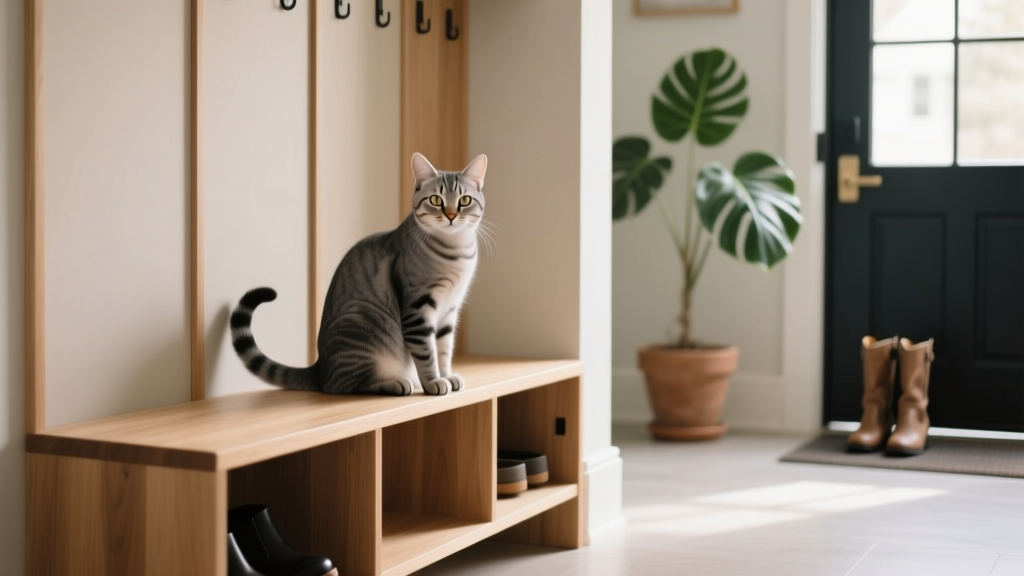
You’re trying to leave the house. Shoes half-on, keys in hand, maybe a tote bag sliding off your shoulder. And there’s your cat—perched like a tiny, whiskered gatekeeper on the mudroom storage bench. Not on the couch. Not on the cat tree. Not even on the sunny window ledge. The bench. The spot that forces you to pause, shuffle sideways, or negotiate with a creature who weighs nine pounds but carries the confidence of a bouncer at an exclusive club.
If your cat regularly claims the mudroom bench, you’re not alone—and your cat isn’t being random. That bench sits at the intersection of scent, traffic, routine, and security. In cat language, it’s an information hub… and sometimes, a stage.
1) The Scientific (and Evolutionary) “Why” Behind the Bench Habit
Cats are both predators and prey in evolutionary terms. That dual role shaped a brain that’s always scanning: “Where’s the best vantage point? What’s changing? Who’s coming in? Who’s leaving?”
A mudroom is a high-change zone. It’s where:
- New scents arrive (shoes, packages, backpacks, guests).
- Outdoor information enters the home (wind, rain, pollen, neighborhood animals).
- People move in predictable patterns (leave in the morning, return later).
The storage bench is often the perfect cat perch: slightly elevated, stable, and positioned to monitor the doorway. From an evolutionary lens, that’s prime territory—high-value information with low effort. Your cat can keep tabs on the “colony” (you), scan for potential intruders (delivery people, dogs outside), and soak up the scent story of the day.
2) A Detailed Breakdown: Different Reasons Cats Choose the Mudroom Bench
Same behavior, different motivations. Here are the most common “bench meanings” I see in real homes.
It’s a lookout post (a.k.a. “I run border patrol”)
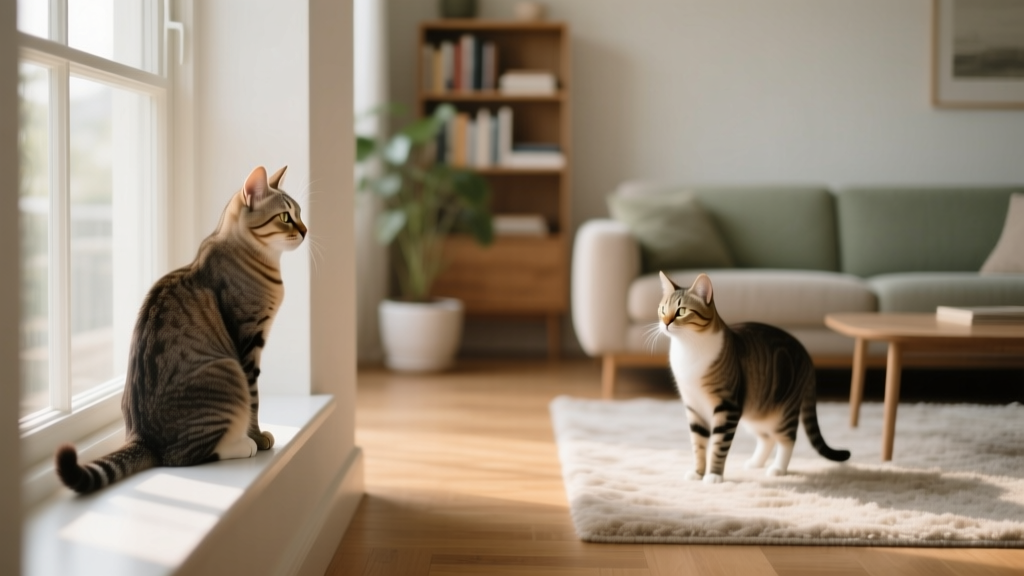
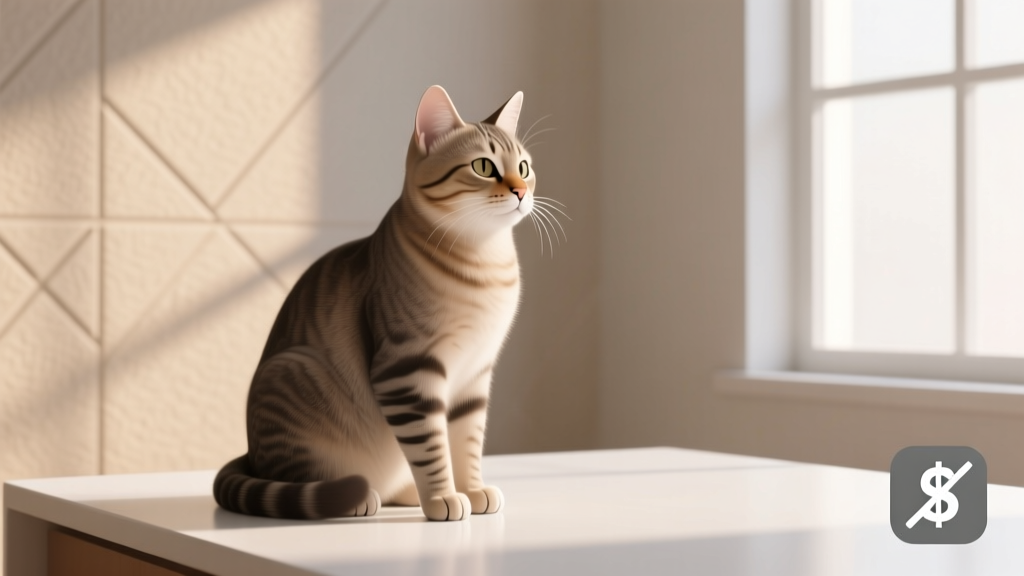
If the bench faces the door or a window, your cat may be using it as a watchtower. Many cats love elevated spots where they can observe without being approached from behind. In a busy household, the mudroom bench can feel like a controlled, predictable platform—especially if it’s against a wall.
What it looks like: Upright sitting, ears swiveling, eyes tracking small movements, tail wrapped neatly around paws.
It’s a scent checkpoint
Cats experience the world through scent the way we experience it through news and social media: constant updates. Shoes and coats carry strong odor information—where you’ve been, who you stood near, what animals were outside. Sitting on the bench lets your cat “marinate” in those smells and add their own scent, subtly reclaiming the space as part of their territory.
What it looks like: Sniffing shoes, rubbing cheeks on the bench edge, slow blinks, relaxed lounging near your belongings.
It’s a warm (or cool) comfort zone
Mudrooms often have interesting microclimates: a sunny patch at certain hours, warm air from a vent, a cool tile floor nearby on hot days. Benches sometimes hold heat from dryers on the other side of the wall or from sun-warmed wood.
What it looks like: Loaf position (paws tucked), sleepy eyes, choosing the same spot at the same time daily.
It’s a routine anchor
Cats love predictable sequences. If you sit on that bench to put on shoes, your cat may have learned: “Bench time = attention time.” Even if you only pet them occasionally, that tiny reward can reinforce the behavior for weeks.
What it looks like: Your cat appears right when you reach for socks or keys, then positions themselves squarely where you must notice them.
It’s a social strategy (blocking is communication)
Cats aren’t always subtle. Sitting in your path can be an intentional social move: “Pause. Engage. Consider my needs.” This isn’t spite. It’s effective communication that has worked before—especially if you routinely step around them while talking to them, laughing, or petting them.
What it looks like: Direct eye contact, small chirps or meows, tail held upright, a confident posture.
It feels safer than the rest of the house
Some cats choose entryway perches because the flow of the home feels overwhelming elsewhere. If there are kids, dogs, or another cat, the mudroom bench might be a “neutral” zone where your cat can observe without being chased or cornered.
What it looks like: Cat stays on the bench during household bustle, watches other pets carefully, may hop down only when the area is quiet.
3) What the Bench Behavior Says About Your Cat’s Mood
Body language matters more than location. The mudroom bench can be a happy hangout or a stress station depending on posture and expression.
- Relaxed and content: Soft eyes, slow blinks, ears neutral, tail calm. This usually means your cat feels safe and is enjoying the social proximity or the perch.
- Curious and engaged: Forward ears, alert but not stiff, head turns toward new sounds. Your cat is gathering information—normal and healthy.
- Seeking attention: Tail up, weaving around your ankles when you approach, gentle meows. They’ve learned the bench is where you’re most predictable.
- Guarding or anxious: Stiff posture, ears angled sideways or back, wide eyes, tail twitching sharply. This can indicate stress about the doorway, outside animals, or changes in routine.
- Overstimulated: Fast tail flicking, skin ripples, sudden swats if touched. The cat may be “on duty” and not open to petting in that moment.
4) Related Behaviors You Might Also Notice
If your cat loves the mudroom bench, you may see these companion quirks:
- Rubbing cheeks on shoes or bags (depositing friendly facial pheromones).
- Rolling on the mat (scent mixing and comfort behavior).
- “Escorting” you to the door like a tiny security detail.
- Meowing right as you leave (a routine-triggered request: attention, food, or reassurance).
- Sitting on backpacks, coats, or packages (new object = new scent = must be investigated and claimed).
- Darting to the bench when the doorbell rings (high-value event zone).
5) When Sitting on the Bench Is Normal… and When It Might Be a Concern
Most of the time, this is completely normal feline behavior: watchful, curious, and comfort-seeking. But a few scenarios deserve a closer look.
Normal (and adorable)
- Your cat sits there during predictable times (before work, after dinner).
- They look relaxed and move away easily.
- They occasionally nap there and show no signs of stress.
Potential concern
- Obsessive door monitoring: Your cat spends hours rigidly watching the entryway, startles easily, or can’t settle elsewhere.
- New clinginess: A sudden shift—shadowing you at the door, vocalizing more—can signal stress, boredom, or sometimes health changes.
- Aggression around the bench: Swatting when you approach, guarding the spot, or redirecting aggression at another pet.
- Inappropriate urination near the entry: This can be territorial stress (outside cats), anxiety, or medical issues and should be addressed promptly.
If the behavior is new and intense, or paired with changes in appetite, grooming, hiding, or litter box habits, it’s wise to check in with your veterinarian first. Pain and illness can make cats more vigilant, reactive, or “stuck” in certain safe zones.
6) How to Respond (or Encourage It) in a Cat-Friendly Way
If your cat has chosen the mudroom bench as their special spot, you can work with it rather than against it.
Make the bench safely “theirs” (without making it a tripping hazard)
- Add a non-slip mat or small cat blanket so they feel secure and stop sliding when they reposition.
- Provide a designated corner of the bench—cats love clear “my spot” boundaries.
- If possible, position a small cat bed or a low-sided basket on one end.
Turn it into a positive routine
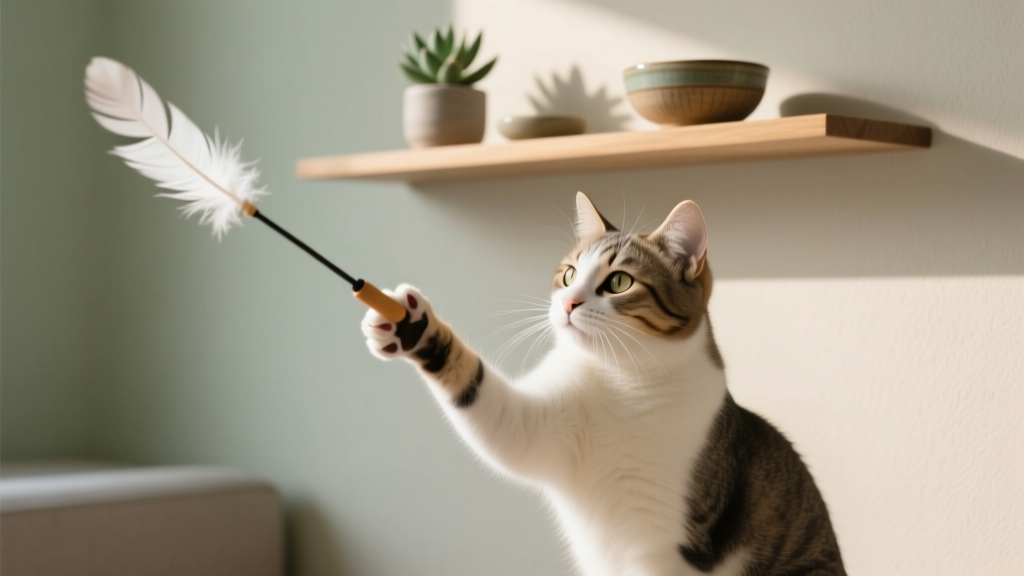
- Offer a single treat or a quick 30-second wand toy session when you arrive home (if your cat enjoys play).
- Use a consistent phrase like “I’m home!” plus a gentle pet, then move on. Predictability is soothing for many cats.
If your cat blocks you when you’re rushing out
- Avoid pushing them with your foot or stepping over them in a way that startles them.
- Teach a simple cue like “Off” by tossing a treat a few feet away, then praising when they move. This keeps the interaction friendly and reduces frustration for both of you.
If the bench is a stress post
- Reduce outside triggers: close blinds at times when neighborhood cats pass, or use frosted window film on lower panes.
- Consider a pheromone diffuser near the entry area if your cat is frequently tense.
- Add alternative perches elsewhere so your cat has more than one “safe lookout.”
7) Fun Facts and Research-Backed Tidbits
- Cats map their world by scent and routine. Entryways are “data-rich” because they’re packed with changing smells from outside.
- Elevated resting spots are a natural preference. Studies and shelter observations consistently find that access to perches helps many cats feel more secure, especially in busier environments.
- Your cat’s face rub isn’t just affection. Cheek rubbing deposits pheromones from facial glands—often associated with comfort and familiarity—essentially labeling an object as safe.
- Cats can learn your departure sequence. Keys, shoes, and coat-grabbing are powerful cues. Some cats show “anticipatory behaviors” (like appearing on the bench) the moment those cues start.
FAQ: Mudroom Bench Cats, Explained
Why does my cat sit on the bench only when I’m leaving?
Leaving cues are very consistent: shoes, keys, the door. Your cat may be responding to routine (predictability), seeking attention, or trying to interrupt the sequence because it leads to separation. Some cats also find the pre-departure moment stimulating—lots of movement, lots of scent.
Is my cat trying to stop me from going out?
Not in a calculated, human way. But your cat may have learned that sitting there reliably gets you to pause, talk, or pet them. If that pause is rewarding, the behavior sticks. It can also be mild separation-related behavior, especially if your cat becomes vocal or clingy.
Why does my cat rub all over my shoes on the bench?
Shoes are scent encyclopedias. Rubbing mixes their scent with yours and marks the area as familiar. It can be comfort-seeking, social bonding, or mild territorial behavior—usually normal.
My cat growls or swats near the mudroom. What’s going on?
This can happen if your cat is stressed by outside animals (seeing a neighborhood cat through the glass) or feels cornered in a high-traffic area. If the reaction is new, frequent, or escalating, look for triggers (windows, doorbell, other pets) and consider a vet check plus a behavior plan.
Should I discourage my cat from sitting on the bench?
Only if it’s unsafe or causing conflict. In most homes, it’s a great opportunity to give your cat a predictable “station” near the door. If you need the space, offer an equally appealing alternative nearby (a stool, a small cat tree, or a wall shelf perch).
Why does my cat choose the bench instead of their expensive cat bed?
The bench wins on location. Cats don’t choose spots based on price; they choose based on information, security, and proximity to their favorite humans. A boring bed in a low-traffic corner can’t compete with the mudroom’s constant updates.
One More Thought: Your Cat’s Bench Is a Conversation
When a cat posts up on the mudroom storage bench, they’re often saying: “This is where the important stuff happens.” It’s scent, routine, security, and social life all bundled into one tidy perch. Once you start reading that behavior as communication instead of inconvenience, the bench becomes less of a battleground and more of a meeting place.
Does your cat supervise shoe-tying, sprawl across backpacks, or insist on being the last thing you see before you leave? Share your mudroom bench stories (and the hilarious rituals that come with them) on catloversbase.com—your cat’s quirky habits might be exactly what another cat owner needs to recognize and understand.