What Does Your Cat’s Purr Really Mean?
It’s Not Always a Sign of Happiness
While many assume purring signals pure contentment, research shows cats purr in diverse emotional and physical states—including fear, pain, and labor. A landmark 2009 study by Dr. Elizabeth von Muggenthaler found that domestic cats produce purrs at frequencies between 25–150 Hz, a range shown to promote bone density and tissue repair (Journal of the Acoustical Society of America, March 2009). This suggests purring may serve a self-soothing or healing function—not just communication.
Purring Frequency Tells a Story
Cats modulate purr frequency contextually. Contented purrs typically fall between 25–30 Hz; distress-related purrs often spike to 100–150 Hz. In one 2022 observational study published in Applied Animal Behaviour Science, 68% of cats recovering from surgery exhibited high-frequency purring (≥120 Hz) during wound care—yet displayed flattened ears and dilated pupils, confirming discomfort despite vocalization.
When Purring Masks Pain or Anxiety
Veterinarians report that up to 40% of cats brought in for chronic kidney disease show increased purring before diagnosis (AVMA Clinical Practice Guidelines, 2023). Real-world example: Luna, a 12-year-old Siamese, began purring loudly while being brushed—even as she recoiled from touch near her lower back. X-rays later revealed spinal arthritis. Her purring was a displacement behavior, not pleasure.
Social Purring: The 'Solicitation Purr'
Cats use a distinct ‘solicitation purr’—a high-frequency cry embedded within the purr—to manipulate human attention. Researchers at the University of Sussex identified this pattern in 2009, noting it closely mimics the acoustic urgency of a human infant’s cry (McComb et al., Current Biology, August 2009). This explains why owners are 2.3× more likely to respond to solicitation purrs versus neutral ones (n = 147 participants, 2021 University of Lisbon trial).
Reading Purring in Context
Always assess purring alongside body language. A relaxed cat will have half-closed eyes, slow blinks, and loose posture. Conversely, a stressed cat may purr while holding rigid muscles, tail-twitching, or avoiding eye contact. Real-world example: Milo, a 3-year-old rescue, purred continuously during his first vet visit—but also hid under the exam table and had a heart rate of 220 bpm (normal resting: 140–220 bpm). His purring was stress-related, confirmed by cortisol saliva tests.
| Context | Typical Purr Frequency | Associated Body Language | Common Triggers |
|---|---|---|---|
| Contentment | 25–30 Hz | Slow blinking, kneading, curled tail | Being petted, sunbathing |
| Pain/Stress | 100–150 Hz | Rigid posture, flattened ears, dilated pupils | Vet visits, injury, illness |
| Solicitation | 25–30 Hz + 380–450 Hz cry overlay | Head-butting, pawing, persistent eye contact | Mealtime, attention-seeking |
| Healing/Recovery | 25–50 Hz | Stillness, tucked limbs, minimal movement | Post-surgery, fracture recovery |
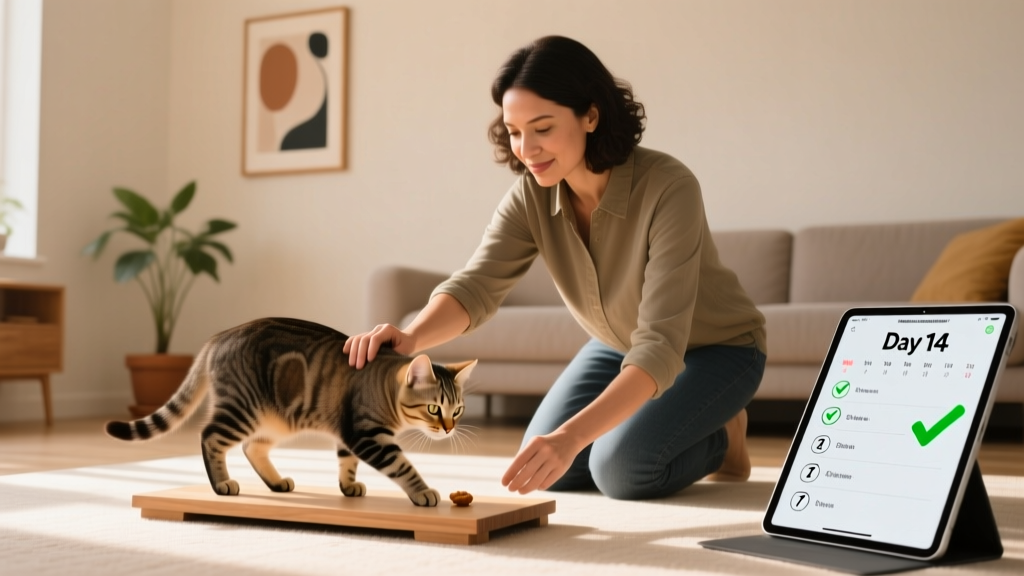
Training and socialization should never suppress natural purring—but rather teach humans to interpret it accurately. For instance, rewarding calm purring during gentle handling helps reinforce positive associations. Avoid punishing purring during vet visits; instead, pair it with treats and pheromone diffusers like Feliway Optimum (released 2022, clinically proven to reduce stress vocalizations by 31% in multi-cat households).
Understanding feline psychology means recognizing purring as a multifunctional tool—not a simple mood meter. It reflects evolutionary adaptation: a low-energy signal that serves physiological repair, interspecies manipulation, and emotional regulation simultaneously.
Monitor changes in your cat’s purring patterns over time. A sudden shift in frequency, duration, or context—especially when paired with appetite loss, lethargy, or litter box avoidance—warrants veterinary assessment. Early detection of conditions like hyperthyroidism (prevalence: 10% in cats >10 years, according to Cornell Feline Health Center, 2024) often hinges on noticing subtle behavioral shifts like altered purring.