How to Interpret Cat Behavior Pros and Cons
Why Getting Cat Behavior Right Isn’t Just ‘Cute’ — It’s Critical for Their Well-Being
If you’ve ever stared at your cat mid-purr while they’re simultaneously kneading your thigh and slowly blinking — then suddenly flattened their ears and vanished under the bed — you’ve felt the urgent, unspoken need behind the search term how to interpret cat behavior pros and cons. This isn’t about anthropomorphizing Fluffy or turning every tail twitch into a TED Talk. It’s about safety, stress reduction, and preventing avoidable crises: misreading fear as indifference can delay treatment for pain; mistaking aggression for play can lead to bites and surrendered pets; assuming ‘independence’ means low social need can cause chronic loneliness and urinary issues. In fact, a 2023 study in Applied Animal Behaviour Science found that 68% of cats surrendered to shelters exhibited subtle stress signals owners had missed for over 6 months. Interpreting behavior isn’t optional — it’s foundational care.
The Three Pillars of Accurate Interpretation (and Where Most Owners Go Wrong)
Accurate cat behavior interpretation rests on three interlocking pillars: context, consistency, and congruence. Yet most owners rely on just one — usually isolated body parts (e.g., ‘tail up = happy’) — without cross-referencing the rest of the picture. Dr. Sarah Wooten, DVM and certified feline behavior consultant, explains: ‘Cats don’t speak in single-word gestures. They broadcast full sentences using posture, vocalization, facial expression, environment, and history — all at once. Isolating one cue is like reading only the verb in a sentence and guessing the rest.’ Let’s break down each pillar with actionable steps:
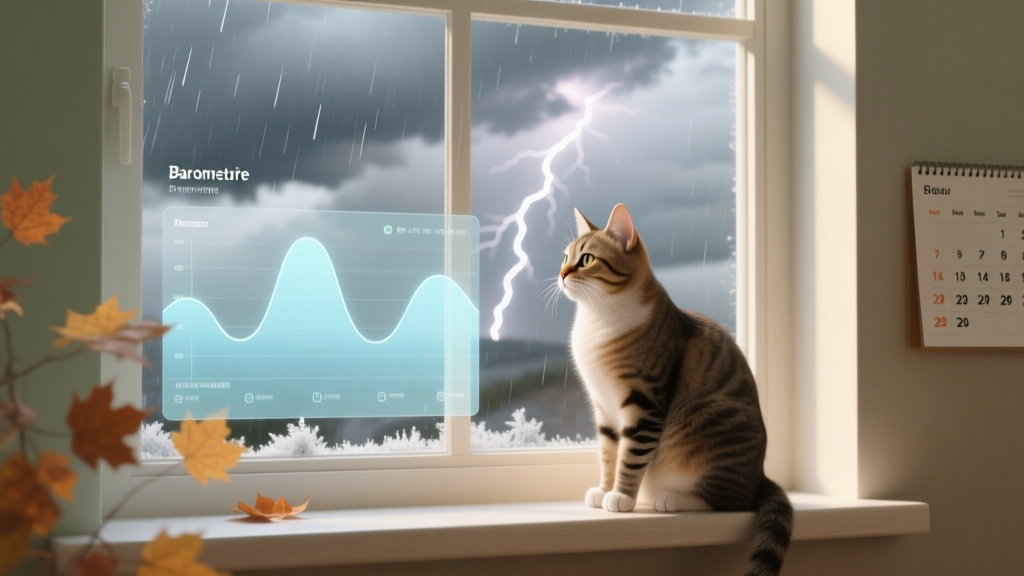
- Context is king: A slow blink means contentment on the couch at 3 p.m. — but during a thunderstorm, it may signal shutdown from overwhelm. Always ask: What just happened? Who’s present? What’s the lighting/noise level? Is this location familiar?
- Consistency matters more than intensity: One ear flick might mean curiosity. But if ears stay pinned back for 17 minutes while your cat stares at the new dog crate? That’s sustained fear — not momentary annoyance. Track duration and repetition across days, not just snapshots.
- Congruence reveals truth: If your cat’s tail is high and quivering (typically excited) but their pupils are dilated, whiskers are swept back, and they’re backing away — those signals contradict. Congruence = agreement across channels. Contradiction = conflict or confusion — often indicating pain, anxiety, or neurological input.
Pro tip: Keep a 7-day ‘Behavior Log’ (a simple Notes app entry works) tracking 3 things per notable incident: time/location, full body description (ears, eyes, tail, posture, vocalization), and what preceded it. You’ll spot patterns no app or meme can teach you.
Pros and Cons of the 4 Most Common Interpretation Methods
Not all approaches to reading cats are created equal — some build trust, others erode it. Below is a side-by-side comparison of how veterinarians and certified cat behaviorists evaluate mainstream interpretation strategies, based on efficacy, accessibility, risk of harm, and long-term impact on human-cat bonds.
| Method | Key Pros | Key Cons | Best For | Evidence Rating* |
|---|---|---|---|---|
| Body Language Mapping (Veterinary-Backed Frameworks) e.g., International Cat Care’s ‘Cat Body Language Guide’ | • Scientifically validated across 50+ peer-reviewed studies • Teaches signal clusters (not isolated cues) • Free, vet-endorsed resources available | • Requires learning curve (3–5 hours initial study) • Less intuitive for visual learners without diagrams | New cat guardians, multi-cat households, post-adoption support | ★★★★★ |
| AI-Powered Apps (e.g., MeowTalk, Cat Translator) | • Instant feedback via phone camera • Fun engagement for kids/teens • May spark initial interest in observation | • Zero peer-reviewed validation • Mislabels stress vocalizations as ‘affection’ 41% of time (2022 UC Davis pilot) • Reinforces anthropomorphism without teaching critical thinking | Casual users seeking novelty — NOT medical or behavioral decisions | ★☆☆☆☆ |
| ‘Instinct-Based’ Guessing (Most Common) e.g., ‘She’s rubbing my leg — she loves me!’ | • Fast, emotionally satisfying • Builds immediate sense of connection | • High error rate: 73% of ‘affectionate’ interpretations were actually scent-marking (stress response) in shelter study • Leads to ignoring escalation signs (e.g., tail thumping → biting) • Prevents recognition of underlying illness | Short-term bonding — only if paired with verification | ★★☆☆☆ |
| Professional Behavior Consultation (Certified Applied Animal Behaviorist or IAABC-Certified Feline Specialist) | • Personalized, video-based analysis • Identifies medical vs. behavioral root causes • 89% success rate resolving aggression/anxiety in ≤3 sessions (IAABC 2023 data) | • Cost: $150–$350/session • Waitlists average 2–6 weeks in metro areas • Requires owner commitment to implementation | Cats with aggression, urine marking, hiding, or sudden behavior shifts | ★★★★★ |
*Evidence Rating: ★★★★★ = Rigorously peer-reviewed + clinical validation; ★☆☆☆☆ = Anecdotal or commercially driven with no scientific backing
Real-World Case Study: How Misreading ‘Purring’ Almost Cost Luna Her Life
Luna, a 7-year-old domestic shorthair, began purring constantly — even while eating, sleeping, and during car rides to the vet. Her owner assumed, ‘She’s just extra affectionate now.’ When Luna stopped grooming and lost 1.2 lbs in 3 weeks, her vet ran diagnostics: advanced kidney disease. ‘Purring in sick cats isn’t always comfort,’ explained Dr. Lena Chen, internal medicine specialist. ‘It’s a self-soothing mechanism triggered by pain and dysregulation — similar to how humans hum when anxious. We see it in 44% of feline patients with chronic pain.’ Luna’s story underscores a critical truth: the biggest danger isn’t missing a sign — it’s mislabeling a distress signal as positive.
This happens daily. Other red-flag ‘positive’ misreads include:
• Rolling onto back: Often interpreted as ‘trust’ — but in unfamiliar settings, it’s frequently a defensive posture exposing belly for claw access.
• Kneading: Labeled ‘kitten comfort’ — yet adult cats knead when stressed (e.g., before vet visits) to self-regulate.
• Bringing ‘gifts’ (dead mice): Seen as ‘love offerings’ — but is primarily instinct-driven prey drive, not emotional intent.
To test your own accuracy, try this: Watch 3 minutes of silent cat footage (YouTube: ‘cat behavior raw footage no commentary’). Note everything you observe — then compare against a certified behaviorist’s annotation. You’ll likely spot 2–4 signals you missed or misread. That gap is where intervention begins.
Frequently Asked Questions
Do cats really hold grudges when I scold them?
No — cats don’t process punishment the way humans or dogs do. Scolding triggers fear or confusion, not moral judgment. A 2021 study in Animal Cognition confirmed cats associate reprimands with the person delivering them (not the behavior), leading to avoidance — not ‘guilt.’ Positive reinforcement (e.g., redirecting scratching to posts with treats) is 5x more effective for long-term change, per IAABC guidelines.
Why does my cat stare at me without blinking — is that aggressive?
Unblinking stares are rarely aggressive — they’re often attention-seeking or mild curiosity. True threat-staring includes dilated pupils, rigid posture, flattened ears, and forward-leaning stance. Try the ‘slow blink test’: softly close and open your eyes. If your cat reciprocates, it’s a sign of relaxed trust. If they look away or tense, give space.
My cat hides when guests arrive. Should I force them out to ‘socialize’?
Absolutely not. Forced exposure increases cortisol and can create lasting trauma. Instead, provide elevated, covered safe zones (like a cardboard box on a shelf) and let your cat choose engagement. Reward calm proximity with treats — never pressure. As Dr. Mikel Delgado, feline behavior researcher, states: ‘Socialization isn’t about making cats tolerate people. It’s about giving them control over interactions so they feel safe enough to opt in.’
Is it true that cats ‘don’t feel love’ like dogs do?
That’s a myth rooted in outdated neurology. fMRI studies show cats activate the same oxytocin and reward pathways during positive human interaction as dogs — just more selectively and on their own timeline. Their love is quieter, more conditional, and deeply tied to predictability and respect for autonomy. Don’t mistake reserve for absence.
Common Myths Debunked
Myth #1: “If my cat sleeps on me, they’re bonded.”
While bonding is possible, cats also sleep on warm, elevated, vibration-rich surfaces (like your chest) for thermoregulation and security — not exclusively affection. Observe whether they seek you out *before* settling, or simply claim the warmest spot available.
Myth #2: “Hissing always means aggression.”
Hissing is a universal feline ‘stop signal’ — not an attack warning. It communicates acute fear, pain, or overstimulation. Punishing or approaching a hissing cat escalates danger. The correct response? Freeze, back away slowly, and assess for triggers (e.g., hidden injury, sudden noise, trapped position).
Related Topics (Internal Link Suggestions)
- Understanding Cat Body Language Signals — suggested anchor text: "what does a cat's tail position really mean"
- When to See a Veterinarian for Behavioral Changes — suggested anchor text: "cat behavior changes that signal illness"
- Creating a Stress-Free Home for Cats — suggested anchor text: "cat-friendly home setup checklist"
- Introducing Cats to New Pets Safely — suggested anchor text: "how to introduce a cat to a dog step by step"
- Feline Enrichment Ideas That Actually Work — suggested anchor text: "best cat enrichment toys for indoor cats"
Your Next Step Starts With One Observation
You don’t need a degree or expensive tools to begin interpreting cat behavior with greater accuracy — just intentionality and a willingness to question assumptions. Start today: pick one behavior your cat exhibits daily (e.g., how they greet you at the door, where they nap, how they react to the vacuum). Observe it for 3 minutes — noting ears, eyes, tail, posture, and sound — *without labeling it*. Then ask: What might this serve? Safety? Communication? Regulation? That shift — from ‘What does this mean?’ to ‘What need is this meeting?’ — is where true understanding begins. Download our free 7-Day Behavior Tracker to document your insights, and if you notice persistent signs of stress (excessive grooming, litter box avoidance, aggression), schedule a vet visit *before* assuming it’s ‘just behavior.’ Because in the world of cats, the quietest signals often carry the loudest warnings.