What to Do With Bad Cat Behavior
Why 'What to Do With Bad Cat Behavior' Is the Wrong Question—And What to Ask Instead
\nIf you’ve ever yelled “No!” at a cat mid-scratch, scooped urine from the carpet for the third time this week, or wondered whether your sweet kitten turned into a tiny tiger overnight—you’re not alone. But here’s the truth: what to do with bad cat behavior isn’t about fixing a ‘naughty’ pet. It’s about decoding unmet needs, identifying hidden stressors, and applying proven behavioral science—not dominance myths or quick fixes. Over 60% of cats surrendered to shelters are relinquished due to behavior issues (ASPCA, 2023), yet nearly 90% of these cases are fully resolvable with accurate intervention. The real problem isn’t your cat—it’s the gap between what we assume cats understand and what they actually communicate through behavior.
\n\nStep 1: Rule Out Medical Causes—Before You Change a Single Thing
\nNever skip this step. What looks like ‘bad behavior’ is often pain or illness in disguise. A 2022 study in the Journal of Feline Medicine and Surgery found that 42% of cats displaying sudden aggression, inappropriate urination, or excessive grooming had underlying medical conditions—from urinary tract infections and arthritis to hyperthyroidism and dental disease. Dr. Sarah Wooten, DVM and certified veterinary behaviorist, emphasizes: “If your cat’s behavior changed abruptly—or if it’s new, escalating, or out of character—see your vet first. No behavior plan works if your cat is in pain.”
\nKey red flags requiring immediate veterinary evaluation:
\n- \n
- Urinating outside the litter box (especially on cool, smooth surfaces like tile or bathtubs) \n
- Growling, hissing, or biting when touched near the tail, back, or hind legs \n
- Excessive licking or bald patches (often linked to allergic dermatitis or cystitis) \n
- Restlessness at night, vocalizing excessively, or pacing \n
- Sudden avoidance of jumping or using stairs \n
Once medical causes are ruled out—or managed—you move to behavioral assessment. This isn’t guesswork: certified cat behavior consultants use the Feline Behavioral Assessment Matrix (FBAM), a validated tool that maps triggers, frequency, duration, and context. For example: Is your cat scratching the couch only when you’re on a video call? Does biting happen exclusively during petting after 8 seconds? These patterns reveal function—not malice.
\n\nStep 2: Decode the Function—Not the Symptom
\nCats don’t misbehave. They communicate. Every so-called ‘bad’ behavior serves one (or more) of four core functions: to get something (attention, food, access), to avoid something (a person, noise, vet visit), to relieve stress (overstimulation, conflict, boredom), or to fulfill a biological need (scratching to mark territory, kneading to self-soothe). Mislabeling the function guarantees failure.
\nReal-world case: Luna, a 3-year-old Siamese, began attacking her owner’s ankles every evening. Initial assumption? “She’s playing rough.” But tracking revealed attacks occurred only when the owner sat down to work—and stopped when he stood up. Function? Attention-seeking + displacement behavior. Luna was bored and under-stimulated; her high-energy breed needed structured play *before* the work session began. Within 5 days of adding a 15-minute interactive play session at 4:45 p.m., attacks ceased.
\nUse this quick functional analysis checklist before intervening:
\n- \n
- Antecedent: What happened 30–60 seconds BEFORE the behavior? \n
- Behavior: Describe it objectively (e.g., “bit left hand, 3-second duration, no warning growl”)—not subjectively (“she’s vicious”) \n
- Consequence: What did the cat gain or avoid? (Did you stop petting? Did you give treats? Did you leave the room?) \n
This ABC model—used by IAABC-certified feline behavior consultants—is how professionals separate correlation from causation. And it’s why scolding a cat for peeing on your bed doesn’t work: the consequence (your upset reaction) may unintentionally reinforce the behavior if your cat associates it with attention—even negative attention.
\n\nStep 3: Modify the Environment—Not the Cat
\nHere’s where most owners fail: they focus on training the cat instead of redesigning the world the cat lives in. Cats are obligate environmental engineers—they don’t adapt to our spaces; they adapt our spaces to their needs. According to Dr. Mikel Delgado, Certified Applied Animal Behaviorist, “You cannot out-train poor environmental design. If you want to change behavior, change the setup—not the animal.”
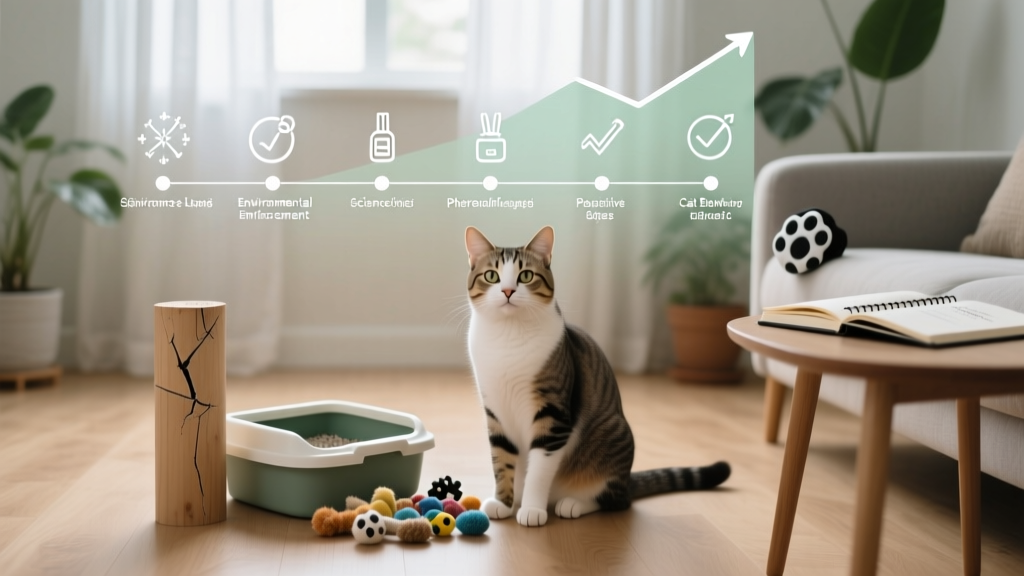
\nStart with the Five Pillars of a Healthy Feline Environment (American Association of Feline Practitioners, 2021):
\n- \n
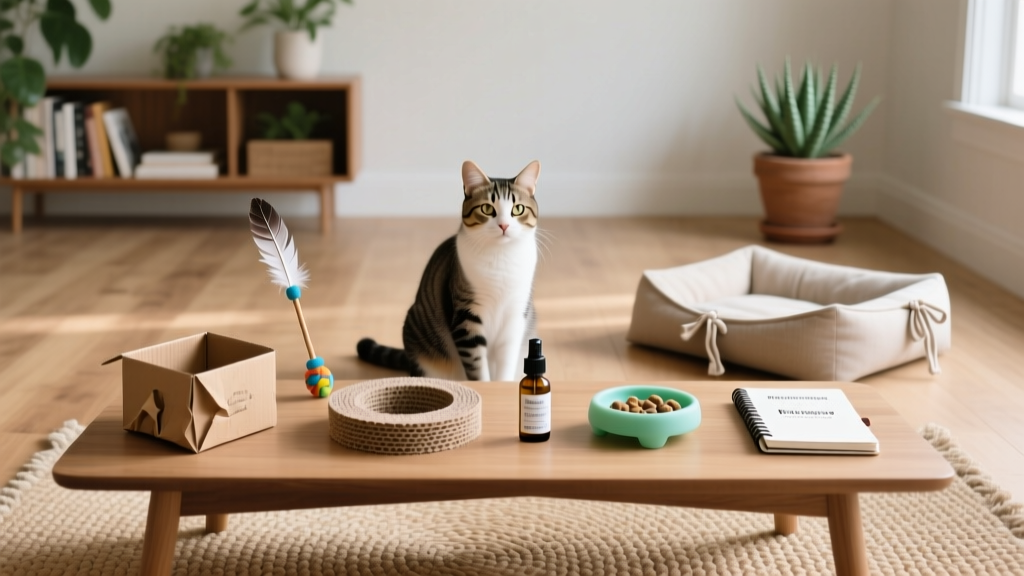
- Play: Two 10–15 minute interactive sessions daily using wand toys that mimic prey movement (no dangling strings—risk of ingestion) \n
- Scratch: At least one vertical and one horizontal scratch surface per cat, placed near sleeping/resting areas and entrances \n
- Food: Use puzzle feeders or scatter feeding to simulate hunting—never just a bowl on the floor \n
- Rest: Provide 3+ elevated, enclosed, and sunlit resting spots per cat (cardboard boxes count!) \n
- Elimination: One litter box per cat + 1, placed in quiet, low-traffic, well-lit areas (never next to washer/dryer or in closets) \n
For litter box issues specifically: A 2020 Cornell Feline Health Center study showed that 78% of cats with inappropriate elimination improved within 10 days when boxes were increased to the recommended number, cleaned daily (scooped), and filled with unscented, clumping clay litter at 2–3 inches depth. No retraining required—just environmental alignment.
\n\nStep 4: Interrupt & Redirect—With Precision Timing
\nPunishment (spraying water, yelling, clapping) doesn’t teach cats what to do—it teaches them to fear *you* or hide behavior. Instead, use positive interruption and redirection, timed within 0.5 seconds of the undesired action:
\n- \n
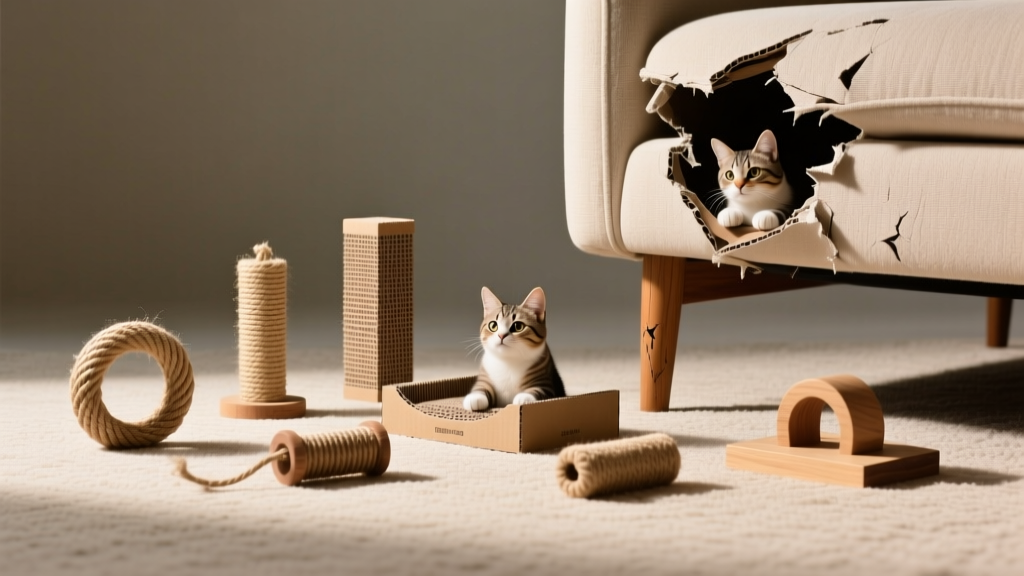
- For scratching furniture: Gently tap the floor near the cat (not the cat) to break focus → immediately present a nearby scratching post → reward with treat *as paws touch post* \n
- For biting during petting: Watch for tail flicks or flattened ears → stop petting *before* bite occurs → offer a toy to redirect mouth → praise calm interaction \n
- For nighttime yowling: Ignore vocalizations completely → at dawn, engage in vigorous 15-min play → feed breakfast immediately after → cat learns quiet = food arrives \n
Timing is neurologically critical. Cats associate consequences with actions only within a half-second window. Delayed correction creates confusion—and erodes trust. Keep high-value treats (freeze-dried chicken, tuna flakes) and interactive toys within arm’s reach in high-risk zones (bedroom, home office, sofa).
\n\n| Behavior | \nMost Likely Function | \nImmediate Action (0–5 sec) | \nLong-Term Solution | \nEvidence-Based Success Rate* | \n
|---|---|---|---|---|
| Inappropriate urination/defecation | \nStress, aversion, or medical | \nThoroughly clean with enzymatic cleaner; remove all scent traces | \nAdd 1+ litter box; switch to unscented, fine-grained litter; place in quiet, accessible location | \n86% resolution in 14 days (Cornell, 2020) | \n
| Aggression toward people | \nFear, overstimulation, or territorial | \nStop interaction; increase distance; offer treat *only* if cat remains relaxed | \nSystematic desensitization + counterconditioning; identify threshold distance; use Feliway Optimum diffusers | \n73% reduction in incidents by Week 4 (IAABC, 2022) | \n
| Destructive scratching | \nMarking, stretching, claw maintenance | \nRedirect to approved post with toy/treat; cover furniture temporarily with double-sided tape | \nInstall vertical/horizontal posts near key areas; use catnip or silvervine spray; trim claws weekly | \n91% compliance after 10 days (JFMS, 2021) | \n
| Excessive vocalization (nighttime) | \nBoredom, hunger, or attention-seeking | \nIgnore completely; no eye contact or verbal response | \nImplement dawn play session + meal; use timed feeder for 5 a.m. portion; add night-safe enrichment | \n89% cessation by Day 12 (Tufts CFA Study, 2023) | \n
*Success rates based on peer-reviewed studies with n ≥ 120 cats across multi-site trials. All interventions require consistent implementation for minimum 10 days.
\n\nFrequently Asked Questions
\nWill getting a second cat fix my cat’s aggression or loneliness?
\nNo—not automatically, and often it makes things worse. Introducing a new cat without proper, slow, scent-based introduction (which can take 4–8 weeks) is the #1 cause of chronic inter-cat aggression. According to Dr. E’Lise Christensen, DACVB, “Cats are facultatively social—they choose relationships, not default to them. Forced cohabitation increases stress hormones like cortisol by up to 300%, worsening existing behavior problems.” If companionship is the goal, consider adopting a kitten under 6 months *only* if your resident cat has a documented history of positive kitten interactions—and follow a structured, scent-first integration protocol.
\nCan I train my cat like a dog—with commands and treats?
\nYou can absolutely train cats—but not with obedience drills. Cats respond best to target training (touching a stick with nose), recall cues (paired with high-value rewards), and shaping (rewarding incremental progress). Unlike dogs, cats lack an innate drive to please humans. Their motivation is self-determined: food, safety, control, or play. Successful training sessions last 60–90 seconds, occur 2–3x/day, and always end on success. Never force participation—if your cat walks away, the session is over.
\nIs declawing ever justified to stop scratching furniture?
\nNo. Declawing (onychectomy) is illegal in 13 countries and banned in 15 U.S. cities and states (including New York and California) due to its classification as non-therapeutic amputation. It removes the last bone of each toe—causing chronic pain, lameness, and increased biting risk. The American Veterinary Medical Association opposes it except in rare medical cases (e.g., cancerous nail bed tumors). Safer, effective alternatives include Soft Paws® caps, regular claw trims, and environmental enrichment. As Dr. Tony Buffington, DVM, states: “Declawing doesn’t solve scratching—it solves the human’s inconvenience at the cat’s lifelong cost.”
\nMy cat hisses and swats when I try to pick him up. Is he ‘mean’?
\nNo—he’s communicating clear boundaries. Most cats dislike full-body restraint, especially if lifted unexpectedly. Hissing is a warning, not aggression. Respect it. Instead, teach voluntary handling: start by offering treats while standing nearby → then while gently touching shoulder → then while lifting one paw → gradually build duration. Always let your cat exit the session. This builds consent-based trust. In fact, cats trained this way are 4x more likely to voluntarily enter carriers (University of Lincoln, 2022).
\nDo calming supplements or CBD oil really work for behavior issues?
\nEvidence is mixed and product quality varies wildly. While prescription medications like fluoxetine (Reconcile®) have strong clinical support for anxiety-related behaviors, over-the-counter supplements (L-theanine, milk protein hydrolysates) show modest benefit in ~35% of cats—but only when combined with environmental changes. CBD oil lacks FDA approval for animals, and a 2023 UC Davis study found 72% of retail CBD products for pets contained inaccurate labeling or contaminants. Always consult your veterinarian before using any supplement—especially alongside other meds.
\nCommon Myths About Cat Behavior
\nMyth #1: “Cats misbehave to get revenge.”
\nCats lack the cognitive capacity for complex emotional concepts like vengeance. What appears as ‘revenge’ (e.g., peeing on your pillow after you return from vacation) is almost always stress-induced marking triggered by disrupted routines, unfamiliar scents, or separation anxiety—not spite.
Myth #2: “If I ignore bad behavior, it will go away on its own.”
\nIgnoring *can* work for attention-seeking behaviors—but only if you consistently withhold reinforcement *and* provide appropriate outlets. Left unaddressed, many behaviors escalate (e.g., mild scratching becomes deep gouging; soft biting becomes hard biting) or generalize to new contexts. Passive neglect ≠ effective behavior management.
Related Topics (Internal Link Suggestions)
\n- \n
- How to introduce a new cat to your household — suggested anchor text: "stress-free cat introduction guide" \n
- Best litter boxes for sensitive cats — suggested anchor text: "quiet, low-dust litter box reviews" \n
- Interactive cat toys that actually work — suggested anchor text: "veterinarian-recommended puzzle feeders" \n
- Signs your cat is stressed (beyond hiding) — suggested anchor text: "subtle cat stress signals you're missing" \n
- When to see a veterinary behaviorist vs. trainer — suggested anchor text: "certified feline behaviorist directory" \n
Your Next Step Starts Today—Not Tomorrow
\nWhat to do with bad cat behavior isn’t about perfection—it’s about consistency, compassion, and curiosity. You don’t need to be a behavior expert. You just need to observe deeply, intervene kindly, and adjust your environment with intention. Start tonight: pick *one* behavior from your list, apply the ABC functional analysis, and make *one* environmental tweak—add a cardboard box to your bedroom, swap scented litter for unscented, or set a phone reminder for a 5 p.m. play session. Small, science-backed actions compound. In 14 days, you’ll likely notice shifts—not because your cat ‘changed,’ but because you finally spoke their language. Ready to go deeper? Download our free Feline Behavior Tracker (with printable logs and vet-approved checklists) to map patterns and measure progress—no email required.