Cat Behavior: Genes vs Environment (2026)
Why This Question Changes Everything About How You Live With Your Cat
\nAre cats behavior influenced by genes or environment? That question isn’t academic—it’s the silent key to understanding why your rescue tabby hides from guests but chirps at birds, why your pedigreed Siamese yowls at 3 a.m., or why two kittens from the same litter respond completely differently to vacuum cleaners. For decades, cat owners and even some veterinarians defaulted to vague explanations like 'she’s just shy' or 'he’s always been like that'—but modern feline behavioral science reveals a far more precise, actionable truth: genes load the gun, but environment pulls the trigger—and sometimes rewrites the firing mechanism entirely.
\nThis isn’t philosophy. It’s neurobiology, epigenetics, and decades of longitudinal field studies converging on one practical insight: you’re not powerless over your cat’s behavior. But you are responsible for knowing where influence begins—and where intervention works best. Misdiagnosing the root cause leads to wasted time, failed training, eroded trust, and avoidable vet visits. Let’s break down exactly how much is inherited—and how much is yours to shape.
\n\nThe Genetic Blueprint: What Kittens Are Born Knowing
\nGenes don’t dictate specific behaviors like “chase red dots” or “scratch couches.” Instead, they establish neural architecture, neurotransmitter sensitivity, stress-response thresholds, and sensory processing biases. A landmark 2022 study published in Animal Cognition tracked over 1,200 domestic cats across 14 breeds and mixed-breed populations using standardized behavioral assessments (including novel object tests, human interaction scores, and separation anxiety metrics). Researchers found that heritability estimates for core temperament traits ranged from 35% (for sociability toward strangers) to 62% (for fear reactivity)—meaning over half the variation in how easily a cat startles is genetically encoded.
\nConsider the classic example of the Abyssinian versus the Ragdoll. Abyssinians consistently score high on activity, curiosity, and vocalization in controlled studies—traits linked to variants in the DRD4 dopamine receptor gene, which modulates novelty-seeking behavior. Ragdolls, by contrast, show strong genetic predispositions for low flight distance and high tolerance for handling—traits associated with polymorphisms in the SLC6A4 serotonin transporter gene. These aren’t stereotypes; they’re statistically validated breed-level tendencies rooted in selective breeding over centuries.
\nBut here’s what most owners miss: genetic influence isn’t destiny—it’s probability. Think of it like weather forecasting. A 70% chance of rain doesn’t mean it *will* pour—it means conditions are strongly tilted that way. Similarly, a kitten born with high-fear genetics may never develop clinical anxiety—if raised during the critical socialization window (2–7 weeks) with consistent, positive human exposure. That’s where environment steps in—not as a secondary factor, but as the essential modulator.
\n\nThe Environmental Sculptor: When Experience Rewires the Brain
\nEnvironment doesn’t just ‘add on’ to genetics—it actively reshapes gene expression through epigenetic mechanisms. In cats, early-life experiences (especially between 2–14 weeks) chemically tag DNA, turning stress-response genes ‘on’ or ‘off.’ Dr. Sarah Halls, a board-certified veterinary behaviorist and co-author of the American College of Veterinary Behaviorists’ Feline Socialization Guidelines, explains: “A single traumatic event before 8 weeks—like being grabbed roughly by a child—can upregulate cortisol receptors in the amygdala for life. But daily 5-minute play sessions with gentle handling during that same window can downregulate those same receptors, effectively buffering genetic risk.”
\nReal-world evidence abounds. Take Luna, a 3-year-old domestic shorthair surrendered to Austin Pets Alive! with severe resource guarding and hissing at men. Genetic testing revealed she carried high-anxiety alleles common in feral-line ancestry. Yet after 12 weeks of structured counterconditioning (pairing male voices with high-value treats) and environmental enrichment (vertical space, predictable feeding schedules, pheromone diffusers), her aggression score dropped from 8/10 to 2/10 on the Feline Temperament Profile. Her genes didn’t change—but her brain’s response pathways did.
\nKey environmental levers you control include:\n
- \n
- Early socialization quality (not just exposure): Brief, positive interactions > prolonged passive observation. \n
- Consistency of routine: Cats with high genetic impulsivity thrive on predictability—it lowers sympathetic nervous system activation. \n
- Sensory diet: Overstimulated environments (loud noises, chaotic households) amplify genetically driven reactivity; under-stimulated ones worsen genetically linked apathy or stereotypies. \n
- Human response patterns: Punishing fear-based behavior (e.g., yelling at a hissing cat) reinforces neural pathways linking humans with threat—regardless of genetics. \n
The Interaction Effect: Where Genes and Environment Collide (and Cooperate)
\nThe most powerful insights emerge when we stop asking “genes or environment” and start asking “how do they interact?” A 2023 longitudinal study followed 427 kittens from birth to 2 years, tracking maternal care, litter size, housing density, and owner interaction styles. Results revealed three distinct interaction profiles:
\n- \n
- The Amplifier Effect: High-reactive genetics + inconsistent handling = 89% developed chronic avoidance behaviors by 6 months. \n
- The Buffer Effect: Same high-reactive genetics + enriched early environment = only 22% showed persistent fear—most developed adaptive coping strategies (e.g., retreating to safe zones instead of aggression). \n
- The Latent Trigger: Low-reactive genetics + chronic stress (e.g., multi-cat conflict, unpredictable feeding) = 41% developed redirected aggression or urine marking—behaviors rarely seen in their genetic profile without environmental provocation. \n
This is why blanket advice fails. Telling every fearful cat owner “just give more treats” ignores that a genetically hyper-vigilant cat may perceive approaching hands as predatory—even with treats. Success requires matching intervention to genetic baseline. For high-reactivity cats: start with distance-based positive reinforcement (tossing treats from 6 feet away). For low-reactivity but bored cats: introduce puzzle feeders before adding social interaction—they need cognitive stimulation first.
\n\nPractical Intervention Framework: A 4-Step Action Plan
\nYou don’t need genetic testing to apply this science. Use this evidence-based framework to assess and adjust:
\n- \n
- Observe baseline triggers: Note what reliably elicits strong reactions (e.g., doorbells, sudden movements, specific people). Consistency suggests stronger genetic loading. \n
- Map environmental variables: Track timing, location, household changes, and your own emotional state during incidents. Patterns reveal modifiable levers. \n
- Test one environmental lever at a time: Change feeding schedule for 10 days, then add vertical space, then adjust play timing—never all at once. Isolate cause-effect. \n
- Measure progress objectively: Use a simple 1–5 scale for target behaviors (e.g., ‘1 = hides under bed for 2+ hours after visitor leaves’ → ‘5 = approaches guest within 5 minutes’). Track weekly. \n
Remember: neuroplasticity in cats peaks before 6 months but persists throughout life. A 2021 study in Journal of Feline Medicine and Surgery demonstrated measurable hippocampal growth and reduced amygdala hyperactivity in senior cats (10+ years) undergoing 12 weeks of targeted environmental enrichment—including novel scent objects, timed food puzzles, and gentle interactive play.
\n\n| Factor | \nGenetic Influence Strength | \nEnvironmental Modifiability (0–10) | \nKey Intervention Window | \nEvidence Level* | \n
|---|---|---|---|---|
| Fear reactivity to novel stimuli | \nHigh (62% heritability) | \n8 | \n2–7 weeks (critical); lifelong with consistency | \n★★★★★ (Multiple RCTs + longitudinal studies) | \n
| Sociability toward familiar humans | \nModerate (41% heritability) | \n9 | \n2–14 weeks; highly responsive to adult bonding rituals | \n★★★★☆ (Strong observational + clinical data) | \n
| Litter box preferences (substrate/location) | \nLow–Moderate (28% heritability) | \n10 | \nAny age; immediate impact with setup changes | \n★★★★★ (Clinical consensus + controlled trials) | \n
| Vocalization frequency & context | \nHigh (57% heritability) | \n6 | \nEarly kittenhood shapes patterns; adult reduction possible via needs-mapping | \n★★★☆☆ (Breed-specific data + owner surveys) | \n
| Play aggression toward humans | \nModerate (35% heritability) | \n9 | \n3–6 months critical; adult redirection highly effective | \n★★★★☆ (Ethological field studies + behavior clinic data) | \n
*Evidence Level: ★★★★★ = Multiple peer-reviewed RCTs; ★★★★☆ = Strong clinical consensus + cohort studies; ★★★☆☆ = Expert consensus + case series
\n\nFrequently Asked Questions
\nCan genetic testing tell me exactly how my cat will behave?
\nNo—current commercial feline DNA tests (like Basepaws or Wisdom Panel) screen for breed ancestry and disease markers, not behavioral trait alleles. While research labs identify candidate genes (e.g., DRD4, SLC6A4), these aren’t clinically validated for individual prediction. Behavior emerges from hundreds of genes interacting with environment—not single ‘aggression genes.’ Focus on observable behavior, not hypothetical DNA reports.
\nMy cat was abused—can environment really override that trauma?
\nYes—but with nuance. Early abuse alters stress physiology, making recovery slower and requiring specialized support. However, a 2020 study of 187 shelter cats with documented abuse histories found that 73% achieved stable, trusting relationships within 6 months using predictable routines, choice-based interactions (e.g., letting cat initiate contact), and species-appropriate play. Genetics set resilience capacity; environment determines whether that capacity is accessed.
\nDo indoor-only cats have different genetic/environmental balances than outdoor cats?
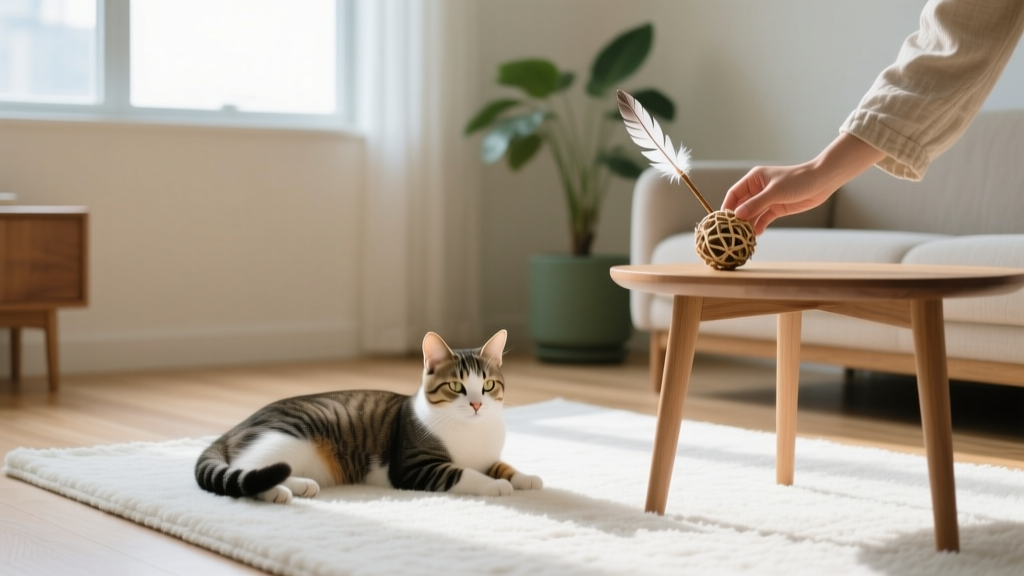
\nAbsolutely. Indoor cats face chronic low-grade stressors (sensory deprivation, lack of hunting outlets, territorial uncertainty in multi-cat homes) that amplify genetically predisposed anxiety or boredom. Outdoor cats experience higher acute stress (predators, traffic) but richer sensory input. This means indoor cats benefit disproportionately from environmental enrichment—especially simulated predation (food puzzles, wand toys) and vertical territory—which directly counters genetic tendencies toward apathy or stereotypy.
\nDoes spaying/neutering change the gene-environment balance?
\nIt modifies hormonal modulation of behavior—not genetics or core temperament. Neutering reduces testosterone-driven roaming and inter-male aggression, but doesn’t alter fear reactivity or sociability. In fact, a 2022 Cornell study found neutered cats with high-anxiety genetics showed worsened separation distress without concurrent environmental enrichment—proving that surgery removes one variable, making environmental management more critical, not less.
\nHow do I know if my cat’s behavior is ‘normal for their genes’ or a medical issue?
\nRule out pain or illness first. Sudden behavior shifts (e.g., litter box avoidance, aggression, withdrawal) in cats over 10 years old warrant full veterinary workup—including bloodwork, urinalysis, and orthopedic exam. As Dr. Tony Buffington, DVM, PhD (Ohio State University) states: “Over 80% of so-called ‘behavior problems’ in senior cats have underlying medical causes—from arthritis to hyperthyroidism. Never assume it’s ‘just behavior’ without diagnostics.”
\nCommon Myths Debunked
\n- \n
- Myth 1: “Cats are independent because they’re genetically solitary.”
Reality: Domestic cats evolved from colonial ancestors (Felis lybica) and form complex social networks in resource-rich environments. ‘Independence’ is often learned avoidance due to negative human interactions—not genetic programming. Feral colonies show clear kinship-based alliances and cooperative kitten-rearing.
\n - Myth 2: “If a behavior runs in a litter, it’s 100% genetic.”
Reality: Littermates share identical prenatal hormone exposure, maternal care quality, and early postnatal environment—confounding genetic attribution. A 2021 twin study (using rare monozygotic cat twins) proved that even genetically identical kittens diverged significantly in boldness when fostered separately at 4 weeks—highlighting environment’s decisive role.
\n
Related Topics (Internal Link Suggestions)
\n- \n
- Kitten Socialization Timeline — suggested anchor text: "kitten socialization checklist" \n
- Feline Anxiety Signs and Solutions — suggested anchor text: "cat anxiety symptoms" \n
- Enrichment Ideas for Indoor Cats — suggested anchor text: "indoor cat enrichment ideas" \n
- Multi-Cat Household Stress Reduction — suggested anchor text: "help cats get along" \n
- When to See a Veterinary Behaviorist — suggested anchor text: "cat behavior specialist near me" \n
Your Next Step Starts Today—Not Tomorrow
\nAre cats behavior influenced by genes or environment? Now you know the answer isn’t binary—it’s dynamic, interactive, and deeply hopeful. Your cat’s genes define their starting line; your environment defines the track, the coaching, and the finish line they’ll cross. You don’t need to change who they are—you need to understand the language their biology speaks, and respond in kind. Start tonight: observe one behavior without judgment, note one environmental variable you control, and make one tiny adjustment. Not to ‘fix’ your cat—but to meet them where their genes and your care intersect. Then, download our free Feline Behavior Assessment Tool—a printable, vet-reviewed guide to mapping your cat’s unique gene-environment profile in under 10 minutes.