Cat Tail Wrapping Around You: Affection Signal
You’re standing in the kitchen, half awake, waiting for the coffee to do its thing. Your cat weaves between your ankles like a furry little commuter in a rush-hour crowd. Then it happens: their tail slides around your calf—sometimes with a gentle squeeze—like they’re looping an arm around you. You pause, because it feels strangely deliberate. Is it a hug? A claim? A request? Or your cat’s version of saying, “Hi, you’re mine”?
That tail wrap is one of those quietly sweet cat behaviors that can make even the most cynical human go soft. And yes—most of the time, it really is an affectionate signal. But cats are cats, so context matters. The same tail that “hugs” you can also broadcast excitement, uncertainty, or “Please feed me before I perish dramatically.”
Why Cats Wrap Their Tails: The Science and the Story Behind It
Cats are social… just not always in the obvious, golden-retriever way. In cat-to-cat communication, the tail is a billboard. It carries scent, expresses emotion through movement and posture, and helps with balance and confidence. Tail wrapping around you likely evolved from a mix of social bonding and scent-sharing behaviors that are normal in feline communities.
Here’s the evolutionary logic: friendly cats in the same social group often rub against each other—heads, cheeks, sides, and sometimes tails. This is called allorubbing, and it serves two key purposes:
- Scent blending (group identity): Cats have scent glands on their cheeks, forehead, lips, and base of the tail. When they rub and weave, they exchange and mix scents. In feline terms, shared scent is shared “family.”
- Affiliative contact (social bonding): Touch can reinforce trust. Cats that choose to touch are cats that feel safe enough to get physically close.
When your cat wraps their tail around your leg, they’re often combining those two goals: getting close and leaving a little “you belong with me” signature. It’s subtle, low-risk affection—perfect for a species that still carries the instincts of a small predator and potential prey.
Different Contexts: What Tail Wrapping Looks Like in Real Life
A tail wrap isn’t one single behavior. It shows up in different forms depending on what your cat wants and how they’re feeling. Here are the most common situations cat owners recognize immediately.
1) The “Good Morning, You’re Alive” Wrap
You step out of bed. Your cat approaches with a tail held upright, possibly with a little hook at the tip, and wraps your shin like a ribbon. This is the warmest version: a social greeting. Many cats do this when you wake up, come home, or re-enter a room.
What it usually means: “Hi. I’m happy you’re here.” (With a side of “Also, breakfast.”)
2) The “Please Don’t Leave” Wrap
You’re putting on shoes or heading toward the door. Your cat suddenly becomes a winding, tail-wrapping obstacle course. Some cats add a plaintive meow or sit right on your feet.
What it usually means: social attachment, mild protest, or a request for interaction. It can also be a learned behavior if leaving sometimes predicts less attention.
3) The “I’m Feeling Extra Cozy” Wrap During Petting
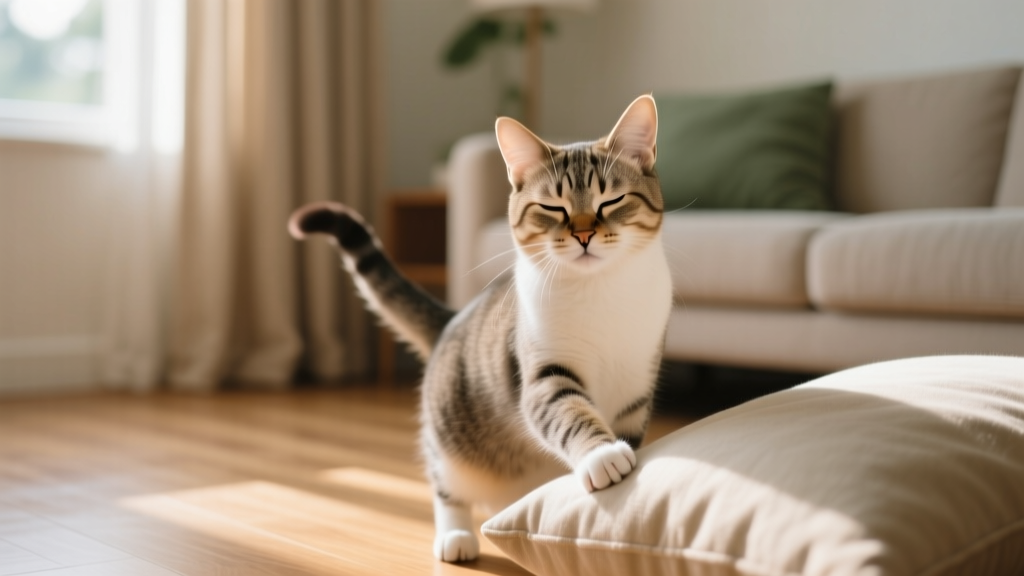
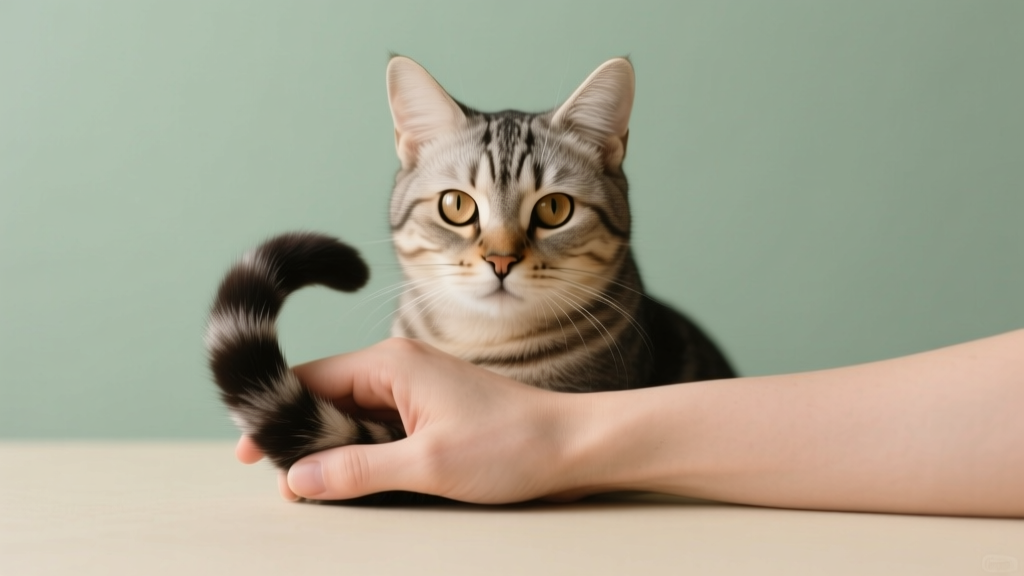
You’re scratching behind the ears. Your cat leans in, half-closes their eyes, and drapes their tail around your wrist or forearm. It’s the feline equivalent of hooking an arm around someone on a couch.
What it usually means: comfort, bonding, and often an attempt to maintain contact. Think: “Stay right there.”
4) The “Excited Anticipation” Wrap (Usually Food-Related)
You open the pantry. Your cat’s tail goes up and may quiver. Then the tail wraps your ankle like they’re trying to anchor you to the spot where the treats live.
What it usually means: high arousal excitement. The affection is real, but it’s also motivation-driven. Cats are honest about their priorities.
5) The “Polite Check-In” Wrap With New People
Some cats will tail-wrap a familiar guest’s leg after a few visits. They approach slowly, tail upright, then brush and wrap. This is a big compliment.
What it usually means: “You’re approved. You smell like part of the safe zone now.”
What Tail Wrapping Says About Your Cat’s Mood and Feelings
A tail wrap is best interpreted like you’d interpret tone of voice in a conversation. The gesture matters, but the emotional “accent” comes from the rest of the body.
Signs it’s affectionate and relaxed:
- Tail held upright (confidence, friendly intent)
- Soft body posture, leaning in
- Slow blinks, relaxed eyelids
- Purring (not always, but often)
- Gentle rubbing with cheeks or shoulder along with the tail wrap
Signs it might be anxious or overstimulated instead:
- Tail flicking sharply at the tip or lashing side-to-side
- Ears angled sideways or back
- Body tense, crouched, or “stiff” contact
- Dilated pupils with a frozen stare
- Sudden nipping after the wrap (overstimulation)
If the tail wrap comes with a calm, upright tail and soft eyes, you can safely file it under affection + social bonding.
Related Behaviors You Might Notice (Tail Wrapping’s Best Friends)
Cats rarely use just one signal. Tail wrapping often arrives as part of a whole “hello sequence.” You might also notice:
- Head bunting (bunting): a gentle forehead bump into your hand or leg; another scent-sharing sign.
- Cheek rubbing: those facial pheromones are prime “you are safe” messaging.
- Weaving between legs: classic affiliative behavior; sometimes includes tiny “drive-by” flops.
- Tail quivering while upright: often excitement and friendly arousal (some cats do this when you come home).
- Kneading: comfort behavior tied to kittenhood; can show up when a cat is feeling secure.
- Slow blinking: the cat version of a relaxed, affectionate signal.
When tail wrapping appears alongside bunting and slow blinks, you’re basically being surrounded by feline compliments.
When Tail Wrapping Is Normal… and When It Might Be a Concern
Most tail wrapping is perfectly normal and a sign of a socially comfortable cat. Still, any behavior can shift meaning if it changes suddenly or comes with red flags.
Normal tail wrapping:
- Happens during greetings, petting, or routine requests (food, play)
- Cat’s body language is loose and friendly
- No pain signs when the tail is touched
- Cat can disengage easily and doesn’t seem frantic
Potential concern (worth a closer look):
- Sudden clinginess + tail wrapping paired with hiding, reduced appetite, or vocalizing more than usual (possible stress or illness)
- Tail sensitivity: flinching, yowling, or swatting if the tail or base of tail is touched (could indicate pain, injury, arthritis, or skin issues like fleas)
- Compulsive pacing/weaving with frantic tail wrapping and agitation (stress, changes at home, or unmet needs)
- Aggressive signals: tail lashing, ears pinned, growling while making contact (cat may be conflicted, overstimulated, or guarding resources)
If your cat’s tail wrapping is new and intense, or your cat seems uncomfortable, a vet check is the safest first step—especially if you suspect pain near the tail base or lower back.
How to Respond (and How to Encourage More of It)
If your cat wraps their tail around you, the best response is to “speak cat” back: calm, respectful, and consistent.
- Pause and acknowledge: Stop walking for a second so you don’t step on paws or tail. A gentle “hi” and a slow blink goes a long way.
- Offer a predictable affection spot: Many cats prefer cheek rubs, chin scratches, and forehead strokes over full-body petting. Keep it short and sweet.
- Reward the greeting: If you want more friendly hellos, reinforce it with a tiny treat, a quick wand-toy session, or a few seconds of your cat’s favorite petting.
- Watch for overstimulation: If the tail starts twitching or your cat’s skin ripples, stop petting before it escalates into a nip.
- Don’t punish the leg-weaving: If it’s happening in risky places (stairs, carrying laundry), redirect instead—toss a treat away from your feet or cue your cat to a mat for rewards.
Pro tip for safety: Teach a “station” behavior—your cat goes to a small rug or perch for treats while you walk around. You’ll keep your ankles intact and your cat will still feel included.
Fun Facts and Research-Flavor Bits About Tail Wrapping
- Tail-up posture is a social super-signal: In friendly cat interactions, an upright tail is often used as an approach signal. Kittens use it with mom, and adult cats use it with trusted friends—humans included.
- Cats live in a world of scent maps: When your cat rubs and tail-wraps, they’re not just being cute—they’re updating the household “scent profile,” which can reduce stress and increase feelings of familiarity.
- Some cats are “touch talkers” and some are not: Genetics, early socialization, and past experiences shape how physically affectionate a cat becomes. A non-tail-wrapper can still love you deeply; they may just show it by following you quietly or slow blinking from across the room.
FAQ: Cat Tail Wrapping Around You
1) Does tail wrapping always mean affection?
Often, yes—especially when paired with a tail held upright, relaxed body language, and gentle rubbing. But it can also mean excitement (food!), a request for attention, or mild anxiety. The rest of the body tells the full story.
2) Why does my cat wrap their tail around my leg and then bite me?
This is commonly overstimulation or mixed signals: your cat wants contact but gets overwhelmed quickly. Watch for tail flicking, tense shoulders, or skin twitching. Keep petting brief, focus on cheek/chin areas, and stop before the bite happens.
3) My cat only tail-wraps one person in the house. Why?
Cats choose “safe favorites” based on who respects their boundaries, moves predictably, and interacts in ways the cat enjoys. Scent can play a role too—your cat may find that person’s smell especially comforting or familiar.
4) Is my cat marking me when they wrap their tail around me?
In a friendly way, yes. It’s less “property” and more “you’re part of my group.” Cats use scent to create a shared identity, which can make them feel secure.
5) Should I pet my cat when they do this?
If your cat seems relaxed and enjoys touch, a short pet in their favorite spots is perfect. If they seem tense or start flicking the tail, simply pause and let them choose what happens next.
6) Why does my cat wrap their tail around my arm while I’m working?
It’s often a contact-seeking behavior: “I’d like some connection, please.” Consider offering a nearby perch, a short play break, or a puzzle feeder—something that meets the social need without sacrificing your keyboard.
That little tail loop around your ankle is one of the sweetest ways a cat says, “You’re safe with me.” Next time it happens, take a second to read the full body language—and enjoy being chosen.
Have a cat who tail-wraps like a pro (or one who only does it during treat time)? Share your story with fellow cat people on catloversbase.com—we’d love to hear the quirky details.