Why Cats Rub Against Door Corners and Legs
You’re walking from the kitchen to the hallway with a mug of coffee, half-awake, and suddenly—thunk—your cat materializes at your ankles. They glide along your shin like a furry comet, tail up, then pivot and rub their cheek against the door frame as if they’re signing a lease. You pause, they do a second pass, and now you’re doing that careful “don’t step on the cat” shuffle that every cat person knows by heart.
It’s one of those everyday cat moments that feels sweet, a little funny, and slightly inconvenient if you’re carrying laundry. But it’s also a behavior packed with meaning. Rubbing against door corners and your legs is your cat communicating—using scent, body language, and a dash of social strategy that goes back thousands of years.
The Science (and Ancient Cat Logic) Behind Rubbing
Cats experience the world through scent as much as sight and sound. One of their most important tools is a set of scent glands located on the face (around the cheeks, lips, and chin), along the sides of the body, at the base of the tail, and between the paw pads. When a cat rubs their face or body on something, they’re depositing chemical messages called pheromones.
These pheromones aren’t “smelly” to us, but to cats they’re like sticky notes. Some pheromones communicate comfort and familiarity (“this is safe”), others help map territory (“this is part of my space”), and some play a social role (“you’re in my group”). In a natural environment, scent-marking helps cats:
- Navigate safely by creating familiar scent trails
- Avoid conflict by establishing boundaries without fighting
- Strengthen social bonds with friendly cats (and yes, humans)
Door corners and legs are perfect targets for this. Door frames are high-traffic “checkpoints” in the home—literal passageways between zones. Your legs are moving scent-pillars: tall, warm, and always going places worth monitoring.
What Rubbing Looks Like in Different Contexts (and What It Often Means)
Not all rubbing is the same. The details—tail position, speed, intensity, and what happens next—tell you the story.
1) The “Welcome Home” Leg Weave
You come in the door and your cat immediately circles your ankles, rubbing both sides like they’re painting you with themselves. This is often a blend of:
- Social bonding (“You’re part of my group—re-scented and approved.”)
- Information gathering (you smell like the outdoors, other people, other animals)
- Excitement (especially if it’s paired with chirps or a question-mark tail)
Some cats do a full-body rub, others prefer cheek rubs. A cheek rub is often more “affiliative”—friendly and social—while a full-body glide can be a bigger “claim” (in the gentle, cat-approved sense of the word).
2) The Door Corner Cheek Swipe
That quick cheek press against the edge of a doorway is classic facial marking. Door corners are “message boards” because they’re passed frequently. Your cat is essentially maintaining a scent map: “This corridor is part of my safe route.”
You’ll especially notice this after changes—moving furniture, deep cleaning, a visitor, a new pet, or even just rearranging your home office. Your cat may rub more because the scent landscape has been disrupted.
3) The “Feed Me” Ankle Attack (a.k.a. Strategic Affection)
If rubbing happens at very specific times—like when you walk toward the kitchen, open a cupboard, or approach the treat jar—your cat may be using rubbing as a highly effective attention-getter.
This isn’t “manipulation” in a villainous way. It’s learned communication: “When I rub you, you look at me, talk to me, and sometimes food appears. Excellent system.”
4) The Post-Stress Re-Mark
After something unsettling (a loud noise, a vacuum session, a new person), a cat may rub corners and furniture more frequently. This can be self-soothing: re-establishing familiar scent where it matters most.
5) The “I’m Feeling Social” Body Bump
Some cats bonk you with their cheek or forehead (often called a head bump or bunting), then rub along you. This is a strong friendly signal in most cats—akin to a hug in cat language. It often shows trust and comfort.
What Rubbing Says About Your Cat’s Mood
Rubbing is usually positive, but the emotional “flavor” varies. Here are common mood clues:
- Tail up, relaxed body, slow movements: Friendly, secure, affectionate.
- Purring, soft eyes, gentle cheek rubs: Social bonding, contentment.
- Fast weaving, sudden stops, intense focus on you: Excitement, anticipation (often food-related).
- Rubbing + rolling onto back: High comfort and playfulness (not always a belly-rub invitation).
- Rubbing + vocalizing insistently: Requesting something (attention, food, routine).
- Rubbing after a scare, with cautious posture: Reassurance-seeking, rebuilding familiarity.
One more detail: if your cat rubs and then gives a little “love nibble” or quick lick, that can be part of social grooming behavior. If it escalates into overstimulation (sudden biting or swatting), your cat may have a low tolerance for prolonged contact in that moment.
Related Behaviors You Might Also Notice
Cats tend to bundle behaviors. If your cat is a dedicated door-corner rubber, you might also see:
- Head bunting: A firm forehead/cheek press against you or furniture—often very affiliative.
- Kneading: Rhythmic pawing, usually tied to comfort and soothing.
- Flank rubbing on furniture: Marking larger surfaces with body scent glands.
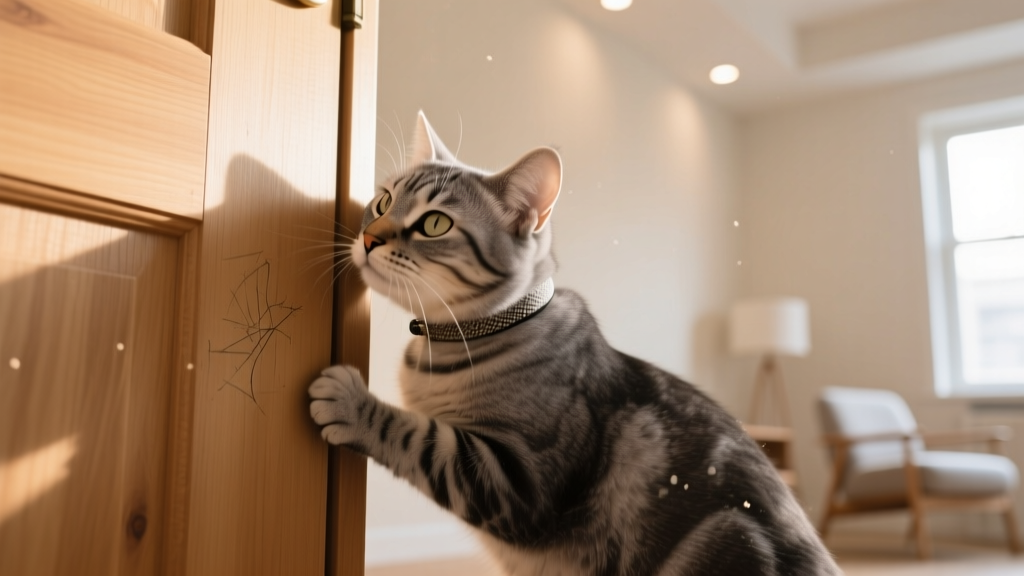
- Scratching near doorways: Scratching is also a scent and visual mark; doorways are prime real estate.
- Face rubbing after you pet them: “Resetting” their scent and reinforcing the bond.
- Sniffing your shoes/bags: Collecting information about where you’ve been.
When Rubbing Is Normal… and When It Might Signal a Problem
Most of the time, rubbing is a healthy, normal cat behavior. It becomes worth a closer look when you see sudden changes, physical discomfort, or compulsive patterns.
Likely Normal
- Rubbing as part of greetings or routines
- Increased rubbing after cleaning or rearranging furniture
- Rubbing paired with relaxed body language
Potential Concern (Consider a Vet Check)
- Sudden increase in rubbing or pressing the head against walls in a repetitive, non-social way (especially with disorientation)
- Rubbing focused on ears/face along with scratching, head shaking, odor, or redness (possible ear or skin irritation)
- Rubbing paired with agitation, hiding, appetite changes, or litter box changes (stress or medical issues can drive behavior shifts)
- Compulsive pacing and rubbing that seems frantic and hard to interrupt
If you’re unsure, capture a quick video. It can be incredibly helpful for your vet or a behavior professional to see the exact motion and context.
How to Respond (and Encourage the Good Kind of Rubbing)
Your goal is to acknowledge the communication without accidentally training your cat to trip you every time you walk.
- Pause and reward calmly: If your cat rubs politely, offer a gentle cheek scratch or a soft verbal greeting. Keep it low-key if they get overexcited.
- Watch your step: The ankle weave is adorable and hazardous. If your cat is a dedicated “underfoot escort,” shuffle your feet slightly to avoid stepping back onto them.
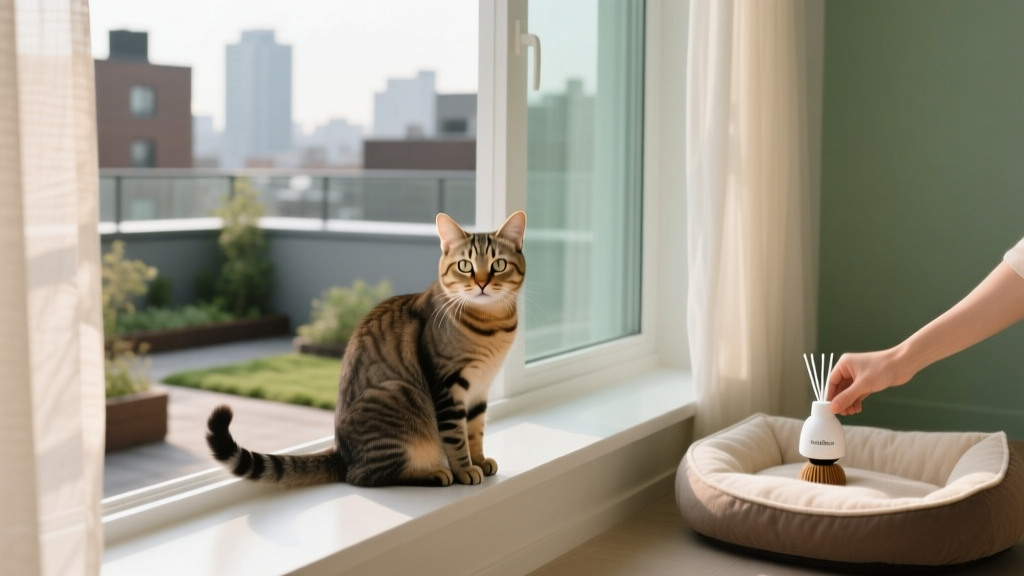
- Offer acceptable rubbing stations: Place a sturdy cat tree, corner brush, or wall-mounted grooming brush near favorite doorways. Many cats love rubbing their cheeks on these and it redirects traffic-jam behavior.
- Maintain routine scent comfort: After deep cleaning, leave a small blanket your cat uses in their favorite area so the home doesn’t smell “wiped clean” of them.
- Use play to meet social needs: If rubbing ramps up in the evening, a short interactive play session (wand toy, fetch) can satisfy connection and energy.
- If rubbing equals food demands: Avoid feeding immediately after intense ankle-weaving. Instead, wait for a brief calm moment, then feed—this gently teaches “calm gets results.”
Fun Facts and Research-Adjacent Nuggets
- Cheek pheromones are comfort cues: The facial area is rich in glands that produce pheromones associated with familiarity and calm. That’s one reason cats often rub their face on things they consider safe.
- Doorways are scent highways: Cats are big on “routes.” Marking a doorway is like putting a comforting stamp on a high-traffic intersection in their territory.
- Social rubbing exists in cat friendships: Cats who get along often rub heads and bodies together, creating a shared group scent. When your cat rubs on you, they’re often treating you like family.
- Your cat is updating your “profile”: If you’ve been around new smells (a friend’s dog, a new perfume), your cat may rub more to mix scents—part investigation, part relationship maintenance.
FAQ: Cats Rubbing Against Door Corners and Legs
1) Does my cat rubbing on me mean they love me?
Often, yes—it’s commonly an affiliative behavior that signals comfort and social bonding. It can also be a request (food, attention), so look at the full context: relaxed body language and gentle head/cheek contact usually point to affection and trust.
2) Why does my cat rub against the door frame specifically?
Door frames are high-traffic zones that connect parts of the home. Marking them helps your cat keep the environment smelling familiar and “owned,” which can reduce stress and support their sense of security.
3) My cat rubs my legs and then bites me—why?
This can happen for a few reasons: playful arousal, overstimulation from touch, or a frustrated request (often food-related). Try keeping petting brief, redirecting with a toy, and rewarding calmer greetings so the routine stays friendly.
4) Is rubbing the same as spraying?
No. Rubbing is scent-marking with glands on the face and body, and it’s usually social and calm. Spraying involves urine marking and often signals territorial stress, mating-related behavior (especially in unneutered cats), or conflict in multi-cat homes.
5) Why does my cat rub more after I clean or rearrange furniture?
Cleaning removes your cat’s scent “labels.” Your cat rubs to replace those familiar markers and restore the home’s comforting smell-map. It’s normal and often temporary.
6) Should I stop my cat from rubbing on my legs?
You don’t need to stop it if it’s safe and enjoyable, but you can shape it. If your cat trips you, teach an alternate greeting spot (like a corner brush or cat tree near the entry) and reward that location with attention or a treat.
Cats rub because scent is their love language, their map system, and their way of turning a house into a home. The next time your cat sideswipes your ankle or carefully stamps a door corner with their cheek, you’ll know: they’re communicating comfort, connection, and a little bit of “you belong with me.”
Does your cat have a signature rubbing routine—door corners only, full-body leg weaves, or dramatic head bonks with sound effects? Share your story with the Cat Lovers Base community on catloversbase.com—we’d love to hear about your cat’s most charming “drive-by affection.”