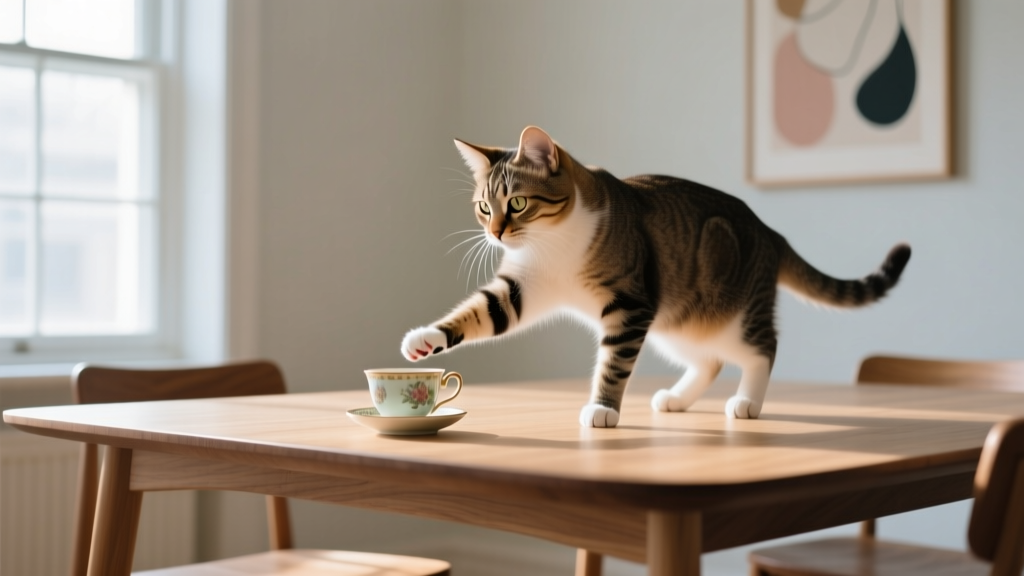
Cat Paw Pushing Objects Off Tables: Investigation
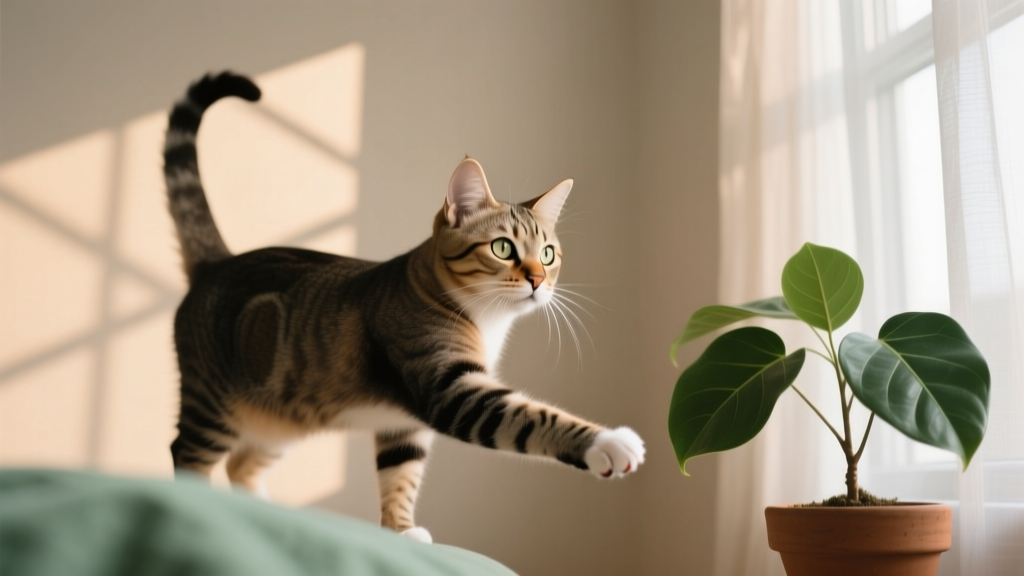
You’re sitting down with a cup of tea, finally relaxing. Your cat hops onto the table like they pay rent, strolls over to your pen, and—while making direct eye contact—slowly nudges it toward the edge. You say, “Noooo,” in that half-laughing, half-panicked voice. The pen teeters. Your cat pauses, as if considering your feelings. Then: tap. Off it goes.
If you’ve ever wondered whether your cat is being mischievous, vengeful, bored, or secretly training for a career in gravity research… you’re not alone. This is one of the most common “Why are you like this?” cat behaviors, and it’s also one of the most misunderstood. The good news: most of the time, it’s normal, explainable, and even a little brilliant.
The evolutionary and scientific “why” behind the table-edge tap
Cats are predators built for investigating the world through movement. In nature, small prey items—mice, insects, lizards—telegraph vital information by skittering, wobbling, or trying to escape. A cautious paw tap lets a cat gather data without risking a bite or a sting. Is it alive? Will it move? Is it safe? Can I catch it?
Now swap “beetle” for “chapstick.” To a cat’s brain, a small object on a raised surface is basically a practice opportunity. The paw is a precision instrument: it can test, hook, pin, drag, or flick. And the edge of a table adds something extra: gravity. When the object falls, it makes sound, changes location, and becomes more “interesting” than it was sitting still.
There’s also a learning component. Cats repeat behaviors that produce results. If pushing an object leads to you reacting (talking, rushing over, making big interesting noises), your cat has learned a powerful cause-and-effect: paw tap = human activation. Not “my cat is trying to ruin my life,” but “my cat has discovered a reliable button.”
Different contexts: not all object-pushing is the same
That slow-motion shove can mean different things depending on what’s happening around it. Here are the most common “flavors” of the behavior.
1) The hunter’s experiment
Scenario: It’s quiet. Your cat is alert, ears forward, whiskers slightly fanned. They tap a small item, watch it move, then tap again. They may chase it if it falls.
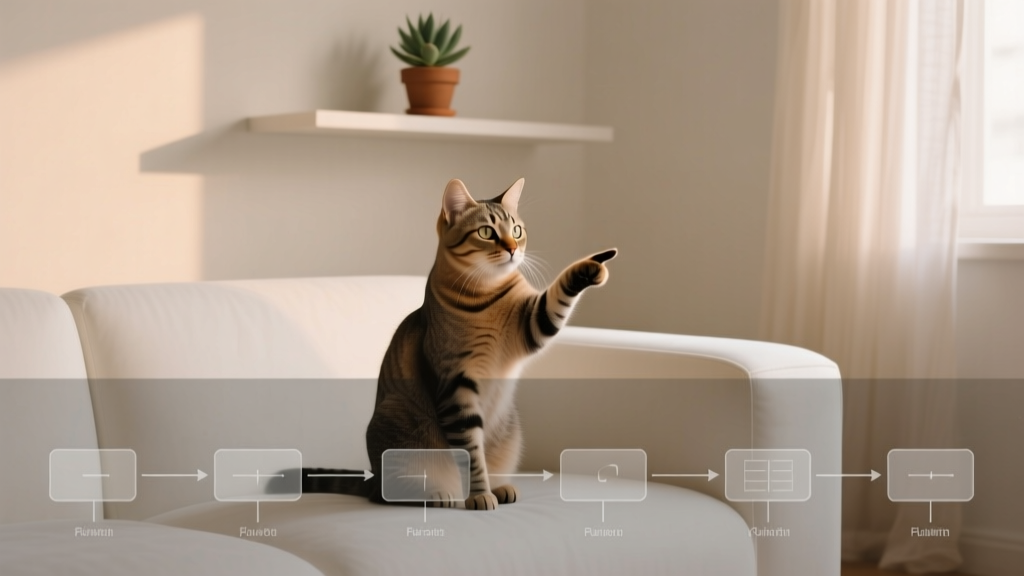
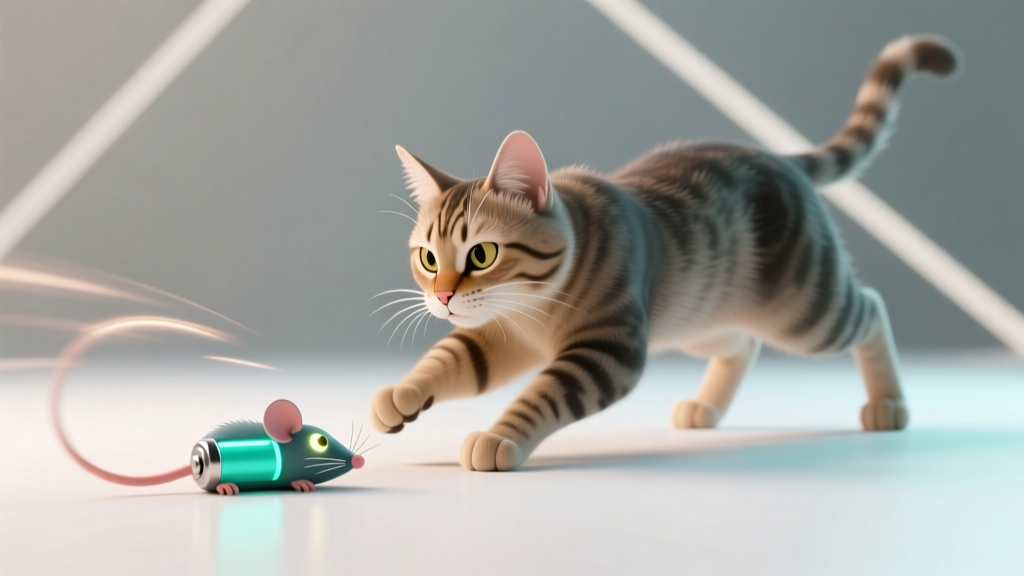
What’s going on: This is practice. Your cat is running a miniature hunting sequence: stalk → test → pounce → “kill.” Indoor life doesn’t offer daily mouse-chasing, so cats create their own simulations.
2) The boredom bopper
Scenario: Your cat has been lounging all day. You’ve been busy. Suddenly your cat appears on a shelf and starts redecorating… loudly.
What’s going on: Boredom plus energy equals “find stimulation.” Knocking something down produces instant novelty: sound, movement, and your attention. It’s very efficient entertainment.
3) The attention appointment reminder
Scenario: You’re on a work call. Your cat chooses the noisiest object available and begins tapping it closer to the edge while watching you closely.
What’s going on: Your cat has learned timing. They’re not trying to “be bad.” They’re trying to be effective. If quiet cues (sitting near you, a polite meow) didn’t work, the cat escalated to a behavior that always works: gravity + noise.
4) The sensory seeker
Scenario: Your cat seems fascinated by a particular type of item—metal keys, hair ties, a plastic cap. They bat it, mouth it, or carry it off.
What’s going on: Texture, weight, smell, and sound matter. Some items make a satisfying clink. Some roll perfectly. Some are the ideal “prey size.” Your cat is choosing objects that best meet their sensory preferences.
5) The stress or tension release
Scenario: There’s been a change—new pet, visitors, construction noises. Your cat seems restless and starts knocking things over more than usual.
What’s going on: Repetitive, controllable actions can help animals cope with stress. Pushing objects creates predictable outcomes (it falls, it sounds), which can feel grounding when other things feel uncertain.
What this behavior says about your cat’s mood
Your cat’s body language is the key. The same action can come from playfulness, frustration, or overstimulation. Look for these clues:
- Playful/curious: relaxed posture, ears forward, soft eyes, tail gently moving, intermittent pauses to watch the object.
- Seeking attention: frequent eye contact with you, checking your reaction, repeating the behavior after you respond.
- Frustrated/under-stimulated: pacing, vocalizing, zoomies, short patience, knocking multiple items in a row like a tiny bulldozer.
- Overstimulated: tail thumping, ears slightly sideways (“airplane ears”), skin twitching, quick jerky movements—often paired with “don’t touch me” vibes.
- Anxious: crouched posture, hypervigilant scanning, hiding more than usual, clingy behavior or avoidance—plus new or increased object-knocking.
Think of object-pushing as your cat communicating through physics. The message might be: “Play with me,” “Notice me,” “I’m wound up,” or “What happens if I do this?”
Related behaviors you might also notice
If your cat is a dedicated table-edge scientist, you may see a few companion habits:
- The “drop it in the water bowl” routine: some cats love the splash, movement, and retrieval challenge.
- Batting items under the couch: it mimics prey disappearing into a burrow—very exciting, very inconvenient.
- Paper shredding: satisfying sound and texture, often a boredom outlet.
- Cable chewing or plant nibbling: sometimes exploration, sometimes stress, sometimes oral fixation—always worth addressing for safety.
- Counter surfing: elevated vantage points and interesting smells; sometimes the object-pushing is just part of the expedition.
When it’s normal vs. when it might be a concern
In most homes, occasional object-knocking is normal feline behavior. It’s worth a closer look when:
- It starts suddenly in an adult or senior cat who didn’t do it before.
- It’s paired with other changes (appetite shifts, hiding, increased vocalizing, litter box issues, aggression, clinginess).
- Your cat seems disoriented—misjudging edges, staring blankly, wobbling, or acting “off.”
- Compulsive patterns emerge (repetitive knocking for long periods, hard to interrupt, seems driven rather than playful).
- There’s risk of injury (glass breaking, heavy objects falling, cat jumping onto unsafe surfaces).
If you’re seeing sudden behavior changes or anything that suggests pain, anxiety, or confusion, a vet visit is a smart first step. Cats are excellent at masking discomfort, and “new mischief” can sometimes be “new stress” or “new pain.”
How to respond (and how to keep your stuff intact)
You don’t have to choose between letting your cat express natural behavior and living in a home where nothing survives. The goal is redirect, don’t punish. Punishment tends to increase stress and can make your cat sneakier without changing the underlying need.
1) Don’t reward the behavior with big reactions
If your cat has learned that knocking things down summons you like magic, try to reduce the payoff. Stay calm. Avoid yelling or rushing in dramatically. If it’s safe, quietly pick up the object later.
2) Give your cat a “yes zone” for batting and pushing
Create a small area where it’s okay to knock things around:
- A shallow box with a few safe toys (ping-pong balls, large plush mice, crinkle balls)
- A treat ball or puzzle feeder that rewards paw work
- A cat track toy that mimics rolling prey
When your cat heads for the remote, redirect them to the “yes zone” and praise with attention or a treat for playing appropriately.
3) Increase hunting-style play (short, satisfying sessions)
Two to three daily play sessions of 5–10 minutes can dramatically reduce “DIY entertainment.” Use a wand toy and aim for a full sequence: stalk → chase → pounce → “catch.” End with a small snack to complete the hunt cycle. Many “serial knockers” are just under-hunted indoor predators.
4) Make tabletops less tempting
- Clear tempting small objects for a while (especially during training)
- Use heavier décor items that don’t move easily
- Offer vertical alternatives (cat trees, window perches) so your cat gets height without access to your fragile items
5) If it’s attention-seeking, schedule attention first
Cats love predictability. If your cat knocks items when you work, preempt it with a routine: a short play session before calls, a food puzzle during calls, then a cuddle break afterward. You’re teaching your cat a better way to get what they need.
Fun facts and research-flavored insights
- Cats learn by outcomes. If a behavior reliably produces movement, sound, or human engagement, it’s likely to repeat. That’s not “spite”—that’s learning.
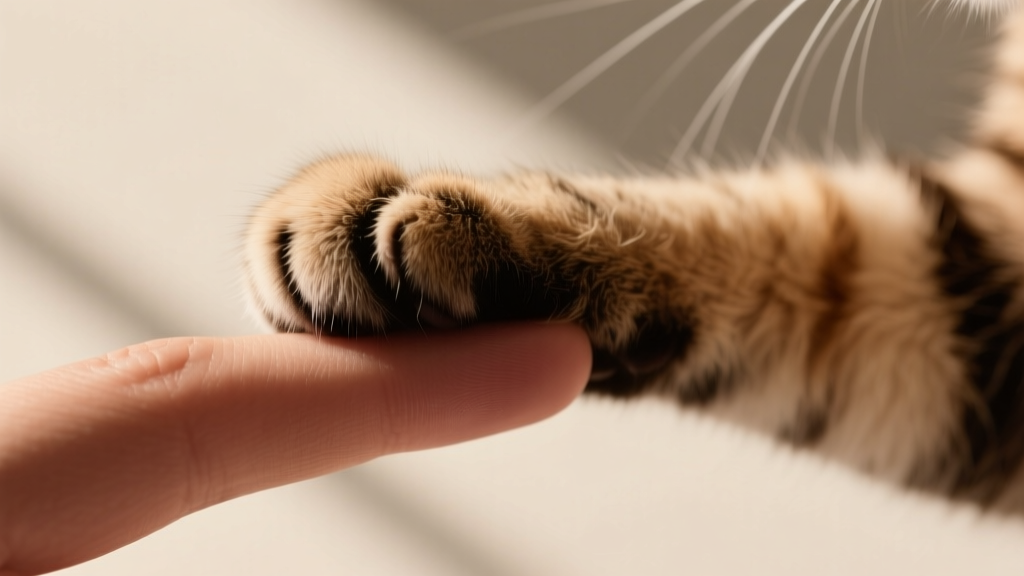
- The paw is a data-gathering tool. Cats use their paws to explore texture and resistance while keeping their face safely away. It’s cautious predator engineering.
- Edges add excitement. Falling objects change in speed, sound, and location. For a cat, that’s a multi-sensory event, not just “making a mess.”
- Some cats are more object-focused than others. Individual personality, early play experiences, and daily enrichment all influence how strongly a cat seeks out “batting games.”
FAQ: Cat paw pushing objects off tables
Is my cat doing this to punish me?
Cats don’t typically plan revenge the way humans imagine it. This behavior is usually curiosity, play, boredom, or attention-seeking. The eye contact is real, though—many cats monitor your reaction because it’s part of what makes the behavior rewarding.
Why does my cat only do it when I’m busy?
Because it works. If your cat has learned that subtle cues don’t get a response during your busy moments, they’ll choose a louder, faster strategy. Scheduling play and providing a puzzle feeder during your “busy times” can help a lot.
Should I stop my cat from doing it entirely?
It’s more realistic (and kinder) to redirect it. The instinct to bat and test objects is normal. Your job is to provide safe, approved ways to do it and remove fragile temptations while your cat learns new habits.
What toys are best for a cat who loves knocking things down?
Try rolling toys (balls, track toys), treat-dispensing toys, sturdy kicker toys, and wand toys for supervised play. Avoid string or hair ties unattended—those can be dangerous if swallowed.
My cat knocks over water glasses specifically. Why?
Water has movement, reflections, and sound—very interesting to cats. Some cats also prefer running or freshly poured water and may be experimenting. Consider a pet water fountain and keep cups out of reach for a while.
When should I talk to a vet or behavior professional?
If the behavior is new and intense, paired with other changes, seems compulsive, or you suspect anxiety or pain, check in with your vet first. If medical issues are ruled out and the behavior is disruptive, a qualified feline behavior consultant can help you build a tailored plan.
Cats pushing objects off tables may be chaotic for your décor, but it’s also a window into how your cat thinks: curious, hands-on (paws-on?), and always testing the environment. With the right outlets, you can keep your cat’s brilliant little brain busy—and your favorite mug safely out of the splash zone.
Has your cat chosen a signature item to “research” (keys, pens, your brand-new earbuds)? Share your funniest table-edge investigation stories with the Cat Lovers Base community at catloversbase.com.