How to Control Cats Behavior for Senior Cats
Why Your Senior Cat’s Sudden Behavior Changes Aren’t ‘Just Aging’ — And What You Can Do Today
If you’ve been wondering how to control cats behavior for senior cats, you’re not alone — and you’re absolutely right to pay attention. Contrary to popular belief, dramatic shifts like nighttime howling, uncharacteristic hissing, pacing at dawn, or avoiding the litter box aren’t inevitable 'just because they’re old.' In fact, a landmark 2023 study in the Journal of Feline Medicine and Surgery found that over 72% of behavior changes in cats aged 11+ had an identifiable, treatable cause — ranging from painful arthritis and hypertension to early-stage cognitive dysfunction (FCD) or undiagnosed dental disease. Ignoring these signs doesn’t make them go away; it often worsens anxiety, erodes your bond, and increases risk of injury or abandonment. The good news? With empathy, environmental tweaks, and timely veterinary collaboration, most age-related behaviors are highly manageable — and many improve significantly within 2–4 weeks.
Step 1: Rule Out Pain & Medical Triggers First — Before Assuming It’s ‘Behavioral’
Here’s the critical truth no one tells you: cats don’t misbehave — they communicate distress. A senior cat who suddenly scratches furniture, avoids being petted, or hides for hours isn’t ‘acting out.’ They may be suffering from osteoarthritis (affecting up to 90% of cats over age 12, per Cornell Feline Health Center), hyperthyroidism, kidney disease, or even oral pain so severe they flinch when you touch their head. Dr. Sarah Wooten, DVM and certified feline practitioner, emphasizes: ‘I see at least 3–4 cases weekly where owners spent months trying “training” or pheromone diffusers — only to discover their cat had a painful tooth root abscess or a bladder stone causing urinary discomfort. Treat the source, not the symptom.’
Start with a comprehensive senior wellness exam that includes: bloodwork (CBC, chemistry panel, T4, SDMA for kidney health), urinalysis, blood pressure check, full oral exam under sedation if needed, and radiographs if mobility issues are present. Ask specifically about feline cognitive dysfunction (FCD) — the feline equivalent of Alzheimer’s — which affects ~55% of cats aged 11–15 and 80% of those over 16. Early signs include staring into space, getting stuck behind furniture, forgetting litter box location, or altered sleep-wake cycles.
Once medical causes are ruled out or managed, you’ll have a clean foundation for behavioral support — and your interventions will actually work.
Step 2: Redesign Their World for Safety, Predictability & Low-Stress Access
Sr. cats don’t need ‘discipline’ — they need accommodation. Their senses dull, joints stiffen, and processing speed slows. What felt intuitive at age 3 becomes overwhelming at 15. Think like an occupational therapist: How can you reduce cognitive load and physical strain?
- Elevate & soften everything: Place orthopedic memory foam beds on every level (not just the floor). Add low-rise ramps or carpeted steps to favorite perches. Replace slick floors with non-slip rugs — especially near litter boxes and food bowls.
- Optimize litter box access: Use low-entry boxes (under 3 inches high) with unscented, soft-clumping litter. Place at least one box on every floor — and never next to noisy appliances. Clean daily (seniors have weaker immune systems and less tolerance for odor).
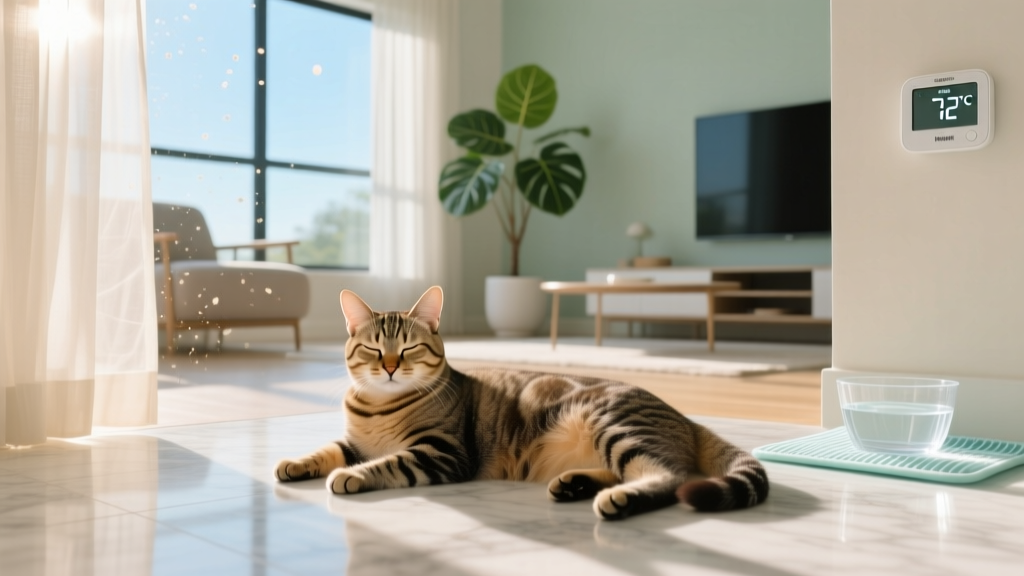
- Create ‘quiet zones’: Designate 2–3 calm, dimly lit areas with consistent temperature (68–75°F), zero foot traffic, and no sudden noises. Add heated pads (set to 100–102°F) for arthritic cats — but always use thermostatically controlled models to prevent burns.
- Reinforce routine — gently: Feed, play, and interact at the same times daily. Use timed feeders for breakfast and dinner. Even small deviations (e.g., shifting playtime by 30 minutes) can trigger anxiety in cognitively impaired cats.
Real-world example: Betty, 78, noticed her 14-year-old tuxedo cat, Oliver, began eliminating beside — not in — his box. After ruling out UTIs and arthritis, her vet suggested a simple change: replacing his covered box with a large, open one placed beside his favorite napping spot. Within 3 days, accidents stopped. Why? Reduced visual obstruction + zero effort to climb in = restored confidence.
Step 3: Calm Their Nervous System — Not Just Their Actions
Punishment, spray bottles, or yelling don’t work on senior cats — they damage trust and amplify fear-based behaviors. Instead, target the nervous system using evidence-backed calming techniques:
- Feliway Optimum diffusers: Unlike classic Feliway (which targets stress via facial pheromones), Optimum releases both facial *and* appeasing pheromones — proven in a 2022 RVC clinical trial to reduce vocalization and restlessness in 68% of geriatric cats within 10 days.
- Targeted play therapy: Short, predictable sessions (3–5 mins, 2x/day) using wand toys held at ground level mimic natural hunting without demanding leaps or sprints. End each session with a high-value treat (e.g., freeze-dried chicken) to reinforce calm association.
- Massage & gentle tactile input: Daily 2-minute sessions focusing on shoulders, base of tail, and inner thighs stimulate parasympathetic response. Use slow, circular strokes — stop immediately if ears flatten or tail flicks.
- Supplement wisely: L-theanine (found in products like Composure Pro) and alpha-casozepine (Zylkène) show safety and mild efficacy in reducing anxiety in older cats — but only after vet approval, especially if kidney or liver values are borderline.
Important caveat: Avoid melatonin, CBD, or essential oils. There’s zero peer-reviewed safety data for these in geriatric cats, and several documented cases of liver toxicity linked to lavender and tea tree oil exposure.
Step 4: Support Cognitive Health — Because ‘Confused’ Isn’t Hopeless
Feline Cognitive Dysfunction (FCD) is progressive but manageable — especially when caught early. Think of it like dementia prevention in humans: nutrition, mental engagement, and vascular health matter profoundly.
According to Dr. Danielle Bernal, board-certified veterinary nutritionist, ‘Diet is the #1 modifiable factor. Diets rich in antioxidants (vitamin E, selenium), omega-3s (EPA/DHA), and medium-chain triglycerides (MCTs) cross the blood-brain barrier and reduce neuroinflammation. Hill’s b/d and Royal Canin NeuroCare are clinically tested for this — and yes, switching matters even at age 16.’
Pair nutrition with cognitive enrichment — not puzzles that frustrate, but sensory stimulation that invites participation:
- Hide kibble in shallow muffin tins lined with soft fabric (easy to paw out).
- Play nature sounds (birdsong, rustling leaves) at low volume during daylight hours — helps reset circadian rhythm.
- Introduce novel scents weekly (e.g., dried catnip, silvervine, or rosemary) on safe cloth squares — smell is the strongest memory trigger in cats.
A 2021 UC Davis longitudinal study followed 42 cats aged 12–18 for 18 months. Those receiving MCT-enriched food + daily scent rotation showed 41% slower decline in spatial memory tasks versus controls — and 3x fewer episodes of disorientation.
| Life Stage | Key Behavioral Signs to Monitor | Vet Visit Frequency | Top 2 At-Home Interventions | When to Escalate |
|---|---|---|---|---|
| 11–13 years (Early Senior) | Mild night vocalization, slight litter box inconsistency, reduced grooming | Annual exam + bloodwork | Introduce joint supplements (glucosamine/chondroitin), add ramps to favorite spots | More than 2 accidents/week OR vocalizing >1 hr nightly |
| 14–16 years (Mid-Senior) | Pacing, staring, forgetting food bowl location, increased clinginess or withdrawal | Biannual exams + BP + SDMA test | Switch to senior brain-support diet, install nightlights in hallways/bathrooms | Getting trapped in rooms, falling down stairs, or no longer recognizing family members |
| 17+ years (Geriatric) | Disorientation, apparent blindness/deafness, significant weight loss despite eating, prolonged hiding | Every 4–6 months + tailored diagnostics | Use heated orthopedic beds, hand-feed small frequent meals, simplify environment (remove clutter) | Incontinence, inability to stand/walk, or persistent vocalization with no clear trigger |
Frequently Asked Questions
Can I train a 15-year-old cat to stop yowling at night?
Yes — but not through correction. Night yowling is almost always tied to vision/hearing loss, hypertension, or FCD disrupting circadian rhythm. First, rule out high blood pressure (a silent killer in seniors) and retinal degeneration. Then, try this: 1) Install motion-activated nightlights in key paths, 2) Feed last meal at 9 PM to align digestion with sleep, 3) Play 10 minutes of gentle interactive play at dusk to ‘wind down’ energy, and 4) Use Feliway Optimum diffuser in bedroom. Most cats show improvement in 10–14 days — but if yowling persists beyond 3 weeks, recheck with your vet for underlying pain or neurological changes.
My senior cat suddenly hates being touched — is this normal?
No — it’s a red flag. While some grumpiness can occur, true aversion to handling often signals pain (especially in spine, hips, or mouth) or hyperesthesia (nerve sensitivity). Gently run your hands along their back and sides while watching for flinching, tail lashing, or skin rippling. If you notice any, schedule a vet visit immediately. Never force contact. Instead, rebuild trust with ‘touch-free’ bonding: sit quietly nearby while reading aloud, offer treats from your palm (no grabbing), and let them initiate contact. Many cats regain comfort within weeks once pain is treated.
Will medication help my senior cat’s aggression?
Medication is rarely first-line — and should only follow thorough medical workup and behavior assessment. SSRI-type drugs like fluoxetine *can* help in confirmed FCD or anxiety cases, but they take 4–6 weeks to reach therapeutic levels and require careful monitoring of liver/kidney function. More effective first steps: eliminate triggers (e.g., block window views of outdoor cats), add vertical space for escape, and use species-appropriate calming aids. A board-certified veterinary behaviorist (available via telehealth through AVSAB) can guide personalized plans — often avoiding meds entirely.
Is it okay to get another cat to keep my senior cat company?
Generally, no — especially if your senior cat shows signs of stress, cognitive decline, or territorial behavior. Introducing a new cat creates massive social, olfactory, and spatial disruption. Over 80% of geriatric cats regress behaviorally after introductions, per the 2020 ASPCA Shelter Behavior Survey. Instead, enrich solo life: rotate toys daily, use window perches with bird feeders outside, and provide ‘social’ audio (recordings of purring or gentle meows). If companionship is truly desired, consider fostering a calm, adult cat *only after* your senior has passed — not during their vulnerable years.
Common Myths About Senior Cat Behavior
- Myth #1: “Old cats just get cranky — there’s nothing you can do.”
False. Irritability is nearly always a symptom — not a personality trait. Arthritis pain, dental disease, or hypertension cause genuine discomfort that manifests as growling, swatting, or avoidance. Address the cause, and the ‘crankiness’ often vanishes.
- Myth #2: “If they’re still eating and using the litter box, they must be fine.”
Dangerously misleading. Cats mask illness masterfully. A senior cat may eat while in chronic pain or early kidney failure — and use the litter box out of sheer habit, even while experiencing urinary discomfort. Subtle changes in posture, grooming frequency, or interaction quality matter more than binary ‘yes/no’ functions.
Related Topics (Internal Link Suggestions)
- Signs of arthritis in cats — suggested anchor text: "subtle signs of arthritis in senior cats"
- Feline cognitive dysfunction symptoms — suggested anchor text: "early signs of cat dementia"
- Best senior cat food for kidney health — suggested anchor text: "vet-recommended kidney-friendly food for older cats"
- Litter box solutions for arthritic cats — suggested anchor text: "low-entry litter boxes for elderly cats"
- How to introduce a new cat to a senior cat — suggested anchor text: "safe introduction guide for older cats"
Your Next Step Starts With Observation — Not Intervention
You now know that how to control cats behavior for senior cats isn’t about dominance or discipline — it’s about listening deeply, adapting compassionately, and partnering with your veterinarian as a co-diagnostician. Start today: grab a notebook and track one behavior for 72 hours — note time of day, what happened before/after, your cat’s body language, and environmental factors (noise, light, people). Patterns will emerge. Then, call your vet and say: ‘I’ve noticed X, Y, Z — can we prioritize checking [specific concern] at our next visit?’ That simple act shifts you from overwhelmed caregiver to empowered advocate. And remember: every gentle adjustment you make doesn’t just change behavior — it deepens dignity, safety, and love in your cat’s golden years. You’ve got this.