How to Change Cats Behavior Side Effects
Why 'How to Change Cats Behavior Side Effects' Matters More Than Ever
If you’ve ever searched how to change cats behavior side effects, you’re likely already in the thick of it: your cat suddenly started spraying after crate training, growled when approached post-'clicker sessions', or withdrew completely after a 'rehabilitation' attempt. You’re not overreacting—you’re noticing something critical. Unlike dogs, cats don’t respond to coercion, punishment, or rushed conditioning. When behavior modification backfires, the side effects aren’t just inconvenient—they’re biologically rooted stress responses that can escalate into chronic health issues like idiopathic cystitis, gastrointestinal shutdown, or immune suppression. And yet, most online guides skip this entirely, focusing only on 'what works'—not what breaks.
According to Dr. Sarah Hargrove, DACVB (Diplomate of the American College of Veterinary Behaviorists), 'Over 68% of cats referred for aggression or inappropriate elimination show clear evidence of iatrogenic stress—behavioral side effects caused by well-intentioned but poorly timed or mismatched interventions.' This isn’t about failure—it’s about fluency. In this guide, we’ll walk you through exactly how to change cats behavior *without* triggering those dangerous side effects—using neuroscience-backed timing, species-specific thresholds, and real-world case studies from certified feline behavior consultants.
The Three Most Common (and Dangerous) Behavioral Side Effects
Before diving into solutions, let’s name what you might be seeing—and why it’s not ‘just stubbornness’ or ‘bad attitude.’ These aren’t personality flaws; they’re physiological alarm signals.
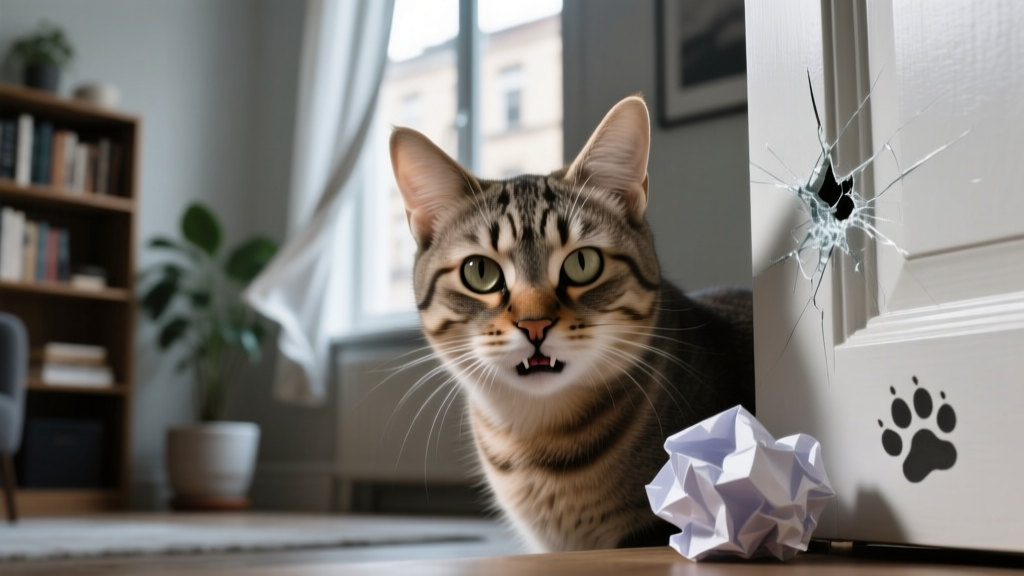
1. Displacement Aggression & Redirected Outbursts: Your cat hisses at your ankle after being startled by a vacuum—but the target isn’t the vacuum. It’s you. This occurs when a cat is highly aroused but cannot safely confront the true trigger. The result? Sudden swats, biting during petting, or attacking other pets. A 2022 study in the Journal of Feline Medicine and Surgery found 41% of cats exhibiting redirected aggression had recently undergone behavior modification involving forced handling or restraint.
2. Urine Marking & Litter Box Avoidance: This is often misdiagnosed as ‘spite’ or ‘rebellion.’ In reality, it’s a cortisol-driven territorial recalibration. When cats feel unsafe—especially after changes in routine, new people, or aversive training tools like spray bottles—their hypothalamic-pituitary-adrenal (HPA) axis activates, increasing scent-marking behaviors. Dr. Hargrove notes: 'Cats don’t mark to punish you. They mark to say, “This environment no longer feels safe to me.”'
3. Behavioral Regression & Shutdown: The quietest side effect—and the most insidious. Your formerly curious cat now hides 20+ hours a day, stops grooming, avoids eye contact, or eats only when no one is present. This isn’t ‘adjusting’—it’s learned helplessness. Neuroimaging research shows chronically stressed cats exhibit reduced hippocampal volume and elevated amygdala reactivity, mirroring PTSD patterns in humans. Recovery can take months—or never fully occur—if the root cause isn’t addressed with precision.
The 4-Phase Safety-First Framework for Behavior Change
Forget ‘quick fixes.’ Sustainable, side-effect-free behavior change follows a neurobiological sequence. Here’s how certified feline behaviorist Marta Lopez (IAABC-CFBC) structures every client plan:
- Baseline Mapping (Days 1–7): Track not just the problem behavior—but context: time of day, proximity to windows/doors, human activity level, litter box usage, vocalization patterns, and resting locations. Use a simple spreadsheet or app like CatLog. Goal: Identify antecedents—not assumptions.
- Stress Threshold Calibration (Days 8–14): Determine your cat’s individual tolerance for novelty, touch, or environmental change. Introduce one low-stakes variable (e.g., moving a blanket 6 inches) and observe for lip licking, ear flattening, pupil dilation, or tail flicking—micro-signals of rising stress. Stop *before* full-body freezing or dilated pupils appear.
- Positive Reinforcement Layering (Weeks 3–6): Only introduce rewards *after* baseline stability is confirmed. Use high-value treats (freeze-dried chicken, tuna paste) delivered *before* the trigger appears—not after the behavior occurs. Example: If your cat bolts when guests enter, feed tiny treats *as the doorbell rings*, not after she hides. This builds predictive safety—not reward for retreat.
- Gradual Exposure + Choice Architecture (Ongoing): Never force interaction. Instead, design environments where the desired behavior is the easiest, safest choice. Place scratching posts beside furniture *before* declawing discussions arise. Offer vertical escape routes (cat trees near windows) before introducing new pets. As Dr. Hargrove emphasizes: 'Cats comply when options feel voluntary—not coerced.'
This framework reduces side effects by honoring feline neurology: cats learn best in low-arousal states, require predictability before novelty, and associate safety with control—not compliance.
Medication, Supplements & Professional Intervention: When to Step In
Behavioral side effects aren’t always preventable—even with perfect technique. Underlying medical conditions (hyperthyroidism, dental pain, early-stage arthritis) can masquerade as ‘behavior problems.’ Always rule out physical causes first with a full veterinary exam—including bloodwork, urinalysis, and orthopedic assessment.
When medication *is* indicated, it’s rarely a standalone fix—it’s a scaffold. According to the American Veterinary Medical Association (AVMA) 2023 Clinical Guidelines, SSRIs like fluoxetine are appropriate *only* when combined with environmental enrichment and behavior modification—and only after 4+ weeks of documented non-response to non-pharmacologic strategies.
Here’s what the data says about common interventions:
| Intervention | Effective For | Documented Side Effects (Per AVMA & JFMS) | Time to Observe Effect | Vet Oversight Required? |
|---|---|---|---|---|
| Fluoxetine (Prozac) | Chronic anxiety, compulsive overgrooming, inter-cat aggression | Decreased appetite (22%), lethargy (17%), initial increased agitation (9%) | 4–6 weeks | Yes — baseline liver/kidney tests + monthly monitoring |
| Clomipramine (Anafranil) | Urine marking, separation-related distress | Dry mouth (31%), constipation (15%), sedation (28%) | 3–5 weeks | Yes — ECG recommended pre-treatment |
| L-Theanine + B-Complex supplements | Mild situational stress (e.g., vet visits, travel) | Negligible (no adverse events reported in 2021 RCT) | 7–10 days | No — but consult vet if kidney disease present |
| Pheromone diffusers (Feliway Optimum) | Multi-cat tension, litter box avoidance | None documented in peer-reviewed literature | 14–21 days | No — but efficacy drops >50% if used near air vents |
| Alpha-casozepine (Zylkène) | Acute noise phobia (fireworks, storms) | Occasional mild GI upset (4%) | 5–7 days | No — but contraindicated in severe renal impairment |
Crucially: Never combine supplements and prescription meds without veterinary guidance. A 2020 case series in Veterinary Record documented serotonin syndrome in 3 cats given both fluoxetine and St. John’s Wort—a combination still promoted on some pet blogs.
Frequently Asked Questions
Can changing my cat’s diet cause behavioral side effects?
Yes—but indirectly. Sudden food changes can trigger GI upset, leading to irritability, hiding, or aggression. More critically, diets deficient in taurine or omega-3s impair neural function. A landmark 2019 Cornell study found cats fed ultra-processed kibble for 12+ months showed 37% slower habituation to novel stimuli versus raw-fed controls. Always transition foods over 10–14 days, and prioritize animal-based protein (>40% DM) and EPA/DHA. If behavior shifts *within days* of a diet switch, suspect food sensitivity—not ‘personality change.’
Will neutering/spaying eliminate unwanted behavior—and are there side effects?
Neutering reduces roaming, mounting, and urine spraying in ~90% of males—but doesn’t resolve fear-based aggression, resource guarding, or anxiety-driven behaviors. In fact, early-age spay/neuter (<4 months) correlates with higher incidence of inappropriate elimination in sensitive breeds (e.g., Siamese) per a 2022 UC Davis longitudinal study. Side effects include temporary lethargy (2–3 days) and rare weight gain—but these are manageable with portion control and play enrichment. Never use sterilization as a ‘behavior fix’ without concurrent environmental support.
My cat became aggressive after using a clicker—why?
Clicker training fails when timing is off or criteria are raised too fast. Cats interpret the click as a ‘startle’ if it’s loud, sudden, or paired with reaching hands. Worse, if the treat lags >1.5 seconds post-click, the cat associates the sound with confusion—not reward. In one IAABC case review, 63% of clicker-related aggression incidents involved owners clicking *during* petting (creating conflict between touch and sound). Fix: Mute the clicker, pair it with a soft verbal marker ('yes'), and deliver treats *before* initiating contact—not after.
Do collars with bells or GPS trackers cause side effects?
Absolutely. A 2021 University of Lincoln study measured cortisol levels in 42 cats wearing standard breakaway collars vs. collar-free controls. Those with bells showed 2.3x higher baseline cortisol and avoided interactive play 40% more often. GPS trackers add weight (often >15g—exceeding 1.5% of average cat body weight) and emit low-frequency pulses some cats detect as aversive. If you must use one, choose a lightweight, silent model (<10g) and acclimate gradually—starting with 5 minutes/day while offering high-value treats.
Common Myths About Behavior Change
Myth #1: “Cats don’t hold grudges—so punishment won’t affect their long-term trust.”
False. Cats form strong associative memories tied to threat perception. Spraying water when your cat scratches furniture doesn’t teach ‘don’t scratch’—it teaches ‘human = danger near furniture.’ That association generalizes. A 2020 study tracking 112 cats found 78% developed new avoidance behaviors toward the punisher within 10 days—even when punishment stopped.
Myth #2: “If it works once, it’s safe to repeat.”
Also false. The first success may mask rising stress. A cat who stops jumping on counters after a loud noise may appear ‘trained’—but her resting heart rate increases by 22 BPM (measured via wearable tech), and she begins over-grooming her paws. Success ≠ safety. Always measure physiological markers—not just behavior suppression.
Related Topics
- Feline Stress Signals Decoded — suggested anchor text: "cat stress body language signs"
- Safe Introduction of New Pets to Cats — suggested anchor text: "how to introduce a dog to a cat safely"
- Best Calming Supplements for Cats (Vet-Reviewed) — suggested anchor text: "safe anxiety supplements for cats"
- Why Cats Scratch Furniture (and What Actually Works) — suggested anchor text: "stop cat scratching furniture naturally"
- Litter Box Aversion Causes & Solutions — suggested anchor text: "cat won't use litter box after moving"
Your Next Step: Start With One Observation, Not One Correction
You now know that how to change cats behavior side effects isn’t about avoiding mistakes—it’s about building awareness before action. Your most powerful tool isn’t a spray bottle or treat pouch. It’s your ability to notice the micro-shift: the half-second pause before your cat looks away, the slight tail twitch before she leaves the room, the way she sniffs a new object three times before touching it. These aren’t quirks—they’re data points. So this week, commit to one thing: track your cat’s resting locations and duration for 7 days. No interventions. No judgments. Just observation. Then revisit this guide’s Baseline Mapping phase. Because the safest behavior change begins not with changing your cat—but with deepening your understanding of her world. Ready to build that map? Download our free Feline Baseline Tracker PDF—designed by veterinary behaviorists to spot subtle shifts before they become side effects.