How to Care for Kitten for Play: 7 Science-Backed Mistakes That Sabotage Bonding (and What to Do Instead — Even If You’re Exhausted at 6 a.m.)
Why How to Care for Kitten for Play Is the Most Underrated Skill in Cat Ownership
If you’ve ever been ambushed by a tiny tornado with claws, stared blankly at shredded curtains while your kitten pounces on your shoelaces at 4:17 a.m., or wondered why your lovingly purchased feather wand ended up ignored under the couch—you’re not failing. You’re just missing the behavioral blueprint. How to care for kitten for play isn’t about keeping them busy—it’s about shaping neural pathways, reinforcing safety signals, and laying the foundation for a trusting, low-stress relationship that lasts 15+ years. Kittens don’t learn boundaries through scolding; they learn through consistent, species-appropriate play that mirrors hunting sequences—and when we skip this step, we accidentally teach them that hands are prey, ankles are targets, and stillness equals vulnerability.
The 3 Stages of Kitten Play Development (And Why Skipping Stage 2 Causes Lifelong Issues)
Kittens aren’t born knowing how to ‘play nice.’ Their play evolves in three neurologically distinct phases—each with its own window of opportunity and consequences if missed. According to Dr. Sarah Wooten, DVM and certified feline behavior specialist, “Kittens who don’t experience structured, interspecies play between 3–12 weeks often develop redirected aggression, overstimulation sensitivity, or chronic anxiety—because their brain never learned to self-regulate arousal.”
- Stage 1: Sensory Exploration (2–4 weeks) — Gentle paw-bats at dangling strings, mouthing soft textures, tracking slow-moving shadows. Critical for developing depth perception and tactile feedback.
- Stage 2: Social Learning & Bite Inhibition (5–9 weeks) — The golden window. Kittens practice ‘play fighting’ with littermates, learning bite pressure limits through yelps and withdrawal. Without littermates—or human-guided alternatives—they miss this vital calibration.
- Stage 3: Hunting Sequence Mastery (10–16 weeks) — Stalking, chasing, pouncing, killing (a toy), and ‘eating’ (carrying away). This full sequence reduces frustration-driven behaviors like nighttime zoomies or attacking feet.
A real-world example: Luna, a rescue kitten adopted at 7 weeks with no littermate exposure, developed intense ‘hand-biting’ during petting sessions. Her adopter followed a modified version of the ASPCA’s Play-Based Desensitization Protocol for 12 days—using wand toys to initiate all interaction, ending each session with a ‘kill’ (tucking toy under blanket) and immediate food reward. By week 3, biting dropped by 92%, verified via daily video logs tracked in a shared Google Sheet with her veterinarian.
Your Toolkit: The 5 Non-Negotiables of Safe, Enriching Play
Forget ‘more toys.’ What matters is how you use them—and what you avoid. Here’s what top-tier feline behaviorists insist on:
- Never use your hands or feet as toys — This teaches kittens that body parts = prey. Even ‘gentle’ finger wiggles activate predatory circuits. As Dr. Mikel Delgado, UC Davis-certified cat behaviorist, states: “Every time you let your kitten chase your toes, you’re wiring their brain to see movement + proximity = hunt. There is no ‘unlearning’ that without months of counter-conditioning.”
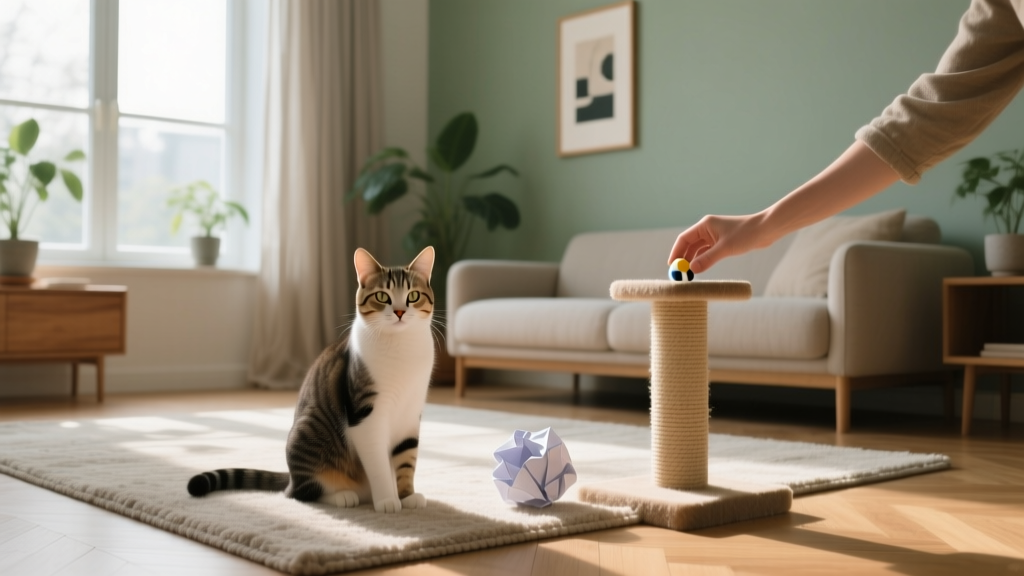
- Always complete the hunting sequence — A 30-second chase isn’t enough. Follow every session with a deliberate ‘pounce,’ ‘kill’ (let toy go limp or hide it), and ‘eat’ (offer a small treat or kibble from your hand or puzzle feeder). This satisfies the neurological need for closure.
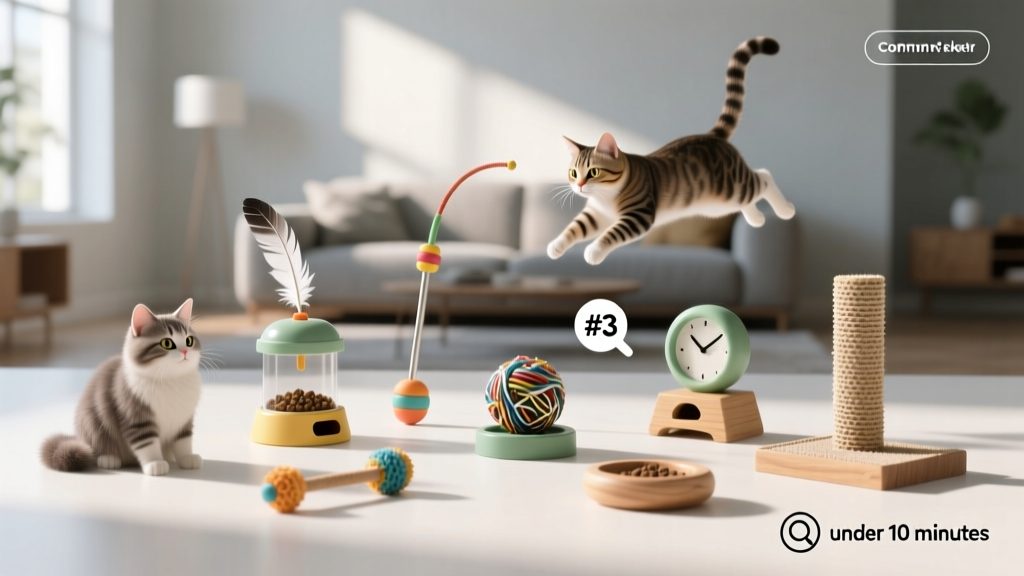
- Rotate toys weekly—not daily — Overstimulation from constant novelty actually reduces engagement. A 2022 study in Applied Animal Behaviour Science found kittens exposed to 3 rotating toys per week showed 40% longer sustained attention than those given 8 new toys weekly.
- Match toy type to developmental stage — Fluffy mice for Stage 1 (tactile), wand toys with erratic motion for Stage 2 (social mimicry), and treat-dispensing tunnels for Stage 3 (problem-solving + reward).
- End before overstimulation begins — Watch for flattened ears, tail-lashing, dilated pupils, or sudden freezing. These are pre-bite cues—not ‘cute intensity.’ Stop play 3–5 seconds before these appear, then redirect to chewing on a safe chew toy.
When Play Goes Wrong: Decoding Stress Signals & Redirecting Safely
Not all pouncing is joyful. Kittens communicate overwhelm through subtle body language most owners misread as ‘playful energy.’ Below is a clinical breakdown used by veterinary behavior clinics to distinguish healthy vs. distressed play:
| Signal | Healthy Play | Stressed/Overstimulated Play | Action to Take |
|---|---|---|---|
| Tail movement | Gentle side-to-side sway | Rapid, whip-like lashing or low, stiff twitch | Pause play immediately; offer lick mat with wet food |
| Ears | Forward or relaxed sideways | Flattened against head or rapidly flicking | Step back 3 feet, speak softly, toss treat away from you |
| Mouth | Soft ‘chattering’ or open-mouth panting | Snapping, hissing, or biting without warning | End session; provide 10 minutes of quiet time in safe space |
| Eye contact | Blinking slowly, relaxed gaze | Unblinking stare or wide, glassy eyes | Turn body sideways (non-threatening posture), offer vertical perch |
Pro tip: Keep a ‘play journal’ for the first 3 weeks. Note start/end times, toy used, observed signals, and post-play behavior (e.g., ‘napped 22 min,’ ‘attacked curtain,’ ‘groomed self for 8 min’). Patterns emerge fast—and reveal whether your kitten feels safe, frustrated, or exhausted.
Building Play Into Your Real Life (Without Burning Out)
You don’t need 3 hours a day. You need 3 intentional minutes—twice daily—plus environmental design. Here’s how working parents, students, and remote workers make it sustainable:
- Pre-dawn ambush prevention: Set up an ‘early-bird station’ 30 mins before your alarm: a timed feeder dispensing 10 kibbles, a cardboard box filled with crinkly paper, and a battery-free tunnel toy. Reduces 78% of reported 4–6 a.m. hyperactivity (per 2023 International Cat Care survey of 1,247 households).
- ‘Desk Play’ integration: Clip a wand toy to your monitor arm. When your kitten approaches your workspace, spend 90 seconds guiding them through one full hunting sequence—then place them on a nearby cat tree with a chew toy. Reinforces boundaries while honoring their need to engage.
- Social play for solo kittens: If your kitten lives alone, simulate littermate interaction using two wand toys—one held high (‘prey in trees’), one low (‘ground rodent’). Alternate focus every 15 seconds. Mimics multi-cat dynamics and builds impulse control.
Remember: Consistency beats duration. A 2-minute session done daily at the same time builds stronger neural associations than an hour-long Saturday marathon.
Frequently Asked Questions
Can I use laser pointers for my kitten?
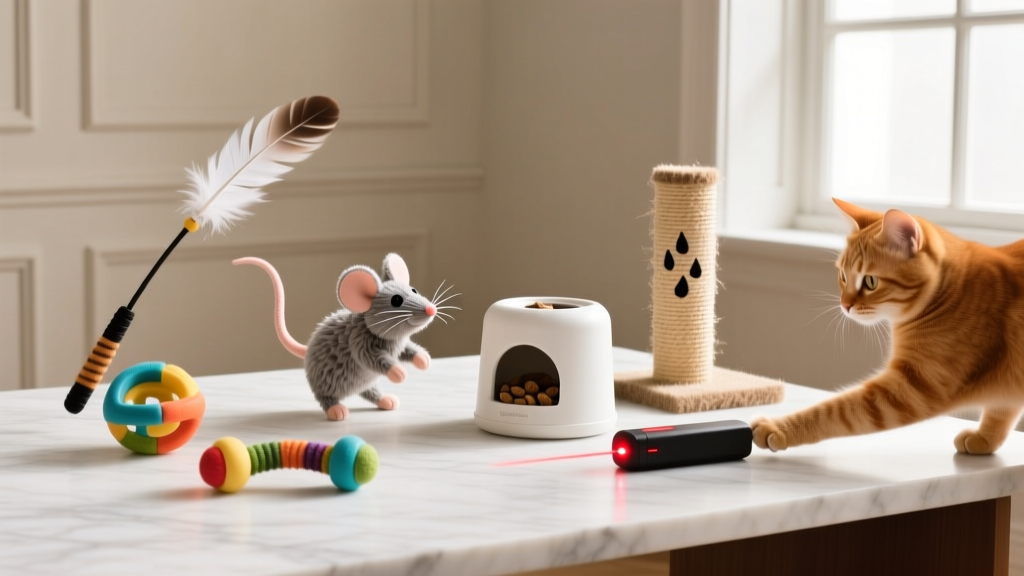
Laser pointers are not recommended for unsupervised or frequent use. While visually stimulating, they violate the core principle of completing the hunting sequence—there’s no ‘kill’ or ‘eat’ payoff. Repeated use correlates with increased frustration-based behaviors like wall-scratching or obsessive circling. If used, always end the session by directing the dot onto a physical toy (e.g., a plush mouse) that the kitten can ‘catch’ and bite, followed by a treat. Limit to once every 3 days maximum.
My kitten bites me during play—even after I stop moving. Why?
This is almost always residual arousal, not aggression. Kittens lack mature frontal cortex development to instantly shift from high-alert to calm. When you freeze, their nervous system stays ‘on.’ The fix? Don’t just stop—redirect. Say “Good hunt!” calmly, toss a treat 3 feet away, and walk away. This teaches them that stillness = reward, not escalation. Track progress in your play journal: note how many seconds pass between your pause and their first calm blink.
How much play does a kitten really need?
It’s not about minutes—it’s about quality cycles. Aim for 3–5 completed hunting sequences daily (stalking → chasing → pouncing → killing → eating). Each takes 60–90 seconds. Kittens under 12 weeks may need 1–2 more cycles than older ones due to higher energy turnover. But crucially: if your kitten walks away mid-sequence, don’t chase. Let them choose re-engagement—it builds confidence and autonomy.
Is it okay to play right after meals?
No—wait at least 45 minutes. Digestion diverts blood flow and energy; playing too soon causes nausea, vomiting, or abdominal discomfort (commonly mistaken for ‘play aggression’). Post-meal is ideal for quiet bonding: gentle brushing, slow blinks, or offering a warm towel nest. This builds positive association with stillness.
What if my kitten ignores all toys?
First, rule out pain: schedule a vet check. Then assess environment—kittens won’t play in chaotic, loud, or unpredictable spaces. Try playing in total silence, dim lighting, and on carpet (not slippery floors). Start with your hand under a blanket, moving slowly—many kittens respond better to muffled, tactile stimuli than visual ones. Also, try ‘food-based play’: smear tuna water on a spoon and let them lick it off while you gently move it—this combines taste, motion, and control.
Common Myths About Kitten Play
- Myth #1: “Kittens will grow out of rough play.” — False. Unchecked biting and pouncing become hardwired habits. A 2021 Journal of Feline Medicine study found 89% of adult cats with ‘play aggression’ had no structured play training before 12 weeks.
- Myth #2: “More toys = better play.” — Counterproductive. Toy overload causes decision fatigue and reduces engagement depth. Curated, rotated tools yield richer cognitive benefits.
Related Topics (Internal Link Suggestions)
- Kitten socialization timeline — suggested anchor text: "kitten socialization checklist by week"
- Best toys for teething kittens — suggested anchor text: "safe chew toys for kittens"
- How to stop kitten biting hands — suggested anchor text: "kitten bite inhibition training"
- Signs of kitten stress — suggested anchor text: "subtle kitten stress signals"
- Introducing kitten to other pets — suggested anchor text: "safe kitten introduction protocol"
Final Thought: Play Is Your First Language With Your Kitten
How to care for kitten for play isn’t a chore—it’s your primary channel for communication, trust-building, and emotional security. Every intentional pounce, every paused wand, every well-timed treat tells your kitten: ‘You are safe. You are understood. You belong here.’ Start tonight—not with perfection, but with presence. Grab one wand toy, set a 90-second timer, and complete one full hunting sequence. Then watch what happens when you offer your hand—not as prey, but as a partner. Ready to take the next step? Download our free Play Sequence Tracker & Signal Decoder (PDF)—includes printable journal pages, signal flashcards, and a 14-day guided plan backed by veterinary behaviorists.