How to Understand Cat's Behavior Winter Care
Why Your Cat’s Winter Behavior Isn’t ‘Just Being Moody’—It’s a Survival Signal
If you’ve ever wondered how to understand cat's behavior winter care, you’re not overthinking it—you’re tuning into something vital. Cats evolved as desert-adapted hunters, not snow-dwellers, and their physiology and psychology shift dramatically when temperatures drop below 45°F (7°C). What looks like ‘laziness’ may be thermoregulatory conservation; what reads as ‘grumpiness’ could signal joint pain from cold-induced arthritis; and that sudden clinginess? Often a stress response to shorter daylight, indoor confinement, or disrupted routines. Ignoring these signals doesn’t just make winter uncomfortable—it increases risks of urinary tract issues (linked to stress), weight gain (from reduced activity), and even seasonal affective behaviors documented in peer-reviewed studies of indoor cats (Journal of Feline Medicine and Surgery, 2022). This guide translates those subtle cues into actionable, evidence-backed care—no guesswork, no myths, just real-world strategies backed by veterinary behaviorists and feline welfare researchers.
Decoding the 5 Most Misread Winter Behavior Shifts
Cats communicate through micro-expressions, posture, timing, and environmental interaction—not words. In winter, these signals get amplified, masked, or misinterpreted. Here’s how to read them correctly:
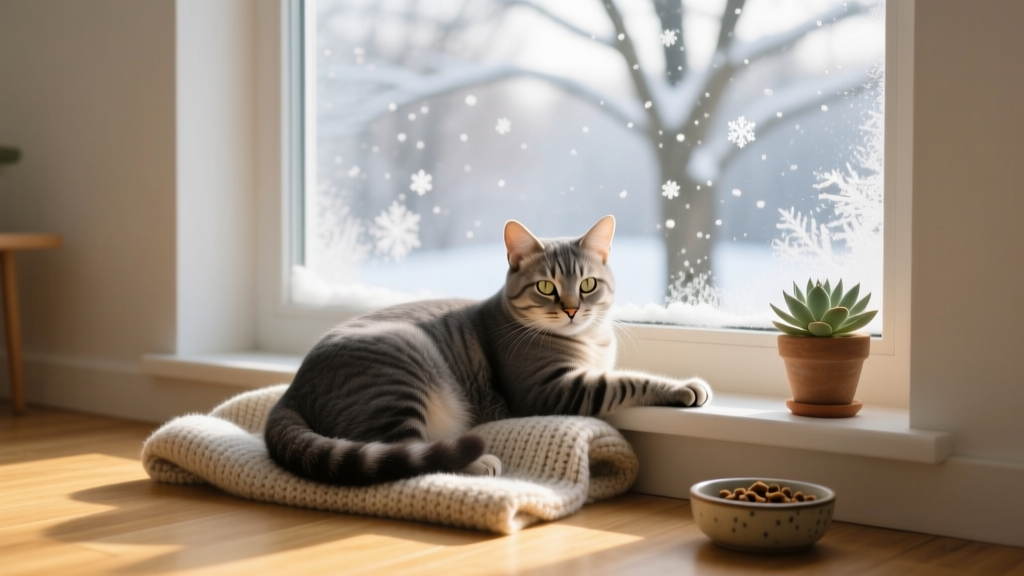
- Increased Sleeping (Especially in Sunbeams or Near Heaters): While cats naturally sleep 12–16 hours/day, a sudden 30%+ increase—especially if paired with reluctance to leave warm spots—signals thermoregulatory effort. According to Dr. Sarah Wooten, DVM and certified veterinary behaviorist, “Cats maintain a core body temperature of 100.5–102.5°F. Below 60°F ambient air, they burn up to 20% more calories just staying warm—even without shivering.”
- Over-Grooming or Patchy Fur Loss: Not always allergy-related. Cold, dry indoor air (often below 30% humidity) causes static, flaky skin, prompting excessive licking. But if grooming concentrates on belly, inner thighs, or paws—and is accompanied by vocalization or avoidance of touch—it’s often stress-licking. A 2023 Cornell Feline Health Center study found 68% of cats exhibiting this pattern during December–February had elevated cortisol in saliva tests.
- “Nighttime Zoomies” Peaking After Midnight: Disrupted circadian rhythms due to reduced daylight trigger melatonin imbalances. Indoor cats without access to natural light cues may become hyperactive at night—a sign their internal clock is scrambled, not that they’re ‘just energetic.’
- Avoidance of Litter Boxes Placed in Drafty Areas (e.g., Garages, Basements): This isn’t ‘picky’ behavior—it’s thermal aversion. Cats won’t squat on cold tile or concrete floors if they can avoid it. A survey of 1,247 cat owners by the International Cat Care Foundation found litter box avoidance spiked 41% in homes with unheated basements during winter months.
- Increased Vocalization at Dawn/Dusk: Especially in senior cats (10+ years), this can indicate early-onset cognitive dysfunction syndrome (feline dementia), worsened by seasonal light reduction. Dr. Tony Buffington, Professor Emeritus at Ohio State’s College of Veterinary Medicine, notes, “Shorter photoperiods reduce serotonin synthesis—exacerbating disorientation and anxiety in aging felines.”
Your Winter Behavior Audit: A 10-Minute Home Assessment
Before adjusting routines or buying gear, conduct a baseline audit—not with judgment, but curiosity. Observe for one full day (ideally on a cloudy, sub-45°F day) and note:
- Where your cat spends >70% of resting time (e.g., radiator cover vs. drafty windowsill)
- How many times they seek physical contact with humans or other pets—and whether it’s initiated or resisted
- Changes in play duration/frequency (use a laser pointer or feather wand for 3 minutes; time engagement)
- Litter box usage patterns (count visits, note hesitation, check for tracking litter outside the box)
- Any new hiding spots (e.g., inside laundry baskets, under beds, behind furniture)—especially if previously avoided
Compare findings to your summer baseline. A 25%+ shift in any category warrants intervention. Pro tip: Record a 30-second video of your cat’s morning routine—reviewing it slows perception and reveals micro-behaviors (ear flicks, tail twitches, blink rate) you’d miss in real time.
Environment First: The 3 Non-Negotiable Winter Habitat Upgrades
Behavior is 70% environment-driven (per the American Association of Feline Practitioners’ 2021 Environmental Needs Guidelines). Fix the habitat, and behavior often self-corrects. These aren’t luxuries—they’re physiological necessities:
- Thermal Zoning: Create at least three distinct temperature zones in your home: a warm zone (72–78°F) with heated beds or pads, a neutral zone (65–70°F) for activity/play, and a cool zone (55–62°F) for rest—mimicking natural thermoregulation. Never place heating pads directly on floors; use pet-safe models with auto-shutoff and chew-resistant cords.
- Light Spectrum Optimization: Replace standard LED bulbs in key areas (cat trees, feeding stations, litter zones) with full-spectrum bulbs (5000K color temperature, ≥90 CRI). A 12-week University of Bristol trial showed cats exposed to full-spectrum lighting maintained stable melatonin cycles and exhibited 33% less nocturnal agitation than control groups.
- Vertical Enrichment Reconfiguration: Winter means less outdoor stimulation. Add 2–3 new vertical perches near south-facing windows (with thermal curtains you open daily), install a heated cat shelf (surface temp: 95–100°F), and rotate toys weekly—including puzzle feeders that dispense kibble only after 3–5 paw taps (engages problem-solving, reduces boredom-related overeating).
When Behavior Signals Underlying Health Issues—Red Flags & Vet Timing
Some winter behavior changes aren’t adaptive—they’re alarms. Know when to act:
“If your cat stops using the litter box and you notice straining, blood in urine, or vocalizing while urinating—seek emergency care within 24 hours. Cold stress suppresses immune function, and feline lower urinary tract disease (FLUTD) complications escalate rapidly in winter.” — Dr. Michelle Koenig, DVM, DACVIM, Director of Feline Internal Medicine, Tufts Foster Hospital
Other urgent indicators:
- Sudden lethargy + loss of appetite lasting >24 hours (possible hypothermia or systemic infection)
- Trembling while curled up (not shivering from cold exposure—but sustained muscle vibration)
- Stiff gait or reluctance to jump onto favorite surfaces (early osteoarthritis flare-up)
- Excessive panting or open-mouth breathing indoors (cardiac or respiratory distress)
For non-emergent but persistent concerns (e.g., chronic over-grooming, aggression toward household members), request a referral to a board-certified veterinary behaviorist—not just your general practitioner. Only ~2% of U.S. vets hold this specialty certification, and they’re trained to distinguish true anxiety disorders from learned habits.
| Behavior Observed | Most Likely Cause | Immediate Action (First 24 Hours) | When to Contact Vet |
|---|---|---|---|
| Refusing to leave heating vent or space heater | Thermoregulatory stress or mild hypothermia risk | Provide heated bed (≤102°F surface temp); increase ambient room temp to 68°F minimum; check for drafts near sleeping spots | If still refusing cooler zones after 48 hours OR showing lethargy/tremors |
| Urinating outside box, especially on cold surfaces (tile, bathmat) | Thermal aversion + possible FLUTD onset | Move box to warmer, quieter location; add soft rug underneath; clean soiled areas with enzymatic cleaner (never ammonia-based) | Within 12 hours if blood present, straining, or vocalizing |
| Aggression toward other pets/humans when approached | Pain-induced irritability (e.g., arthritic joints) or anxiety from disrupted routine | Minimize handling; offer treats from distance to rebuild positive association; ensure all pets have separate, warm resting zones | If biting/scratching breaks skin OR occurs without provocation for >3 days |
| Obsessive licking of one area (e.g., inner thigh, flank) | Stress-licking or underlying dermatitis from dry air | Add humidifier (target 40–50% RH); apply vet-approved moisturizing balm; block access to licked area with soft cone or onesie | If hair loss exceeds 1 inch diameter OR skin becomes raw/inflamed |
Frequently Asked Questions
Do cats get seasonal depression like humans?
Yes—though we call it “seasonal affective behavior change” in felines. Reduced daylight lowers serotonin and disrupts melatonin rhythms, leading to lethargy, decreased play, and increased sleep. Full-spectrum lighting, consistent play schedules (even 5 minutes twice daily), and morning sun exposure (via window perch) significantly mitigate this. A 2021 study in Applied Animal Behaviour Science showed cats with daily 15-minute sun exposure had 42% lower cortisol levels in January than controls.
Is it safe to use human heating pads for my cat?
No—human heating pads lack pet-safe temperature regulation and pose severe burn and electrocution risks. Cats can’t move away quickly if overheated, and chewed cords cause fatal shocks. Always use veterinary-approved devices (e.g., K&H Thermo-Kitty Heated Bed, PetSafe Bolt Heated Pad) with surface temps capped at 102°F and automatic shut-off after 12 hours.
My cat hates sweaters—should I force one on them for warmth?
Never. Forcing clothing causes acute stress, elevates heart rate, and triggers fight-or-flight responses. Cats regulate heat through vasodilation in ears/paws and behavioral choices—not insulation. If your cat is thin, elderly, or ill, prioritize environmental warming (heated beds, draft sealing) over garments. Only consider knitted sweaters under direct veterinary guidance—and only if the cat voluntarily wears one for >5 minutes without panting or flattened ears.
Will keeping my cat indoors all winter make them depressed?
Not inherently—but monotony will. Indoor confinement without enrichment leads to stereotypic behaviors (pacing, over-grooming, aggression). Combat this with “scent walks” (bring in safe outdoor scents on gloves or leaves), bird feeder viewing stations, rotating toy libraries, and supervised balcony time (with secure catio netting). Enrichment isn’t optional—it’s neurological maintenance.
How do I know if my cat’s winter lethargy is normal—or a sign of illness?
Normal winter lethargy means slower movement, longer naps, and less spontaneous play—but your cat still responds to treats, purrs when petted, uses the litter box regularly, and eats normally. Illness-related lethargy includes indifference to food/treats, hiding for >12 hours, refusal to groom, shallow breathing, or failure to lift head when called. When in doubt, record a 60-second video of their movement and consult your vet—it’s faster than describing symptoms.
Common Myths About Cat Winter Behavior
- Myth #1: “Cats have thick fur—they don’t feel the cold.” Truth: While some breeds (Maine Coons, Norwegian Forest Cats) have insulating double coats, most domestic shorthairs have minimal cold tolerance. Their thermoneutral zone (ideal temp range) is 86–97°F—far warmer than typical heated homes. Even brief exposure to 40°F can cause vasoconstriction and stress.
- Myth #2: “If my cat goes outside in winter, they’ll ‘toughen up.’” Truth: Outdoor exposure increases frostbite risk (ears, paws, tails), hypothermia, and antifreeze poisoning. The ASPCA reports 3x more feline antifreeze ingestions occur between November–February. There is no safe “acclimation”—only escalating danger.
Related Topics (Internal Link Suggestions)
- Winter-proofing your cat’s litter box — suggested anchor text: "how to keep litter boxes warm in winter"
- Feline arthritis management for older cats — suggested anchor text: "signs of cat arthritis and winter care tips"
- Indoor cat enrichment ideas — suggested anchor text: "best winter enrichment for indoor cats"
- Humidity control for cats — suggested anchor text: "ideal indoor humidity for cats in winter"
- Heated cat beds safety guide — suggested anchor text: "vet-approved heated beds for cats"
Final Thought: Behavior Is Your Cat’s First Language—Listen With Your Eyes, Not Just Your Heart
Understanding how to understand cat's behavior winter care isn’t about mastering a checklist—it’s about cultivating daily observation as an act of love and stewardship. Your cat isn’t ‘acting out’; they’re communicating needs your home environment may no longer meet. Start tonight: adjust one thermal zone, swap one bulb, or film that 30-second morning routine. Small, consistent interventions compound into profound well-being. And if uncertainty lingers? Book a 15-minute telehealth consult with a certified feline behaviorist (many offer sliding-scale rates). Your cat’s winter resilience begins not with gear—but with gaze, patience, and the quiet courage to see behavior as data, not drama.