Why Cats Choose Your Pillow Over Their Own Bed
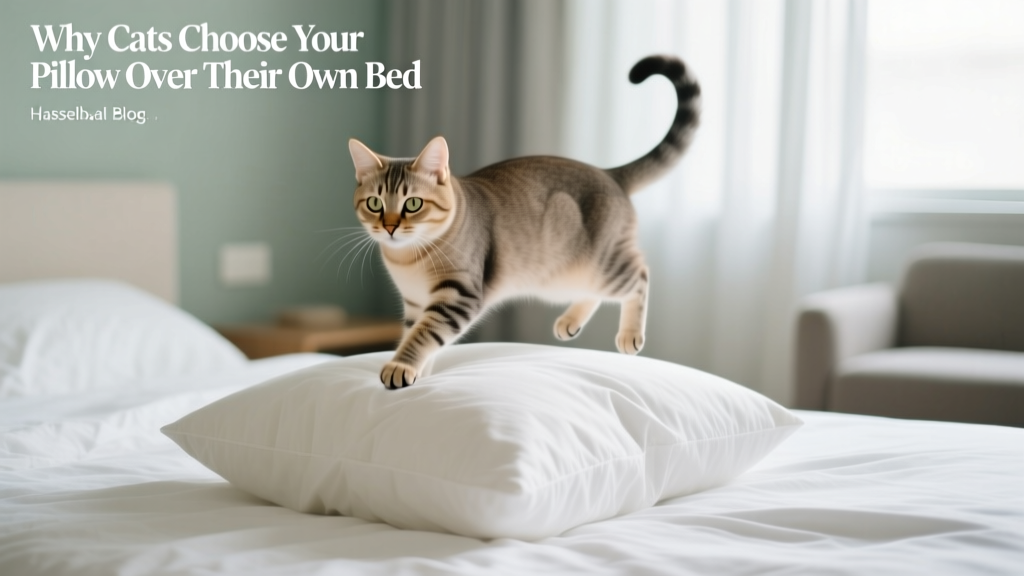
You buy your cat a plush, cloud-soft bed. Maybe it’s even heated. You place it in a quiet corner, away from foot traffic, like a tiny feline spa. Your cat sniffs it… then hops onto your pillow and curls up like they pay rent.
If you’ve ever tried to reclaim your pillow only to find a warm cat-shaped imprint (and possibly a few whiskers), you’re not alone. Pillow-sleeping is one of those classic “Why are you like this?” cat behaviors—quirky on the surface, but surprisingly sensible once you look at it through a cat’s eyes.
Here’s what’s really going on when your cat ignores their bed and chooses your pillow instead.
1) The scientific (and evolutionary) reason your pillow wins
Cats are small predators and also, historically, prey. Even the fluffiest indoor cat carries instincts shaped by survival: seek warmth, reduce risk, choose safe vantage points, and stay close to trusted allies.
Your pillow checks several instinctive boxes at once:
- Warmth and heat retention: Your head leaves behind heat. Pillows hold it. Many cat beds cool down quickly unless they’re insulated or heated.
- Safety through elevation: Beds on the floor can feel exposed. Your pillow is often higher up—on a bed that provides a broad “platform” and sightlines.
- Trusted scent: Cats use scent like a social map. Your pillow is saturated with your scent—skin oils, hair scent, the “you-ness” that signals familiarity and safety.
- Social bonding: Domestic cats can form strong attachments to people. Sleeping where you rest is a subtle form of social closeness—like choosing the same “nest.”
From a feline psychology perspective, your pillow isn’t just a soft object. It’s a warm, elevated, familiar-smelling “safe zone” that also happens to be associated with their favorite large food-dispensing mammal.
2) A detailed breakdown: different pillow-sleeping contexts (and what’s driving them)
Not all pillow choices mean the same thing. The details matter—time of day, your cat’s body language, and whether they’re pressed against your head or keeping a polite distance.
They sleep on your pillow when you’re not in bed
This is often about scent and comfort. Your cat may be seeking the strongest concentration of “their person” in the home. If you’re gone all day, your pillow can become a calming stand-in.
What it looks like: They curl tightly, knead, rub their cheeks, or do the slow-blink-and-melt routine before napping.
They climb onto your pillow right after you lie down
This can be social proximity plus heat. Your cat may want to settle in where your breathing and movement are predictable—near your head—rather than near your feet where you might shift.
What it looks like: They circle twice, plop down like a tiny boulder, then purr as if they just solved a complex puzzle.
They wedge themselves against your head or hair
This is the “intimate zone” and usually signals trust. Cats exchange scent through cheek rubbing and head bunting. Your hair and scalp also carry strong personal scent cues, and your exhaled breath adds warmth.
What it looks like: A determined cat loaf near your face, forehead pressed to yours, or a gentle head-butt followed by immediate sleep.
They pick one specific pillow and ignore the rest
Cats can be extremely specific about texture and smell. The “right” pillow might have the ideal fabric, the perfect squish level, or the strongest scent—especially if it’s the pillow you use most.
What it looks like: They bypass all other sleeping options like a picky hotel guest and head straight for that pillow.
They choose your pillow over their bed… but only at night
Nighttime can bring out a cat’s desire for security. Many cats become slightly more vigilant in the dark. Sleeping near you may help them relax because you’re a trusted “home base.”
What it looks like: A cat who naps elsewhere during the day but becomes your pillow’s official night shift guardian.
3) What pillow-sleeping reveals about your cat’s mood and feelings
When a cat chooses your pillow, it’s usually one (or more) of these emotional states:
- Secure and bonded: The most common meaning. Your cat feels safe with you and sees your sleeping area as part of their core territory.
- Comfort-seeking: They may be self-soothing, especially if you’ve been away, there’s been a change in the home, or there are loud noises outside.
- Mildly possessive (territorial reassurance): Cats use scent to “label” space. Your pillow carries your scent, but your cat may add theirs by rubbing or kneading—essentially co-signing the shared territory.
- In the mood for warmth: Sometimes it’s not deep—it’s just the warmest, coziest spot available.
One helpful rule: a relaxed pillow-cat will have a soft face, neutral ears, a loosely curled body, and calm breathing. A tense pillow-cat may look alert, hold their body rigid, or react sharply to movement—more on that in the “concern” section.
4) Related behaviors you might also notice
Pillow-sleepers often come with a full set of companion quirks:
- Kneading the pillow: A comfort behavior linked to kittenhood nursing. It can also deposit scent from paw glands.
- Face-rubbing or cheek-marking: Cats have scent glands around the cheeks and chin. Rubbing your pillow is a friendly “this is ours” signal.
- Sleeping on freshly worn clothes: Same logic: heat + your scent + a soft nest-like pile.
- Head-butting (bunting) near bedtime: A social, affiliative gesture that often precedes settling down.
- Following you to the bedroom even if they were napping: Many cats track their favorite human’s routine and join in for the bedtime “group nap.”
5) When it’s normal… and when it might be a concern
Most pillow sleeping is perfectly normal (and honestly, kind of sweet). Still, there are a few situations where it’s worth paying closer attention.
Normal pillow behavior
- Your cat sleeps on your pillow occasionally or regularly and seems relaxed.
- They still use other sleeping spots too.
- No sudden changes in appetite, litter box habits, or social behavior.
- They allow you to adjust the pillow or move slightly without panic or aggression.
Potentially concerning pillow behavior
- Sudden clinginess: If your independent cat abruptly becomes glued to your pillow and follows you constantly, consider stress, pain, or illness as possible triggers.
- Guarding the pillow: Growling, swatting, or biting when you approach your own bed can signal anxiety, resource guarding, or territorial tension—especially in multi-cat homes.
- Obsessive hiding on the bed: If the pillow becomes a “safe bunker” and your cat stops normal activities (playing, eating confidently, greeting you), stress or fear could be driving it.
- Breathing or sleep changes: Loud breathing, coughing, restlessness, or a significant increase in sleep time should prompt a vet check.
If pillow-sleeping appears alongside other behavior shifts—reduced grooming, hiding, irritability, litter box changes—treat it as a clue, not just a cute habit.
6) Tips for responding (and encouraging it without losing your mind)
If you love it, great. If you love your pillow more, also fair. You can keep the bond and still protect your sleep.
Create a “pillow-approved” alternative
- Put a small blanket or towel on your pillow during the day and let your cat sleep on that. At night, remove it for a cleaner pillow (and fewer stray hairs in your face).
- Try an elevated bed near where your head rests—like a cat bed on a sturdy nightstand or a cat shelf. Height is a big deal for many cats.
- Use scent transfer: Rub a soft cloth on your pillowcase (or wear a clean T-shirt for a few hours), then place it in the cat bed to make it more appealing.
Make their bed feel as good as yours
- Prioritize warmth: Heated cat beds (pet-safe, low wattage) or self-warming pads can be a game-changer.
- Match the texture: Some cats prefer jersey knit (T-shirt feel), fleece, or a smooth cotton pillowcase texture. Experiment.
- Location matters: If the bed is in a drafty corner or a busy hallway, your cat may avoid it. Try a quiet spot with a wall on one side (cats love having their back protected).
If you want to discourage pillow sleeping
- Be consistent, not dramatic: Calmly lift your cat and place them in an acceptable spot every time. No scolding—cats don’t connect punishment with the “crime” the way humans hope.
- Reward the alternative: Treats, gentle petting, or play when they settle in their own bed teaches them it’s worth using.
- Close the bedroom door only if you must—and if you do, provide enriched alternatives outside (cozy bed, puzzle feeder, a perch) so it doesn’t become nightly frustration.
7) Fun facts and research-y nuggets about pillow-loving cats
- Cats navigate relationships through scent. Your pillow is basically a giant scent billboard that says “safe human lives here.”
- They leave scent from their paws, too. Kneading isn’t just cute—it can deposit pheromones from glands in the paw pads.
- Warmth is a powerful motivator. Cats generally prefer warmer resting spots than humans do, which is why sunbeams and “freshly stood-up-from” cushions are so irresistible.
- Domestic cats often form attachment-like bonds. Many cats show proximity-seeking behaviors toward their favorite person, especially in resting contexts.
Also: the more you try to protect something with intense energy, the more interesting it can become. A forbidden pillow can become a highly valued pillow. Cats, as always, are committed to irony.
8) FAQ: common questions about cats sleeping on pillows
Is my cat sleeping on my pillow a sign they love me?
Often, yes—at least in the cat version of love: trust, comfort, and choosing to be close. It can also be practical (warmth and scent). Usually it’s both.
Why does my cat sleep on my pillow instead of next to me?
Your pillow is warm, elevated, and saturated with scent. Some cats also prefer to avoid body movement (knees shifting, legs turning). Near your head can feel calmer and more predictable.
My cat drools on my pillow. Is that normal?
Some cats drool when they’re deeply relaxed, especially during kneading or cuddling. If drooling is new, excessive, or paired with bad breath, pawing at the mouth, or reduced appetite, check with your vet to rule out dental issues.
Should I worry about hygiene if my cat sleeps on my pillow?
If your cat is healthy, parasite-prevented, and mostly indoors, it’s usually fine. If it bothers you, use a washable cover or a designated “cat blanket” on the pillow during the day, and wash pillowcases regularly.
Why does my cat steal my pillow the moment I get up?
You’ve left behind the perfect combination of heat, scent, and a slightly indented “nest.” To a cat, that’s premium real estate with same-day delivery.
My cat guards my pillow from my other cat—what do I do?
Add more high-value resting spots (especially elevated ones), spread resources out (multiple beds, multiple litter boxes, multiple feeding stations), and reduce competition. If tension persists, a cat behavior professional can help you create a plan tailored to your home.
Closing thought
Your cat choosing your pillow over their own bed isn’t them being ungrateful—it’s them being a cat: heat-seeking, scent-oriented, security-loving, and a little bit opportunistic. Once you see the pillow through feline logic, it starts to feel less like a snub and more like a compliment… with fur.
Does your cat have a preferred sleeping “theft” strategy—pillow, laundry pile, keyboard, or the exact spot you were about to sit? Share your cat’s funniest sleep preferences and bedtime quirks with the Cat Lovers Base community at catloversbase.com.