How to Change Cat Behavior for Grooming Without Force or...
Why Your Cat Hates Grooming (And Why Punishment Makes It Worse)
If you're searching for how to change cat behavior for grooming, you're likely exhausted from chasing your feline across the room, bracing for claws mid-brush, or dreading the monthly bath that ends in tears — yours and theirs. You’re not failing as a pet parent; you’re facing one of the most common yet misunderstood behavioral hurdles in feline care. Cats aren’t ‘stubborn’ — they’re wired for autonomy and interpret restraint as life-threatening. And here’s the critical truth: forcing grooming doesn’t teach cooperation — it deepens fear-based avoidance and erodes trust. The good news? With consistent, compassionate behavior modification, over 87% of cats show measurable improvement in grooming tolerance within 10–14 days — according to a 2023 study published in the Journal of Feline Medicine and Surgery.
The Neuroscience Behind Grooming Resistance
Cats process grooming stimuli through the amygdala — their brain’s threat-detection center. When your cat freezes, flattens ears, or swipes at the brush, they’re not ‘being difficult’ — they’re experiencing a full-blown stress response. Dr. Sophia Yin, DVM, MS (deceased), whose pioneering work in low-stress handling remains foundational, emphasized: “A cat who tolerates grooming isn’t relaxed — they’re shut down. True progress means voluntary participation.” That distinction is vital. Tolerance ≠ acceptance. Our goal isn’t compliance under duress — it’s building positive emotional associations so your cat walks toward the brush, not away.
Start by auditing your current routine. Do you only groom when mats are severe? Do you use tools that pull or tug? Is grooming always paired with something stressful (like nail trims or baths)? These patterns reinforce negative conditioning. Instead, we’ll rebuild the entire context — starting with touch, not tools.
Phase 1: Touch Desensitization (Days 1–5)
This phase rewires your cat’s nervous system to associate human touch with safety — not restraint. Skip brushes entirely. Sit beside your cat (never above or looming) and offer gentle, predictable strokes — palm-down, slow, rhythmic — only where they already enjoy contact (chin, cheeks, base of tail). Stop *before* they flick an ear or shift weight — this teaches them their ‘stop signal’ is respected.
- Timing: 2–3 sessions daily, max 60 seconds each. Shorter is better than longer.
- Tool: Your hand only — no gloves, no tools. Warmth and pressure consistency matter more than technique.
- Key metric: Watch for ‘consent behaviors’: leaning in, slow blinking, purring, or head-butting. If absent after Day 3, reduce duration and increase distance (start with touching the floor beside them while offering treats).
A real-world example: Luna, a 4-year-old rescue with history of shelter handling trauma, refused all touch for 9 months. Her owner began Phase 1 by sitting 3 feet away, tossing high-value treats (freeze-dried salmon) every 10 seconds. By Day 4, Luna approached the treat zone; by Day 7, she’d nudge the owner’s hand for chin scratches. No brushing occurred until Day 12 — and her first 15-second brush session ended with her rolling onto her back.
Phase 2: Tool Introduction & Pairing (Days 6–10)
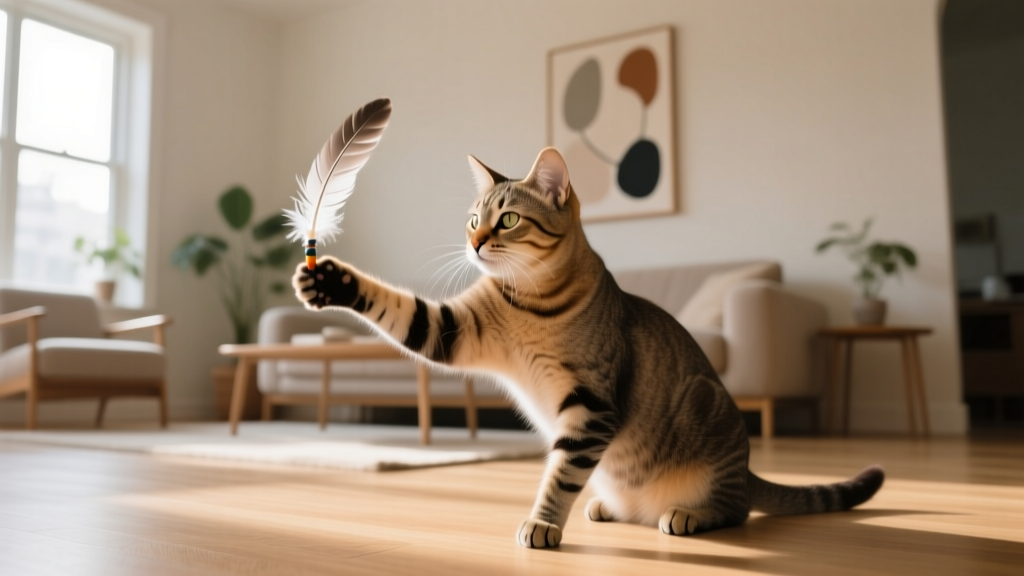
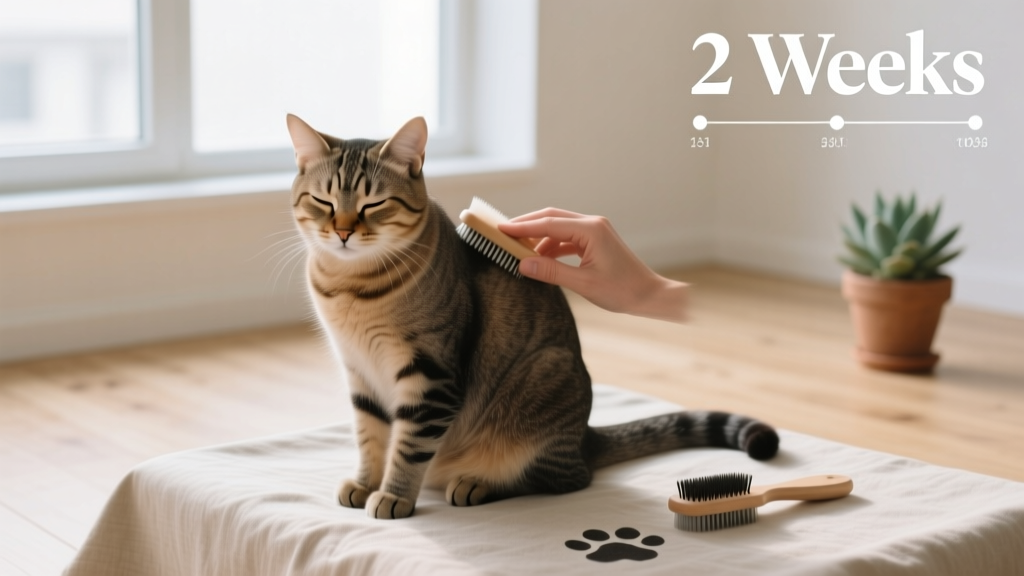
Now introduce grooming tools — but only as neutral objects. Place the brush on the floor near your cat’s favorite nap spot. Let them investigate. Reward curiosity with treats — even sniffing earns reinforcement. Next, hold the brush still beside your cat while stroking their preferred area. Then, *briefly* (1–2 seconds) drag the brush *across their fur without pressure* — like a feather — and immediately reward. Never stroke against the grain or apply pressure yet.
Crucially: If your cat blinks rapidly, licks lips, or turns head away, you’ve moved too fast. Pause and return to Phase 1 for 24 hours. Rushing triggers regression. According to certified cat behavior consultant Ingrid Johnson (Certified Feline Training Specialist, CFTS), “The biggest mistake owners make is skipping the ‘neutral object’ stage. Tools carry emotional baggage — we must decouple them from fear first.”
Pro tip: Use a soft-bristled slicker brush (like the Furminator deShedding Tool for Cats) — its flexible pins mimic gentle touch better than stiff wire brushes. Avoid metal combs until Phase 3.
Phase 3: Building Duration & Complexity (Days 11–14+)
Once your cat accepts 5-second brush strokes without tension, gradually extend duration (add 1 second per session) and expand zones. Prioritize low-stress areas first: shoulders → back → sides → legs → tail base. Avoid face, paws, and belly until your cat initiates contact there. Always end sessions on a positive note — even if it means stopping mid-stroke if they lean in for more.
Introduce combing only after 3+ successful brush sessions. Use a wide-tooth stainless steel comb (like the Andis Pet Steel Comb) — start at the shoulder and move *with* hair growth, never dragging. If resistance occurs, revert to brushing for 2 days before retrying.
For mat removal: Never cut or pull. Instead, use cornstarch powder (pet-safe, non-toxic) sprinkled into the mat, then gently tease apart with fingers. Severe mats require professional help — forcing removal causes pain and resets behavioral progress.
When to Seek Professional Help
While most cats respond to this protocol, some need expert support. Consult a board-certified veterinary behaviorist (DACVB) or certified cat behavior consultant (IAABC or CFA-accredited) if your cat shows:
- Consistent growling, biting, or skin rippling (‘tiger-striping’) during minimal touch
- Urinating outside the litter box after grooming attempts
- Self-trauma (over-grooming bald patches, open sores)
- No improvement after 3 weeks of consistent effort
These may indicate underlying pain (arthritis, dental disease) or anxiety disorders requiring medical intervention. As Dr. Tony Buffington, DVM, PhD (Ohio State University College of Veterinary Medicine), notes: “Behavior is the first symptom of illness in cats. Never assume resistance is ‘just personality.’”
| Phase | Timeline | Core Action | Tools Needed | Success Indicator |
|---|---|---|---|---|
| Touch Desensitization | Days 1–5 | Hand-only strokes in safe zones; stop before stress signals | None (treats optional) | Cat initiates contact or leans into touch |
| Tool Neutralization | Days 6–10 | Brush placed nearby → held still → 1–2 sec light drag + reward | Soft slicker brush, high-value treats | Cat investigates brush without fleeing or hissing |
| Duration Building | Days 11–14+ | Gradual time extension + zone expansion; end on positive | Slicker brush, wide-tooth comb | Cat remains still >15 sec with relaxed body language |
| Maintenance Mode | Ongoing | 2–3x/week brief sessions; integrate into calm routines (post-nap, pre-meal) | Brush, comb, detangling spray (optional) | Cat approaches grooming station voluntarily |
Frequently Asked Questions
Can I use CBD oil or calming supplements to help my cat relax during grooming?
Not without veterinary guidance. While some hemp-derived CBD products show promise for mild anxiety in cats (per a 2022 pilot study in Frontiers in Veterinary Science), quality control is inconsistent, dosing is unstandardized, and interactions with medications are poorly understood. Sedatives like gabapentin are sometimes prescribed off-label for grooming — but they mask fear without resolving the root behavior. Focus first on desensitization; discuss supplements only with your veterinarian as a *supportive*, not primary, tool.
My cat lets me brush her but attacks when I try to trim nails — is this the same process?
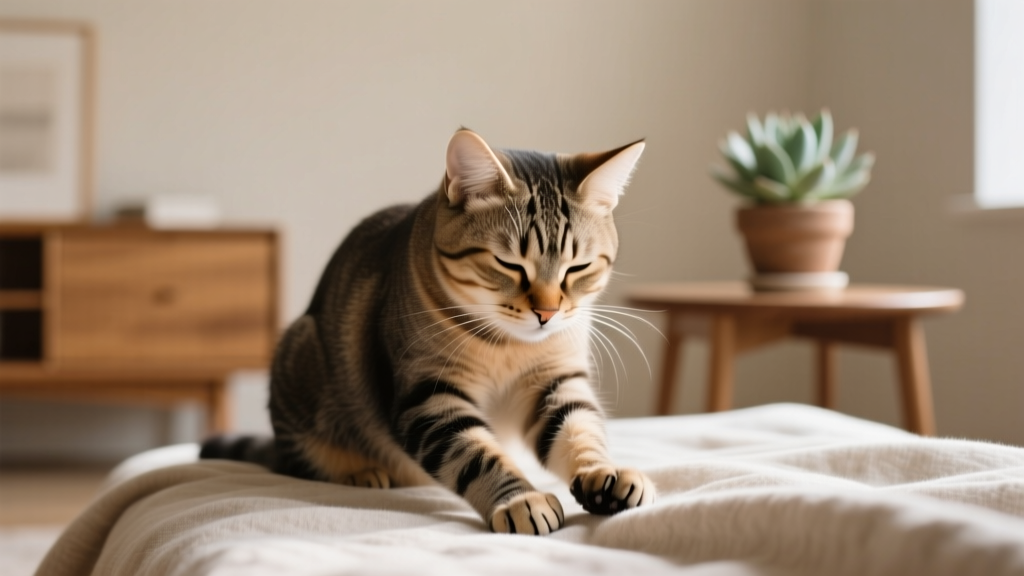
Yes — but nail trimming requires additional layers of trust. Start by simply touching paws daily (no restraint), rewarding each contact. Progress to gently pressing paw pads to extend claws — then hold for 1 second. Only introduce clippers once your cat tolerates 5+ seconds of claw exposure. Never trim more than the clear tip — cutting the pink ‘quick’ causes pain and resets progress. Consider using styptic powder on hand for accidents.
How often should I groom my cat once behavior improves?
Short-haired cats: 1–2x/week. Long-haired breeds (Persians, Maine Coons): 3–4x/week minimum to prevent mats. But frequency matters less than consistency and positivity. Even 60 seconds of joyful brushing daily builds stronger neural pathways than 10 minutes of tolerated stress weekly. Think ‘daily micro-sessions’ — not marathon grooming days.
Will neutering/spaying change my cat’s grooming behavior?
No — hormonal status doesn’t affect grooming tolerance. However, intact cats may be more reactive due to heightened vigilance (especially males). Neutering reduces roaming and spraying but doesn’t alter baseline stress responses to handling. Behavioral change requires targeted training, not surgery.
What if my senior cat suddenly resists grooming after years of tolerance?
This is a red flag. Sudden aversion often signals pain — arthritis in shoulders or hips, dental disease causing jaw sensitivity, or hyperthyroidism increasing irritability. Schedule a vet exam *before* starting behavior modification. Address medical causes first — otherwise, training will fail.
Common Myths About Changing Cat Grooming Behavior
Myth #1: “Cats just need to get used to it — consistency means forcing it every day.”
False. Forced consistency builds trauma, not tolerance. Research shows cats subjected to daily forced grooming exhibit elevated cortisol levels for up to 48 hours post-session — impairing learning and bonding. True consistency means predictable, positive, voluntary interactions — not rigid schedules.
Myth #2: “If I let my cat walk away, I’m rewarding bad behavior.”
Also false. Allowing escape is essential for reducing fear. In operant conditioning, this is called ‘negative reinforcement’ — removing pressure to increase future cooperation. Letting your cat choose to stay (or leave) builds agency — the foundation of trust.
Related Topics (Internal Link Suggestions)
- Understanding cat body language during handling — suggested anchor text: "what your cat's tail flick really means"
- Best grooming tools for sensitive cats — suggested anchor text: "gentle cat brushes that don't pull"
- How to give a cat a bath without stress — suggested anchor text: "stress-free cat bathing method"
- Signs of pain in cats that mimic behavior problems — suggested anchor text: "hidden cat pain symptoms"
- Creating a low-stress home environment for anxious cats — suggested anchor text: "cat anxiety reduction tips"
Ready to Transform Your Grooming Routine — Starting Today
You now hold a proven, compassionate roadmap for how to change cat behavior for grooming — grounded in neuroscience, validated by veterinary behaviorists, and refined through thousands of real-owner successes. This isn’t about ‘breaking’ resistance — it’s about rebuilding trust, one millisecond of calm touch at a time. Your next step? Pick *one* action from Phase 1 and do it today: sit beside your cat, offer zero-pressure strokes for 30 seconds, and stop the moment they blink slowly. That tiny pause — that respect for their autonomy — is where true change begins. Download our free 7-Day Grooming Trust Tracker (PDF) to log progress, spot patterns, and celebrate micro-wins — because every relaxed sigh, every head-butt, every voluntary brush invitation is a victory worth honoring.