How to Understand Cat's Behavior Interactive
Why Understanding Your Cat’s Behavior Interactively Isn’t Optional—It’s Essential for Their Well-Being
If you’ve ever wondered, "Why did my cat suddenly bite after purring?" or "Is that stare love—or a warning?", you’re not alone. Millions of cat guardians struggle with the same confusion—and it’s precisely why learning how to understand cat's behavior interactive has never been more urgent. Unlike dogs, cats evolved as solitary hunters who communicate subtly, often masking distress until it escalates into aggression, overgrooming, or urinary issues. A 2023 study in the Journal of Veterinary Behavior found that 68% of cats exhibiting 'unexplained' aggression or litter box avoidance had underlying communication breakdowns—not medical problems. The good news? You don’t need a degree in ethology. With intentional, low-pressure interaction strategies grounded in feline neuroscience and decades of clinical observation, you can become fluent in their silent language—starting today.
Step 1: Master the 5 Core Interactive Signals (And What They *Really* Mean)
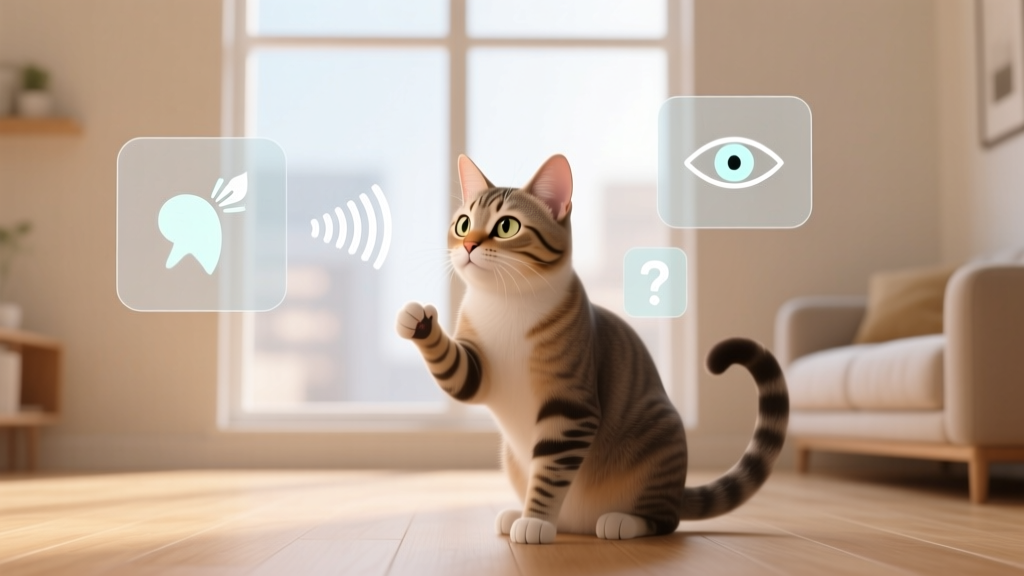
Feline communication isn’t about isolated gestures—it’s about context, sequence, and intensity. Dr. Sarah Hargreaves, a board-certified veterinary behaviorist at the Cornell Feline Health Center, emphasizes: "Cats don’t ‘misbehave’—they signal unmet needs. Your job isn’t to correct; it’s to interpret and respond." Here’s how to read their body language interactively:
- Tail position + movement: A gently swaying tail tip while sitting = relaxed curiosity. A rapid, thumping base-sweep = rising frustration—stop petting immediately. A puffed, vertical tail = high arousal (could be playful or fearful—check ears and pupils).
- Eyes & blinking: Direct, unblinking stares are confrontational. Slow, deliberate blinks (‘cat kisses’) are invitations to mutual trust. Try returning one—you’ll often get a blink back within 3–5 seconds if they feel safe.
- Ears: Forward and slightly tilted = engaged interest. Swiveling independently = hyper-awareness (e.g., hearing birds outside). Flat against head = fear or defensive readiness—never approach.
- Vocalizations in context: A short, high-pitched ‘mew’ near food bowls = request. A drawn-out, low-pitched yowl mid-night = distress (pain, cognitive decline, or anxiety). Purring during vet exams? Often a self-soothing mechanism—not contentment.
- Touch response testing: Gently stroke from forehead to base of tail. Pause at shoulders, flank, and base of tail. If they lean in, knead, or vocalize softly: green light. If tail flicks, skin ripples, or ears flatten: stop. Note where boundaries lie—this varies by individual, not breed.
This isn’t passive observation—it’s an ongoing dialogue. Keep a 7-day ‘Signal Log’ (a simple notebook or Notes app) tracking when specific behaviors occur, what preceded them (e.g., doorbell rang, dog barked), and how you responded. Patterns emerge fast: You’ll likely discover your cat’s ‘stress threshold’ is lower than you assumed—and that small adjustments yield big calm.
Step 2: Build Trust Through Interactive Play—Not Just Petting
Most cat owners default to stroking—but for many cats, especially those with rescue histories or early socialization gaps, touch is the *last* step in trust-building, not the first. Interactive play leverages their innate hunting sequence: stalking → chasing → pouncing → killing → eating → grooming. Skipping steps (e.g., only offering food or lap time) leaves neural circuits unfulfilled, manifesting as redirected biting, nighttime zoomies, or furniture scratching.
Here’s your evidence-based play protocol (validated by the 2022 International Cat Care Play Protocol Study):
- Timing matters: Play for 10–15 minutes, twice daily—ideally 30 mins before meals. This mimics natural predation rhythms and triggers endorphin release.
- Tool selection: Use wand toys (feathers, fur, ribbons) held *above* eye level—never dragged on floor (triggers prey panic, not play). Avoid laser pointers alone; always end with a tangible ‘kill’ (a treat or plush toy they can ‘capture’).
- Read their focus: Watch for ‘eye dilation’ and forward-tipped ears. If they disengage mid-play, pause for 10 seconds—then re-engage slowly. Forcing continuation breaks trust.
- Post-play ritual: Immediately offer a high-value treat (e.g., freeze-dried chicken) or a small meal. This completes the sequence neurologically, reducing post-play agitation.
A real-world case: Luna, a 3-year-old Siamese mix, attacked her owner’s ankles nightly. Her guardian implemented this protocol for 14 days—no treats skipped, no forced interaction. By Day 10, ankle attacks ceased. Why? Her predatory drive was being met *before* frustration built. As Dr. Hargreaves notes: "Play isn’t entertainment. It’s emotional regulation therapy."
Step 3: Decode Vocalizations Using the ‘3-Second Rule’
Cats have over 16 distinct vocalizations—but humans misinterpret most. The key isn’t memorizing sounds; it’s applying the 3-Second Rule: Observe what happens in the 3 seconds *before* and *after* each vocalization. This reveals function—not just sound.
For example:
- ‘Meow’ at the door: Preceded by pacing + sniffing handle = request to go out. Preceded by staring at empty food bowl = hunger. Post-meow, if they rub your leg, it’s affectionate solicitation. If they retreat, it’s demand-driven stress.
- Chirps/chatters at windows: Preceded by crouching + intense focus = frustrated hunting instinct. Post-chatter, if they lick lips or groom, it’s self-calming. If they hiss at you approaching, they’re guarding territory.
- Yowling at night: Preceded by wandering + vocalizing in different rooms = possible cognitive dysfunction (common in cats >12 years). Preceded by loud noises (e.g., thunder) = fear response. Always rule out pain first—schedule a vet visit if new or persistent.
Record 3–5 vocal episodes weekly using your phone’s voice memo. Transcribe the context (time, location, preceding event, your action, their next move). Within two weeks, you’ll spot patterns: Is their ‘demand meow’ always followed by your giving attention? That reinforces it. Is their ‘fear yowl’ followed by hiding under the bed? That confirms anxiety—not ‘spite.’
Step 4: Create an Interactive Environment—Not Just a Pretty Space
Your home is your cat’s entire world. Without environmental enrichment designed for *interactive* engagement, even the most loving guardian inadvertently breeds boredom-induced behavior issues. The ASPCA’s 2024 Feline Enrichment Guidelines stress: "Static toys gather dust. Interactive systems spark cognition."
Build interactivity into daily infrastructure:
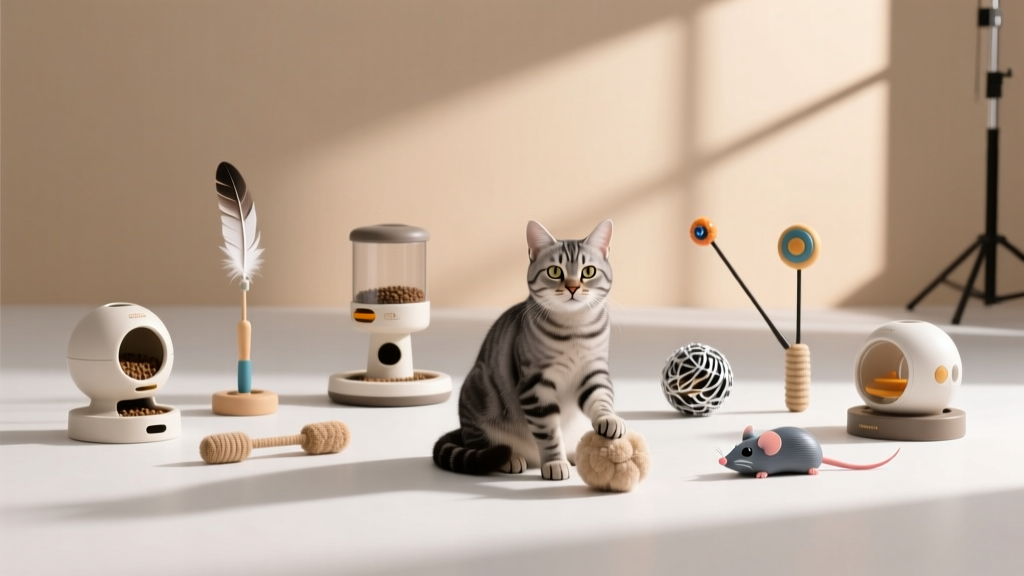
- Vertical territory with purpose: Not just shelves—but platforms with hanging toys, treat-dispensing tunnels, or window perches facing bird feeders. Cats scan vertically for safety; give them vantage points that reward observation.
- Food puzzles scaled to skill: Start with Level 1 (rolling ball with holes) for novices. Advance to Level 3 (multi-step drawers) for confident problem-solvers. Never use food puzzles when hungry—always pair with 20% of daily kibble to avoid frustration.
- Scent-based interaction: Rotate safe herbs (catnip, silver vine, valerian root) weekly. Place in crinkle balls or DIY sock toys. Observe reactions: Some cats roll, others zone out, some ignore. This reveals sensory preferences—and stress triggers (e.g., sudden avoidance of a scent may indicate illness).
- Human-as-toy calibration: When playing, vary speed, height, and unpredictability. Mimic injured prey (erratic hops) vs. fleeing prey (sudden dashes). If your cat loses interest, switch tactics—not toys.
Remember: Interactivity isn’t about constant stimulation. It’s about *choice*. A cat who can choose to stalk, observe, rest, or engage—on their terms—is a cat with low chronic stress. Chronic stress elevates cortisol, suppressing immunity and triggering cystitis, dermatitis, and behavioral shutdown. Your interactive environment is preventive healthcare.
| Interactive Technique | Time Investment | Key Tool Needed | Expected Outcome (Within 7 Days) | Red Flag to Stop |
|---|---|---|---|---|
| Slow-blink reciprocity training | 2–3 minutes, 2x/day | None (just your eyes) | Increased voluntary proximity; longer blink duration from cat | Cat looks away abruptly or flattens ears |
| Target-touch training (with chopstick/treat) | 5 minutes, daily | Clicker or verbal marker (“Yes!”), high-value treats | Cat touches target reliably; begins following target toward new spaces | Cat turns head away or licks nose excessively (sign of stress) |
| Environmental scent rotation | 2 minutes, weekly | Cat-safe herbal blends, fabric pouches | Renewed interest in exploration; reduced repetitive licking | Cat sneezes repeatedly or avoids room entirely |
| Play session with ‘kill’ completion | 15 minutes, 2x/day | Wand toy + tangible reward (treat/toy) | Fewer redirected bites; calmer post-play resting | Cat hides or growls during session |
Frequently Asked Questions
Can I train my cat to do tricks like dogs?
Yes—but differently. Cats learn through positive reinforcement (treats, praise, play) and *choice*. Unlike dogs, they won’t perform on command for external validation. Success looks like: your cat voluntarily sits when you hold a treat, touches a target stick, or enters a carrier for a treat. Force or repetition backfires. Focus on rewarding desired behaviors *as they happen*, not demanding them. Certified cat behavior consultant Mikel Delgado notes: "Training isn’t about control. It’s about building a shared language where ‘yes’ means ‘I choose to cooperate.’"
My cat hates being brushed. Is that normal?
Extremely common—and often misread as ‘stubbornness.’ Most cats dislike brushing because it’s done too long, too hard, or on sensitive areas (belly, legs, tail base). Try this instead: Use a soft rubber curry brush for 15 seconds max, only on the back and shoulders. Pair with treats *during* brushing—not after. End while they’re still leaning in. Gradually extend time by 5 seconds every 3 days. If they stiffen, freeze, or flick tail—stop. Many cats prefer self-grooming via food puzzles or scratching posts.
Why does my cat stare at me silently?
Silent staring is rarely aggression—it’s usually focused attention or mild curiosity. But context is critical: If accompanied by dilated pupils, flattened ears, or a stiff posture, it’s vigilance (e.g., sensing something behind you). If paired with slow blinks and relaxed posture, it’s affection. Try blinking slowly back. If they blink back, it’s a bond affirmation. If they look away, they’re politely declining interaction. Never interpret silence as ‘empty’—cats process deeply before acting.
Do cats understand human words?
Research from the University of Tokyo (2022) shows cats recognize their own names—and the names of other household cats—distinct from random nouns. They also respond to tone and pitch more than vocabulary. So while they won’t grasp ‘Let’s go to the vet,’ they *will* associate the phrase ‘treat time’ with positive outcomes—if said consistently with upbeat tone and immediate reward. Consistency and emotion matter more than grammar.
Is interactive behavior training safe for senior cats?
Absolutely—and vital. Cognitive decline affects 55% of cats over age 11 (AAHA 2023). Gentle interactive games (e.g., rolling a treat under a low barrier, scent work with dried herbs) preserve neural pathways. Adapt intensity: shorter sessions (3–5 mins), lower-height toys, softer surfaces. Always consult your vet first to rule out arthritis or vision loss that could make certain interactions painful or confusing.
Common Myths About Interactive Cat Behavior
- Myth #1: “Cats are aloof—they don’t want interaction.” Truth: Cats form deep, selective bonds. Their ‘aloofness’ is often caution rooted in evolutionary survival. Interactive engagement builds security—not dependence. Studies show bonded cats have lower resting heart rates and cortisol levels.
- Myth #2: “If my cat sleeps on me, they’re ‘dominant.’” Truth: Sleeping on you is the ultimate vulnerability display—indicating profound trust. Dominance is a debunked concept in modern feline ethology; cats operate on resource security, not hierarchy.
Related Topics (Internal Link Suggestions)
- Reading Cat Body Language Cues — suggested anchor text: "what does a cat's tail position really mean?"
- Best Interactive Cat Toys for Indoor Cats — suggested anchor text: "top 7 vet-recommended interactive toys"
- How to Stop Cat Aggression Toward Humans — suggested anchor text: "why does my cat bite after petting?"
- Feline Stress Signs You’re Missing — suggested anchor text: "subtle signs your cat is stressed"
- Cat Training Basics: Clicker & Target Methods — suggested anchor text: "how to train your cat with positive reinforcement"
Conclusion & Your Next Step
Learning how to understand cat's behavior interactive isn’t about mastering a checklist—it’s about cultivating presence, patience, and pattern recognition. Every blink, tail sway, and chirp is data. Every response you choose shapes their sense of safety. You now have actionable, vet-validated tools: the 5-core signal framework, play-as-regulation, the 3-second vocal rule, and environmental interactivity design. Your next step? Pick *one* technique from the table above—start with slow-blink reciprocity tomorrow morning. Track it for 3 days. Notice one subtle shift: Did they sit closer? Blink longer? Follow you into a room? That tiny win is neurological rewiring—in both of you. Because when you speak their language, they stop shouting—and start trusting. Ready to begin? Download our free Interactive Behavior Tracker PDF (with printable logs and video examples) to turn insight into instinct.