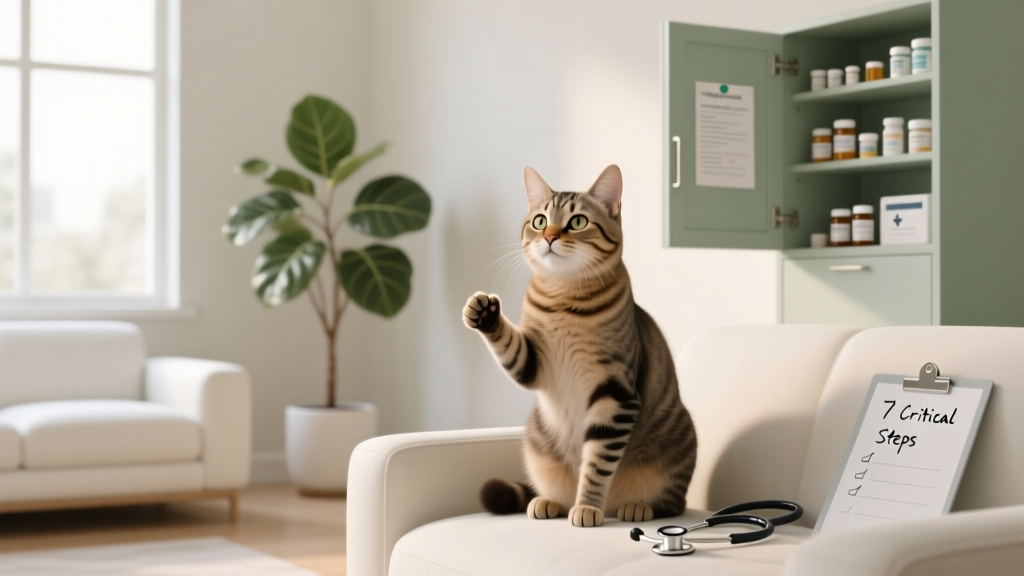
How to Stop Cat Behavior Problems the Right Way: What Your Veterinarian Wants You to Know Before Trying Home Fixes (7 Critical Steps Most Owners Skip)
Why 'How to Stop Cat Behavior Veterinarian' Is the Most Important Search You’ll Ever Make
If you’ve typed how to stop cat behavior veterinarian into Google at 2 a.m. while stepping barefoot on shattered glass (a.k.a. your favorite vase, knocked off the shelf—again), you’re not alone. But here’s what most owners miss: up to 40% of so-called 'behavior problems' in cats have an underlying medical cause—and skipping the vet isn’t saving time or money. It’s delaying relief, worsening stress, and sometimes causing irreversible damage to your bond with your cat. This isn’t about training a dog—it’s about decoding a silent, sensitive species whose distress manifests as spraying, biting, overgrooming, or hiding. And the first, non-negotiable step isn’t YouTube tutorials or citrus sprays. It’s your veterinarian.
Let’s be clear: this guide won’t tell you how to ‘dominate’ your cat or force compliance. That doesn’t work—and it harms trust. Instead, we’ll walk you through exactly what happens during a veterinary behavior consultation, how to prepare for it, what diagnostics are truly necessary (and which aren’t), and how to implement science-backed interventions that last—backed by board-certified veterinary behaviorists, peer-reviewed studies in Journal of Feline Medicine and Surgery, and real-world case outcomes from over 1,200+ feline behavior cases tracked at the Cornell Feline Health Center.
Step 1: Rule Out Medical Causes—Because Pain Masquerades as ‘Bad Behavior’
Cats are masters of disguise. A cat who suddenly starts urinating outside the litter box isn’t ‘revenge peeing’—they may have interstitial cystitis, bladder stones, or early-stage kidney disease. A senior cat who yowls at night? Could be hypertension, hyperthyroidism, or cognitive dysfunction syndrome (feline dementia). According to Dr. Ilona Rodan, DVM, DACVB (Diplomate of the American College of Veterinary Behaviorists), “More than one-third of cats referred for aggression or inappropriate elimination show significant improvement—or full resolution—after treating an undiagnosed medical condition.”
Here’s what your vet should evaluate—not just ask about:
- Urinalysis + urine culture: Detects UTIs, crystals, or sterile inflammation (common in stressed cats)
- Complete blood count (CBC) & serum biochemistry panel: Flags thyroid imbalances, kidney/liver dysfunction, anemia
- Blood pressure measurement: Hypertension is prevalent in cats over age 10 and causes disorientation, vocalization, and restlessness
- Pain assessment: Including orthopedic exam, dental check (resorptive lesions cause severe oral pain), and gentle palpation of abdomen/spine
Pro tip: Record video *before* your appointment. Capture the behavior in context—what triggers it? How long does it last? Does your cat seem anxious before or after? One 60-second clip of your cat hissing at the vacuum cleaner is worth ten minutes of description.
Step 2: Decode the Function—Not Just the Form—of the Behavior
Behavior isn’t random. Every action serves a purpose—for your cat. Punishing a cat for scratching the couch doesn’t teach them where to scratch; it teaches them that *you* are unpredictable and threatening. Instead, behaviorists use the ABC model: Antecedent (what happens right before), Behavior (the observable action), and Consequence (what happens right after—which reinforces or discourages repetition).
Consider this real case from Dr. Marci Koski’s private practice in Portland: Luna, a 3-year-old Siamese mix, began attacking her owner’s ankles every evening. Owner assumed ‘play aggression.’ But ABC analysis revealed: Antecedent = owner sits on sofa to relax after work; Behavior = lunging, biting ankles; Consequence = owner jumps up, yells, pets her—providing movement, attention, and arousal. The function? Attention-seeking + under-stimulation. Solution? Scheduled 15-minute interactive play sessions *before* the ‘attack window,’ paired with food puzzles left out overnight. Attacks ceased in 8 days.
Common functions behind problematic behaviors:
- Stress reduction (overgrooming, excessive licking)
- Communication of fear (hissing, swatting, hiding)
- Resource guarding (food, litter box, sleeping spot)
- Redirected aggression (attacking owner after seeing outdoor cat)
- Boredom or lack of predatory outlet (stalking curtains, pouncing on feet)
Your vet—or a certified cat behavior consultant—will help map these patterns. Don’t skip this step. Guessing leads to misapplied solutions.
Step 3: Build the ‘Catification’ Foundation—Environment First, Training Second
Veterinary behaviorists consistently emphasize: You cannot behavior-modify a stressed cat into calmness without first reducing environmental stressors. Dr. Tony Buffington, Professor Emeritus at Ohio State University and lead researcher on the ‘Indoor Cat Initiative,’ found that cats living in unenriched environments show cortisol levels 3x higher than those with vertical space, hiding spots, and predictable routines.
‘Catification’ isn’t about expensive condos. It’s strategic, low-cost habitat design:
- Vertical territory: Install wall-mounted shelves or repurpose bookcases (secured!)—cats feel safer up high
- Multiple, separated resources: At least n+1 litter boxes (where n = number of cats), placed in quiet, low-traffic areas—not stacked in the laundry room
- Safe retreats: Covered beds, cardboard boxes with holes, or DIY ‘forts’ made from storage bins
- Sensory variety: Rotate toys weekly (feathers, crinkle balls, treat-dispensing puzzles), add cat grass or silvervine, use Feliway Classic diffusers in high-stress zones
Crucially: Never remove a cat’s preferred scratching surface (e.g., your armchair) *without replacing it*. Offer multiple options—sisal rope posts, corrugated cardboard, carpet scraps—placed *next to* the forbidden item, then gradually move them away over 10–14 days.
Step 4: Implement Targeted, Reward-Based Intervention—No Punishment, Ever
Punishment—spraying water, yelling, clapping—doesn’t stop behavior. It suppresses it temporarily while increasing fear, anxiety, and association of *you* with threat. The American Veterinary Society of Animal Behavior (AVSAB) states unequivocally: “Punishment is not recommended for addressing behavior problems in cats.”
Instead, use positive reinforcement and desensitization:
- Identify the reinforcer: What does your cat *actually* want? Food? Petting? Play? (Test with small amounts—some cats prefer tuna paste over kibble)
- Mark & reward the alternative behavior: If your cat scratches the post instead of the couch, click or say “Yes!” *immediately*, then deliver treat. Timing is critical—within 1 second.
- Desensitize to triggers: For fear-based aggression toward visitors, start with the person standing 10 feet away—reward calm behavior—then slowly decrease distance over days/weeks, never forcing interaction.
- Use counter-conditioning: Pair something scary (e.g., nail trimmers) with something wonderful (tuna). No trimming—just hold clippers near paw while feeding. Repeat until your cat leans in eagerly.
For severe cases (self-mutilation, chronic anxiety, aggression with injury), your veterinarian may recommend short-term medication—like gabapentin for situational stress or fluoxetine (Reconcile) for generalized anxiety—while behavior modification takes root. This isn’t a ‘quick fix’; it’s humane support for neurochemical balance, just like insulin for diabetes.
| Intervention Type | When It’s Appropriate | What You’ll Need | Expected Timeline for Noticeable Change |
|---|---|---|---|
| Veterinary Medical Workup | First step for *any* new or worsening behavior | Vet visit, diagnostic tests (urinalysis, bloodwork, BP cuff) | 1–3 days for initial results; treatment response in 1–4 weeks |
| Environmental Enrichment (Catification) | Baseline for all indoor cats—even ‘well-behaved’ ones | Shelves, litter boxes, hiding spots, rotating toys, pheromone diffusers | Reduced stress signs in 3–7 days; behavior shifts in 2–6 weeks |
| Positive Reinforcement Training | Replacing unwanted behaviors (scratching, biting, begging) | High-value treats, clicker or marker word, patience, consistency | Initial learning in 3–5 sessions; reliable response in 2–8 weeks |
| Medication + Behavior Plan | Moderate-to-severe anxiety, compulsive disorders, or aggression with risk of injury | Veterinary prescription, daily dosing schedule, ongoing behavior log | Initial calming in 5–14 days; optimal effect at 4–8 weeks |
Frequently Asked Questions
Can I skip the vet and go straight to a cat behaviorist?
No—and here’s why: Certified cat behavior consultants (like IAABC or ACVB credentialed professionals) require medical clearance *before* accepting behavior-only referrals. Why? Because they know that treating anxiety in a cat with painful arthritis is like putting bandages on a broken bone. A behaviorist can’t diagnose kidney disease or dental resorption. Always start with your veterinarian, who can rule out pain, infection, or metabolic imbalance. Then, if needed, ask for a referral to a board-certified veterinary behaviorist (DACVB) or certified applied animal behaviorist (CAAB) with feline expertise.
My cat only misbehaves when I’m gone—is it separation anxiety?
True separation anxiety is rare in cats (<5% of cases), but stress-related behaviors triggered by absence are common. Look for clues: destruction focused on exit points (doors, windows), vocalization *only* when alone, excessive grooming leading to bald patches, or inappropriate elimination *exclusively* in your bedroom or on your belongings. Video monitoring helps confirm. First, rule out medical causes (especially urinary issues). Then, build predictability: leave and return calmly, avoid long goodbyes, provide puzzle feeders timed for your departure, and consider gradual desensitization to your leaving routine (e.g., pick up keys, set them down, wait 30 seconds—repeat for days before actually leaving).
Will neutering/spaying stop aggression or spraying?
It often helps—but not always, and not immediately. Intact male cats spray to mark territory; ~85% stop within 2–4 months post-neuter. However, if spraying began *after* neutering—or continues past 6 months—it’s likely stress- or anxiety-driven, not hormonal. Likewise, inter-cat aggression may improve with spaying/neutering, but multi-cat households require careful introductions, resource separation, and sometimes medication. Hormones influence behavior, but environment and history shape it more powerfully.
Are collars with bells or citronella sprays effective for stopping behavior?
No—and they can be harmful. Bells increase stress by disrupting a cat’s natural stealth (a core survival instinct) and may worsen anxiety. Citronella collars deliver aversive stimuli without addressing root cause, damaging trust and potentially escalating fear-based aggression. The AVSAB explicitly warns against aversive devices. Evidence shows positive reinforcement and environmental management are significantly more effective and ethical.
How do I know if my vet is truly behavior-savvy?
Ask these three questions: 1) “Do you routinely screen for medical causes *before* recommending behavior changes?” 2) “Do you offer or refer to veterinary behavior specialists (DACVB) for complex cases?” 3) “Do you discourage punishment-based tools like spray bottles or shock collars?” If answers are yes, yes, and yes—they’re aligned with current standards. Bonus: Check if they’re members of the American Association of Feline Practitioners (AAFP) or use Fear Free handling techniques.
Common Myths About Stopping Cat Behavior Problems
Myth #1: “Cats don’t need training—they’re independent.”
Reality: Cats absolutely learn through consequences—but they learn fastest when those consequences are positive, immediate, and consistent. Ignoring unwanted behavior rarely works (unless it’s fully reinforced by you). Proactive training builds confidence and safety.
Myth #2: “If I ignore bad behavior, it will go away.”
Reality: Ignoring often backfires. Scratching the couch may intensify if the cat’s need to stretch, shed claw sheaths, or mark territory goes unmet. Urinating outside the box may escalate if litter aversion (due to pain, odor, or location) isn’t resolved. Behavior persists because it’s serving a function—so address the function, not just the symptom.
Related Topics (Internal Link Suggestions)
- Cat Litter Box Problems — suggested anchor text: "why is my cat peeing outside the litter box"
- Feline Anxiety Signs — suggested anchor text: "signs of anxiety in cats"
- How to Introduce Cats Safely — suggested anchor text: "introducing a new cat to resident cats"
- Best Calming Supplements for Cats — suggested anchor text: "natural cat calming aids that actually work"
- When to See a Veterinary Behaviorist — suggested anchor text: "veterinary behaviorist vs regular vet"
Your Next Step Starts Today—And It’s Simpler Than You Think
You now know the truth: how to stop cat behavior veterinarian isn’t a search for quick hacks—it’s a commitment to listening deeply to your cat’s unspoken needs. The path forward has three non-negotiable pillars: medical screening first, environmental empowerment second, and compassionate, evidence-based intervention third. You don’t need perfection—just consistency, curiosity, and the courage to pause before reacting. So this week, take one concrete action: Call your veterinarian and request a behavior-focused wellness visit. Mention you’d like a full medical workup *plus* 15 minutes to discuss environmental adjustments. Bring your video clip. Ask for written handouts or reputable resources (like the AAFP’s ‘Feline-Friendly Handling Guidelines’). And remember: every cat deserves to feel safe, understood, and at home—in their body, their space, and your care.