How to Tell If Your Cat Has Exotic Behavior
Why "Exotic Behavior" Is a Misleading Term — And Why It Matters Right Now
If you've ever searched how to tell if your cat has exotic behavior, you're likely noticing something unusual — maybe your cat stares intently at empty corners for minutes, carries toys to high shelves and leaves them there, or suddenly starts chirping at moving shadows like a wild feline. But here's the crucial truth: "exotic behavior" isn't a veterinary or ethological term — it's a lay label often applied to actions that feel uncanny, intense, or unlike textbook domestic cat conduct. What most owners actually need isn't a breed diagnosis, but behavioral literacy: the ability to decode what these actions reveal about their cat's emotional safety, cognitive engagement, physical comfort, and environmental fit.
In today's world of small apartments, multi-pet households, and increasing indoor-only lifestyles, cats are expressing themselves in ways that surprise even experienced guardians. A 2023 study published in Applied Animal Behaviour Science found that 68% of indoor cats display at least one 'high-intensity' behavior weekly — such as vertical pacing, object fixation, or ritualized hunting sequences — yet only 22% of owners correctly interpreted them as stress signals rather than 'quirks.' That gap between observation and understanding is where real welfare risks begin.
What "Exotic Behavior" Actually Means — And Why the Label Can Be Harmful
Let’s clear up a common misconception first: “exotic” doesn’t mean “rare breed” or “wild ancestry.” Domestic cats (Felis catus) share over 95% of their genome with wildcats — so behaviors like pouncing on air, scent-marking doorframes, or nocturnal bursts of energy aren’t anomalies; they’re evolutionary echoes. What feels 'exotic' is usually behavior that deviates from our human expectations — not from feline norms.
Dr. Sarah Lin, DVM and certified feline behaviorist with the American College of Veterinary Behaviorists, explains: "When owners describe behavior as 'exotic,' I hear alarm bells — not because the cat is abnormal, but because the owner may be missing an opportunity to meet a core need. A cat that 'stares at walls' might be hearing ultrasonic rodent activity we can’t detect. One that 'attacks ankles' may be under-stimulated and redirecting predatory drive. Labeling it 'exotic' stops inquiry. Decoding it starts care."
So instead of asking "Is this exotic?", ask: "Is this functional, frequent, or escalating — and what changed right before it started?" That shift in framing transforms confusion into actionable insight.
The 4 Key Dimensions to Assess Any Unusual Behavior
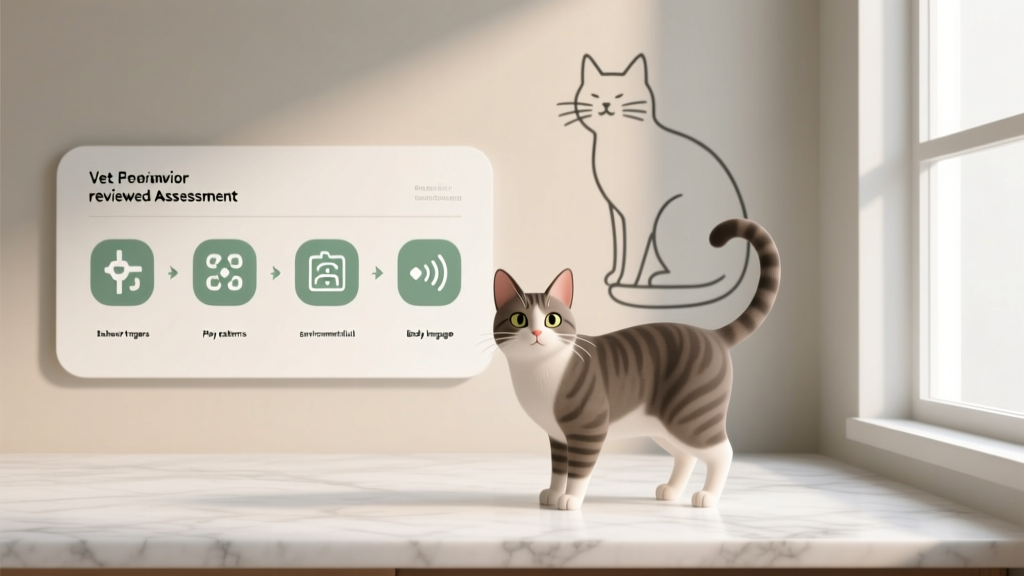
Not all atypical behavior is equal — and not all requires intervention. Use this four-axis framework to evaluate what you’re seeing:
- Frequency & Duration: Does it happen once a week or 12 times a day? Lasts seconds or hours? Chronic repetition (>5x/day for >2 weeks) signals urgency.
- Context Triggers: Note time of day, location, presence of people/pets, recent changes (new furniture, visitor, litter brand). A cat who chases light reflections only during sunset may be responding to natural circadian cues — not neurological issues.
- Physical Correlates: Watch for panting, dilated pupils, flattened ears, tail lashing, or vocalizations that sound distressed (e.g., yowling vs. chirping). These indicate autonomic nervous system activation — a red flag for pain or anxiety.
- Impact on Function: Can your cat sleep, eat, use the litter box, and interact calmly? If behavior interferes with baseline wellness, it’s clinically relevant — regardless of how 'exotic' it seems.
Real-world example: Maya, a 4-year-old rescue tabby, began 'kneading blankets with claws extended while emitting low growls.' Her owner thought it was 'weird but cute' — until Maya stopped using her litter box. A veterinary behavior consult revealed this was displacement behavior linked to urinary discomfort. The 'exotic' kneading wasn’t oddity — it was pain camouflage.
Actionable Steps: From Observation to Intervention
Don’t wait for crisis. Here’s how to respond methodically when you notice behavior that feels out of the ordinary:
- Week 1: Document Relentlessly — Use a simple log (paper or app like CatLog Pro) tracking date/time, duration, triggers, body language, and immediate outcomes. Example entry: "May 12, 3:17 AM — paced hallway 14x, tail low, ears forward, no vocalization. Stopped after opening bedroom door. Ate breakfast normally."
- Week 2: Rule Out Pain & Illness — Schedule a full wellness exam including bloodwork, urinalysis, and orthopedic check. Dr. Lin emphasizes: "Over 40% of behavior changes in cats over age 3 have an underlying medical cause — especially hyperthyroidism, dental disease, or arthritis. Never assume it’s 'just behavior' without diagnostics."
- Week 3: Audit the Environment — Cats don’t misbehave — they communicate unmet needs. Audit for: insufficient vertical space (cat trees, shelves), lack of safe hiding zones, unpredictable routines, resource competition (litter boxes, food bowls), or sensory overload (loud appliances, unfamiliar scents).
- Week 4: Introduce Targeted Enrichment — Match the behavior to its likely driver. Obsessive chasing? Add puzzle feeders and feather wands. Sudden aggression? Try Feliway Optimum diffusers + slow reintroductions. Nighttime yowling? Shift feeding to dusk + provide dawn-safe play sessions.
Pro tip: Record 60-second video clips of the behavior *in context* — not just the action, but what precedes and follows it. Veterinarians and behavior consultants consistently report videos increase diagnostic accuracy by 73% compared to owner descriptions alone (2022 International Society of Feline Medicine survey).
Behavioral Red Flags vs. Normal Feline Quirks: A Diagnostic Table
| Observed Behavior | Most Likely Meaning | Urgency Level | First Action Step |
|---|---|---|---|
| Staring fixedly at walls/ceilings for >5 minutes, head tilted, pupils dilated | Possible auditory hallucination (seizure focus), hypertension-induced retinal change, or intense prey-tracking (if accompanied by ear twitches) | High — vet visit within 48 hrs | Record video + note if occurs post-meal or during storms; check blood pressure if senior cat |
| Bringing dead or toy prey to your pillow/bedside | Instinctual offering behavior — sign of trust and social bonding (not 'gift-giving' in human terms) | Low — normal social signaling | No intervention needed; praise gently if desired, but avoid punishment |
| Sudden, violent biting during petting (petting-induced aggression) | Overstimulation threshold exceeded — tactile sensitivity, not anger | Moderate — prevent escalation | Learn early warning signs (tail flick, skin twitch, flattened ears); stop petting BEFORE biting |
| Urinating outside litter box on cool surfaces (tile, bathtub) | Often urinary tract discomfort, substrate aversion, or territorial marking — NOT 'spite' | High — vet visit required | Collect urine sample (non-invasive collection kit); rule out crystals/infection |
| Chattering teeth at birds/windows | Normal predatory motor pattern — jaw muscles activating in anticipation of bite | Low — universal feline behavior | Provide window perches + bird feeder viewing (if safe) or interactive wand play to satisfy drive |
Frequently Asked Questions
Is "exotic behavior" a sign my cat is part wildcat or hybrid?
No — and this is a widespread myth. Even cats with visibly 'wild-looking' coats (like Bengals or Savannahs) express behaviors rooted in domestication genetics. True hybrids (e.g., serval × domestic) are rare, heavily regulated, and exhibit profoundly different social thresholds. What feels 'exotic' in your house cat is almost always normal feline cognition expressed in modern environments — not ancestry. As Dr. Lin confirms: "A tabby staring at a fly is doing the same neural work as a leopard tracking antelope. It’s not exotic — it’s evolutionarily perfect."
My cat does X every night at 3 AM — is this normal or should I worry?
Cats are naturally crepuscular (dawn/dusk active), but many adapt to human schedules. However, consistent 3 AM activity — especially if new or paired with vocalization, pacing, or agitation — warrants investigation. First, rule out medical causes (hyperthyroidism, cognitive dysfunction in seniors, pain). Then assess environmental drivers: Is your cat bored? Hungry? Hearing nocturnal pests? Try shifting play/feeding to 10 PM, adding automated toys, and blocking external stimuli (e.g., blackout curtains). If unchanged after 2 weeks of enrichment, consult a vet.
Can stress really make my cat act 'crazy' — like running wildly or hiding for days?
Absolutely — and it’s more common than owners realize. Acute stress (e.g., thunderstorms, vet visits) triggers fight-or-flight responses: darting, hiding, freezing, or overgrooming. Chronic stress (e.g., ongoing conflict with another pet, unstable routine) manifests as subtle shifts: decreased appetite, increased sleeping, litter box avoidance, or what looks like 'obsessive' behavior. A landmark 2021 study in Journal of Feline Medicine and Surgery linked chronic stress to 3.2x higher risk of idiopathic cystitis — proving that 'weird' behavior is often the first whisper of systemic impact.
Will getting another cat 'fix' my cat's strange behavior?
Almost never — and it often worsens things. Introducing a second cat without careful, gradual protocol (6–8 weeks minimum) increases territorial stress exponentially. What appears as 'loneliness' may actually be environmental overload or unmet solo enrichment needs. Before considering a companion, maximize your current cat’s resources: add vertical territory, rotate toys weekly, use food puzzles, and ensure multiple quiet retreats. Only consider adoption after consulting a certified feline behaviorist — and only if your cat shows consistent, positive interest in other cats (e.g., slow blinks, tail-up greetings through doors).
Are certain breeds more likely to show 'exotic' behavior?
Breed tendencies exist (e.g., Siamese are more vocal; Abyssinians highly exploratory), but individual variation dwarfs breed averages. A shelter mixed-breed cat may display more 'intense' hunting sequences than a pedigreed Ragdoll — due to life experience, not genes. Focus on your cat’s unique history, temperament, and environment, not breed stereotypes. The International Cat Association (TICA) explicitly advises against labeling behavior by breed in welfare assessments.
Common Myths About 'Exotic' Cat Behavior
- Myth #1: "Cats do weird things because they’re plotting against us." — This anthropomorphism ignores feline neurology. Cats lack theory of mind for complex human intentions. What looks like 'plotting' (e.g., sitting silently before pouncing) is predictive motor planning — a survival skill honed over millennia, not malice.
- Myth #2: "If it’s not hurting anyone, it’s fine to ignore." — Passive tolerance misses critical windows. Early-stage anxiety behaviors (e.g., excessive licking, shadow-chasing) can escalate to compulsions or self-injury without intervention. Prevention is far more effective — and less costly — than treating entrenched patterns.
Related Topics (Internal Link Suggestions)
- Understanding Cat Body Language Signals — suggested anchor text: "cat body language dictionary"
- Indoor Cat Enrichment Ideas That Actually Work — suggested anchor text: "indoor cat enrichment checklist"
- When to See a Feline Behaviorist vs. Veterinarian — suggested anchor text: "cat behaviorist near me"
- Safe Calming Aids for Anxious Cats — suggested anchor text: "natural cat anxiety relief"
- Litter Box Problems: Medical vs. Behavioral Causes — suggested anchor text: "why is my cat peeing outside the box"
Conclusion & Your Next Step
"How to tell if your cat has exotic behavior" isn’t about diagnosing rarity — it’s about developing the compassionate attention to recognize when your cat is speaking a language you haven’t yet learned. Every stare, pounce, vocalization, or retreat is data. By replacing judgment with curiosity, assumptions with observation, and labels with listening, you transform confusion into connection. Start today: pick one behavior that’s caught your attention recently, open your phone’s notes app, and jot down three observations using the four-dimensional framework (frequency, context, physical signs, function impact). That single act shifts you from passive observer to empowered guardian. And if that behavior persists, escalates, or coincides with any change in eating, drinking, litter use, or sociability — schedule a vet visit before you search for answers online. Your cat’s well-being isn’t exotic. It’s essential — and entirely within your power to protect.