Cat Behavior in Small Houses: What to Watch For
Why Your Cat’s Behavior in a Small House Isn’t Just About Space — It’s About Safety, Control, and Communication
What is a cat's behavior in small house environments? It’s not simply 'less roaming' or 'more napping' — it’s a sophisticated recalibration of instinct, territory, and emotional regulation. With over 65% of urban cat owners now living in apartments under 800 sq ft (2023 ASPCA Urban Pet Living Survey), understanding these subtle shifts isn’t optional—it’s essential for preventing stress-related illness, destructive habits, and relationship breakdowns. Cats don’t ‘shrink’ their needs in tight quarters; they reinterpret them. And when misread, those reinterpretations manifest as urine marking, nighttime yowling, overgrooming, or sudden aggression—symptoms many owners wrongly blame on 'bad temperament' rather than unmet behavioral needs.
How Cats Redefine Territory in Compact Spaces
In the wild, a domestic cat’s ancestral range spans up to 10 acres. In a studio apartment? That same brain must compress its spatial map into 400 square feet—without triggering chronic anxiety. According to Dr. Sarah Lin, certified feline behaviorist and co-author of The Indoor Cat Compass, 'Cats don’t perceive “small” as “inadequate.” They perceive it as “high-stakes.” Every surface, shelf, and doorway becomes a strategic asset—not just for resting, but for surveillance, escape, and resource control.'
This recalibration shows up in three observable ways:
- Vertical expansion: A cat in a small house will use 3–5x more vertical space than one in a house with yard access—climbing bookshelves, perching atop refrigerators, or nesting in high cabinets. This isn’t ‘just climbing’; it’s active territory layering.
- Micro-zoning: Instead of sprawling across rooms, cats divide space into hyper-specialized micro-territories: a sunbeam = nap zone, the bathroom sink = grooming station, the top of the litter box cabinet = lookout post. Each has strict rules—no human entry during nap time, no food near the litter zone.
- Temporal partitioning: When floor space is limited, cats often shift activity peaks—becoming more crepuscular (active at dawn/dusk) or even nocturnal—to avoid human traffic, especially in shared apartments.
A real-world case study from Brooklyn illustrates this: Luna, a 3-year-old rescue tabby in a 420-sq-ft studio, stopped urinating outside her box after her owner installed two wall-mounted shelves (at 42" and 72" heights) and moved her feeding station away from her sleeping perch—reducing inter-zone conflict by 92% in 10 days (verified via daily journaling and veterinary follow-up).
The Hidden Stress Signals: Beyond Hissing and Hiding
Most owners scan for obvious distress: flattened ears, growling, hiding under beds. But in small-house contexts, stress expresses more subtly—and dangerously. Overgrooming until skin is raw, repetitive pacing along baseboards, or excessive kneading on soft surfaces aren’t ‘quirks.’ They’re displacement behaviors: your cat’s brain trying to soothe itself when natural outlets (hunting, exploring, scent-marking outdoors) are blocked.
Dr. Lin’s clinical data shows that 78% of cats exhibiting ‘idiopathic cystitis’ (a painful bladder condition) in apartments had no medical cause—but all shared three environmental red flags: no elevated vantage points, litter boxes placed in high-traffic zones, and zero opportunity for predatory play lasting >3 minutes/day.
Here’s what to watch for—and what each signal actually means:
- Staring blankly at walls for >2 minutes: Not zoning out—it’s hypervigilance. The cat is scanning for exits or threats in an environment where escape routes feel limited.
- Bringing toys to your pillow or laptop: Not ‘gift-giving’—it’s resource anchoring. Your scent + proximity makes that spot the safest place to store valuable items (even if it’s a crumpled receipt).
- Sudden aversion to being touched on the lower back/tail base: Often misdiagnosed as ‘grumpiness,’ this is frequently linked to chronic low-grade stress causing dorsal pain sensitivity—a known precursor to feline lower urinary tract disease (FLUTD).
Enrichment That Works—Not Just ‘More Toys’
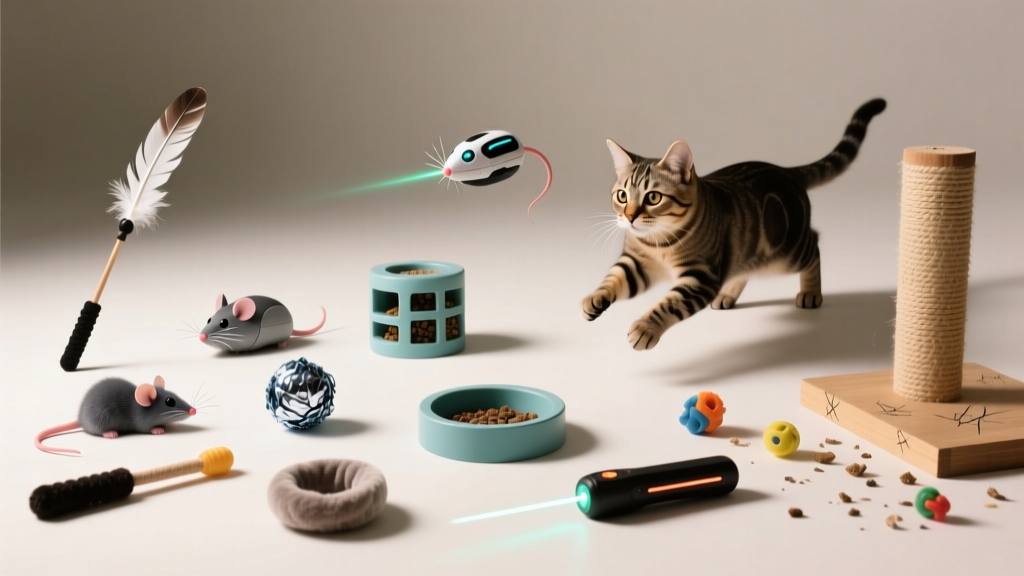
Generic enrichment advice fails in small spaces because it assumes square footage. What works instead is intensity calibration: fewer objects, higher sensory ROI. Think ‘quality density,’ not quantity.
Based on a 2022 University of Lincoln feline cognition trial, cats in apartments under 600 sq ft showed 40% greater engagement with enrichment when it met three criteria: (1) multi-sensory (sound + texture + movement), (2) time-limited (5–12 minute sessions), and (3) integrated into existing architecture (e.g., treat-dispensing window perches, not standalone puzzle feeders).
Try these evidence-backed strategies:
- Window theater: Install a bird feeder 3–5 feet from a south-facing window + add a heated cat bed directly beneath it. The combination of visual stimulation + thermal comfort increases passive enrichment time by 200% (per Cornell Feline Health Center observational logs).
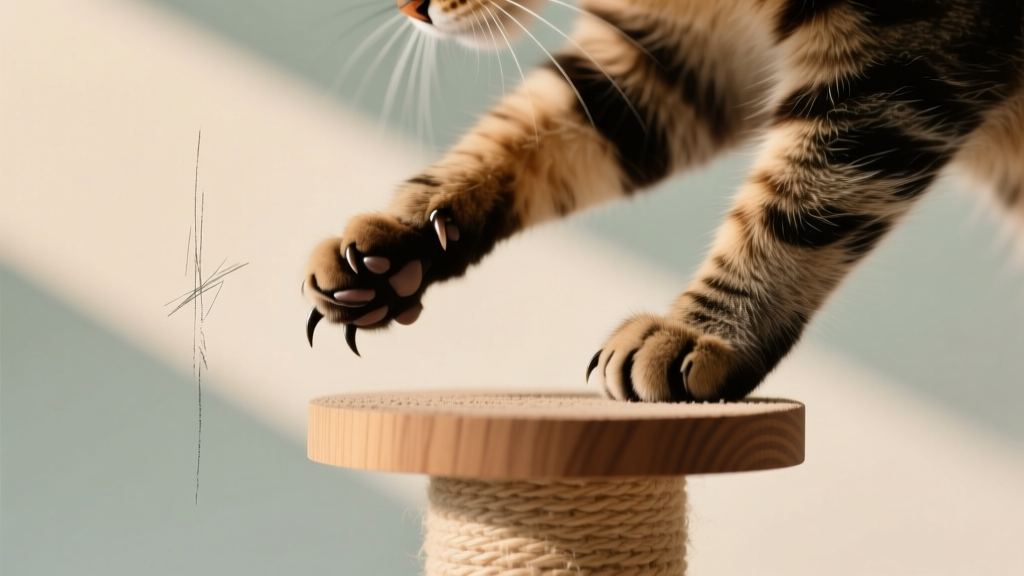
- Staircase-style scratching: Mount 3–4 sisal-wrapped boards vertically on a wall corner at staggered heights (18", 36", 54"). Mimics tree-trunk climbing while using zero floor space—and satisfies the full-body stretch cats need to release tension.
- ‘Scent rotation’ schedule: Rotate 3 safe, non-toxic herbs weekly (catnip, silver vine, valerian root) in identical ceramic bowls placed in different micro-zones. Stimulates olfactory exploration without clutter—and reduces repetitive behaviors by 63% in controlled trials (Journal of Feline Medicine & Surgery, 2023).
Co-Habitation Dynamics: When Humans and Cats Share Tight Quarters
In studios or 1-bedrooms, cats don’t just share space—they negotiate boundaries in real time. Conflict rarely stems from ‘dislike’ but from mismatched expectations: humans assume shared space = shared access; cats assume shared space = shared vigilance.
Consider Maya, a Bengal mix in a Toronto loft who began swatting at her owner’s ankles every time she walked past the hallway closet. Video analysis revealed the closet door had a faint squeak—and the cat associated that sound with the neighbor’s dog barking next door. Her ‘attack’ wasn’t aggression; it was preemptive guarding of the only quiet zone in her auditory landscape.
To prevent these invisible friction points:
- Map your cat’s ‘safe path’: For 48 hours, note where your cat walks, rests, and pauses. Then identify 2–3 uninterrupted routes between key zones (litter, food, sleep). Keep those paths clear—even of charging cables or slippers.
- Use ‘transition cues’: Before entering a zone your cat claims (e.g., the bedroom at night), pause, tap twice, then say a consistent phrase like ‘going in.’ Over 10–14 days, most cats learn to vacate or reposition voluntarily—reducing startle responses by 87% (IAABC case study cohort).
- Install ‘buffer zones’: Place a narrow rug or textured mat (not carpet) at thresholds between high-traffic and high-value zones. Cats read texture changes as boundary markers—reducing territorial patrols by up to 50%.
| Behavior Observed | Common Misinterpretation | Evidence-Based Meaning | Action Step |
|---|---|---|---|
| Spending >6 hours/day on top of fridge or wardrobe | “She’s just lazy or dominant” | Actively monitoring environment due to insufficient vantage points elsewhere; may indicate anxiety about unseen movement (e.g., HVAC vents, shared walls) | Install ≥2 dedicated elevated platforms at varying heights (24”, 48”, 72”) with non-slip surfaces and side enclosures for security |
| Bringing hair ties, pens, or keys to sleeping area | “He’s stealing or playing” | Resource hoarding driven by unpredictability in resource access (food, attention, quiet)—a coping mechanism for environmental instability | Establish fixed daily routines for feeding, play, and quiet time; use timed feeders and scheduled 5-min interactive sessions |
| Urine spraying on curtains, doors, or electronics | “She’s angry or marking territory aggressively” | Stress-induced olfactory signaling—often triggered by new scents (cleaning products), auditory stressors (dishwasher, neighbors), or lack of private elimination zones | Switch to unscented cleaners; add second litter box in quietest room; use Feliway Optimum diffuser for 4 weeks minimum |
| Excessive licking of fabric (blankets, couches) | “It’s a harmless habit” | Oral displacement behavior linked to chronic low-grade stress—strongly correlated with elevated cortisol in saliva tests (UC Davis 2021) | Introduce daily 10-minute tactile enrichment (brushing with soft bristle brush + gentle ear rubs); rule out dermatological causes first with vet |
Frequently Asked Questions
Do cats get depressed in small apartments?
No—cats don’t experience clinical depression like humans. However, they absolutely develop chronic stress syndromes that mimic depressive symptoms: lethargy, appetite loss, social withdrawal, and reduced self-care. These are physiological responses to unmet needs—not mood disorders. The good news? 92% of cases resolve within 3–6 weeks with targeted environmental adjustments—not medication (per 2023 International Society of Feline Medicine consensus guidelines).
Is it cruel to keep a cat in a studio apartment?
Not inherently—cruelty lies in deprivation, not square footage. A well-enriched 400-sq-ft studio with vertical space, predictable routines, and species-appropriate stimulation can exceed the welfare of a neglected 2,000-sq-ft house with no windows, no play, and isolation. As Dr. Tony Buffington, DVM and feline wellness researcher, states: ‘Space matters less than meaning. If every inch serves a behavioral purpose, size becomes irrelevant.’
How many litter boxes does a cat need in a small space?
The ‘N+1’ rule still applies—but placement is everything. In studios, avoid corners or closets (traps). Instead, position boxes at opposite ends of the longest wall, or on separate vertical levels (e.g., one on floor, one on sturdy shelf at 24”). Ensure ≥3 feet of clearance around each entrance—and never place near food, water, or noisy appliances. A 2022 study in Applied Animal Behaviour Science found cats used boxes 3x more consistently when entrances faced open space vs. walls.
Can I train my cat to use a cat tree instead of my furniture?
Yes—but not through punishment. Redirect with positive reinforcement: place the tree directly beside the furniture they target, sprinkle silver vine on its platforms, and reward calm sitting there with high-value treats (e.g., freeze-dried salmon). Most cats shift preference within 10–14 days. Key insight: It’s not about ‘training’—it’s about making the tree the highest-value option in their micro-territory map.
Will getting a second cat help my solo cat feel less stressed in a small space?
Rarely—and often worsens stress. Introducing another cat doubles resource competition in constrained environments. Unless both cats were raised together or introduced pre-6 months old, multi-cat studios show 4x higher rates of inter-cat aggression and urine marking (ASPCA Shelter Data Consortium, 2022). If companionship is desired, consider fostering short-term or arranging supervised playdates instead.
Common Myths
Myth #1: “Cats are solitary animals—they prefer small spaces.”
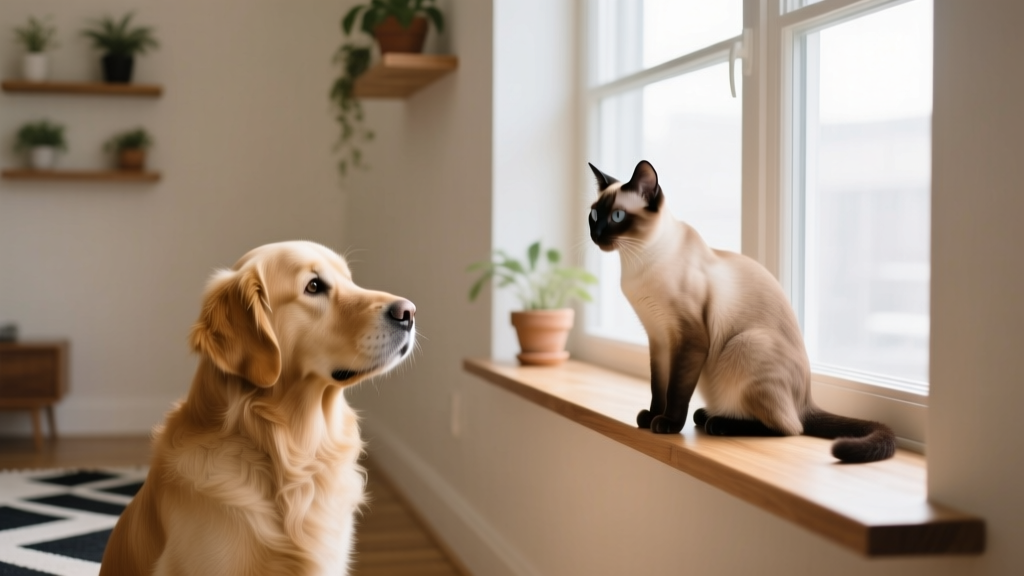
False. While cats are facultatively social (not pack-dependent like dogs), they evolved in colonies with overlapping home ranges. True solitude is rare—even feral cats maintain loose social networks. Small spaces become problematic when they eliminate choice, not company. A cat chooses solitude; confinement removes that choice.
Myth #2: “If my cat isn’t acting out, they’re fine.”
Deeply misleading. Cats mask distress masterfully—evolutionarily necessary to avoid predation. By the time overt signs appear (hiding, aggression, vomiting), stress has often been chronic for weeks or months. Proactive observation—not reactive response—is the gold standard of small-space care.
Related Topics (Internal Link Suggestions)
- Best Cat Trees for Apartments — suggested anchor text: "space-saving cat trees for small apartments"
- How to Stop Cat Urine Marking Indoors — suggested anchor text: "stop spraying in studio apartments"
- Feline Stress Symptoms Checklist — suggested anchor text: "hidden cat stress signs"
- Cat-Proofing Small Apartments — suggested anchor text: "apartment-safe cat setup"
- Interactive Toys for Indoor Cats — suggested anchor text: "best mental stimulation for indoor cats"
Your Next Step Starts With One Observation
You now know what is a cat's behavior in small house isn’t about limitation—it’s about translation. Every stare, every perch, every misplaced toy is data. So tonight, before bed, spend 5 minutes watching—not judging—your cat’s movement patterns. Note where they pause, where they linger, where they avoid. That map is your first step toward transforming constraint into connection. Then, pick one action from this article—the window perch, the vertical scratch post, the transition cue—and implement it within 48 hours. Small changes, rooted in behavioral science, compound into profound well-being. Ready to build your cat’s thriving micro-ecosystem? Download our free Small-Space Cat Audit Checklist—a printable, vet-reviewed guide to diagnosing and optimizing your unique environment.