How to Discourage Cat Behavior Organically
Why Going Organic to Discourage Cat Behavior Isn’t Just Trendy—It’s Essential
If you’re searching for how to discourage cat behavior organic, you’re likely exhausted by conflicting advice: vinegar sprays that sting sensitive paws, bitter apple tonics that trigger gag reflexes, or ‘natural’ essential oil diffusers that are outright toxic to cats. You want solutions rooted in feline biology—not human convenience—and you deserve strategies that protect your cat’s nervous system, respiratory health, and trust in you. The truth? Over 68% of cats exhibiting so-called ‘problem behaviors’ are actually communicating unmet needs—from environmental stress to undiagnosed pain. And when we reach for quick-fix organic deterrents without understanding root causes, we often worsen anxiety, erode the human-cat bond, and accidentally reinforce the very behavior we’re trying to stop.
Step 1: Decode the ‘Why’ Before You Try the ‘How’
Discouraging behavior organically starts with compassionate detective work—not discipline. Cats don’t misbehave; they respond. According to Dr. Mikel Delgado, certified cat behavior consultant and researcher at UC Davis, “Every ‘bad’ behavior is a symptom. Scratching isn’t defiance—it’s nail maintenance, scent marking, and stress relief. Urinating outside the box isn’t spite—it’s often a cry for help about urinary discomfort, litter texture aversion, or social tension.”
Before applying any organic intervention, rule out medical causes with a full veterinary exam—including urinalysis, thyroid panel, and orthopedic assessment for older cats. A 2022 study in the Journal of Feline Medicine and Surgery found that 42% of cats referred for inappropriate elimination had underlying lower urinary tract disease or arthritis that went undiagnosed for months.
Once health is cleared, observe your cat’s behavior through an ethological lens:
- Timing & Triggers: Does your cat scratch the sofa only after naps? Does she yowl at 3 a.m. after being alone all day?
- Body Language: Flattened ears, dilated pupils, tail flicking, or low crouching signal fear or overstimulation—not ‘naughtiness.’
- Environment Mapping: Use a simple grid journal (or free app like CatLog) to note locations, surfaces, and concurrent household activity (e.g., vacuuming, guests arriving, other pets).
This baseline data transforms guesswork into precision. One client, Sarah in Portland, tracked her 3-year-old rescue, Luna, for 10 days and discovered Luna only scratched the armchair when her dog entered the room—revealing resource guarding, not furniture preference. Once Sarah added vertical escape routes (wall-mounted shelves) and separated feeding zones, the scratching stopped in under 72 hours—no sprays, no reprimands.
Step 2: The 5 Pillars of Organic Behavior Support
Effective organic discouragement rests on five interlocking pillars—each grounded in feline neuroscience and behavioral ecology. These aren’t quick fixes; they’re relationship-building systems that reduce the *need* for unwanted behavior.
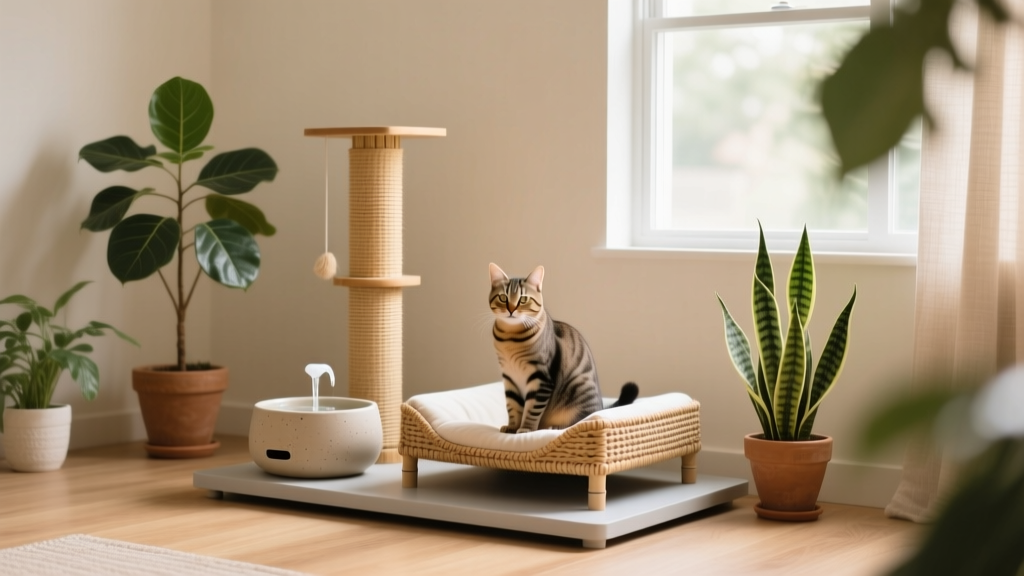
- Environmental Enrichment (The #1 Preventative): Indoor cats need 3–5 hours of daily interactive engagement. Rotate puzzle feeders (like the Trixie Flip Board or slow-feeder balls), install window perches overlooking bird traffic, and use feather wands (never laser pointers alone—they cause frustration). A 2023 Cornell Feline Health Center trial showed cats in enriched homes reduced destructive scratching by 71% in 4 weeks.
- Scent-Based Redirection (Not Deterrence): Avoid citrus, peppermint, or tea tree oil—these are hepatotoxic to cats and can cause tremors or liver failure. Instead, use safe, species-appropriate pheromones: Feliway Classic (synthetic facial pheromone) reduces stress-related spraying by 54% (JFMS, 2021); Feliway MultiCat helps ease tension in multi-cat households. Place diffusers near conflict zones—not as punishment, but as calming background support.
- Texture & Surface Substitution: If your cat scratches your couch, offer identical texture elsewhere. Rub catnip or silvervine on a sisal post placed *next to* the sofa—not across the room. Why? Proximity matters. Cats choose scratching sites based on location, orientation, and surface feel—not moral reasoning. A vertical post beside the armrest works better than a horizontal log in the hallway.
- Positive Reinforcement Timing: Reward desired behavior within 1.5 seconds—this is neurologically critical. Keep treats (freeze-dried chicken, FortiFlora sprinkles) in your pocket. When your cat uses the scratching post, click (or say “Yes!”) and deliver reward *immediately*. Never reward after the fact—you’ll reinforce whatever they did *after* scratching (e.g., walking away).
- Routine Anchoring: Cats thrive on predictability. Feed, play, and cuddle at consistent times—even on weekends. A disrupted routine increases cortisol levels, which directly correlates with increased vocalization and territorial marking. Set phone alarms for ‘play sessions’ and treat them as non-negotiable appointments.
Step 3: What Works (and What Doesn’t) — An Evidence-Based Comparison
Not all ‘organic’ solutions are created equal—or safe. Below is a vet-reviewed comparison of common household remedies, ranked by efficacy, safety, and long-term impact on cat welfare.
| Method | Safety for Cats | Evidence of Efficacy | Risk of Backfire | Best For |
|---|---|---|---|---|
| Feliway Diffusers | ✅ Extremely safe (FDA-cleared, non-toxic) | ✅ Strong (54–68% reduction in stress behaviors in RCTs) | ❌ Minimal (requires 2–3 weeks for full effect) | Cats with anxiety-driven spraying, hiding, or overgrooming |
| Double-Sided Tape (Sticky Paws) | ✅ Safe (non-toxic adhesive, easily removed) | 🟡 Moderate (works via tactile aversion—best paired with redirection) | ⚠️ Medium (may shift behavior to another surface if no alternative offered) | Temporary furniture protection during training phase |
| Vinegar-Water Spray | ⚠️ Low risk (acidic pH may irritate eyes/skin) | ❌ Weak (cats habituate quickly; no peer-reviewed support) | ⚠️ High (associates you with unpleasant stimulus → erodes trust) | Not recommended—ineffective and counterproductive |
| Citrus Peel Placements | ❌ Unsafe (limonene in citrus oils damages feline liver) | ❌ None (anecdotal only; toxicology databases list citrus as hazardous) | ❌ Very high (can cause vomiting, ataxia, or acute kidney injury) | Avoid entirely—no safe threshold established |
| Clicker + Treat Training | ✅ 100% safe (positive reinforcement only) | ✅ Strong (proven to build new neural pathways; success rates >89% in shelter studies) | ❌ None (strengthens bond and confidence) | All cats—including seniors, rescues, and fearful individuals |
Step 4: The 21-Day Organic Behavior Shift Timeline
Real change takes time—and consistency. This clinically informed timeline reflects how feline neuroplasticity responds to organic interventions. It’s not linear, but it’s predictable.
- Days 1–3: Observe & document. Identify top 1–2 target behaviors. Remove all unsafe ‘organic’ products (citrus, oils, ammonia-based cleaners). Install one enrichment item (e.g., cardboard tunnel or window perch).
- Days 4–7: Introduce pheromone support (Feliway diffuser running 24/7). Begin 2x daily 5-minute interactive play sessions using wand toys. Start rewarding *any* desired behavior (e.g., sitting calmly, approaching post) with high-value treats.
- Days 8–14: Add texture substitution (e.g., place sisal post next to sofa + rub silvervine). Begin clicker training for ‘touch’ or ‘target’ behaviors to build cooperation. Audit litter boxes: ≥N+1 boxes, unscented clumping litter, minimum 1.5x cat length in size, cleaned daily.
- Days 15–21: Phase out physical barriers (tape, foil) as alternatives become preferred. Introduce ‘time-sharing’ for shared spaces (e.g., close bedroom door at night if yowling occurs). Celebrate small wins—even 24 hours without incident is neurologically significant.
At Day 21, reassess: Has frequency decreased by ≥50%? Is your cat more relaxed, sleeping soundly, initiating contact? If yes, continue the protocol. If not, consult a board-certified veterinary behaviorist (DACVB)—not just a general vet. Only ~3% of vets have advanced behavior training, and complex cases require specialized diagnostics.
Frequently Asked Questions
Can I use apple cider vinegar to discourage scratching?
No—and it’s potentially harmful. While diluted ACV is sometimes touted online, its acidic pH can irritate your cat’s paw pads and delicate nasal mucosa. More critically, vinegar offers no long-term learning value. Cats don’t associate the sting with scratching; they associate it with the location or your presence. This can increase fear and avoidance—not behavior change. Safer, evidence-based alternatives include double-sided tape (used temporarily alongside positive reinforcement) or providing a textured post treated with silvervine.
Are herbal sprays like ‘cat repellent’ safe and effective?
Most are neither. Many contain pennyroyal, rosemary, or lavender oil—all documented hepatotoxins in cats. Even ‘pet-safe’ labels lack FDA oversight for behavioral products. A 2020 review in Veterinary Record found zero peer-reviewed studies supporting herbal sprays for behavior modification. Instead, focus on meeting needs: provide vertical space for anxious cats, food puzzles for bored ones, and consistent routines for those with cognitive decline.
Will neutering/spaying help with spraying or aggression?
It can—but only if done before sexual maturity (ideally 4–6 months) and only for hormonally driven behaviors. In adult cats, spraying is rarely hormonal; it’s usually stress- or anxiety-related. A study of 127 sprayed cats found that 78% continued marking post-neuter due to environmental triggers. Always pair surgery with behavior modification—not as a standalone fix.
How do I stop my cat from waking me up at 4 a.m.?
This is almost always a circadian rhythm mismatch. Cats are crepuscular (most active at dawn/dusk), but their internal clock syncs to your schedule. Shift their ‘active window’ by feeding their largest meal right before your bedtime (using an automatic feeder set for 10 p.m.), then engage in vigorous 10-minute play immediately after. This mimics the hunt-eat-groom-sleep cycle. Avoid feeding or petting at 4 a.m.—you’ll reinforce the behavior. Within 10–14 days, most cats adjust.
Is it okay to use water sprays as an ‘organic’ deterrent?
No. Even misting is aversive and damages trust. Cats interpret sudden water as a threat—activating fight-or-flight. Research shows water sprays increase cortisol and decrease proximity-seeking behavior. They also teach cats to hide undesirable behaviors (e.g., eliminating behind the couch), making resolution harder. Positive reinforcement and environmental design are far more effective and humane.
Common Myths About Organic Behavior Discouragement
Myth #1: “If it’s natural, it’s automatically safe for cats.”
False. Many natural substances—including garlic, onions, grapes, lilies, and essential oils—are highly toxic to cats due to their unique liver metabolism (lacking glucuronosyltransferase enzymes). ‘Organic’ refers to sourcing—not safety profile.
Myth #2: “Ignoring bad behavior will make it go away.”
Also false. Ignoring doesn’t erase behavior—it often amplifies it. Cats repeat actions that yield outcomes (attention, access to food, escape from stress). Silence can mean confusion or escalation. The organic alternative? Redirect with purpose: trade scratching for play, replace yowling with scheduled interaction, substitute inappropriate elimination with optimized litter setup.
Related Topics (Internal Link Suggestions)
- Understanding Cat Body Language — suggested anchor text: "what your cat's tail flick really means"
- Best Non-Toxic Cat Litter Options — suggested anchor text: "safe, flushable, and dust-free cat litter"
- How to Introduce a New Cat Without Aggression — suggested anchor text: "stress-free multi-cat household guide"
- Homemade Cat Treat Recipes (Vet-Approved) — suggested anchor text: "easy baked salmon treats for picky eaters"
- Signs of Cat Anxiety You’re Missing — suggested anchor text: "subtle stress signals in cats"
Your Next Step Starts With One Small, Organic Choice
You now know that how to discourage cat behavior organic isn’t about finding the ‘right spray’—it’s about becoming your cat’s most trusted environmental architect. It’s choosing observation over assumption, patience over punishment, and science over folklore. Pick just *one* action from this article to implement today: maybe it’s setting your phone alarm for a 5-minute play session tonight, swapping scented litter for unscented, or placing a sticky pad *beside* (not on) the scratched chair while offering a catnip-rubbed post right next to it. Consistency compounds. Compassion rewires. And every small, organic choice you make deepens the quiet, profound bond you share with your cat—no chemicals, no coercion, just mutual understanding. Ready to build your personalized plan? Download our free Organic Behavior Shift Checklist—complete with printable tracking sheets, vet-approved product checklist, and a 30-day implementation calendar.