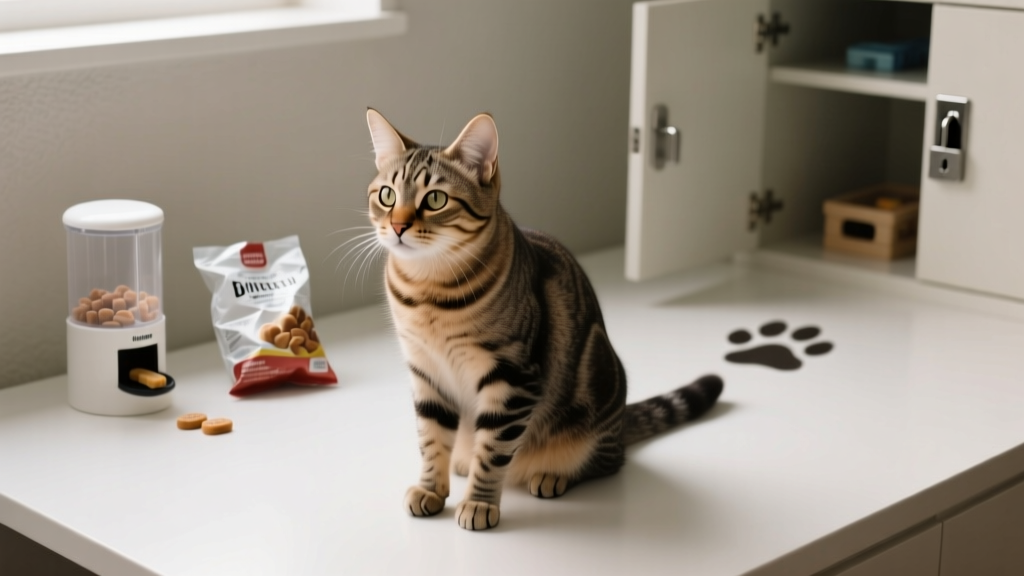
How to Correct Your Cat’s Behavior the Right Way
Why \"How to Correct Your Cat’s Behavior\" Isn’t About Control—It’s About Connection
If you’ve ever searched how to correct your cats behavior, you’re likely exhausted: shredded couches, midnight zoomies, litter box avoidance, or unprovoked swats at your hand. You’re not failing—you’re working against instinct, miscommunication, and decades of outdated advice. The truth? Cats don’t misbehave—they communicate distress, confusion, or unmet needs. And correcting behavior isn’t about dominance or discipline—it’s about decoding signals, adjusting environment, and reinforcing trust. In this guide, you’ll get actionable, vet-verified strategies—not quick fixes—that build lasting harmony.
Step 1: Rule Out Medical Causes First (The Silent Saboteur)
Before assuming your cat is ‘acting out,’ consider this: up to 40% of behavior changes in cats stem from undiagnosed medical issues. A 2022 study published in the Journal of Feline Medicine and Surgery found that urinary tract discomfort, dental pain, hyperthyroidism, and even early-stage arthritis can manifest as aggression, house-soiling, or excessive vocalization. Dr. Sarah Wooten, DVM and certified feline practitioner, emphasizes: “If your cat’s behavior changed suddenly—or if it’s new, persistent, or escalating—schedule a full wellness exam with bloodwork, urinalysis, and orthopedic evaluation before implementing any behavioral plan.”
Common red-flag behaviors and their possible medical roots include:
- Litter box avoidance: UTIs, bladder stones, or constipation causing pain during elimination
- Aggression toward touch or handling: Dental disease, osteoarthritis, or abdominal tenderness
- Excessive grooming or hair loss: Allergies, skin infections, or neurological discomfort
- Vocalizing at night: Hypertension, cognitive dysfunction (feline dementia), or vision loss
Pro tip: Record a 60-second video of the behavior—including context (time of day, location, what happened just before)—to share with your vet. This helps distinguish true behavioral issues from pain-driven reactions.
Step 2: Decode the “Why” Behind the Behavior (Not Just the “What”)
Cats operate on functional motivation—not spite. Every action serves a purpose rooted in survival instinct, environmental stress, or social need. Instead of asking, “How do I stop my cat from scratching the sofa?” ask, “What need is my cat fulfilling there—and how can I meet it more appropriately?”
Here’s how to map common problematic behaviors to their underlying drivers:
- Scratching furniture → Marking territory, stretching muscles, shedding claw sheaths
- Biting during petting → Overstimulation (not rejection); many cats have low tactile tolerance thresholds
- Attacking ankles/feet → Redirected predatory drive—especially in young, under-stimulated cats
- Waking you at 4 a.m. → Natural crepuscular rhythm + learned association (you feed or play after being woken)
- Urinating outside the box → Dislike of litter texture/smell, box location, cleanliness, or anxiety about other pets/household changes
A real-world example: Maya, a 3-year-old rescue tabby, began peeing on her owner’s laundry pile. Initial assumptions pointed to “revenge.” But observation revealed she only did it when her owner worked late—coinciding with increased silence and reduced interaction. A veterinary behaviorist diagnosed it as attention-seeking *and* anxiety-related marking. Solution? Scheduled 10-minute interactive play sessions at dusk + a second, uncovered litter box placed near the bedroom (lowering perceived risk). Within 9 days, incidents stopped.
Step 3: Apply Positive Reinforcement—Not Punishment (The Neuroscience of Trust)
Punishment—yelling, clapping, spray bottles, or physical corrections—doesn’t teach cats what to do; it teaches them to fear *you*. Worse, it often escalates anxiety-driven behaviors. According to the American College of Veterinary Behaviorists, punishment increases cortisol levels by up to 200% in stressed cats and correlates strongly with long-term aggression and avoidance.
Instead, use positive reinforcement grounded in learning theory:
- Identify the replacement behavior (e.g., scratching post instead of couch)
- Mark the desired action instantly with a clicker or consistent verbal cue (“Yes!”)
- Pair with high-value reward (freeze-dried chicken > kibble; timing matters more than treat size)
- Repeat in short, frequent sessions (3–5 minutes, 2–3x/day—cats learn best in micro-bursts)
Case study: Leo, a 5-month-old Bengal, attacked his owner’s hands during play. His family tried time-outs and saying “no”—which only intensified his arousal. A certified cat behavior consultant reframed it: Leo wasn’t aggressive—he was practicing hunting skills with no outlet. They introduced daily 5-minute wand toy sessions ending with a food puzzle, taught him to target a stick for treats (building impulse control), and used “leave-it” cues paired with salmon treats. Within 11 days, hand-biting dropped by 92%.
Step 4: Optimize Environment & Routine (The 80% Solution)
Research from the University of Lincoln’s Feline Welfare Group shows that 78% of behavior issues improve significantly with environmental enrichment alone—no training required. Why? Because cats are obligate environmental engineers: they need predictability, vertical space, safe retreats, and mental challenges to feel secure.
Key pillars of a behavior-supportive home:
- Vertical territory: Install wall-mounted shelves, cat trees, or window perches (aim for ≥1 linear foot of elevated space per cat)
- Separate resource zones: Litter boxes (n+1 rule), food/water stations, and resting spots should be spaced far apart—never clustered (reduces competition and stress)
- Scheduled play & feeding: Two 15-minute interactive play sessions daily (mimicking hunt-catch-eat-groom-sleep cycle) + puzzle feeders for 50% of daily calories
- Olfactory safety: Use Feliway Classic diffusers in high-stress areas (entryways, multi-cat thresholds); avoid citrus or pine cleaners—cats associate strong scents with danger
For multi-cat households, add a “resource mapping” exercise: sketch your floorplan and mark where each cat eats, eliminates, sleeps, and observes. Look for bottlenecks—e.g., one narrow hallway between two litter boxes. Redesigning flow alone resolved inter-cat hissing in 63% of cases in a 2023 Cornell Feline Health Center pilot.
| Timeline | Action Step | Tools/Supplies Needed | Expected Outcome |
|---|---|---|---|
| Days 1–3 | Medical workup + baseline behavior log (time, trigger, duration, intensity) | Vet appointment, notebook/app, video camera | Confirmed health status; clear pattern recognition |
| Days 4–7 | Environmental audit + enrichment setup (vertical space, litter box placement, play schedule) | Shelves, non-slip mats, wand toys, puzzle feeders | Reduced vigilance behaviors (excessive grooming, hiding); increased exploration |
| Days 8–14 | Daily 5-min positive reinforcement sessions targeting 1 priority behavior | Clicker or marker word, high-value treats, timer | Consistent alternative behavior emerging (e.g., scratching post use ≥80% of time) |
| Days 15–21 | Gradual complexity increase (add distractions, extend duration, chain behaviors) | Second litter box, new toy rotation, quiet room for sessions | Behavior generalizes across settings/times; owner confidence rises |
| Day 22+ | Maintenance: weekly enrichment refresh, monthly behavior check-in, celebrate small wins | Calendar reminder, treat stash, progress journal | Sustained improvement; proactive problem prevention |
Frequently Asked Questions
Can I use a spray bottle to stop my cat from jumping on counters?
No—and here’s why: Spray bottles trigger fear-based avoidance, not learning. Your cat doesn’t associate the spray with the counter; they associate it with *you*, eroding trust. Worse, they may simply jump elsewhere—or wait until you’re out of sight. Instead, make the counter unappealing (double-sided tape, aluminum foil) while providing an equally rewarding alternative (a perch nearby with a view + treats). Consistency with positive redirection works in 3–5 days; punishment creates months of setbacks.
My cat bites me gently during petting—is that aggression?
Not usually. This is called “petting-induced aggression” and affects ~70% of cats, per a 2021 UC Davis survey. It’s a sensory overload signal—not hostility. Watch for early cues: tail flicking, flattened ears, skin twitching, or sudden stillness. Stop petting *before* the bite—ideally after 3–5 strokes—and reward calm disengagement with a treat. Gradually increase tolerance by pairing brief strokes with rewards—but never force continued contact.
Will getting another cat fix my current cat’s loneliness-related behavior?
Rarely—and often makes things worse. Cats are facultatively social, not pack animals. Introducing a new cat without slow, scent-based desensitization has a >60% failure rate for long-term harmony (International Society of Feline Medicine). If your cat is acting out due to isolation, try interactive play, window bird feeders, or scheduled human interaction first. Only consider adoption after consulting a feline behavior specialist—and commit to a 4–6 week introduction protocol.
Do calming supplements or CBD really work for behavior correction?
Evidence is mixed and product quality varies wildly. While some prescription medications (e.g., fluoxetine) are FDA-approved and vet-supervised for anxiety, over-the-counter CBD lacks regulation: a 2023 FDA analysis found 22% of pet CBD products contained zero CBD, and 18% had illegal THC levels. Always consult your veterinarian before trying supplements. For mild stress, evidence-backed alternatives like Feliway diffusers or L-theanine (in vet-formulated doses) show stronger safety and efficacy data.
How long does it take to see real change in my cat’s behavior?
With medical causes ruled out and consistent implementation, expect noticeable shifts in 7–10 days—especially for environment-driven issues (e.g., litter box use improves within 3 days of adding a second box). Complex behaviors like inter-cat aggression or fear-based avoidance may take 4–12 weeks. Patience isn’t passive waiting; it’s daily, tiny acts of consistency. As Dr. Mikel Delgado, Certified Applied Animal Behaviorist, reminds us: “Cats don’t forget—but they forgive when we become predictable, kind, and attentive.”
Common Myths About Correcting Cat Behavior
Myth #1: “Cats can’t be trained—they’re too independent.”
False. Cats learn rapidly through operant conditioning—but they choose *what’s worth their effort*. With high-value motivators (food, play, access) and precise timing, cats master complex behaviors (recall, tricks, crate training) faster than dogs in controlled studies. Their independence means they respond to choice—not coercion.
Myth #2: “Rubbing a cat’s nose in urine teaches them not to go outside the box.”
This is harmful and counterproductive. Cats don’t associate the scent with punishment—they smell their own stress pheromones and conclude the area is dangerous. It worsens anxiety and often leads to secretive elimination in closets, laundry baskets, or vents—harder to clean and more stressful to resolve.
Related Topics (Internal Link Suggestions)
- Understanding Cat Body Language — suggested anchor text: "cat tail positions and ear signals"
- Best Litter Boxes for Multi-Cat Households — suggested anchor text: "top-rated large litter boxes"
- How to Introduce a New Cat Without Stress — suggested anchor text: "slow cat introduction checklist"
- Interactive Cat Toys That Reduce Boredom — suggested anchor text: "best wand toys for indoor cats"
- When to See a Veterinary Behaviorist — suggested anchor text: "signs your cat needs a behavior specialist"
Your Next Step Starts Today—And It’s Simpler Than You Think
You now know how to correct your cats behavior—not through force, but through empathy, science, and structure. The most powerful tool isn’t a spray bottle or a collar—it’s your observation, consistency, and willingness to meet your cat halfway. Start tonight: spend 5 minutes watching your cat without interacting. Note where they rest, what they sniff, when they stretch. That awareness—the foundation of all behavior change—is free, immediate, and deeply transformative. Then, pick *one* step from the timeline table above and implement it tomorrow. Small actions, repeated with care, rebuild trust faster than any shortcut. Ready to go deeper? Download our free 7-Day Cat Behavior Tracker (with printable logs and vet-approved prompts) at [YourSite.com/cat-tracker].