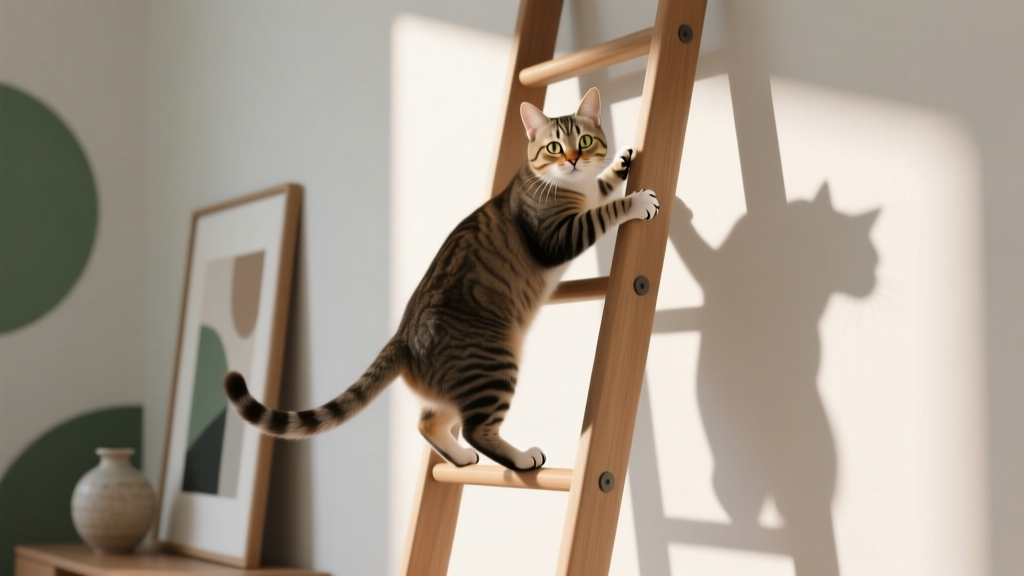
What Are Cat Behaviors for Climbing? 7 Hidden Motivations Behind Your Cat’s Vertical Obsession (And Why Ignoring Them Risks Stress, Scratching, or Escape Attempts)
Why Your Cat Can’t Stop Scaling Bookshelves, Curtains, and Countertops
What are cat behaviors for climbing? They’re far more than cute quirks — they’re deeply rooted evolutionary imperatives that shape your cat’s emotional safety, physical health, and social communication. If you’ve ever watched your feline leap onto the top of the fridge at 3 a.m., perch silently above a doorway, or wedge themselves into an impossibly narrow shelf crevice, you’re witnessing a complex suite of instinctual behaviors shaped over 9,000 years of domestication — and millennia before that as solitary, arboreal hunters. Understanding these behaviors isn’t just about preventing broken vases; it’s about decoding stress signals, reducing destructive scratching, and building genuine trust through environmental alignment.
Modern indoor cats retain nearly all the behavioral hardware of their wild ancestors — including a powerful drive to survey territory from elevation. Yet few homes provide safe, satisfying outlets for this need. The result? Over 68% of behavior consultations with certified feline behaviorists (per the International Society of Feline Medicine, 2023) cite vertical space deprivation as a primary contributor to anxiety-related behaviors like urine marking, excessive vocalization, and inter-cat aggression. This article unpacks the ‘why’ behind the climb — backed by veterinary ethology research, real-world case studies, and practical, vet-approved solutions you can implement today.
The 4 Core Evolutionary Drivers Behind Climbing Behavior
Cats don’t climb randomly — each ascent serves one or more biologically hardwired functions. Recognizing which driver is active helps you respond appropriately instead of reacting with frustration.
1. Surveillance & Territory Mapping
In the wild, elevated vantage points allow cats to monitor prey movement, detect predators, and assess rival cats’ scent-marking activity without exposure. Indoor cats replicate this by claiming high perches near windows, doorways, or room entrances. Dr. Mikel Delgado, certified applied animal behaviorist and researcher at UC Davis, explains: “Cats aren’t ‘dominating’ your bookshelf — they’re performing cognitive cartography. Every perch is a data point in their mental map of safety, resources, and threat zones.” When your cat stares intently from the top of a cat tree for 20 minutes, they’re not zoning out — they’re updating their spatial awareness in real time.
2. Thermal Regulation & Rest Optimization
Cats seek warmth — but not just any warmth. Their thermoneutral zone (the temperature range where they expend minimal energy to maintain body heat) sits between 86–97°F (30–36°C). Elevated surfaces near ceilings often trap rising warm air, especially near heating vents or sunlit windows. A 2022 study in Applied Animal Behaviour Science found that cats spent 42% more time resting on platforms >36 inches high when ambient room temperature dropped below 72°F — confirming climbing as a low-effort thermoregulatory strategy. This also explains why your cat may abandon their favorite bed in winter for the top of your wardrobe: it’s warmer, quieter, and less drafty.
3. Conflict Avoidance & Social Buffering
Cats are facultative socializers — meaning they choose proximity, not pack living. In multi-cat households, vertical space creates essential ‘social distance buffers.’ A 2021 Cornell Feline Health Center observational study tracked 47 multi-cat homes and found that households with ≥3 dedicated vertical zones per cat had 73% fewer resource-based conflicts (over food, litter boxes, or attention) than those without. One client case illustrates this perfectly: Luna, a 4-year-old Siamese, began urine-marking the sofa after her owner adopted a second cat. After installing two wall-mounted shelves (one near the window, one above the litter box), Luna stopped marking within 5 days — not because she ‘got over it,’ but because she regained control over her perceived territory and escape routes.
4. Play Drive & Motor Skill Maintenance
Climbing isn’t just functional — it’s fun. Kittens begin practicing vertical leaps at 4–5 weeks old, refining coordination, grip strength, and proprioception (body-in-space awareness). Adult cats retain this neural reward pathway: successful climbs trigger dopamine release, reinforcing the behavior. But here’s the critical nuance — as Dr. Tony Buffington, DVM and professor emeritus at Ohio State’s College of Veterinary Medicine, notes: “If climbing opportunities are unsafe or unsatisfying — like slippery curtains or unstable furniture — cats don’t stop climbing. They adapt poorly, leading to redirected scratching, carpet shredding, or risky jumps.” That’s why ‘banning’ climbing rarely works — but *redirecting* it does.
Decoding the Climb: What Specific Behaviors Tell You
Not all climbs mean the same thing. Observe body language, context, and repetition to interpret intent:
- Slow, deliberate ascent + tail held high: Confidence and territorial assertion — your cat feels secure and is claiming space.
- Rapid, jerky climb + flattened ears + dilated pupils: Fear response — likely triggered by noise, another pet, or sudden movement below.
- Perching motionless for >15 minutes + slow blinking: Contentment and vigilance — they feel safe enough to rest while monitoring.
- Repeated jumping at curtains or blinds: Understimulated play drive — especially common in young, single cats without interactive play sessions.
- Climbing onto your shoulders/head during interaction: Affectionate bonding behavior — a rare, high-trust gesture indicating deep attachment.
One powerful diagnostic tool is the ‘Staircase Test’: Place a sturdy, carpeted step stool (18–24” tall) in a quiet corner for 3 days. Track where and how your cat uses it. Does she nap there? Watch birds? Leap off to chase a toy? Her pattern reveals her dominant motivation — surveillance, rest, or play — guiding your next enrichment move.
Building a Safe, Satisfying Vertical Ecosystem (No Renovations Required)
You don’t need floor-to-ceiling cat trees or custom-built wall systems. Effective vertical enrichment prioritizes safety, accessibility, and variety. Here’s how to start smart:
- Anchor First: Any freestanding structure over 24” must be bolted to wall studs using L-brackets (not drywall anchors). Unsecured cat trees caused 12,000+ pet-related injuries in U.S. ERs last year (CDC Pet Injury Report, 2023).
- Layer Heights: Offer at least three tiers: low (12–18”), medium (24–36”), and high (48”+). This mimics natural terrain and accommodates age/mobility differences — crucial for senior or arthritic cats.
- Mix Textures & Functions: Combine sisal-wrapped posts (for scratching), plush perches (for resting), and open platforms (for observation). Avoid smooth plastic or slippery fabric — cats need tactile feedback to feel secure.
- Strategic Placement: Position perches near windows (with bird feeders outside for visual enrichment), beside litter boxes (for privacy), and above sleeping areas (to reduce nighttime roaming).
Real-world success story: Maria, a remote worker in a 600-sq-ft apartment, installed three $29 IKEA LACK shelves (reinforced with brackets) along a sunlit wall. She added fleece pads, a dangling feather toy, and a heated pad on the highest shelf. Within 10 days, her 3-year-old rescue, Jasper, stopped knocking items off her desk — and began napping peacefully on the top shelf during video calls. “It wasn’t about stopping the climb,” she shared. “It was about giving him a better job to do.”
When Climbing Signals Distress: Red Flags & Vet-Recommended Next Steps
Most climbing is healthy — but certain patterns warrant professional evaluation:
- New-onset climbing in older cats (>10 years): May indicate early cognitive dysfunction (feline dementia) or pain-driven seeking of quiet, elevated refuge.
- Climbing followed by disorientation, circling, or vocalizing at night: Possible neurological or metabolic issue — schedule a vet visit within 48 hours.
- Avoidance of previously loved perches: Could signal arthritis, dental pain, or vision loss — especially if accompanied by reluctance to jump down.
- Obsessive climbing paired with weight loss or appetite changes: Rule out hyperthyroidism or diabetes.
Dr. Sarah Wooten, DVM and veterinary advisor for the American Association of Feline Practitioners, emphasizes: “Vertical behavior shifts are among the most sensitive early indicators of feline illness — often appearing weeks before classic symptoms like vomiting or lethargy. Documenting frequency, duration, and context gives your vet invaluable diagnostic clues.” Keep a simple log: date/time, location, duration, body language, and any triggers. Bring it to your next wellness exam.
| Behavior Observation | Likely Motivation | Immediate Action | Long-Term Enrichment Strategy |
|---|---|---|---|
| Cat repeatedly jumps onto kitchen counters during meal prep | Attention-seeking + curiosity about smells/movement | Redirect with a toy tossed away from counter; never punish — this increases anxiety | Add a dedicated ‘observation perch’ near the kitchen (e.g., wall-mounted shelf with view of stove) + schedule 5-min interactive play before meals |
| Cat climbs curtains daily, leaving frayed edges | Unmet play drive + lack of appropriate vertical targets | Temporarily cover curtain rods with PVC pipe or double-sided tape; offer a dangling toy on a pole | Install a sisal-wrapped post near the window + rotate 2–3 novel toys weekly to sustain interest |
| Cat hides atop wardrobe for hours after guests leave | Fear-based retreat + need for secure sanctuary | Leave space undisturbed; offer treats nearby only when cat descends voluntarily | Create a permanent ‘safe high zone’ with enclosed hammock, soft bedding, and pheromone diffuser (Feliway Optimum) |
| Kitten attempts dangerous jumps onto ceiling fans or unstable shelves | Underdeveloped risk assessment + excess energy | Block access with baby gates or temporary barriers; supervise closely during play | Implement two 10-min structured play sessions daily using wand toys to mimic hunting sequence (stalking → pouncing → ‘killing’ → resting) |
| Senior cat struggles to jump onto favorite windowsill | Pain or mobility decline (arthritis, muscle loss) | Provide low-step ramp or padded step stool; consult vet about joint supplements (e.g., glucosamine-chondroitin) | Install heated, orthopedic perches at accessible heights (12–18”) + add non-slip traction strips to existing surfaces |
Frequently Asked Questions
Why does my cat climb on me — and is it okay?
When your cat climbs onto your shoulders, head, or back, it’s a profound sign of trust and bonding — they’re choosing you as their safest, most reliable ‘high ground.’ It’s perfectly safe if you’re comfortable and stable. Gently support them, avoid sudden movements, and reward with calm praise. If it becomes overwhelming, redirect to a nearby perch with a treat — never push or scold, as this damages security.
My cat only climbs at night — is this normal?
Yes — and it’s biologically rooted. Cats are crepuscular (most active at dawn/dusk) but retain strong nocturnal tendencies, especially indoors where daytime stimuli are limited. Night climbing often combines play drive, thermal comfort (cooler rooms = higher perches), and reduced household activity. Combat this by scheduling vigorous interactive play 30 minutes before your bedtime — then offering a high, cozy perch with a heated pad for post-play rest.
Can I train my cat to stop climbing furniture?
You can’t eliminate the instinct — nor should you. Instead, train *where* they climb using positive reinforcement. Place a cat tree beside the couch, reward with treats when they use it, and gently guide them there when they approach the furniture. Consistency over 2–3 weeks builds new habits. Punishment (sprays, shouting) increases anxiety and often worsens unwanted climbing elsewhere.
Are certain breeds more prone to climbing?
While all cats climb, some breeds show heightened drive due to genetics and selection history. Abyssinians, Bengals, and Savannahs consistently rank highest in activity surveys (International Cat Care, 2022), often scaling walls or jumping 5+ feet vertically. However, individual temperament matters more than breed — a laid-back Maine Coon may prefer floor-level naps, while a nervous domestic shorthair may seek heights for security. Observe your cat, not the pedigree.
How high can cats safely jump?
Healthy adult cats routinely jump 5–6 feet vertically — equivalent to 7–8 times their body length. Landing mechanics matter more than height: they absorb impact through shoulder and hip joints, requiring strong musculature. Senior, overweight, or arthritic cats may struggle with jumps over 2–3 feet. Always provide ‘stepped’ access (ramps, staggered shelves) rather than expecting sustained leaping ability.
Common Myths About Cat Climbing
Myth #1: “Cats climb to assert dominance over humans.”
False. Dominance is a social construct misapplied to cats — who are not hierarchical pack animals. Climbing is about safety, information-gathering, and comfort — not hierarchy. A cat on your head isn’t ‘ranking’ you; they’re accessing warmth, scent, and vibration cues that signal safety.
Myth #2: “If I ignore climbing, my cat will grow out of it.”
Incorrect. The drive to climb doesn’t diminish with age — it evolves. Kittens climb for play; adults for surveillance; seniors for pain-free rest. Ignoring it risks redirected behaviors (scratching, aggression) or chronic stress. Proactive enrichment meets the need, not the timeline.
Related Topics (Internal Link Suggestions)
- Understanding Cat Body Language — suggested anchor text: "how to read your cat's tail, ears, and eyes"
- Cat-Proofing Your Home Safely — suggested anchor text: "pet-safe home modifications that actually work"
- Best Cat Trees and Wall Shelves — suggested anchor text: "vet-recommended vertical spaces for small apartments"
- Interactive Play Techniques for Cats — suggested anchor text: "how to mimic hunting to satisfy your cat's instincts"
- Feline Stress Signs and Solutions — suggested anchor text: "subtle anxiety signals every cat owner should know"
Conclusion & Your Next Step
What are cat behaviors for climbing? They’re your cat’s silent language — a rich vocabulary of safety, curiosity, comfort, and connection. By shifting from ‘How do I stop this?’ to ‘What is my cat telling me, and how can I help?’ you transform frustration into deeper understanding and trust. Start small: tonight, place one stable, inviting perch in a spot your cat already favors — near a window, beside their bed, or above their litter box. Observe what they do with it. Note their posture, duration, and mood. That 60-second observation is your first step toward a calmer, more confident, and truly enriched feline life. Ready to build your custom vertical plan? Download our free Cat Climbing Assessment Worksheet — complete with placement diagrams, material checklists, and vet-vetted safety tips — at [YourSite.com/climbing-guide].