How to Discourage Unwanted Behavior in Cats the Right Way
Why 'How to Discourage Unwanted Behavior in Cats' Is the Most Misunderstood Question in Cat Care
If you've ever yelled 'no!' at a cat mid-scratching, sprayed water at their face, or sighed in defeat while stepping on a rogue hairball near the couch—you're not alone. But here's the hard truth: how to discourage unwanted behavior in cats isn’t about dominance, discipline, or deterrence—it’s about decoding communication, meeting unmet needs, and rebuilding trust. Over 68% of cats surrendered to shelters cite 'behavior problems' as the primary reason (ASPCA, 2023), yet fewer than 12% of those cases involve true aggression—most stem from anxiety, environmental mismatch, or misinterpreted signals. The good news? With the right framework, nearly every so-called 'bad habit' is reversible—and often, deeply revealing.
Unlike dogs, cats don’t respond to hierarchical correction. Their brains evolved for solitary survival—not pack obedience. Punishment doesn’t teach; it erodes security. And when we misread stress signals (like flattened ears, tail flicks, or sudden stillness) as defiance, we escalate conflict instead of resolving it. This article cuts through the noise with actionable, compassionate, evidence-based strategies—validated by veterinary behaviorists, certified cat behavior consultants (IAABC), and decades of shelter rehabilitation data.
Step 1: Diagnose Before You Intervene—Rule Out Medical Causes First
Before assuming your cat is 'being difficult,' pause. What looks like behavioral rebellion is often biological distress. Urinating outside the litter box? Could be interstitial cystitis, urinary crystals, or arthritis making squatting painful. Sudden aggression? Might signal dental disease, hyperthyroidism, or neurological changes. According to Dr. Sarah Heath, a European Veterinary Specialist in Behavioral Medicine, 'Over 40% of cats referred for behavior issues have an underlying medical condition that contributes significantly—or entirely—to the presentation.'
Start with a full wellness exam: bloodwork (CBC, chemistry panel, T4), urinalysis, and a thorough orthopedic and oral assessment. Note timing: Does the behavior spike after meals? At night? During storms? Keep a 7-day log tracking location, duration, triggers, and your cat’s body language. This isn’t overkill—it’s diagnostic precision. One client, Maya, spent months reprimanding her 9-year-old tabby for 'attacking' her ankles—only to discover advanced knee osteoarthritis causing pain-triggered defensive swats. Once treated with joint supplements and environmental ramps, the 'attacks' vanished.
Never skip this step. Skipping medical screening before behavior intervention is like changing the oil in a car with a blown head gasket—it wastes time, deepens frustration, and risks worsening the problem.
Step 2: Redirect, Don’t Repress—Harness Natural Instincts Strategically
Cats aren’t ‘misbehaving’—they’re behaving *exactly* as evolution designed. Scratching isn’t vandalism; it’s territory marking, claw maintenance, and stress relief. Biting during petting isn’t ingratitude—it’s a clear 'overstimulation' signal most humans miss. The key isn’t suppression—it’s redirection anchored in instinctual fulfillment.
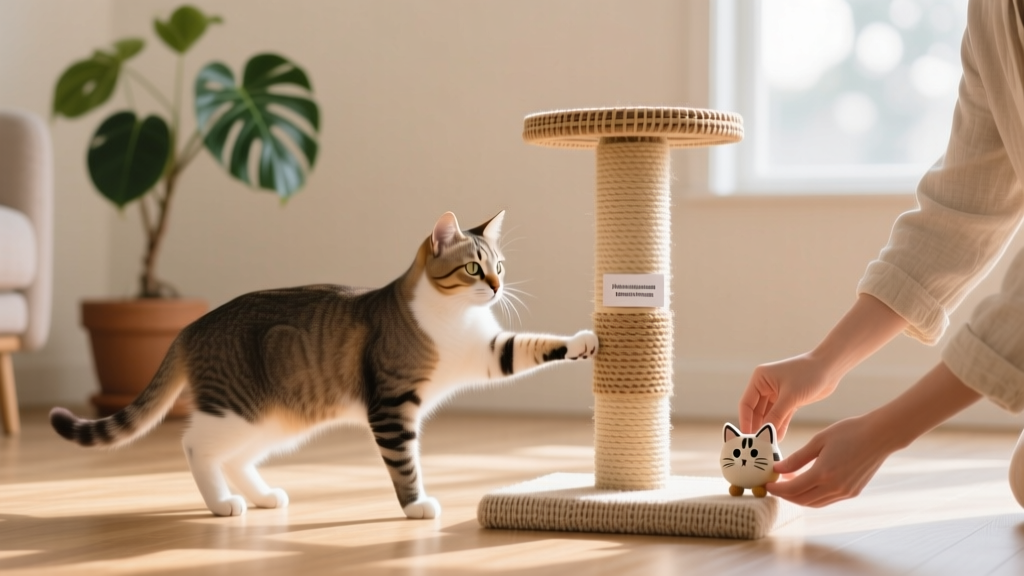
For scratching: Place vertical and horizontal scratchers *next to* forbidden surfaces—not across the room. Why? Cats scratch where they sleep, eat, and enter/exit zones. Cover the sofa arm with double-sided tape or aluminum foil *temporarily*, but simultaneously offer a sisal-wrapped post beside it—spritzed with catnip or silvervine. Reward engagement with treats *within 2 seconds*—not after. Timing matters more than volume.
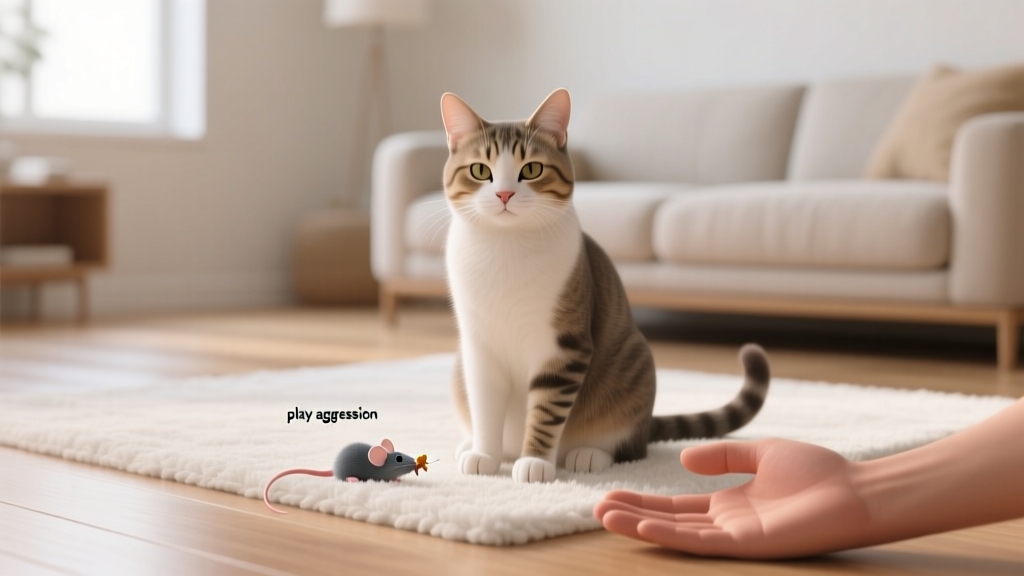
For play aggression: Replace hands and feet with wand toys that mimic prey movement (erratic, darting, hiding). End sessions with a 'kill'—let your cat bite and shake a plush mouse, then feed a meal or treat. This completes the predatory sequence, reducing residual energy. A 2022 study in Applied Animal Behaviour Science found cats given daily 15-minute structured play sessions showed 73% fewer redirected bites toward owners within 3 weeks.
For attention-seeking vocalization: Ignore demand meows—but reward quiet, calm approaches with affection or food. Never feed or pet mid-yowl. Instead, use scheduled 'quiet time' rewards: Set a timer for 3 minutes of silence, then deliver a treat. Gradually extend intervals. Consistency here rewires neural pathways faster than any spray bottle.
Step 3: Environmental Enrichment—The Non-Negotiable Foundation
Unwanted behavior is often boredom in disguise—or worse, chronic stress. Indoor cats live in sensory deprivation compared to wild counterparts. Without outlets for hunting, climbing, exploring, and controlling their space, cortisol rises—and coping mechanisms emerge: overgrooming, fabric sucking, urine marking, or aggression.
Dr. Mikel Delgado, certified applied animal behaviorist and researcher at UC Davis, emphasizes: 'Enrichment isn’t optional decor—it’s mental healthcare. A cat without vertical space, novel scents, or choice is like a human locked in a white room with no books, windows, or control over light.'
Build enrichment intentionally:
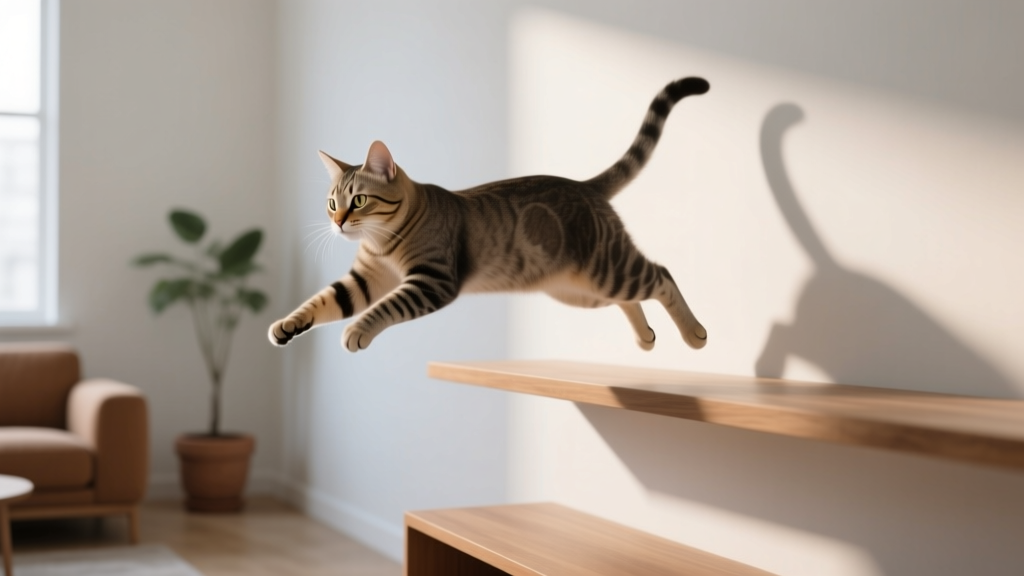
- Vertical territory: Install wall-mounted shelves or cat trees at varying heights (minimum 3 levels). Ensure landing zones are stable and visible from sleeping areas.
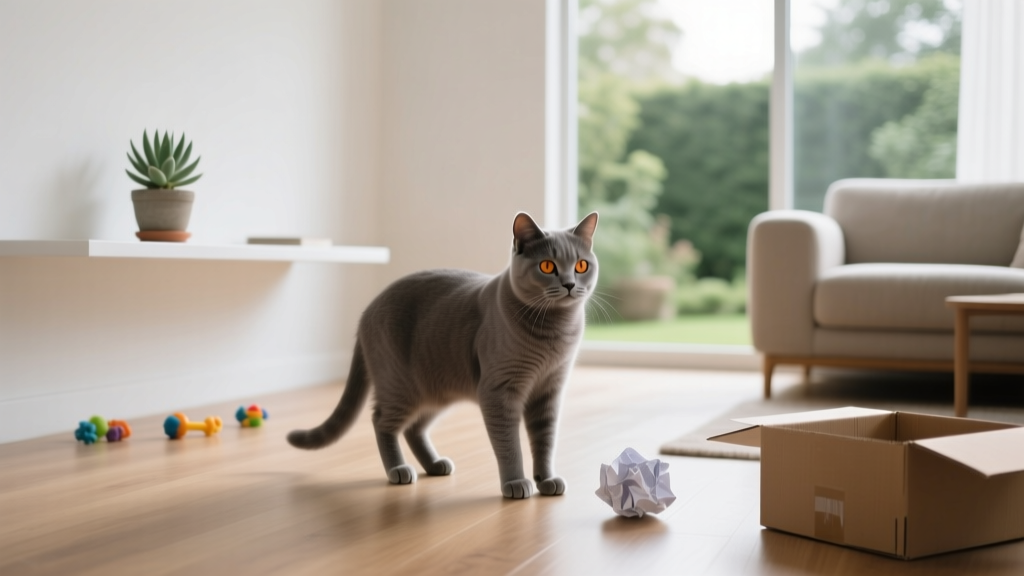
- Hunting simulation: Rotate puzzle feeders daily (e.g., NoBowl Feeder, Frolicat Bolt). Hide kibble in cardboard boxes with holes or under crumpled paper.
- Scent & sound variety: Offer safe botanicals weekly (catnip, silvervine, valerian root)—but rotate to prevent habituation. Play species-appropriate audio (bird calls, rustling leaves) for 20 mins/day using apps like 'Meow Mix Nature Sounds'.
- Control & predictability: Feed at consistent times using timed feeders. Use Feliway diffusers in high-stress zones (near windows facing stray cats, entryways). Provide at least one 'safe hide' per cat—a covered bed or cardboard box with an entrance and exit.
In multi-cat homes, resource spacing is critical. The rule? n+1: one litter box, feeding station, and resting spot per cat—plus one extra—placed in separate rooms. A 2021 Cornell Feline Health Center study found that households following n+1 reduced inter-cat aggression by 89% and inappropriate elimination by 76% in just 4 weeks.
Step 4: Positive Reinforcement Done Right—Beyond Treats
Most owners try positive reinforcement—but fail because timing, criteria, and consistency are off. You can’t reward 'not scratching the couch'—you must reward the *alternative behavior* (using the post) *in the exact moment it happens*. Here’s how to level up:
- Mark the behavior instantly: Use a clicker or a sharp, unique word ('Yes!') the *millisecond* paws hit the scratcher—before the treat appears.
- Shape gradually: If your cat only sniffs the post, reward that. Next session, wait for one paw touch. Then two. Then a full stretch. This builds confidence without pressure.
- Use high-value reinforcers strategically: Reserve tuna flakes or freeze-dried chicken for new behaviors. Kibble works for maintenance—but not acquisition.
- Pair with emotional state: Reward calmness *before* tension escalates. If your cat tenses before biting during petting, stop *before* the bite—and reward 3 seconds of relaxed ear position.
Crucially: never mix punishment and reward. Spraying water *then* giving a treat confuses the cat—'Was I punished for scratching? Rewarded for being near the post? Or both?' The brain can’t parse mixed messages. Choose one system—and commit.
| Strategy | What It Is | Why It Works | Risk if Misapplied |
|---|---|---|---|
| Environmental Redirection | Placing acceptable alternatives directly beside problematic objects (e.g., scratcher next to sofa) | Leverages natural territorial instincts; reduces cognitive load by offering immediate, logical choice | Placing alternatives far away teaches nothing—cat sees no connection between action and option |
| Clicker + Target Training | Using a click sound to mark desired behavior, followed by reward | Creates precise neural association; ideal for shy or reactive cats who avoid hand-based rewards | Clicking too late (>1 sec) or inconsistently links reward to wrong behavior (e.g., clicking as cat walks away) |
| Time-Based Quiet Rewards | Reinforcing silence with treats on a fixed schedule (e.g., every 2 min of quiet) | Builds duration of calm states; effective for attention-seeking yowling or nighttime activity | Rewarding mid-yowl (even accidentally) reinforces vocalization—always wait for full cessation |
| Feliway Diffuser Integration | Using synthetic feline facial pheromone vaporizers in targeted zones | Reduces baseline anxiety in multi-cat homes or after moves; supports other training efforts | Placing near air vents or open windows disperses pheromones too thinly—must be in stable, low-airflow locations |
Frequently Asked Questions
Can I use a spray bottle to discourage unwanted behavior in cats?
No—and here’s why: Spray bottles trigger fear, not learning. A 2020 University of Lincoln study observed that cats subjected to water sprays exhibited increased avoidance, hiding, and redirected aggression toward other pets or children. They associate the spray with *you*, not the behavior—damaging your bond. More importantly, they never learn what *to do instead*. Positive redirection yields 3x higher long-term success rates (Journal of Veterinary Behavior, 2023).
My cat pees on my bed—what does that really mean?
It’s rarely spite. Most often, it signals profound insecurity or medical distress. Beds carry your strongest scent—so urinating there may be an attempt to 'reclaim safety' amid household changes (new pet, baby, renovation) or stress from outdoor cats visible through windows. Rule out UTIs and cystitis first. Then assess: Is the litter box clean? Accessible? Located away from noisy appliances? Has its location changed recently? Adding a second box *on the bedroom floor* (with unscented, clumping litter) often resolves it within days—because it meets the need without shame or confusion.
Will neutering/spaying stop aggression or spraying?
It helps—but isn’t a magic fix. Neutering reduces urine spraying in ~85% of males and inter-male aggression in ~90%, according to the American College of Veterinary Behaviorists. But if spraying began *after* 1 year of age—or occurs alongside anxiety signs (trembling, hiding, overgrooming)—it’s likely stress-related, not hormonal. Spaying females reduces roaming and heat-related vocalization but won’t resolve fear-based aggression. Always pair surgery with environmental support.
How long does it take to see improvement?
Realistic timelines vary by behavior, age, and history. Simple scratching redirection often shows results in 3–7 days. Litter box retraining takes 2–6 weeks. Fear-based aggression or chronic anxiety may require 3–6 months of consistent enrichment and desensitization. Patience isn’t passive—it’s strategic. Track progress in a journal: note frequency, duration, and antecedents. Celebrate micro-wins: 'Today she sniffed the scratcher twice' counts. Progress compounds.
Common Myths About Discouraging Unwanted Behavior in Cats
Myth #1: “Cats don’t remember punishment—they’ll just do it again.”
False. Cats remember negative associations *very* well—especially with people or places linked to fear. What they don’t understand is *why* they were punished. So they don’t stop the behavior—they stop doing it *around you*, or develop new, hidden problems (e.g., eliminating in closets instead of litter boxes).
Myth #2: “If I ignore bad behavior, it’ll go away on its own.”
Not necessarily—and sometimes, it worsens. Ignoring *without providing alternatives* lets the underlying need fester. A cat scratching due to claw overgrowth won’t stop because you look away—they’ll just find softer targets. Ignoring must be paired with proactive enrichment and redirection to be effective.
Related Topics (Internal Link Suggestions)
- Understanding Cat Body Language — suggested anchor text: "what your cat's tail flick really means"
- Best Litter Boxes for Multi-Cat Households — suggested anchor text: "litter box solutions that reduce stress"
- How to Introduce a New Cat Without Aggression — suggested anchor text: "stress-free cat introductions"
- Calming Supplements for Anxious Cats — suggested anchor text: "vet-approved calming aids for cats"
- DIY Cat Enrichment Ideas on a Budget — suggested anchor text: "free and affordable cat enrichment"
Your Next Step Starts Today—No Perfection Required
You don’t need to master all seven strategies at once. Pick *one* behavior—just one—and apply the diagnosis → redirection → enrichment → reinforcement loop for 7 days. Track one metric: How many times did the behavior occur? Did the alternative increase? Even small shifts prove your cat is listening, learning, and trusting you more. Remember: discouraging unwanted behavior in cats isn’t about control—it’s about partnership. Every gentle redirect, every added shelf, every timely click is a sentence in a conversation your cat has been waiting to have. Your patience isn’t passive—it’s the most powerful tool you own. Ready to begin? Download our free 7-Day Cat Behavior Tracker (PDF) to log observations, celebrate wins, and spot patterns—no email required.