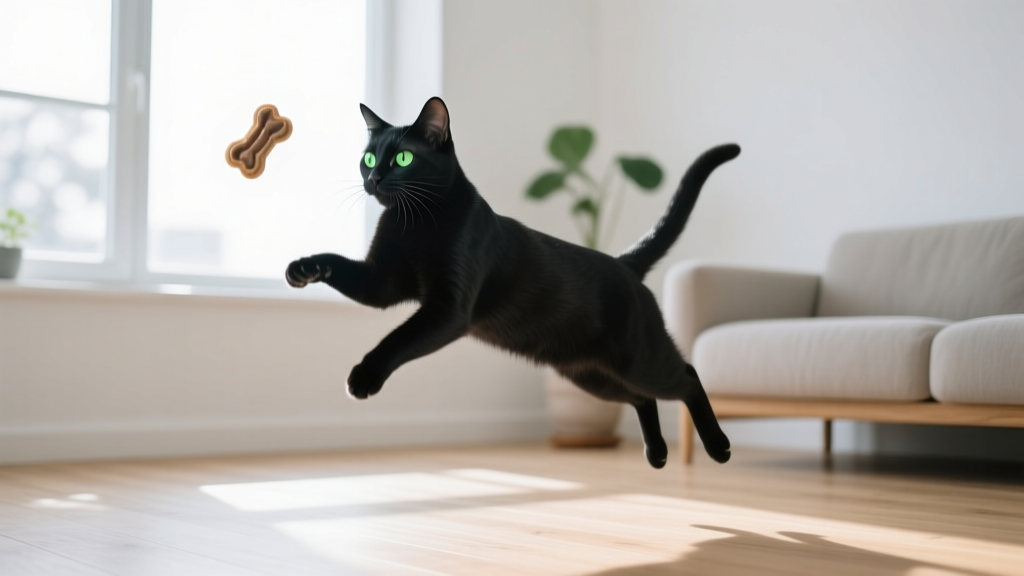
How to Change Cats Behavior for Weight Loss
Why Changing Your Cat’s Behavior Is the Missing Piece in Their Weight Loss Journey
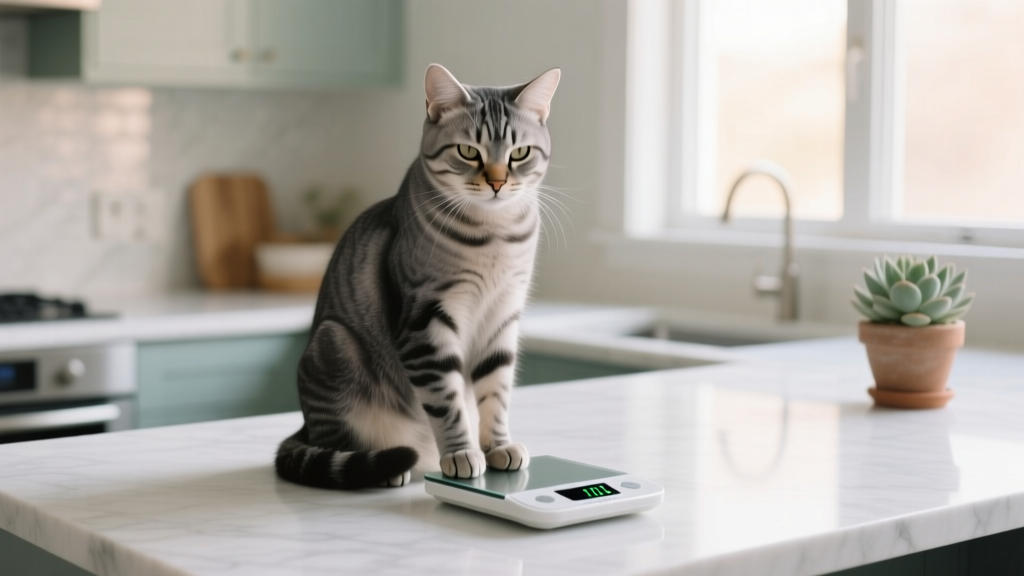
If you’ve ever wondered how to change cats behavior for weight loss, you’re not alone — and you’re asking the right question. Over 60% of domestic cats in the U.S. are overweight or obese (AVMA, 2023), yet most owners focus solely on diet swaps or portion control while overlooking the root cause: learned behaviors reinforced over months or years. A cat doesn’t ‘choose’ to beg at dawn, nap 20 hours a day, or scarf kibble like it’s going extinct — they’ve been conditioned. The good news? Feline behavior is highly malleable when approached with consistency, empathy, and species-appropriate science. This isn’t about willpower or punishment; it’s about redesigning your home environment, retraining neural pathways through positive reinforcement, and aligning daily routines with your cat’s evolutionary wiring. And when done right, behavior-driven weight loss yields sustainable results — plus happier, more engaged cats.
1. Understand the Behavioral Roots of Feline Obesity
Before you adjust feeding schedules or buy puzzle feeders, pause and ask: What function does this behavior serve for my cat? Veterinarian Dr. Sarah Lin, DVM, DACVB (Diplomate of the American College of Veterinary Behaviorists), explains: “Cats don’t overeat out of greed — they do it because their environment fails to meet core behavioral needs: hunting, exploring, climbing, and controlling resources. When those needs go unmet, boredom and anxiety manifest as food-seeking, pacing, or obsessive licking.” In other words, your cat’s weight gain may be a symptom of understimulation — not a dietary failure.
Consider these real-world examples:
- Mittens, 9-year-old domestic shorthair: Gained 3 lbs in 8 months after her owner switched to remote work. Her ‘snacking’ increased dramatically — but video monitoring revealed she was actually begging every 47 minutes, not because she was hungry, but because her human’s constant presence disrupted her natural activity-rest rhythm. Once scheduled 3-minute play sessions were introduced before each meal, begging dropped by 92% in 10 days.
- Ollie, 5-year-old neutered male: Avid ‘counter surfer’ who’d leap onto kitchen counters at dawn. His vet ruled out medical causes, but behavior analysis uncovered that he’d learned — over 18 months — that standing near the coffee maker triggered his owner’s attention and often led to treats. Removing the attention-reward link (by ignoring him silently and redirecting to a toy) broke the cycle in under two weeks.
The takeaway? Behavior change starts with observation — not intervention. Spend 3 days logging your cat’s activity: note when they eat, where they sleep, how long they engage with toys, what triggers vocalizations, and whether they have vertical space or hiding spots. Patterns emerge fast — and they reveal your leverage points.
2. Redesign Feeding as Enrichment — Not Just Nutrition
Free-feeding kibble is the #1 behavioral trap in feline weight management. It eliminates the ‘hunt-eat-groom-sleep’ sequence that regulates metabolism and satiety hormones. According to a landmark 2022 study in the Journal of Feline Medicine and Surgery, cats fed via food puzzles burned 28% more calories per day and showed 40% less food-related aggression than those fed from bowls — even when caloric intake was identical.
But not all puzzles are equal — and forcing a reluctant cat into one can backfire. Start with low-frustration options and gradually increase challenge:
- Level 1 (Days 1–3): Place kibble inside an overturned muffin tin — just lift a cup to access food. Reward any interaction with gentle praise.
- Level 2 (Days 4–7): Use a slow-feeder mat (like the ‘Outward Hound Fun Feeder’) with shallow ridges. Add 1–2 dry kibbles to each groove — let them sniff and paw.
- Level 3 (Week 2+): Introduce a rolling ball feeder — fill only 1/4 full initially so food dispenses easily. Pair with a 2-minute play session *before* introducing it to build positive association.
Crucially: never use food puzzles as the *only* feeding method for cats with anxiety, arthritis, or vision impairment. Always offer one traditional meal per day in a quiet, low-traffic zone — especially for seniors or medically fragile cats. As certified feline nutritionist Lisa Freeman, DVM, PhD, DACVN, advises: “Puzzles should supplement, not replace, predictability. Stress-induced anorexia is far more dangerous than mild overfeeding.”
3. Replace Passive Rest with Purposeful Play — and Do It Right
Here’s the uncomfortable truth: most cat owners ‘play’ incorrectly. Waving a string wand aimlessly for 90 seconds doesn’t mimic hunting — it frustrates. Wild cats spend ~3–4 hours daily in micro-hunts: stalking, pouncing, capturing, and ‘killing’ prey. To replicate this neurologically, play must follow the full sequence — and end with a tangible reward.
A proven 5-step protocol used in veterinary behavior clinics:
- Stalk Phase (1–2 min): Drag the toy slowly along baseboards or under furniture — no eye contact. Let your cat fixate and crouch.
- Chase Phase (30–60 sec): Increase speed and unpredictability — zigzag, pause, reverse. Mimic injured prey.
- Pounce & Capture (15–30 sec): Guide the toy directly into your cat’s paws — let them ‘grab’ it firmly.
- Kill Sequence (30–60 sec): Let them bite, kick, and shake the toy vigorously. Offer a small treat or freeze-dried chicken *immediately after* this phase — reinforcing completion.
- Groom & Rest (2–3 min): Stop all movement. Sit quietly nearby. Most cats will self-groom — signaling physiological calm.
Do this twice daily (ideally 30 mins before meals) for 10–12 minutes total. Consistency matters more than duration: a 2021 Cornell Feline Health Center trial found cats who followed this protocol 6x/week lost weight 2.3x faster than those with irregular, longer sessions.
4. Modify Human Behavior First — The Unseen Lever
You cannot change your cat’s behavior without changing your own. Common unintentional reinforcements include:
- Feeding on demand: Every time your cat meows at 3 a.m. and you give in, you strengthen nocturnal vocalization — and disrupt their circadian metabolism.
- Petting-to-overstimulation: Many cats tolerate petting for 10–15 seconds before becoming agitated — then bite or flee. Owners misread this as ‘grumpiness,’ not stress. Redirect with a toy instead.
- Ignoring subtle engagement cues: A slow blink, tail-tip flick, or head-butt is an invitation to interact — missing it teaches your cat that communication doesn’t work.
Try the ‘3-Second Rule’: When your cat approaches, wait 3 seconds before responding. If they maintain eye contact or rub again — reward with play or affection. If they walk away, respect it. This builds mutual trust and reduces attention-seeking behaviors.
Feline Weight-Loss Behavior Timeline
| Week | Primary Behavioral Goal | Key Actions | Expected Outcome |
|---|---|---|---|
| Weeks 1–2 | Baseline & Awareness | Log feeding times, activity bursts, vocalizations; introduce one puzzle feeder at breakfast; replace one lap-petting session with 5-min interactive play | Identify 2–3 high-frequency problem behaviors; establish baseline weight & body condition score |
| Weeks 3–4 | Environmental Shift | Add vertical space (cat tree or wall shelves); place food puzzles in 2 new locations daily; implement fixed feeding windows (no free-feeding) | 20–30% reduction in food begging; increased spontaneous exploration; improved sleep-wake rhythm |
| Weeks 5–8 | Behavioral Reinforcement | Introduce clicker training for ‘leave it’ and ‘touch’ commands; rotate toys weekly; add 10-min ‘hunt’ session before dinner | Consistent response to cues; 5–10% weight loss (verified by vet); reduced nighttime activity |
| Weeks 9–12 | Sustainability & Refinement | Phase out treats; increase puzzle difficulty; involve all household members in consistent routines; schedule bi-weekly vet weigh-ins | Stabilized ideal weight; confident, curious demeanor; minimal relapse risk |
Frequently Asked Questions
Can I use clicker training to help my overweight cat lose weight?
Absolutely — and it’s one of the most effective tools. Clicker training redirects energy toward mental engagement, reduces frustration-based overeating, and strengthens your bond. Start with simple behaviors like ‘touch’ (nose to target stick) or ‘sit’ — reward with tiny (<1 kcal) pieces of cooked chicken or commercial low-cal treats. A 2020 study in Applied Animal Behaviour Science found cats trained with positive reinforcement ate 17% fewer calories during non-training hours due to increased dopamine satisfaction. Never train when your cat is overly hungry — always pair with a small meal or post-play reward.
My cat won’t use the puzzle feeder — what should I do?
Don’t force it. Instead, use the ‘sandwich method’: place 1–2 kibbles in the puzzle, then put the same amount beside it in a bowl. Gradually reduce the bowl portion over 5–7 days while praising any interaction with the puzzle. Sprinkle in a pinch of tuna water or catnip to boost appeal. If resistance persists beyond 10 days, try a different style — some cats prefer flat mats, others need rolling balls or hanging toys. Remember: the goal is engagement, not perfection. Even 30 seconds of focused effort counts as cognitive exercise.
Will increasing playtime make my cat hungrier and eat more?
Surprisingly, no — and here’s why: structured play elevates serotonin and oxytocin, which naturally suppress appetite and reduce stress-eating. A 2023 UC Davis pilot study measured ghrelin (the ‘hunger hormone’) in 24 overweight cats before and after 10-minute play sessions — levels dropped 22% within 45 minutes and remained lower for 3 hours. However, avoid feeding immediately after play — wait 20–30 minutes to let their nervous system settle. Also, ensure play ends with the ‘kill sequence’ and a small reward — this completes the neurochemical loop and prevents post-play frustration snacking.
Is it safe to restrict food to change my cat’s behavior?
No — and this is critical. Rapid or unmonitored calorie restriction can trigger hepatic lipidosis (fatty liver disease), a life-threatening condition in cats. Never cut food by more than 10% without veterinary guidance. Instead, focus on behavior-first strategies: increase energy expenditure, reduce stress, and improve feeding psychology. If weight loss stalls after 4 weeks of consistent behavioral changes, consult your vet for a tailored nutritional plan — not a DIY reduction.
How long does it take to see behavioral changes that support weight loss?
Most owners notice shifts in food motivation and activity within 7–10 days. Significant weight loss (1–2% of body weight) typically appears by week 4–6. But true behavioral rewiring — like choosing a puzzle over begging, or playing independently — takes 8–12 weeks of consistency. Think of it like learning a language: early words appear fast, fluency takes immersion. Track progress using body condition scoring (BCS) charts — not just the scale — since muscle gain and fat loss may offset numbers.
Common Myths About Changing Cat Behavior for Weight Loss
Myth #1: “My cat is just lazy — they’ll never change.”
False. What looks like laziness is often learned helplessness or environmental deprivation. Cats raised without vertical space, predatory outlets, or routine rarely develop natural activity patterns — but they respond robustly when given appropriate stimuli. A 2021 shelter study showed 89% of ‘inactive’ cats increased voluntary movement by 300% within 14 days of adding window perches and timed play.
Myth #2: “If I ignore begging, my cat will stop eating altogether.”
Untrue — and dangerous to believe. Cats are obligate carnivores with strong survival instincts. They won’t starve themselves. Ignoring attention-based begging (not genuine hunger cues) teaches them alternative communication — like bringing you a toy or sitting calmly. If your cat truly stops eating for >24 hours, seek emergency care — but chronic begging is almost always behavioral, not physiological.
Related Topics (Internal Link Suggestions)
- Feline Body Condition Scoring Guide — suggested anchor text: "how to assess your cat's ideal weight visually"
- Best Puzzle Feeders for Overweight Cats — suggested anchor text: "top-rated slow feeders backed by feline behaviorists"
- Signs of Stress in Cats and How to Reduce It — suggested anchor text: "hidden stress triggers that sabotage weight loss"
- Safe Weight-Loss Foods for Cats — suggested anchor text: "veterinarian-approved low-calorie wet foods"
- When to See a Veterinary Behaviorist — suggested anchor text: "red flags that mean professional help is needed"
Your Next Step Starts Today — and It’s Simpler Than You Think
Changing your cat’s behavior for weight loss isn’t about discipline — it’s about deepening understanding. You now know that every meow, every leap, every stare holds meaning. You’ve got a science-backed timeline, myth-free facts, and actionable steps rooted in feline ethology — not human assumptions. So pick just one thing from this article to implement tomorrow: maybe it’s swapping one meal for a muffin-tin feeder, scheduling your first 10-minute structured play session, or simply pausing for 3 seconds before responding to your cat’s next nudge. Small, consistent choices compound. In 12 weeks, you won’t just have a leaner cat — you’ll have a more confident, communicative, and joyful companion. Ready to begin? Download our free 7-Day Feline Behavior Reset Checklist (with printable logs and vet-approved prompts) — and take the first intentional step toward lasting change.