Cat Cheek Rubbing: Pheromone Marking Territory
You’re walking to the kitchen in socks, minding your own business, and your cat suddenly appears like a furry little cruise ship. They drift alongside your leg, slow-blinking, then press their cheek into your ankle with the dedication of someone stamping an important document. A moment later, they’re doing the same thing to the corner of the couch, the table leg, your shoes, and—because they’re thorough—your freshly folded laundry.
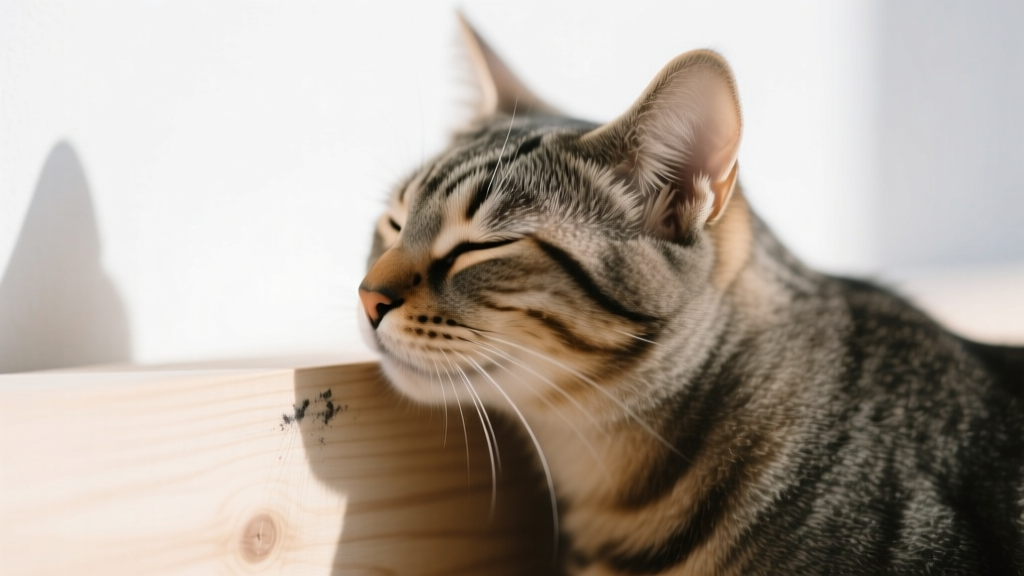
It’s adorable. It’s also very intentional. That “face-plant-and-glide” move is one of your cat’s most social, scent-based ways of saying, “This is part of my world.” Cat cheek rubbing is all about pheromone communication: a silent, comforting, and sometimes strategic way cats mark territory and strengthen bonds.
Why Cats Cheek Rub: The Scientific (and Evolutionary) Story
Cats experience their environment as a rich landscape of smells, much like we experience it as a landscape of sights. While humans rely heavily on vision, cats rely heavily on scent to answer big survival questions: Who was here? Is this safe? Do I belong here?
On a cat’s face—especially around the cheeks, lips, chin, and forehead—are scent glands that produce chemical signals called pheromones. When your cat rubs their cheek on you or on objects, they deposit these pheromones like invisible sticky notes. To us, it looks like affection (and it often is). To your cat, it’s also communication: “Familiar,” “Safe,” “Mine,” and “Part of my group.”
Evolutionarily, this makes perfect sense. Wildcats and feral cats navigate complex territories. Scent marking helps reduce conflict by advertising presence and establishing “known zones.” In multi-cat communities, shared scent can also help create group harmony—like everyone wearing the same team jersey, but in smell form.
What’s Actually Happening: A Breakdown of Cheek Rubbing in Different Contexts
Cheek rubbing isn’t one single behavior with one single meaning. Context is everything. Here are the most common scenarios cat owners recognize, and what may be going on.
1) The “Hello, You’re Home” Rub
You open the door, and your cat immediately head-butts your hand and drags a cheek along your shin. This is often a blend of social bonding and relief: “You’re back, you smell right, and I’m re-connecting us.” Many cats will rub more intensely after separation because your scent has changed (outside air, other people, different environments), and they’re re-establishing the shared “family scent.”
2) The “I Love You, Now Feed Me” Rub
Some cats are master negotiators. They’ll rub, purr, and gaze up at you right before mealtime. The cheek rub here can be both affectionate and strategic. Cats learn quickly: cheek rubbing makes humans melt, and melting humans open cans.
3) The Furniture Drive-By
Ever notice your cat making the rounds after you clean, rearrange furniture, or bring home a new item? That’s your cat doing scent management. New smells are information—and sometimes potential threats. By cheek rubbing, your cat is essentially “tagging” the object with familiar pheromones to make it feel like it belongs.
4) The Guest “Inspection” Rub
Some cats rub on visitors’ shoes, bags, or even ankles. This can mean: “You’re now in my space,” and also, “I’m gathering information.” Your guest carries the scent of other places and animals. Your cat may be blending scents—adding their pheromones while simultaneously sniffing to assess.
5) The Post-Stress Rub
After a loud noise, a vet visit, or a tense moment with another pet, your cat might rub more. This can be self-soothing: re-marking the environment with calming, familiar scent cues. Think of it as your cat restoring emotional order—like re-fluffing pillows after a chaotic day.
What Cheek Rubbing Reveals About Your Cat’s Mood and Feelings
Cheek rubbing is usually a positive sign, but it can reflect different emotional states depending on the rest of your cat’s body language.
- Relaxed and social: Soft eyes, slow blinking, upright tail with a gentle curve, purring—your cat is comfortable and affiliative. They’re bonding.
- Confident “this is my space” energy: Tail up, purposeful movements, rubbing on prominent objects. This is territorial marking in the calmest form.
- Seeking reassurance: Rubbing paired with extra following, frequent checking in, or hiding earlier in the day can indicate your cat is trying to feel secure.
- Overstimulated or conflicted: If rubbing happens with twitchy skin, rapid tail flicking, or sudden biting after rubbing, your cat may be emotionally “full.” They want connection, but their nervous system is on a hair trigger.
The biggest clue is what happens after the rub. A cat who rubs and then settles nearby is usually content. A cat who rubs and then darts away or swats may be mixing social interest with anxiety or overstimulation.
Related Behaviors You Might Also Notice
Cheek rubbing often travels with a whole set of scent-and-social behaviors. If your cat is a dedicated “rubbing enthusiast,” you may also see:
- Head bunting (head bumps): A more direct forehead press, often social and friendly.
- Chin rubbing: Chin glands can leave scent on edges—tables, laptop corners, your knee.
- Allorubbing (cats rubbing on each other): Friendly cats exchange scent to build a shared group identity.
- Kneading: Often associated with comfort and bonding; sometimes paired with cheek rubbing during “cozy mode.”
- Rolling and exposing the belly: Can be a social signal; not always an invitation to pet, but often indicates relaxation.
- Scratching: Not just for claws—scratching also leaves scent from glands in the paws and provides a visual mark.
In many homes, cats use a combination of cheek rubbing, scratching, and strategic lounging to create a layered “map” of ownership and comfort.
When Cheek Rubbing Is Normal vs. When It Might Be a Concern
In most cases, cheek rubbing is wonderfully normal. Still, there are situations where it’s worth paying closer attention.
Normal (and usually delightful)
- Rubbing during greetings, after naps, or when you’ve returned home
- Rubbing on new items or after you’ve cleaned
- Rubbing paired with relaxed body language
Potentially concerning
- Sudden, frantic rubbing or face pressing: If your cat is pressing their face or head hard against walls or furniture (not a gentle rub), or seems disoriented, contact a vet. Persistent head pressing can be a medical red flag.
- Rubbing with visible discomfort: Pawing at the face, shaking the head, yowling, or wincing may suggest dental pain, ear issues, skin irritation, or allergies.
- Excessive rubbing after a stressful change: A move, new baby, new pet, or neighborhood cat intrusions can increase marking behaviors. Not an emergency, but it may indicate stress that deserves support.
- Hair loss or sores around the cheeks/chin: Overgrooming, allergies, parasites, or feline acne can contribute to irritation and increased rubbing.
If you’re ever unsure, a quick video for your veterinarian can help distinguish “normal scent marking” from “I’m uncomfortable.”
How to Respond (and How to Encourage the Good Stuff)
If your cat cheek rubs you, you’re being included in their inner circle. Here’s how to respond in ways your cat will appreciate.
- Offer a steady hand for a “consent checkpoint”: Hold your hand still near their cheek. If they rub into it, they’re choosing contact. If they turn away, give space.
- Pet in scent-friendly zones: Many cats prefer gentle strokes around the cheeks, under the chin, and between the ears—areas associated with friendly marking. Save full-body petting for cats who clearly enjoy it.
- Support scent security after changes: After moving furniture or bringing home new items, allow your cat to investigate and rub at their pace. Avoid forcing interactions.
- Use scratching posts and “rubbing stations”: Place scratchers near entrances or favorite pathways. Cats love marking high-traffic areas. A sturdy cat tree near the living room can become a social scent hub.
- Reduce territorial stress in multi-cat homes: Add resources (litter boxes, water, resting spots) and create vertical space. When cats feel secure, they rely less on intense territorial behaviors.
One more tip: try not to immediately scoop your cat up after they rub. Some cats love it, but many are offering a quick friendly stamp, not requesting a full-body hug. Let the rub be its own little conversation.
Fun Facts and Research-Inspired Nuggets
- Facial pheromones can be calming: Cats have different pheromone signals. Facial markings are generally associated with familiarity and social comfort—part of why cats rub more in places they feel safe.
- Cats create a “scent passport” for their home: By rubbing common routes (hallways, chair legs, corners), cats maintain a smell-based map that helps them feel oriented and secure.
- Your cat may be blending scents, not just claiming you: When cats rub on you after you pet another animal, they’re not always “jealous.” They may be re-establishing the group scent so you smell like “us” again.
- Cheek rubbing is often a social shortcut: In cat-to-cat relationships, rubbing can reduce tension by communicating friendly intent without direct confrontation.
FAQ: Cat Cheek Rubbing and Pheromone Marking
Why does my cat rub their cheek on me and then bite?
This can be overstimulation or conflicted arousal: your cat wants contact but becomes sensitive quickly. Keep petting brief, focus on cheeks/chin, and watch for tail flicking or skin twitching—signals to pause.
Is cheek rubbing the same as head bunting?
They’re related. Head bunting is typically a firmer forehead press; cheek rubbing is more of a glide along the cheek. Both can deposit facial pheromones and are often friendly, social behaviors.
Why does my cat rub on everything after I clean?
Cleaning removes familiar scent cues. Your cat is restoring “known smell” to make the environment feel safe again. It’s basically redecorating, but with pheromones.
Do cats cheek rub to show affection?
Often, yes. It’s one of the clearest ways cats signal social closeness. It’s also territorial in a peaceful way—more “you’re part of my group” than “you’re property.”
My cat rubs on visitors but hides from them. What gives?
Some cats are curious but cautious. Rubbing on shoes or bags can be a low-risk way to gather information and add their scent without committing to full social interaction.
Should I stop my cat from rubbing on certain things?
Usually no—rubbing is healthy communication. If it’s happening on something problematic (like dirty shoes on clean bedding), redirect with a cat tree, a scratching post near the doorway, or a cozy “approved” blanket that can become their scent anchor.
One Last Thought
When your cat rubs their cheek on you, they’re speaking one of their native languages: scent and safety. It’s part affection, part home-making, part emotional self-care. And once you start noticing it, you’ll see how carefully your cat maintains the “feel” of your shared territory—one gentle cheek press at a time.
Does your cat have a signature cheek-rub routine—on guests, on furniture corners, on your laptop at the exact moment you need to type? Share your stories (and your funniest “I’ve been marked” moments) with the Cat Lovers Base community at catloversbase.com.