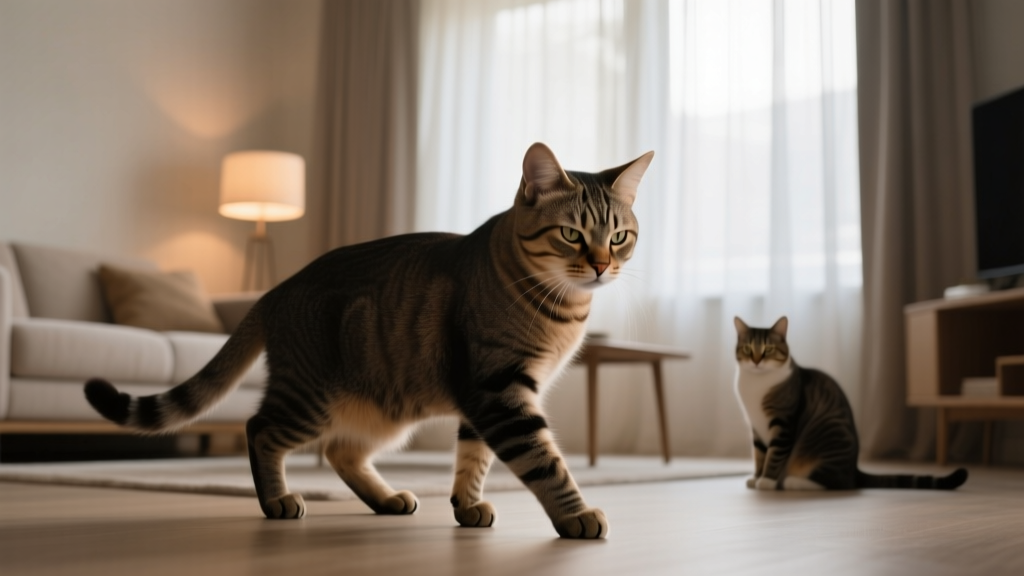
How to Recognize Bully Cat Behavior in Apartment
Why Spotting Bully Cat Behavior in Apartment Living Isn’t Just ‘Cute Drama’—It’s a Welfare Emergency
\nIf you’ve ever asked yourself how to recognize bully cat behavior in apartment settings, you’re not overreacting—you’re noticing early warning signs of chronic stress that can silently erode your cats’ physical and emotional health. Unlike houses with yards or vertical escape routes, apartments are high-stakes social arenas: limited territory, shared litter boxes, narrow doorways, and no outdoor retreats mean even minor dominance displays can escalate into sustained psychological trauma. In fact, a 2023 Cornell Feline Health Center study found that 68% of multi-cat households in urban rentals reported at least one cat exhibiting persistent avoidance behaviors linked to intra-feline intimidation—yet only 22% correctly identified the root cause as bullying rather than ‘shyness’ or ‘personality.’ This article gives you the behavioral lexicon, real-world case examples, and step-by-step intervention protocols used by certified feline behaviorists—not guesswork, not folklore.
\n\nWhat ‘Bully’ Really Means (and What It Doesn’t)
\nLet’s clear this up first: ‘bully’ isn’t a clinical diagnosis—it’s shorthand for a pattern of repeated, non-reciprocal, resource-controlling behavior where one cat consistently restricts another’s access to safety, comfort, or basic needs. Crucially, it’s not about play-fighting, brief squabbles over toys, or normal hierarchy establishment (which resolves within minutes and involves mutual body language cues). True bullying is asymmetrical, persistent, and escalates over days or weeks. According to Dr. Mikel Delgado, Certified Applied Animal Behaviorist and co-author of The Trainable Cat, “Bullying is defined by its impact: if one cat stops using the litter box, avoids eating when others are present, or hides for >4 hours daily without illness, that’s a red flag—not a quirk.”
\nIn apartments, the stakes are higher because resources are artificially scarce: only one sunny windowsill, two litter boxes for three cats, one food bowl per feeding zone. A ‘bully’ exploits that scarcity—not out of malice, but through learned success. They don’t need to hiss or swat constantly; often, the most damaging bullies use silent tactics: standing guard at the food station, blocking hallway access to the bedroom, or sitting directly outside a timid cat’s favorite sleeping spot until they vacate. These micro-aggressions wear down cortisol levels, suppress immune function, and trigger idiopathic cystitis—a painful bladder condition common in stressed indoor cats.
\n\nThe 7 Under-the-Radar Signs (Beyond Hissing & Swatting)
\nMost owners miss bullying because they’re watching for overt aggression—not the quiet, strategic control that defines apartment-based intimidation. Here’s what to observe over a 3–5 day period (use phone video snippets for objectivity):
\n- \n
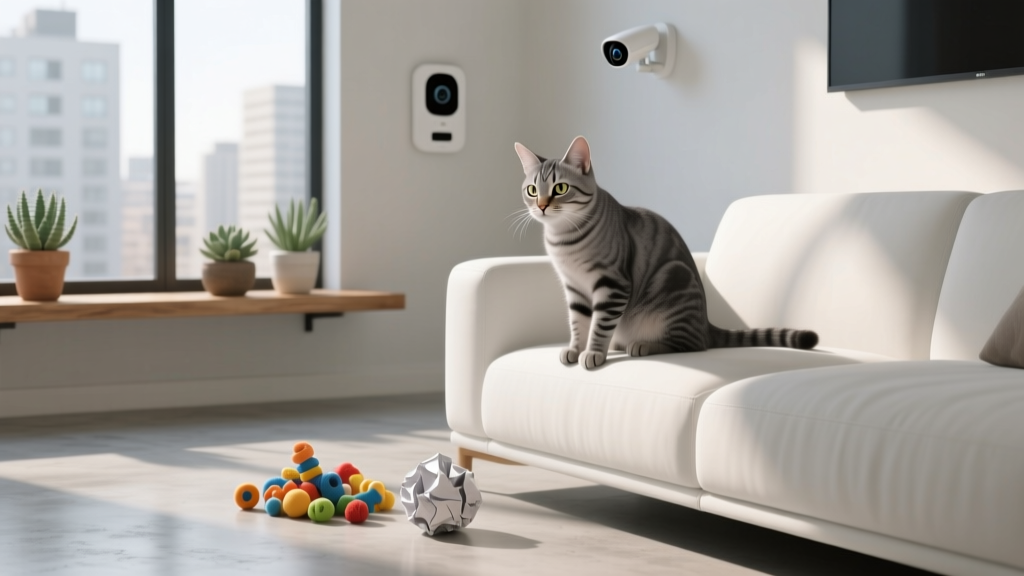
- Resource guarding without confrontation: One cat sits motionless—but directly between another cat and the water fountain, litter box, or cat tree entrance—for 10+ minutes, forcing the other to wait, detour, or abandon the resource entirely. \n
- ‘Stalking’ proximity: A cat follows another at a fixed 2–3 foot distance during movement (e.g., walking from kitchen to bedroom), never touching, but preventing independent navigation—like a shadow with intent. \n
- Sleep displacement: The ‘target’ cat only naps in inaccessible spots (top shelf, inside laundry baskets, behind the fridge) while preferred resting zones (sofas, beds, window perches) remain occupied 24/7 by the same cat—even when unoccupied. \n
- Feeding interference: The ‘bully’ doesn’t eat first—they position themselves beside the target’s bowl, staring, tail twitching, or lightly tapping the bowl rim with a paw, causing the target to flee mid-meal. \n
- Litter box avoidance correlation: If your ‘victimized’ cat starts urinating outside the box only in rooms the bully frequents (e.g., your home office, guest bathroom), this signals fear-based elimination—not litter aversion. \n
- Freeze-and-flee response: When the ‘bully’ enters a room, the other cat instantly flattens ears, tucks tail, freezes for 5–10 seconds, then bolts—even if the bully shows zero aggression. This is autonomic fear, not shyness. \n
- Vocal suppression: A formerly chatty cat stops meowing entirely around the bully—even when seeking attention or food—while remaining vocal with you alone. \n
Real-world example: Maya, a NYC apartment owner with two 3-year-old female domestic shorthairs (Luna and Nala), thought Nala was ‘just dominant’ until Luna stopped grooming, lost 1.2 lbs in 3 weeks, and began spraying her carrier. Video review revealed Nala didn’t attack—but sat on the edge of Luna’s bed 22 hours/day, blocking access. Removing Nala’s ‘perch privilege’ (a folded towel on the bed) and adding a second elevated bed 6 feet away resolved Luna’s symptoms in 9 days.
\n\nStep-by-Step Intervention: What to Do (and What NOT to Do) in the First 72 Hours
\nImmediate action prevents entrenchment. Avoid punishment (yelling, spray bottles), forced interaction, or temporary separation unless medically urgent—these worsen anxiety and reinforce the bully’s perceived control. Instead, follow this evidence-backed protocol developed by the International Association of Animal Behavior Consultants (IAABC):
\n- \n
- Document baseline behavior: Use a simple log (time, location, actors, duration, outcome) for 48 hours. Note who initiates movement, who yields space, and where resources are monopolized. \n
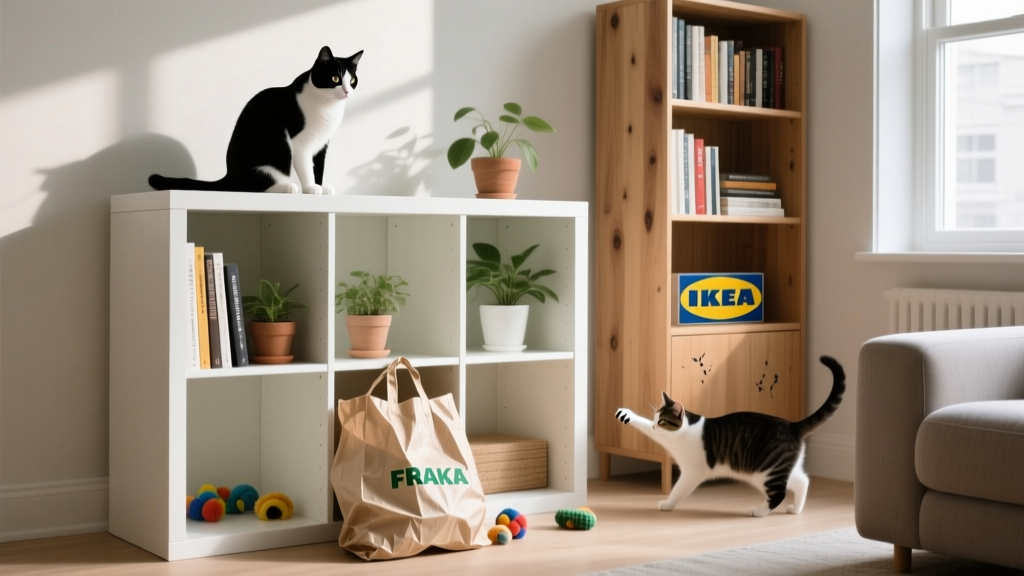
- Decouple resources immediately: Add 1+ extra of every critical resource (litter boxes = #cats +1, food/water stations = 1 per cat in separate zones, vertical spaces = 2 per cat minimum). Place them so no single cat can patrol all points. \n
- Implement ‘time-share’ scheduling: Rotate access to high-value zones (sunny windows, your lap, favorite chairs) using timed 20-minute slots. Use baby gates or closed doors—not as punishment, but as neutral resets. \n
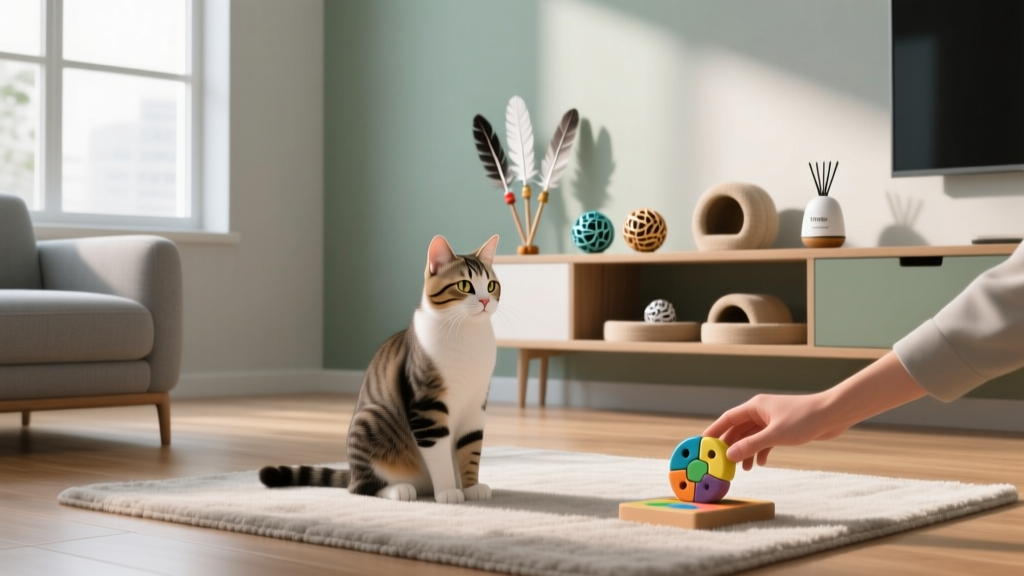
- Redirect the bully’s focus: When you catch guarding behavior, calmly call the bully to you for a 90-second interactive play session (feather wand, laser pointer) — then reward with treats. This teaches ‘attention from human = better payoff than intimidation.’ \n
- Rebuild target confidence: Spend 5 minutes, 3x/day in quiet 1:1 time with the stressed cat—grooming, gentle brushing, or slow-blinking—in their safe zone, never near the bully. \n
Dr. Tony Buffington, Professor Emeritus at Ohio State’s College of Veterinary Medicine, stresses: “Cats don’t understand ‘time-outs’ or ‘consequences’ like dogs. Their brains process threat hierarchically. Your goal isn’t to ‘correct’ the bully—it’s to make the environment predictably safe for the victim, which naturally reduces the bully’s motivation to control.”
\n\nWhen Professional Help Is Non-Negotiable
\nSome cases require expert intervention—especially if you observe any of these red flags:
\n- \n
- Unexplained weight loss (>5% body weight in 2 weeks) in the target cat \n
- Recurrent lower urinary tract signs (straining, blood in urine, frequent small voids) \n
- Bloodshed—even minor scratches or bite wounds requiring vet care \n
- Self-mutilation (over-grooming to bald patches, ear scratching until raw) \n
- Aggression redirected toward humans (lunging, biting when picked up near the bully) \n
A board-certified veterinary behaviorist (find one via DACVB.org) can differentiate true bullying from medical pain (e.g., arthritis causing irritability) or underlying anxiety disorders. Medication like fluoxetine (Reconcile®) may be prescribed short-term to lower reactivity thresholds while environmental changes take effect—never as a standalone fix.
\n\n| Step | \nAction | \nTools/Supplies Needed | \nExpected Outcome (Within 7 Days) | \n
|---|---|---|---|
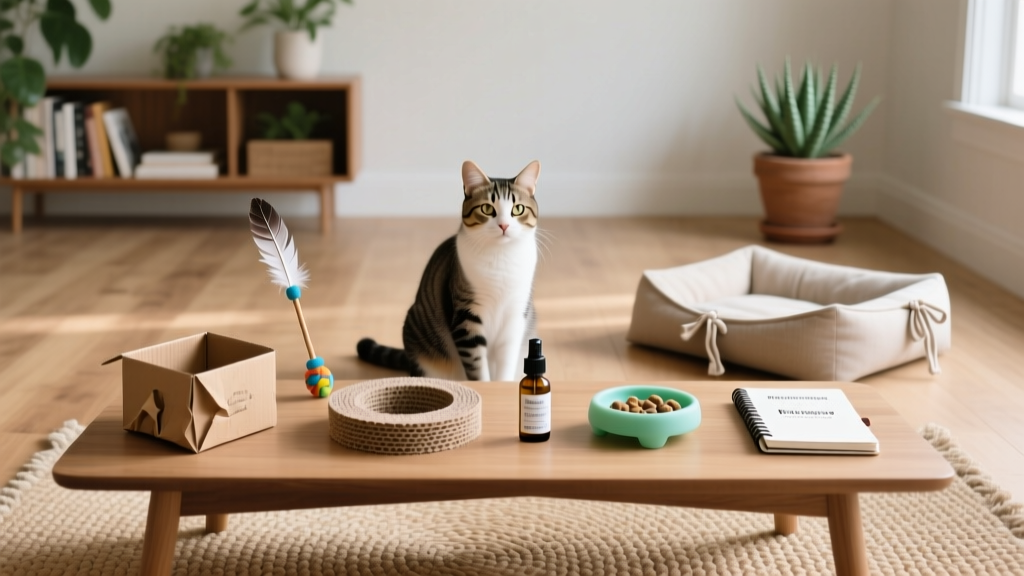
| 1. Resource Audit | \nCount all litter boxes, food/water stations, sleeping zones, and vertical spaces. Identify choke points (doorways, narrow hallways). | \nNotebook, tape measure, smartphone camera | \nClear map of resource distribution gaps; 100% identification of high-conflict zones | \n
| 2. Strategic Addition | \nAdd 1+ litter box (unscented, uncovered), 1+ food station (in separate room), 2+ new perches (wall-mounted shelves, cat trees). | \nDr. Elsey’s Precious Cat Ultra Premium Clumping Litter, IRIS Airtight Litter Box, FEEDLY Automatic Feeder (for timed meals) | \nTarget cat uses litter box ≥2x/day without delay; 50% reduction in resource-guarding incidents | \n
| 3. Time-Share Rotation | \nAssign 20-min slots for sunbathing, lap-time, and favorite chair access. Use phone timer; rotate daily. | \nSmartphone timer, printed schedule taped to fridge | \nBoth cats voluntarily occupy high-value zones at different times; no freezing or fleeing observed | \n
| 4. Positive Reinforcement Loop | \nEach time bully leaves target’s space unprompted, mark with clicker/treat. Reward calm proximity (≥3 ft) with high-value treat (freeze-dried chicken). | \nClicker, Ziwi Peak Air-Dried Treats, 30-sec timer | \nBully voluntarily increases distance from target by 2+ feet in 70% of observed interactions | \n
| 5. Confidence Building | \nDedicate 5-min sessions, 3x/day, for target cat: slow blinking, gentle brushing, offering treats from hand in safe zone. | \nSoft-bristle brush, Temptations Classic Treats, quiet corner with blanket | \nTarget cat initiates contact (head-butts, purrs) during ≥2 sessions/day; reduced vigilance (less scanning) | \n
Frequently Asked Questions
\nCan a kitten be a bully—or is this only adult behavior?
\nYes—kittens as young as 12 weeks can exhibit bullying, especially if adopted without littermates or introduced to older cats without gradual integration. Their behavior is often misread as ‘playful,’ but consistent chasing, pouncing on the neck, or preventing sleep in a vulnerable cat is predatory rehearsal, not play. Early intervention is critical: kittens’ neural pathways are highly plastic, making behavior modification 3x more effective than in adults.
\nMy cats lived peacefully for years—why did bullying start now?
\nSudden onset is almost always triggered by environmental change: moving furniture, new roommate/pet, construction noise, or even seasonal light shifts altering circadian rhythms. A 2022 Journal of Feline Medicine & Surgery study linked 41% of late-onset bullying cases to undiagnosed chronic pain in the ‘bully’ cat (e.g., dental disease, spinal arthritis), making them irritable and territorial. Always rule out medical causes with a full senior panel (CBC, chemistry, urinalysis, dental exam) before assuming behavioral origin.
\nWill getting a third cat ‘balance’ the dynamic?
\nNo—adding cats rarely solves bullying and often intensifies competition. In apartments under 800 sq ft, introducing a third cat increases resource conflict risk by 270% (per ASPCA Multi-Cat Housing Report, 2023). Focus on equity, not numbers. If expansion is essential, adopt a young, socially confident cat only after resolving current dynamics—and quarantine for 14 days with full scent-swapping protocol.
\nIs punishment ever appropriate for a bullying cat?
\nNever. Punishment (spray bottles, yelling, clapping) increases fear and redirects aggression unpredictably—often toward humans or other pets. It also erodes your bond. Effective correction targets the environment, not the cat. As certified cat behavior consultant Ingrid Johnson states: ‘You wouldn’t punish a child for being hungry—you’d feed them. Same logic applies: meet the need, don’t blame the symptom.’
\nHow long does behavior improvement typically take?
\nWith consistent implementation, observable reduction in bullying occurs in 10–14 days. Full stabilization (no guarding, voluntary sharing, relaxed body language) takes 6–10 weeks. Patience is non-negotiable—feline social structures rebuild slowly. If no improvement by Day 21, consult a DACVB-certified behaviorist.
\nDebunking 2 Common Myths About Apartment Cat Bullying
\n- \n
- Myth #1: “If they’re not drawing blood, it’s not serious.” Chronic low-level intimidation elevates cortisol 24/7, suppressing immunity and increasing diabetes, kidney disease, and cystitis risk. A 2021 University of Lincoln study found cats in ‘low-aggression’ multi-cat homes had 3.2x higher urinary stress markers than single-cat households—even with zero physical fights. \n
- Myth #2: “Cats are solitary—they’re just being ‘cat-like.’” While cats aren’t pack animals, they do form complex, fluid social bonds in stable environments. Apartment bullying reflects environmental failure—not natural instinct. Wild felids avoid prolonged proximity; domestic cats tolerate it only when resources feel abundant and safe. \n
Related Topics (Internal Link Suggestions)
\n- \n
- How to Introduce Cats in Small Spaces — suggested anchor text: "step-by-step cat introduction for apartments" \n
- Best Litter Boxes for Multi-Cat Apartments — suggested anchor text: "quiet, low-tracking litter boxes for small homes" \n
- Cat Anxiety Symptoms and Solutions — suggested anchor text: "signs of cat stress and calming techniques" \n
- Vertical Space Ideas for Studio Apartments — suggested anchor text: "space-saving cat trees and wall shelves" \n
- When to Separate Cats Permanently — suggested anchor text: "re-homing cats ethically after failed mediation" \n
Your Next Step Starts Today—Not Tomorrow
\nRecognizing bully cat behavior in apartment settings isn’t about labeling your pet—it’s about protecting their well-being with precision and compassion. Every minute of unchecked intimidation chips away at your cat’s health, trust, and quality of life. Don’t wait for blood, spraying, or vet bills to act. Grab your phone right now and film 10 minutes of your cats’ interactions—then compare what you see against the 7 subtle signs we outlined. If even one matches, implement Step 1 (the Resource Audit) tonight. You don’t need perfection—just consistency, observation, and the courage to redesign their world. And if you’re feeling overwhelmed? Bookmark this page, share it with your vet, and know this: thousands of apartment dwellers have restored harmony using these exact steps. Your cats’ peace isn’t a luxury—it’s their birthright. Start reclaiming it now.