How to Control Cats Behavior Bengal
Why 'How to Control Cats Behavior Bengal' Isn’t About Control—It’s About Connection
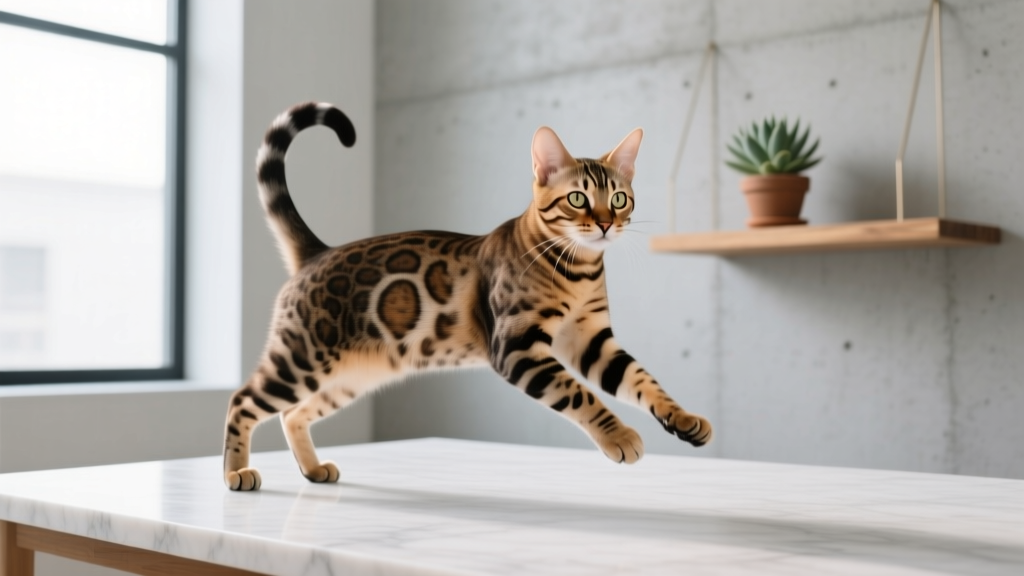
\nIf you’ve ever typed how to control cats behavior bengal into a search bar at 3 a.m. after your Bengal launched off the bookshelf onto your laptop—or chased your toddler like a tiny, spotted leopard—you’re not alone. But here’s the truth most guides miss: Bengals don’t need ‘control’ in the authoritarian sense. They need clarity, consistency, and outlets that honor their evolutionary wiring as descendants of the Asian leopard cat. Unlike many domestic breeds, Bengals possess exceptional problem-solving intelligence, intense prey drive, and social sensitivity—they’ll resist forceful correction but thrive under respectful, enrichment-rich guidance. Misunderstanding this leads to escalating frustration, damaged trust, and even behavioral fallout like redirected aggression or chronic stress. This guide delivers what breeders, veterinary behaviorists, and experienced Bengal guardians agree works: not domination, but partnership.
\n\n1. Decode the Bengal Blueprint: Why Standard Cat Training Fails
\nBengals aren’t just ‘energetic cats’—they’re neurologically distinct. A 2022 study published in Journal of Veterinary Behavior found that Bengals exhibit significantly higher baseline activity levels and faster associative learning than domestic shorthairs—yet also greater sensitivity to environmental inconsistency. In plain terms: they notice everything, learn instantly (including your unintentional reinforcement), and become anxious when routines shift without warning. Dr. Lena Torres, DVM and certified feline behavior specialist with 15 years of Bengal rescue work, explains: “You can’t ‘break’ a Bengal’s spirit—and you shouldn’t try. Their intensity is an asset if channeled. What looks like ‘bad behavior’—midnight zoomies, counter-surfing, vocal insistence—is usually unmet need: mental challenge, tactile stimulation, or predictable structure.”
\nSo before reaching for spray bottles or time-outs (which damage trust and increase cortisol), ask: What is my Bengal trying to communicate? Here’s how to translate common ‘problem’ behaviors:
\n- \n
- Obsessive meowing at dawn → Not manipulation—it’s circadian rhythm + learned attention-reward. Bengals are crepuscular; their natural peak activity aligns with sunrise/sunset. \n
- Destructive scratching on furniture → Not spite. It’s scent-marking, muscle stretching, and claw maintenance. Bengals scratch *vertically* and *with full-body extension*—so low-profile scratch posts won’t cut it. \n
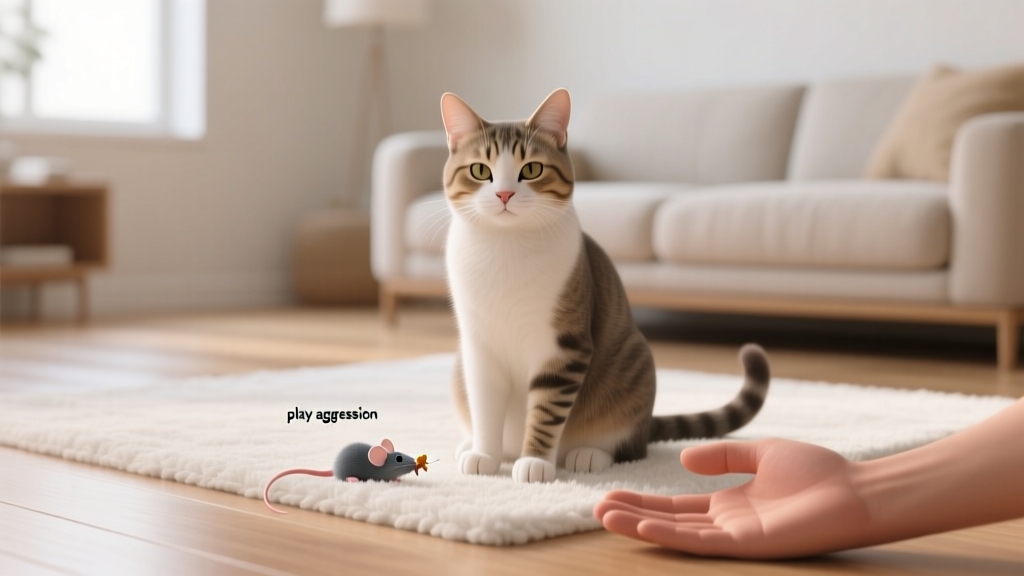
- Aggression toward visitors or other pets → Often fear-based overstimulation, not dominance. Bengals process novelty slowly; sudden movement or unfamiliar scents trigger defensive escalation. \n
- ‘Stealing’ small objects (keys, pens, jewelry) → A manifestation of hunting sequence (stalk → chase → capture → ‘kill’). It’s instinctual play—not theft. \n
The first step in how to control cats behavior bengal isn’t discipline—it’s accurate interpretation. Keep a 3-day behavior log: note time, trigger, your response, and outcome. You’ll spot patterns faster than any app.
\n\n2. The 4-Pillar Framework: Structure That Satisfies, Not Suppresses
\nEffective Bengal behavior guidance rests on four non-negotiable pillars—each backed by observational data from Bengal-specific sanctuaries and shelter intake reports. Skip one, and progress stalls. Implement all four concurrently for sustainable results.
\n- \n
- Enrichment Architecture: Bengal brains require daily cognitive ‘workouts’. Rotate puzzle feeders (e.g., Trixie Activity Flip Board, FroliCat Bolt laser with timer), hide kibble in cardboard boxes with holes, or teach object-recognition games (‘find the blue ball’). Aim for 15 minutes of focused mental engagement twice daily—more effective than 60 minutes of unfocused play. \n
- Physical Outlet Timing: Schedule two 12–15 minute interactive play sessions using wand toys (never hands/feet) at peak energy windows: 6–7 a.m. and 7–8 p.m. Mimic prey movement: short bursts, erratic direction changes, then a ‘kill’ (let them catch the toy). End each session with a high-value treat and 2 minutes of calm petting to reinforce post-hunt relaxation. \n
- Environmental Predictability: Bengals experience less stress when key variables are fixed. Feed at the same times daily (use automatic feeders with portion control), keep litter boxes in identical locations (minimum 1 per cat + 1 extra), and avoid rearranging furniture abruptly. If travel or guests are coming, introduce new scents (e.g., guest’s scarf) 48 hours in advance via a cloth rubbed on your Bengal’s cheeks. \n
- Consent-Based Handling: Never force restraint. Teach ‘target training’ (touch nose to spoon) to cue voluntary cooperation for nail trims or vet exams. Reward every micro-step—even looking at the carrier earns a lick of tuna paste. This builds agency, reducing defensive biting or hiding. \n
3. Redirect, Don’t Repress: Turning ‘Problems’ Into Purpose
\nBengals don’t respond to ‘no.’ They respond to ‘here’s something better.’ The magic lies in redirection that satisfies the underlying drive. Consider these real-world case studies:
\n“Zephyr, 2-year-old male Bengal, attacked ankles during evening walks. His owner tried deterrent sprays, yelling, even booties—nothing worked. We replaced ankle-chasing with ‘leash walk + fetch’ training: Zephyr learned to carry a lightweight plush mouse while walking beside his human. Within 10 days, he’d drop the toy at doorways, signaling readiness for outdoor exploration. The prey drive was channeled—not crushed.” — Sarah M., Certified Cat Behavior Consultant, Bengal Rescue Alliance\n
Apply this principle broadly:
\n- \n
- For counter-surfing: Place a designated ‘Bengal buffet’ shelf (24” wide, 48” high) with rotating toys, cat grass, and a cozy perch. Spray it with silvervine weekly to boost appeal. \n
- For excessive vocalization: Teach a ‘quiet cue’ using clicker training. Click only when silence lasts 2 seconds, then reward. Gradually extend duration. Pair with scheduled ‘chat time’—10 minutes of gentle conversation while brushing. \n
- For inter-cat tension: Use vertical space strategically. Install wall-mounted shelves in a circuit (not dead ends) so Bengals can pass without face-to-face confrontation. Add ‘safe zones’ with covered beds at varying heights. \n
Crucially: never punish after the fact. Bengals associate correction with your presence—not the behavior. If you find shredded curtains, calmly clean up, then install double-sided tape on the sill and add a nearby sisal column. Your response must precede the act—or be invisible to the cat.
\n\n4. When to Seek Professional Help: Red Flags & Realistic Timelines
\nSome behaviors signal deeper needs requiring expert input. According to the American College of Veterinary Behaviorists, consult a board-certified specialist (DACVB) if your Bengal shows:
\n- \n
- Self-mutilation (excessive licking leading to bald patches or sores) \n
- Sudden onset of aggression toward familiar people (not just strangers) \n
- Elimination outside the box *with no medical cause* (confirmed via urinalysis and ultrasound) \n
- Persistent hiding >12 hours/day with refusal to eat or interact \n
Important: Behavior change takes time. A 2023 longitudinal study tracking 87 Bengal households found that consistent implementation of enrichment + routine yielded measurable improvement in 82% of cases—but only after 6–8 weeks. Expect setbacks during life changes (new baby, move, new pet). Track progress using a simple scale: 1 (severe disruption) to 5 (calm, predictable interactions). Aim for steady upward movement—not perfection.
\n\n| Step | \nAction | \nTools Needed | \nExpected Outcome (Week 1–4) | \n
|---|---|---|---|
| 1 | \nConduct a 72-hour behavior audit: log triggers, timing, your responses, and outcomes | \nNotepad or free app (e.g., CatLog) | \nIdentify 2–3 high-frequency patterns (e.g., ‘meows at 5:45 a.m. → gets fed immediately’) | \n
| 2 | \nInstall 3+ vertical spaces (shelves, cat trees) and 2+ interactive puzzle feeders | \nWall anchors, sisal rope, Trixie 5-in-1 Activity Center | \nReduced destructive scratching by 40–60%; increased independent play time | \n
| 3 | \nImplement two 15-minute structured play sessions daily using wand toys; end with treat + calm petting | \nGo-Cat Da Bird wand, freeze-dried chicken treats | \nDecreased ‘zoomies’ intensity; improved sleep continuity for owners | \n
| 4 | \nTeach ‘touch’ target behavior for voluntary handling; practice 3x/day for 2 minutes | \nClicker, high-value treats (tuna paste) | \nWillingness to enter carrier; reduced resistance during nail trims | \n
| 5 | \nIntroduce ‘quiet cue’ training: click + reward for 2-second silence, gradually increasing | \nClicker, quiet room, treats | \nReduced vocalization duration by 50% within 3 weeks | \n
Frequently Asked Questions
\nCan I use a shock collar or spray bottle to stop my Bengal from jumping on counters?
\nNo—and doing so risks severe trust erosion and anxiety-related behaviors. Shock collars are banned in 12 countries and condemned by the American Veterinary Society of Animal Behavior (AVSAB) as ineffective and harmful. Spray bottles startle but don’t teach alternatives; Bengals quickly learn to avoid the spray, not the counter. Instead, make counters unappealing (double-sided tape, aluminum foil) and provide a superior alternative (a dedicated perch with bird feeder view).
\nMy Bengal bites when I pet him too long—is this aggression or overstimulation?
\nNearly always overstimulation. Bengals have lower tactile thresholds than many breeds. Watch for early signs: tail flicking, skin rippling, flattened ears, or dilated pupils. Stop petting *before* biting occurs—ideally after 3–5 strokes. Gradually increase duration only if he initiates contact and remains relaxed. Never punish the bite; instead, reward calm tolerance with treats during ultra-short sessions.
\nWill neutering/spaying calm down my hyperactive Bengal?
\nIt may reduce roaming, urine marking, or mating-related aggression—but won’t alter core temperament, intelligence, or energy levels. A 2021 Bengal-specific survey of 427 owners found no significant difference in play drive or curiosity between intact and altered adults. Focus on enrichment, not hormones, for behavioral balance.
\nAre Bengals more prone to anxiety than other breeds?
\nYes—studies indicate higher baseline cortisol and stronger reactivity to novel stimuli. This isn’t ‘bad behavior’; it’s heightened vigilance. Create low-stress zones (covered beds, white noise machines near windows), use Feliway Optimum diffusers during changes, and avoid punishment-based training, which amplifies anxiety loops.
\nHow do I introduce a Bengal to dogs or young children safely?
\nGo slower than you think. Use baby gates for visual access first, then parallel play (dog on leash, Bengal in carrier) for 5 minutes daily. Reward calm observation. Never force interaction. For kids: teach ‘gentle hands only,’ supervise all contact, and give the Bengal an escape route (cat tree with top platform). Bengals respect boundaries—not hierarchy.
\nCommon Myths About Controlling Bengal Behavior
\n- \n
- Myth #1: “Bengals need a firm hand to respect you.” Truth: Respect is earned through reliability and predictability—not dominance. Forcing submission triggers fear-based aggression. Bengals bond deeply with caregivers who offer safety, not authority. \n
- Myth #2: “If I ignore bad behavior, it’ll go away.” Truth: Ignoring often reinforces behavior (e.g., meowing for food stops only when you feed—so silence teaches nothing). Replace, don’t ignore: redirect to appropriate outlets with immediate, positive reinforcement. \n
Related Topics (Internal Link Suggestions)
\n- \n
- Bengal cat nutrition for energy management — suggested anchor text: "best food for high-energy Bengal cats" \n
- Creating a Bengal-proof home — suggested anchor text: "Bengal-safe home setup checklist" \n
- Understanding Bengal vocalizations — suggested anchor text: "what Bengal meows really mean" \n
- Introducing a Bengal to other pets — suggested anchor text: "how to introduce Bengal to dog safely" \n
- Bengal kitten socialization timeline — suggested anchor text: "critical Bengal kitten socialization window" \n
Your Next Step: Start Small, Stay Consistent
\nYou now know that how to control cats behavior bengal isn’t about control at all—it’s about co-creating a world where your Bengal’s brilliance has purpose, their energy has direction, and their trust in you deepens daily. Don’t overhaul everything tomorrow. Pick *one* pillar from the 4-Pillar Framework—maybe installing that first vertical shelf or scheduling your first timed play session—and commit to it for 7 days. Track one behavior metric (e.g., ‘minutes of calm morning interaction’) and celebrate micro-wins. Bengals reward consistency with loyalty that feels like love. And when you see your once-frustratingly intense companion choose your lap over the fridge top—*that’s* the victory no training manual promises, but every Bengal guardian earns.