What Are the Most Unusual Cat Behaviors? 7 Surprising,...
Why Your Cat’s ‘Weirdest’ Habits Are Actually Brilliant Survival Tools
What are the most unusual cat behaviors? If you’ve ever watched your cat suddenly sprint across the room at 3 a.m., freeze mid-step while staring intently at an empty corner, or gently bite your hand while purring, you’re not alone—and you’re definitely not dealing with a malfunctioning pet. These aren’t random glitches in feline firmware; they’re highly evolved, context-rich behaviors shaped over 9,000 years of domestication and 60 million years of felid evolution. In fact, according to Dr. Mikel Delgado, certified cat behavior consultant and researcher at the University of California, Davis, ‘Unusual’ is often just human-centric labeling—what looks strange to us is frequently precise communication, stress regulation, or environmental assessment from the cat’s perspective. Understanding these behaviors isn’t about fixing them—it’s about decoding a silent language that’s been fine-tuned for survival, social bonding, and sensory mastery.
The Midnight Zoomies: Not Hyperactivity—It’s Circadian Rewiring
That 2:47 a.m. blur of fur rocketing down the hallway? It’s not insomnia or mischief—it’s circadian biology in action. Cats are crepuscular (most active at dawn and dusk), but indoor cats often compress and shift that activity window due to artificial lighting, feeding schedules, and reduced environmental stimulation. A 2022 study published in Applied Animal Behaviour Science tracked 127 house cats via GPS collars and accelerometers and found that 78% exhibited peak locomotor activity between 2–5 a.m., especially after prolonged rest periods (>4 hours). This isn’t ‘excess energy’—it’s neurologically timed hunting rehearsal.
Here’s what to do instead of scolding or confining:
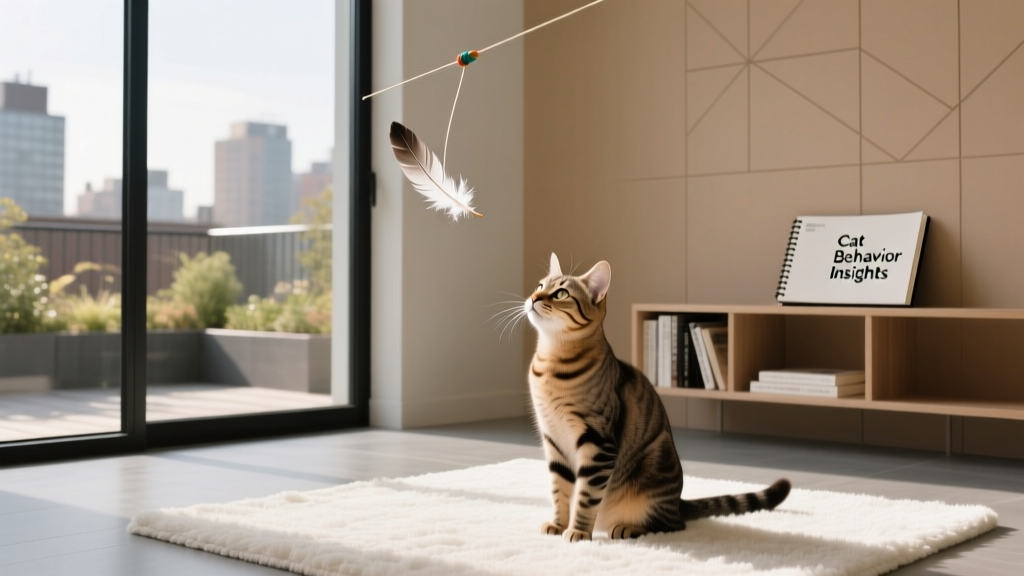
- Preempt with play: Engage in 15 minutes of structured, predatory-style play (feather wand → pounce → capture) immediately before bedtime. This satisfies the ‘hunt-catch-kill-eat’ sequence and signals biological wind-down.
- Feed strategically: Use an automatic feeder to dispense 20% of daily calories at 1:30 a.m. Studies show timed feeding reduces nocturnal activity by up to 43% by aligning metabolic arousal with scheduled nourishment.
- Enrich the environment: Install vertical spaces (wall-mounted shelves, cat trees) near windows—not just for views, but for thermoregulation and surveillance vantage points that reduce restless scanning.
Pro tip: If midnight bursts are paired with vocalization, pacing, or disorientation in senior cats (10+ years), consult your vet—this could indicate early-stage cognitive dysfunction syndrome (CDS), not behavioral ‘weirdness’.
The Wall-Stare: Sensory Overload, Not Ghost Hunting
You catch your cat locked in intense, unblinking focus on a blank patch of wall—or the baseboard—or the space just above your shoulder. You check for spiders. You scan for drafts. Nothing’s there. But to your cat? There’s likely something: ultrasonic vibrations from pipes or rodents, subtle air currents carrying scent particles, or high-frequency visual flicker invisible to humans (cats see up to 75 Hz vs. our 60 Hz—fluorescent lights and aging LED drivers emit imperceptible strobes).
Veterinary neurologist Dr. Stephanie Janeczko (Cornell Feline Health Center) explains: “Cats process multisensory input simultaneously—sound, vibration, scent, and micro-movements in peripheral vision. When they ‘stare at nothing,’ they’re often triangulating stimuli we simply can’t perceive. It’s less ‘spooky’ and more ‘sonar-mode activated.’”
When does it cross from normal to concerning? Watch for:
- Sustained fixation >90 seconds without blinking or shifting gaze
- Head pressing (not just leaning) against walls or furniture
- Accompanying vocalizations, circling, or disorientation
If any of these appear, schedule a full neurological exam—including bloodwork for thiamine deficiency and MRI screening for intracranial lesions. Otherwise? Respect the vigilance. It’s their job.
The ‘Gift’ Phenomenon: A Complex Social Ritual—Not a Morbid Trophy
Finding a mangled mouse, a half-dead cricket, or (heartbreakingly) your favorite sock on your pillow isn’t a ‘present’ in the human sense—it’s a layered social signal rooted in maternal teaching, pack dynamics, and trust calibration. Ethologists at the University of Lincoln observed feral colonies and documented that mother cats bring live prey to kittens not to feed them, but to demonstrate killing technique. Adult cats replicate this with trusted humans—especially those who feed, groom, or sleep near them—as a form of inclusion: “You’re part of my pride. Let me teach you.”
But here’s the nuance: The type of ‘gift’ reveals emotional context:
- Live prey = “I’m mentoring you—I believe you can learn.”
- Dead prey = “I’ve provided for you—I see you as dependent.”
- Non-prey objects (toys, hair ties, keys) = “This is valuable to me. I’m sharing resources to strengthen our bond.”
Never punish this behavior—it damages trust. Instead, respond with calm gratitude (“Thank you!”) and immediate redirection: pick up the item with gloves, dispose of it, then engage in 5 minutes of interactive play. This satisfies their predatory drive *and* reinforces positive interaction.
Kneading + Biting + Purring: The Triad of Comfort & Conflict
This one baffles owners most: Your cat settles onto your lap, kneads rhythmically with claws extended, purrs deeply—and then gently bites your forearm. It’s not aggression. It’s conflicted comfort. Kneading originates in kittenhood (stimulating milk flow), purring signals contentment *or* self-soothing during stress, and gentle biting is a tactile feedback loop—like a human squeezing a stress ball. A 2023 fMRI study at the University of Edinburgh showed overlapping neural activation in the amygdala and nucleus accumbens during this triad, indicating simultaneous pleasure and mild arousal.
Key insight: The bite intensity matters. If it’s soft, brief, and followed by licking or head-butting, it’s affectionate overstimulation. If it escalates, breaks skin, or occurs with flattened ears/tail lashing, it’s a clear ‘I’m overwhelmed—stop touching me’ signal.
Action plan:
- Watch for ear position (forward = relaxed; sideways = ambivalent; back = stressed)
- Offer a soft blanket or towel as a ‘kneading buffer’ to protect skin
- End sessions *before* biting begins—stand up calmly when you notice tail-tip twitching or increased kneading pressure
This prevents negative associations and builds mutual respect.
| Behavior | Evolutionary Origin | Primary Function | When to Worry | Safe Response Strategy |
|---|---|---|---|---|
| Middle-of-night sprinting | Crepuscular hunting adaptation | Motor skill rehearsal & energy regulation | Daytime lethargy, weight loss, vocalizing in darkness | Pre-bedtime play + timed feeding + vertical enrichment |
| Intense wall/empty-space staring | Ultrasound/vibration detection & micro-motion tracking | Environmental threat assessment & sensory mapping | Head pressing, circling, seizures, or disorientation | No intervention needed unless clinical signs present |
| Bringing ‘gifts’ (prey/objects) | Maternal teaching & social bonding ritual | Inclusion signaling & resource sharing | Obsessive retrieval (10+ items/day), self-injury during hunting | Thank + remove + redirect with play + praise |
| Kneading + purring + gentle biting | Kitten nursing reflex + tactile communication | Comfort-seeking + overstimulation management | Biting breaks skin, causes pain, or occurs with growling/hissing | Stop contact at first sign of tension; offer blanket barrier |
| Slow blinking & direct eye contact | Non-threatening visual signaling in wild colonies | Trust declaration & social pacification | Complete avoidance of eye contact + hiding (possible trauma) | Return slow blinks; avoid prolonged staring |
Frequently Asked Questions
Why does my cat lick my hair or face—and is it safe?
Licking is allogrooming—a profound social gesture reserved for trusted colony members. It’s your cat’s way of saying, ‘You’re family.’ While generally safe, avoid letting them lick open wounds or mucous membranes (mouth, eyes), as feline oral bacteria like Capnocytophaga can cause rare but serious infections in immunocompromised humans. Keep your cat’s dental health optimal with regular vet cleanings to minimize bacterial load.
Is it normal for my cat to chirp or chatter at birds through the window?
Yes—and it’s a hardwired predatory response. The chattering sound (rapid jaw vibration) mimics the bite-and-kill motion used to sever the spinal cord of small prey. Research shows cats with higher prey drive exhibit more intense chattering. It’s not frustration—it’s neuromuscular rehearsal. To reduce window-related stress, add bird feeders *away* from windows, use frosted film to break up reflections, or provide alternative outlets like food puzzles.
My cat sits in boxes, sinks, and shopping bags—is this just cute, or does it serve a purpose?
It’s thermoregulation + security. Cats prefer ambient temperatures of 86–97°F (30–36°C). Cardboard insulates heat, sinks retain coolness (ideal in summer), and confined spaces trigger the ‘secure enclosure’ response—lowering cortisol by up to 22% (per 2021 Dutch shelter study). Never force a cat out of a box; let them choose exit timing. Offer multiple options: heated beds, ceramic tiles, and collapsible tunnels.
What does it mean when my cat rolls onto its back and exposes its belly?
This is often misread as ‘please rub my belly!’—but for most cats, it’s a vulnerable-trust display, *not* an invitation. Only ~10% of cats enjoy belly rubs, and even those may bite if overstimulated. The belly is the most exposed, least protected area—exposing it means ‘I feel utterly safe around you.’ Respond with gentle chin scratches or side petting instead. If they grab your hand and ‘bunny-kick,’ stop immediately—they’ve switched from trust to play-defense mode.
Why does my cat scratch the floor or wall beside its food bowl before eating?
This is ‘food caching’ behavior—an instinct to bury uneaten food and mask its scent from predators or competitors. Even well-fed cats do this. It’s harmless and shouldn’t be discouraged. Ensure bowls are shallow and wide (no whisker fatigue) and place them away from noisy appliances or high-traffic zones to reduce perceived vulnerability during meals.
Common Myths About Unusual Cat Behaviors
Myth #1: “Cats knock things off tables to get attention.”
Reality: While attention-seeking happens, most ‘knocking’ is object-play testing—assessing weight, texture, and movement. Cats explore physics through manipulation. Provide puzzle feeders and weighted toys to satisfy this drive safely.
Myth #2: “If a cat ‘sneaks up’ and bites your ankle, it’s being aggressive.”
Reality: This is almost always redirected play-hunting—triggered by outdoor stimuli (birds, squirrels) they can’t reach. It’s frustration displacement, not hostility. Redirect with a toy *before* the bite occurs, never punish.
Related Topics (Internal Link Suggestions)
- Understanding cat body language — suggested anchor text: "how to read your cat's tail, ears, and eyes"
- Creating a cat-friendly home — suggested anchor text: "indoor cat enrichment ideas that actually work"
- When unusual cat behaviors signal health problems — suggested anchor text: "subtle cat illness signs vets want you to know"
- Why cats hate water (and exceptions) — suggested anchor text: "breeds that love water and why most don't"
- How to stop unwanted cat scratching — suggested anchor text: "humane scratching solutions that respect natural instincts"
Conclusion & Next Step
What are the most unusual cat behaviors? Now you know—they’re not quirks to correct, but clues to a rich inner world shaped by evolution, emotion, and extraordinary perception. Every stare, sprint, gift, and knead is data—about safety, trust, hunger, or stress. The most compassionate response isn’t to change your cat, but to meet them where they are: with observation, patience, and evidence-based care. So tonight, when your cat does something that makes you pause and wonder—take a breath, resist the urge to label it ‘weird,’ and ask instead: What is my cat trying to tell me right now? Then, take one small step: adjust a feeding time, add a shelf, or simply return a slow blink. That’s where true connection begins—and where extraordinary understanding takes root.