Why Cats Sit on the Bathroom Vanity Counter
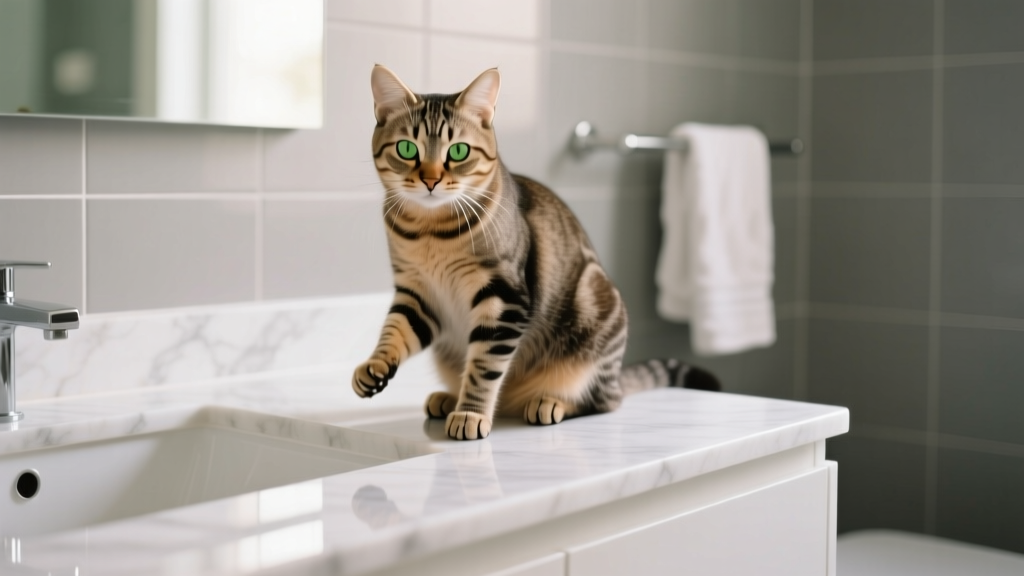
You wake up, stumble into the bathroom, and flip on the light. Before you’ve even found the toothpaste, there’s your cat—perched like a tiny, furry gargoyle on the vanity counter—watching you brush your teeth with the focused intensity of a security guard on night shift. Sometimes they sit politely near the sink. Sometimes they sprawl right where you were about to set your hairbrush. And sometimes they hop up the moment you walk in, as if the bathroom counter is their assigned post.
If you’ve ever wondered, “Why here?” you’re in good company. The bathroom vanity is one of the most popular “weird” cat hangouts, and it’s not random. Cats are experts at choosing locations that meet their needs: safety, information, warmth, attention, and a good view. The bathroom counter checks a surprising number of boxes.
1) The science (and evolution) behind the bathroom counter obsession
Cats are small predators with a prey animal’s caution. That combination shapes nearly everything they do. In the wild, a cat-like hunter thrives by:
- Getting height to spot movement and stay out of reach
- Controlling access points so nothing sneaks up behind them
- Monitoring resources like water and shelter
- Keeping tabs on their social group (yes, that includes you)
Your bathroom is a compact, predictable “territory zone.” It’s typically quiet, has a single doorway, and offers a raised platform (the vanity) with a clear sightline to you. From a feline perspective, it’s a secure observation deck with interesting smells, running water sounds, and frequent human activity. It’s basically cat TV, plus a front-row seat to their favorite person.
There’s also a sensory angle: cats rely heavily on scent. Bathrooms concentrate smells—soap, shampoo, toothpaste, your skin scent, towels, damp air. All of that adds up to a rich “scent bulletin board” for your cat to read.
2) Why the bathroom vanity counter is irresistible: contexts and common motives
Not every cat sits on the counter for the same reason. Often it’s a mix. Here are the most common motivations, with real-life scenarios you’ll recognize.
They want proximity without being held
Some cats crave closeness but don’t enjoy lap time. The vanity lets them be near your face and hands (prime social interaction real estate) without being scooped up. If your cat sits there calmly while you wash your face, they’re choosing “together time” on their terms.
They’re drawn to water (or the possibility of water)
Cats can be picky about drinking. A sink is a fascinating water station: it drips, it echoes, it smells “fresh,” and it sometimes turns on like magic when you approach. Many cats learn that humans make water appear. If your cat jumps up and stares into the basin, paws at the faucet, or licks droplets, they may be scouting a preferred water source.
It’s warm, smooth, and comfortable
Bathroom counters often hold heat better than you’d expect, especially if sunlight hits them or warm water runs nearby. After a shower, the room is cozy and humid—great for a cat who loves warmth. If your cat loafs on the counter right after you finish getting ready, comfort may be the main driver.
They’re seeking a “safe” vantage point
Bathrooms are small. From the vanity, a cat can watch the door, watch you, and feel in control. This is especially true in busy households with kids, dogs, or another cat who’s a little too enthusiastic. If your cat seems to retreat to the bathroom during commotion, the vanity may be their peace-and-quiet lookout.
They want your attention (and they’ve learned it works)
Bathroom routines are predictable. You’re standing still, looking in the mirror, hands occupied. That’s prime time for a cat to insert themselves into the script—by sitting on the counter, rubbing your elbow, or slowly sliding your hair tie toward the edge like a mischievous scientist.
If you talk to them, pet them, or even shoo them, you’re providing interaction. Many cats are not picky about whether attention is “positive” or “negative”—it’s still attention.
They’re interested in your scent and grooming rituals
Cats are meticulous groomers. Watching you groom—brush hair, wash face, apply lotion—can be socially meaningful to them. In cat terms, grooming is bonding. Your cat may be “participating” by rubbing their cheeks on items, head-butting your hand, or simply supervising with a slow blink.
They’re curious about objects and routines
Cats love novelty in small doses. The vanity holds rotating cast members: makeup brushes, cotton swabs, toothpaste caps, combs. If your cat bats at items or opens drawers (yes, some do), curiosity and enrichment are doing the driving.
3) What this behavior says about your cat’s mood and feelings
The same location can mean different things depending on your cat’s body language. Here are a few common “translations.”
- Relaxed loaf, soft eyes, slow blinks: “I feel safe with you. This is comfortable.”
- Tail up with a hook at the tip, rubbing cheeks on the counter: “This is my space too, and I’m happy you’re here.”
- Sitting tall, ears rotating, scanning the doorway: “I’m on watch. Something feels unpredictable out there.”
- Pawing the faucet, staring into the sink, chirping: “Water request. Human, please activate the fountain.”
- Sudden swats at your hand or grumpy meows when you reach toward them: “I want closeness, not handling. Respect my bubble.”
If your cat looks content and chooses the vanity when you’re present, that’s often a compliment. They’ve decided your bathroom routine is a safe social moment—and you’re their favorite entertainment.
4) Related behaviors you might also notice
Cats who love the bathroom vanity often have other “nearby” quirks:
- Following you into the bathroom and waiting outside the door (or protesting closed doors)
- Sitting on the toilet lid like it’s a throne
- Drinking from the tub after a shower or licking droplets from the curtain
- Rolling on bath mats (especially if they’re warm or have your scent)
- Stealing hair ties or Q-tips (which is adorable… and sometimes risky)
- Vocal “bathroom conversations” where they meow as if giving a status report
These behaviors cluster because bathrooms are full of scent, routine, and attention—three cat magnets in one small room.
5) When it’s normal… and when it might be a concern
In most homes, a cat sitting on the vanity is normal, harmless, and even sweet. But context matters. Consider a closer look if you notice:
- New clinginess or following you everywhere paired with weight loss, appetite changes, or increased thirst (could indicate medical issues)
- Obsessive water-seeking (constant faucet begging, desperation for running water), especially if they’re drinking far more than usual
- Sudden hiding in the bathroom when they previously enjoyed other areas—sometimes a sign of stress, pain, or conflict with another pet
- Counter guarding (hissing, swatting, or blocking the doorway) that suggests anxiety or resource tension
- Unsafe item chewing (cotton swabs, dental floss, hair ties, razors—anything stringy or sharp)
If the vanity behavior appears suddenly and comes with other changes (litter box habits, energy level, coat condition, appetite), a vet check is wise. Behavior is often the first place cats “tell” us something is off.
6) How to respond (or encourage it) in a cat-friendly way
You don’t have to choose between “cat on counter” and “peaceful bathroom routine.” A few small tweaks can satisfy your cat’s needs and protect your stuff.
Create an approved spot on the counter
If you’re okay with them being up there, give them a designated perch: a small washable mat or folded towel at one end. Cats love clear “rules” when the environment makes them obvious.
Offer a better alternative nearby
If you’d rather keep the counter cat-free, provide a close substitute:
- A stool with a non-slip pad
- A small cat tree or shelf near the bathroom door
- A heated cat bed in the hallway (for the warmth-seekers)
Then reward your cat for choosing the alternative with gentle praise, pets (if they like them), or a treat.
Make water access easy and appealing
If your cat is sink-obsessed, consider a cat water fountain or an extra water bowl placed away from food. Many cats prefer fresh, moving water and may drink more comfortably with a fountain—no faucet negotiations required.
Cat-proof the “temptations”
Keep dangerous or irresistible items in drawers or lidded containers: floss, cotton swabs, hair ties, medications, razors. This isn’t just about mess—it’s about preventing foreign-body emergencies (stringy items are especially risky if swallowed).
Respond consistently
If you’re trying to change the behavior, consistency matters more than intensity. A dramatic shoo one day and cuddles the next is confusing. Decide what you want (counter okay or not) and teach it gently with alternatives and rewards.
7) Fun facts and research-flavored insights
- Cats use height as a confidence tool. Elevated resting spots can reduce stress because the cat can observe without being approached as easily.
- Bathroom time is social time. Cats often synchronize with your routine. Predictable daily patterns help them feel secure, and they’ll “join” activities that happen at the same time each day.
- Your scent is a comfort cue. Cats are strongly motivated by familiar smells. Items you use often (towels, bath mats, the counter area where you lean) can become soothing scent zones.
- Some cats prefer drinking from wide surfaces like sinks. Whisker sensitivity can make narrow bowls unpleasant. A sink or shallow basin can feel better on the whiskers than a small dish.
8) FAQ: Common questions about cats on bathroom counters
Is it okay to let my cat sit on the bathroom vanity?
If your cat is safe and you’re comfortable with it, it’s usually fine. Just keep the counter free of sharp objects, medications, and stringy items (floss, hair ties), and consider giving them a washable mat as their “spot.”
How do I keep my cat off the counter without scaring them?
Provide a nearby alternative perch and reward your cat for using it. Reduce the payoff of the counter by removing fun objects and attention when they jump up. Avoid punishment; it can increase anxiety and make the behavior sneakier rather than stopping it.
Why does my cat only do this when I’m in the bathroom?
Because the point is often you. The bathroom routine is predictable, and the vanity puts your cat at face level. Many cats are seeking closeness, attention, or participation in your grooming rituals.
My cat paws at the faucet—are they dehydrated?
Not necessarily. Many cats simply prefer running water. But if your cat’s thirst seems dramatically increased (more drinking plus larger urine clumps, weight loss, or appetite changes), schedule a vet visit to rule out medical causes.
Why does my cat meow at me from the counter?
It can be a greeting, a request (water, pets), or a mild complaint about the door being closed. Look at the body language: relaxed posture usually means social chatting; tense posture might mean they’re asking for reassurance.
What if my cat gets aggressive when I try to move them?
That’s often a sign they feel cornered or they’re protecting their perch. Instead of picking them up, lure them off with a treat or a toy, or redirect them to a nearby perch. If aggression is new or escalating, consider discussing stress triggers with your vet or a qualified behavior professional.
Better bathroom routines, better cat-human relationships
Your cat isn’t trying to be inconvenient when they claim the vanity. They’re choosing a spot that feels safe, social, interesting, and full of sensory information. Once you see the counter through your cat’s eyes—a warm lookout near water and near you—it becomes a lot easier to respond with empathy and a plan that works for both of you.
Does your cat supervise toothbrushing like it’s a serious job? Do they demand “sink water,” steal hair ties, or insist on being your bathroom bodyguard? Share your funniest (and sweetest) bathroom-counter stories with the Cat Lovers Base community at catloversbase.com.