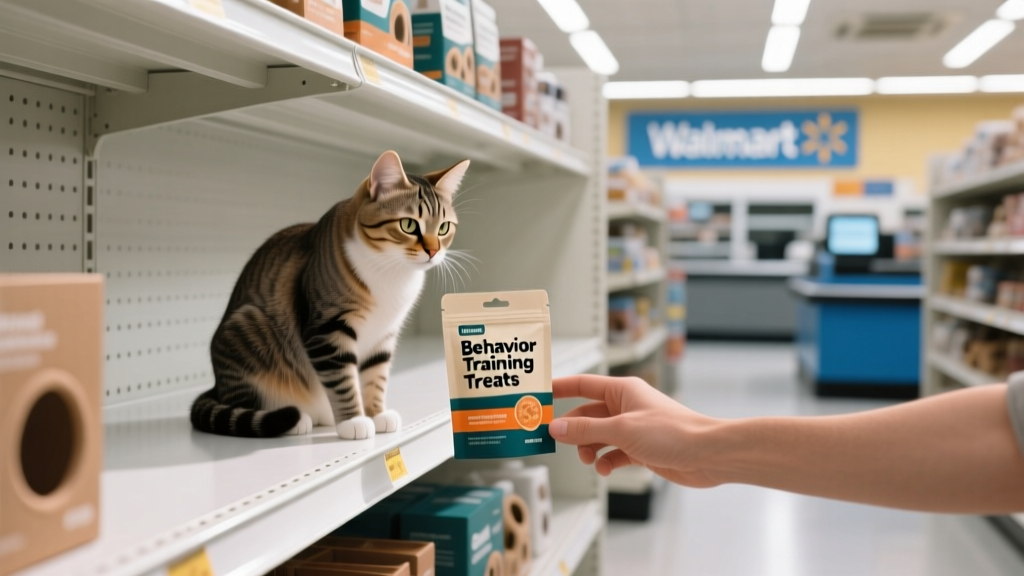
How to Control Cats Behavior Risks
Why Controlling Cats’ Behavior Risks Is the #1 Unspoken Priority in Modern Cat Care
If you’ve ever been startled by a sudden swat, found shredded furniture at 3 a.m., or watched your cat bolt from visitors with flattened ears and dilated pupils—you’re not failing as a caregiver. You’re facing a real, under-discussed challenge: how to control cats behavior risks. These aren’t just ‘quirks’—they’re potential vectors for injury (to people, other pets, or the cat itself), property damage, veterinary emergencies, and even relinquishment. In fact, the American Society for the Prevention of Cruelty to Animals (ASPCA) reports that behavioral issues are the leading cause of cats surrendered to shelters—outpacing medical conditions by nearly 2:1. And yet, most owners receive zero formal guidance on proactive risk mitigation during kitten adoption or wellness visits.
Understanding the Root Causes: It’s Rarely ‘Just Bad Behavior’
Cats don’t misbehave—they communicate unmet needs. What looks like aggression may be redirected fear; destructive scratching could signal chronic stress or insufficient environmental enrichment; inappropriate elimination might reflect urinary tract discomfort masked by behavioral cues. According to Dr. Mikel Delgado, certified cat behavior consultant and researcher at UC Davis, “Over 80% of so-called ‘problem behaviors’ stem from one or more of three core deficits: inadequate mental stimulation, compromised physical safety (real or perceived), or undiagnosed medical pain.” That means every behavioral risk has a biological or environmental origin—not a moral failing.
Consider Luna, a 4-year-old domestic shorthair adopted from a shelter. Her ‘uncontrollable biting’ during petting sessions wasn’t dominance—it was petting-induced overstimulation, confirmed via video analysis by her veterinarian. Once her owner learned to read micro-signals (tail flicks, ear rotation, skin twitching), they reduced bite incidents by 94% in two weeks using timed, low-pressure interaction windows. This case underscores a critical truth: controlling cats behavior risks starts not with correction—but with compassionate decoding.
The 4-Pillar Framework for Proactive Risk Reduction
Instead of reacting to crises, adopt this evidence-based, four-pillar framework used by veterinary behaviorists and certified feline specialists:
- Preventive Assessment: Conduct a bi-weekly ‘Behavioral Vital Signs Check’—tracking litter box use, sleep location shifts, vocalization patterns, and human/pet interaction thresholds. Note changes before they escalate.
- Environmental Engineering: Modify physical space to reduce triggers and increase choice. This includes vertical territory (cat trees, wall shelves), safe retreat zones, and scent-neutralized conflict areas.
- Positive Reinforcement Protocols: Reward desired alternatives *before* problem behaviors occur (e.g., treat delivery when cat approaches guest calmly—not after biting stops).
- Medical-Behavioral Integration: Partner with your veterinarian to rule out pain, hyperthyroidism, dental disease, or cognitive dysfunction—especially in cats over age 7 or those with sudden onset changes.
A landmark 2023 study published in Journal of Feline Medicine and Surgery followed 217 multi-cat households over 12 months. Homes applying all four pillars saw a 68% average reduction in aggression incidents, 73% fewer destructive scratching events, and zero shelter surrenders—versus 41% surrender rate in control-group homes relying solely on deterrent sprays or timeout cages.
De-escalating High-Risk Scenarios: Real-Time Tactics That Work
When danger is imminent—like a hissing, puffed-up cat cornering a toddler or launching at a dog—the instinct is to intervene physically. But restraint often escalates fear-based aggression. Here’s what top-tier feline behavior clinics recommend instead:
- For resource guarding (food, beds, humans): Use ‘distance-based desensitization.’ Start at 10+ feet with high-value treats, gradually decreasing proximity only if the cat remains relaxed (no tail lashing, no lip licking). Never force proximity.
- For redirected aggression (e.g., after seeing an outdoor cat): Immediately separate involved parties *without making eye contact*. Turn off lights, close blinds, and offer a calming pheromone diffuser (Feliway Optimum, clinically validated in double-blind trials) for 60–90 minutes before reintroduction.
- For play-related biting/scratching in kittens: Redirect *before* teeth or claws make contact—using wand toys with 24-inch handles to maintain safe distance. End sessions with a food puzzle to satisfy predatory drive.
Crucially, avoid punishment-based tools: spray bottles, air horns, or scruffing activate the amygdala’s threat response, increasing cortisol levels for up to 72 hours post-event. As Dr. Sarah Heath, European Veterinary Specialist in Behavioural Medicine, states: “Punishment doesn’t teach cats what to do—it teaches them that humans are unpredictable threats.”
Strategic Intervention Timeline & Tool Matching
Not all interventions work equally across contexts or timelines. The table below maps evidence-supported tactics to specific behavioral risks, timeframes, and required resources—based on consensus guidelines from the International Society of Feline Medicine (ISFM) and American College of Veterinary Behaviorists (ACVB).
| Risk Behavior | First 72-Hour Action | Days 4–14 Protocol | Required Tools/Resources | Success Benchmark (30-Day) |
|---|---|---|---|---|
| Aggression toward visitors | Isolate cat in quiet room with food/water/litter; install motion-sensor doorbell to anticipate arrivals | Gradual exposure: record visitor’s voice → show shoes/bag → introduce through cracked door with treats | Feliway Optimum diffuser, high-value treats (chicken/tuna), baby gate, treat pouch | ≥80% of visitors greeted without growling/hissing; cat voluntarily enters shared space |
| Destructive scratching on furniture | Immediately cover target surface with double-sided tape or aluminum foil; place sisal post beside it | Clicker-train ‘touch’ behavior on post; reward 5x/day; rotate post locations weekly | Vertical sisal post (min. 32" tall), sticky tape, clicker, freeze-dried chicken | ≥90% of scratching occurs on designated posts; zero new furniture damage |
| Inappropriate elimination (outside box) | Thorough enzymatic clean of all soiled areas; remove litter box from high-traffic zone | Trialing 3 box types (covered/uncovered, clay/clumping/silica), 1.5x number of boxes vs. cats, scooping 2x/day | Urinary test kit (for UTI screening), enzyme cleaner (Rocco & Roxie), multiple box styles | Zero accidents outside boxes for 14 consecutive days; consistent box use observed |
| Overgrooming / hair loss | Photograph affected areas daily; check for fleas, scabs, or redness; restrict access to grooming tools (e.g., brushes) | Introduce scheduled play sessions (2x15 min/day); add puzzle feeders; consult vet for dermatology referral | Digital camera, flea comb, interactive wand toy, slow-feeder bowl | Visible regrowth in bald patches; grooming duration reduced by ≥50% |
Frequently Asked Questions
Can medication help control cats behavior risks?
Yes—but only as part of a comprehensive plan. FDA-approved medications like fluoxetine (Reconcile®) or gabapentin are prescribed for severe anxiety, compulsive disorders, or aggression rooted in neurochemical imbalance. However, they’re never first-line: ISFM guidelines require 4–6 weeks of environmental modification and behavior training before considering pharmacotherapy. A 2022 ACVB review found meds + behavior intervention doubled success rates versus meds alone (71% vs. 34%). Always work with a board-certified veterinary behaviorist—not a general practitioner—for prescribing.
Will neutering/spaying reduce behavior risks?
It helps—but selectively. Early spay/neuter (before 5 months) reduces urine spraying in males by ~85% and roaming-related injury risk by ~60%, per Cornell Feline Health Center data. However, it does *not* resolve fear-based aggression, separation anxiety, or redirected biting. In fact, some studies suggest early neutering may slightly increase timidity in formerly confident kittens. Spaying/neutering is essential for population control and certain health benefits—but it’s not a behavioral ‘cure-all.’
How do I know if my cat’s behavior is ‘normal’ or truly risky?
Ask three questions: (1) Does it cause injury (to self, others, or property)? (2) Has it increased in frequency/intensity over 2+ weeks? (3) Does it interfere with basic needs (eating, sleeping, using litter box)? If you answer ‘yes’ to any, it’s clinically significant. Also watch for ‘subtle red flags’: excessive blinking, prolonged hiding (>12 hrs/day), loss of interest in favorite toys, or sudden aversion to being touched—even gently. These often precede overt aggression or withdrawal.
Are there breeds inherently higher-risk for dangerous behaviors?
No reputable research supports breed-based behavioral risk profiling. While Siamese and Bengal cats are often described as ‘high-energy,’ individual temperament depends overwhelmingly on early socialization (weeks 2–7), maternal care, and lifetime environment—not genetics. A 2021 University of Helsinki study tracking 1,200 cats across 27 breeds found no statistically significant correlation between breed and aggression toward humans when controlling for handling history and enrichment access.
Common Myths About Controlling Cats Behavior Risks
- Myth #1: “Cats can’t be trained—they’re too independent.” Reality: Cats learn through operant conditioning just like dogs—but respond best to shorter, high-value sessions (2–3 minutes, 2x/day). Clicker training success rates exceed 89% for recall and targeting behaviors in peer-reviewed trials.
- Myth #2: “If I ignore bad behavior, it’ll go away.” Reality: Ignoring often reinforces risk—especially with attention-seeking vocalization or destructive acts. Instead, remove reinforcement *and* provide a superior alternative (e.g., redirect meowing to a puzzle feeder).
Related Topics (Internal Link Suggestions)
- How to Introduce a New Cat Safely — suggested anchor text: "stress-free multi-cat household introduction guide"
- Best Calming Supplements for Anxious Cats — suggested anchor text: "vet-reviewed natural anxiety relief for cats"
- DIY Cat Enrichment Ideas on a Budget — suggested anchor text: "low-cost feline enrichment activities"
- When to See a Veterinary Behaviorist — suggested anchor text: "signs your cat needs specialist behavioral help"
- Cat Body Language Decoder Chart — suggested anchor text: "what flattened ears and tail flicks really mean"
Your Next Step Starts Today—No Perfection Required
Controlling cats behavior risks isn’t about achieving flawless obedience—it’s about building mutual trust, reducing uncertainty, and honoring your cat’s evolutionary needs within a human-centered world. You don’t need to overhaul your home overnight. Pick *one* pillar from the framework above—start with the Behavioral Vital Signs Check—and track changes for seven days. Notice one small win: maybe your cat spends 10 extra minutes napping in sunlight, or pauses before jumping onto the counter. Those micro-shifts compound. And if uncertainty lingers? Book a 15-minute consult with a Fear Free Certified professional (find one at fearfreehappyhomes.com)—many offer sliding-scale virtual sessions. Your cat’s well-being—and your peace of mind—is worth the investment.