Why Cats Sit on the Window Blinds Bottom Rail
You walk into the room and there’s your cat—perched like a tiny, furry tightrope artist on the bottom rail of the window blinds. The blinds are slightly bowed, the rail is wobbling, and your cat looks completely pleased with themself. Maybe they’re staring out at a bird like it’s premium entertainment. Maybe they’re staring at nothing, which somehow feels even more intense. You try to shoo them off to save the blinds… and they climb right back up, as if you’ve misunderstood the whole purpose of the window.
If you’ve ever wondered why your cat chooses that oddly narrow, slightly unstable spot instead of the perfectly good cat bed five feet away, you’re in good company. This behavior is a mix of instinct, physics, and a cat’s deep commitment to being exactly where the best information is.
1) The Scientific (and Evolutionary) Reason Cats Love That Spot
Cats are built to observe first and act second. In the wild, a small predator survives by gathering information: Where are the birds? Is there another predator nearby? Is that rustling a meal—or a threat? Your living room doesn’t contain many life-or-death decisions, but your cat’s brain still runs the same software.
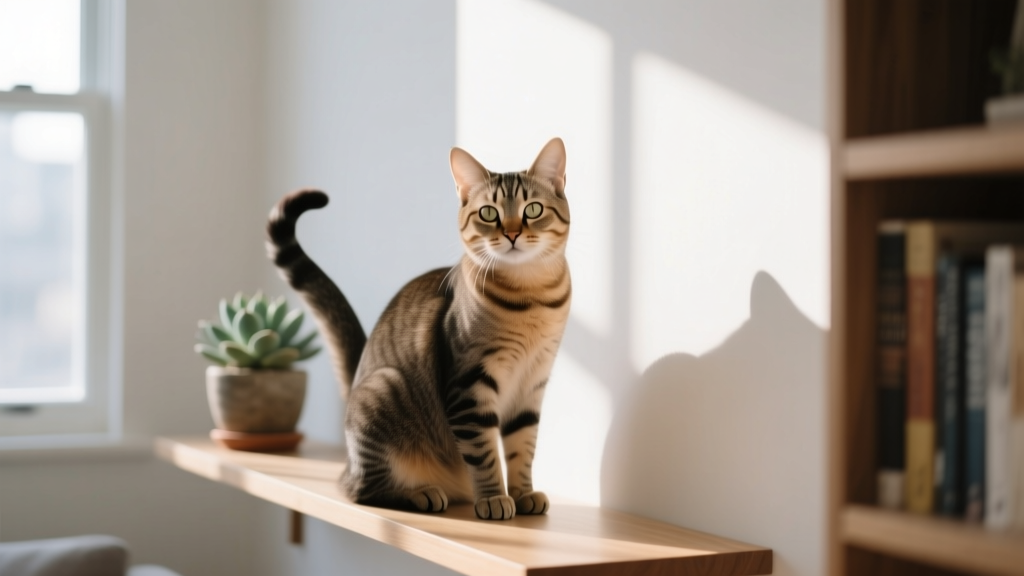
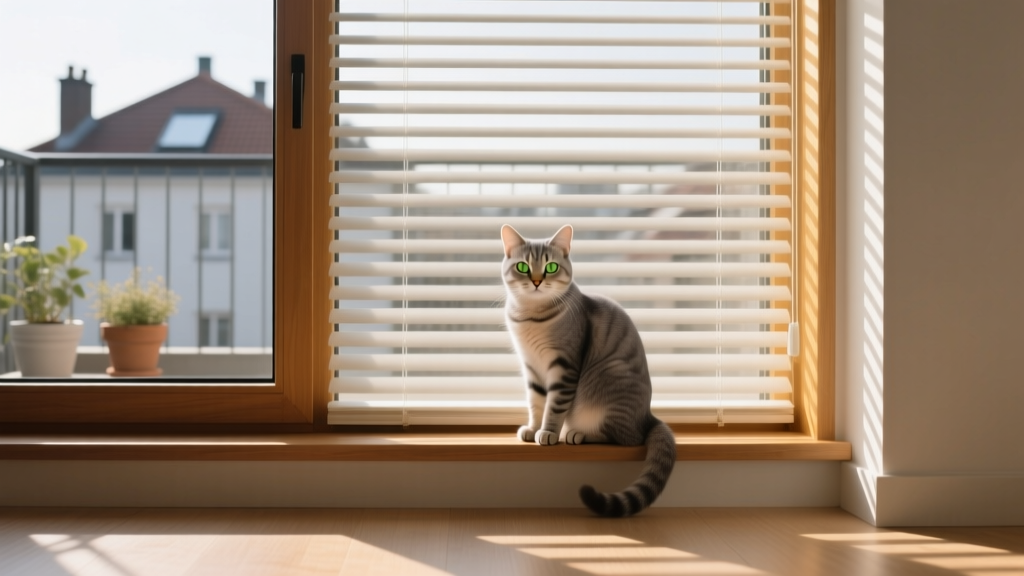
The bottom rail of blinds is a “micro-perch.” Even a few inches of elevation changes what your cat can see and smell. Perching behavior is deeply rooted in feline survival strategy:
- Vantage point = safety. Height helps cats monitor their environment with less chance of being surprised.
- Vantage point = hunting advantage. A stable perch (or stable enough) gives them a platform to watch prey and plan.
- Sun + warmth = energy efficiency. Cats evolved to conserve energy. A sunny window spot is like free heating.
The blinds themselves add another layer: they create a semi-hidden observation post. From your cat’s perspective, that rail isn’t just a seat—it’s a lookout tower with built-in camouflage curtains.
2) A Detailed Breakdown: Different Contexts for the Bottom-Rail Sit
Not all window-blind sitting means the same thing. Context is everything in cat behavior. Here are the most common “why” categories.
A) Bird TV and Squirrel Surveillance
If your cat’s body is still, ears swiveling, eyes wide and tracking, you’re seeing classic hunting mode. The window is a safe place to practice predatory behaviors: stalking with the eyes, calculating distance, and imagining the pounce.
Typical scenario: Your cat chirps at a robin, tail tip twitching like a metronome. They’re not “frustrated” exactly—they’re engaged. It’s mental enrichment, feline-style.
B) “I Want to Be Where the Action Is” (Territory Monitoring)
Cats are territorial, even the friendliest ones. The window is a boundary line between “my territory” and “not mine.” Sitting on the bottom rail may be your cat’s way of checking patrol routes: neighbors walking dogs, outdoor cats passing through, delivery trucks arriving.
Typical scenario: Your cat regularly stations themself at the same window at the same time each day—like a security guard clocking in.
C) Seeking Heat, Light, and Comfort in a Strange Way
That rail might not look comfortable to you, but cats are masters of “good enough” comfort—especially if the spot is warm. Sunlight through the glass can create a heated strip on the blinds and sill area. Also, some cats enjoy the light pressure of balancing; it gives them full-body feedback, like a gentle workout.
Typical scenario: Your cat chooses the window rail in winter afternoons and drifts into a loaf position, eyes half-closed.
D) Attention, Please (and the Blinds Are Involved)
If sitting on the rail reliably makes you talk to them, approach, or even laugh, congratulations: your cat has found a very efficient “summon human” button. Some cats repeat behaviors that get a predictable response—even if the response is, “Get down from there!”
Typical scenario: You’re on a work call. Your cat climbs onto the rail, makes eye contact, and slowly blinks like they own the place.
E) Stress, Uncertainty, or “I Need a Safe Observation Spot”
A stressed cat often increases monitoring behaviors. If something in the environment feels unpredictable—construction noise, a new pet, guests—your cat may choose a lookout position. The blinds create a partial visual barrier that helps them feel less exposed.
Typical scenario: After moving to a new home, your cat spends extra time at the windows, watching and listening more than usual.
3) What This Behavior Says About Your Cat’s Mood
You can learn a lot by looking at posture, tail movement, and facial expression while your cat is on the bottom rail.
- Relaxed and content: Loafed body, slow blinking, ears neutral, tail still. This is “I’m enjoying the view and the warmth.”
- Playful and stimulated: Crouched posture, tail tip twitching, quick head movements, chirps or chattering. This is “I’m hunting… emotionally.”
- Alert or on patrol: Upright posture, ears forward and rotating, intense staring, body very still. This is “I’m gathering intel.”
- Anxious or overwhelmed: Ears sideways (“airplane ears”), tense body, crouched but rigid, rapid tail flicks, darting away if approached. This is “I’m not fully comfortable right now.”
One small but useful clue: a twitching tail is not automatically “anger.” In cats, tail movement often means arousal—excitement, stimulation, or agitation—so you’ll want to read the full body language picture.
4) Related Behaviors You Might Notice
Window-blind rail sitting tends to come as part of a “window ritual.” If your cat does this, you may also see:
- Chattering/chirping at birds (a predatory excitement response)
- Pawing at the glass or tapping the blinds like they’re trying to “start” the outdoors
- Rubbing cheeks on the window frame (scent-marking a favorite station)
- Scratching near the window (often about excitement or marking, not “spite”)
- Claiming the top of the sofa or a bookshelf nearby (more perching options)
- Knocking the blinds around when they’re feeling playful or restless
These behaviors all point to the same feline theme: cats love elevated observation and predictable routines around key territory zones.
5) When Sitting on the Bottom Rail Is Normal… and When It Might Be a Concern
Most of the time, this is completely normal cat behavior—quirky, mildly destructive, and deeply sincere.
Generally normal if:
- Your cat can get up and down easily and confidently
- They’re eating, drinking, sleeping, and using the litter box normally
- No signs of pain, limping, or hesitation when jumping
- The behavior happens in predictable “window times” (morning birds, afternoon sun)
Potential concern if you notice:
- Obsessive window-watching that replaces normal activities (not eating, not resting)
- Sudden increase in vigilance paired with hiding, irritability, or over-grooming
- Aggression redirected at you or another pet after seeing something outside (common trigger: outdoor cats)
- Unsteady balance, frequent falls, or reluctance to jump (could indicate pain, vision issues, or vestibular problems)
- Chewing on cords or the blind mechanism (safety issue and stress signal)
If the behavior is new and intense—especially with other changes—consider a vet check to rule out discomfort, and a behavior review to look for stress triggers (like an outdoor cat visiting your yard).
6) Tips for Responding (and Saving Your Blinds)
You don’t have to choose between letting your cat enjoy the window and keeping your blinds intact. The goal is to give them a “yes” that replaces the risky “yes, but please don’t.”
Offer a Better Perch
- Window-mounted cat perch or hammock: Great for sunbathing and bird-watching.
- Cat tree positioned near the window: Give them height and stability.
- A sturdy bench or low shelf: Some cats prefer a wide platform over a tall one.
Pro tip: Make the new perch more appealing than the rail. Add a soft mat, a pinch of catnip, or feed treats there for a week so it becomes the “premium seat.”
Manage the View (Yes, Really)
- If your cat is reacting to an outdoor cat, use window film on the lower portion of the glass to reduce visual triggers.
- Create bird-feeding stations at a distance if you want to offer safe “cat TV” (check local guidelines for wildlife safety).
Protect the Blinds and Improve Safety
- Tie up cords or use cordless blinds to reduce strangulation risk.
- Consider roller shades or vertical blinds if your cat is a repeat offender.
- If the rail is bending or snapping, block access temporarily while you install a perch alternative.
Respond in a Way That Doesn’t Reinforce the Wrong Thing
If your cat is doing it for attention, big reactions can make it more rewarding. Instead:
- Calmly redirect to the perch.
- Reward when they choose the perch (treats, petting, or play—whatever your cat values).
- Save your most enthusiastic attention for “approved” window spots.
7) Fun Facts and Research-Adjacent Nuggets
- Cats prefer “protected vantage points.” Behaviorists often describe cats as seeking spaces that combine a view with partial cover—exactly what blinds provide.
- Windows are enrichment gold. Environmental enrichment research consistently supports the idea that visual stimulation and perching opportunities reduce boredom and can help lower stress for indoor cats.
- That tiny rail is a balance exercise. Cats have an advanced vestibular system (balance) and a flexible spine—so what looks like a circus act to you may feel like casual stretching to them.
And yes: many cats seem to enjoy the slight wobble. Some individuals genuinely like dynamic surfaces because it engages their body awareness—like standing on a gently shifting yoga board.
8) FAQ: Common Questions About Cats and Blinds
Why does my cat sit on the blinds instead of the windowsill?
The blinds can offer a better angle, a warmer strip of sun, or a sense of concealment. If the sill is narrow, cold, or cluttered, the bottom rail may be the easiest “functional perch” available.
Is it bad for my cat to sit on the bottom rail?
It can be risky if the rail is unstable, if cords are accessible, or if your cat could fall onto something hard or sharp. The behavior itself is normal; the safety depends on your setup.
How do I stop my cat from bending or breaking the blinds?
Provide a sturdier window perch, block access temporarily if needed, and reward your cat for using the alternative. If the window is their favorite enrichment spot, removing access without replacement often backfires.
My cat attacks the blinds or gets aggressive at the window—what does that mean?
This often happens when a cat is over-aroused by prey or threatened by an outdoor cat. It can lead to redirected aggression (your cat can’t reach the “trigger,” so they lash out at what’s nearby). Reduce visual triggers and add calming enrichment; if it’s frequent, consult a veterinarian or qualified behavior professional.
Why does my cat chatter at birds while sitting on the rail?
Chattering is commonly linked to predatory excitement and frustration. Your cat’s hunting brain is fully engaged, but the glass prevents the pounce. It’s a very normal “I want that” response.
Should I add a bird feeder to entertain my cat?
Many cats love it, and it can be excellent enrichment. Place feeders where birds are safer (not right against the window), keep them clean, and consider local wildlife recommendations. Your cat gets the show; the birds get a better chance.
Bringing It All Together
When your cat perches on the window blinds bottom rail, they’re usually doing something wonderfully cat-like: seeking information, comfort, and a little excitement from the safest seat in the house (even if it’s the least convenient seat for your interior decorating plans). With a few tweaks—better perches, safer blinds, and smart reinforcement—you can keep the behavior enriching for your cat and less tragic for your window treatments.
Does your cat have a favorite “why would you sit there?” spot—blinds, curtain rods, the top of the door? Share your cat’s funniest window-watching habits and creative perching choices with the Cat Lovers Base community at catloversbase.com.