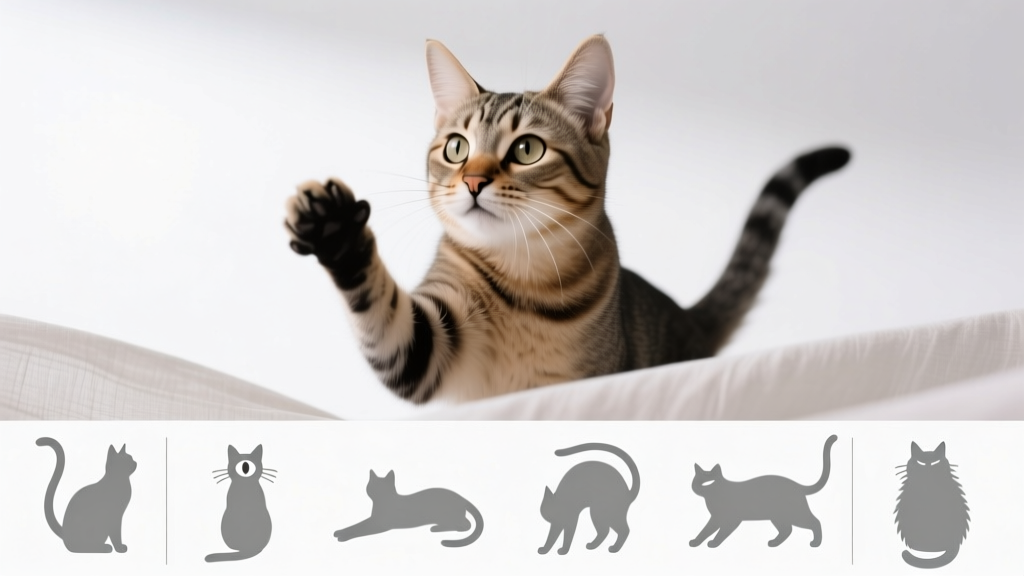
Apartment Cat Behavior: What’s Normal vs. Red Flag
Why Your Apartment Cat’s Behavior Isn’t ‘Weird’ — It’s Wired
\nWhat is a cat's behavior in apartment settings? It’s not random mischief — it’s a complex, evolutionarily tuned response to spatial constraints, sensory deprivation, and unmet instinctual needs. If you’ve ever watched your cat stare blankly at a wall, knock things off your desk at 3 a.m., or suddenly hiss at the vacuum cleaner like it’s a saber-toothed tiger, you’re not dealing with a broken pet — you’re witnessing a highly intelligent predator adapting (often imperfectly) to life in a human-designed concrete box. With over 65% of U.S. cats now living exclusively indoors — and nearly half in apartments or condos — understanding this behavior isn’t just about convenience; it’s foundational to their long-term mental health, stress resilience, and even physical longevity.
\n\n1. The Territorial Tightrope: Space, Scent, and Silent Stress
\nCats don’t measure territory in square feet — they map it in scent, sightlines, and vertical access. In an apartment, where walls are shared, windows are often sealed, and outdoor stimuli are muffled or distorted, felines rely heavily on olfactory cues to feel safe. Dr. Sarah K. Heath, a certified feline veterinary behaviorist and co-author of Feline Behavioral Health and Welfare, explains: “An apartment cat may patrol the same 300-square-foot space dozens of times daily not out of boredom, but as active scent reinforcement — a biological imperative that gets disrupted when we over-clean with citrus- or pine-scented products, which mask their pheromones and trigger low-grade anxiety.”
\nThis invisible stress manifests in subtle but telling ways: overgrooming (especially on the belly or inner thighs), urine marking on vertical surfaces near doorways or windows, or sudden aggression toward familiar people after routine changes (e.g., new furniture, roommate move-in). A 2022 study published in Journal of Feline Medicine and Surgery found that apartment-dwelling cats showed 3.2× higher cortisol metabolite levels in urine samples compared to house-dwelling counterparts — even when no overt ‘problem behavior’ was observed.
\nSo what helps? Not more toys — but strategic environmental layering:
\n- \n
- Vertical real estate: Install wall-mounted shelves or cat trees that reach within 12 inches of the ceiling — cats feel safest when they can observe without being observed. \n
- Scent continuity: Avoid enzymatic cleaners on scratching posts or bedding; instead, use Feliway Classic diffusers in high-traffic zones (living room, bedroom doorway) to mimic calming facial pheromones. \n
- Controlled visual access: Use sheer curtains or window perches with adjustable blinds — giving your cat agency over whether to watch birds or retreat from overstimulation. \n
2. The Midnight Zoomies Aren’t Random — They’re Repressed Hunting Cycles
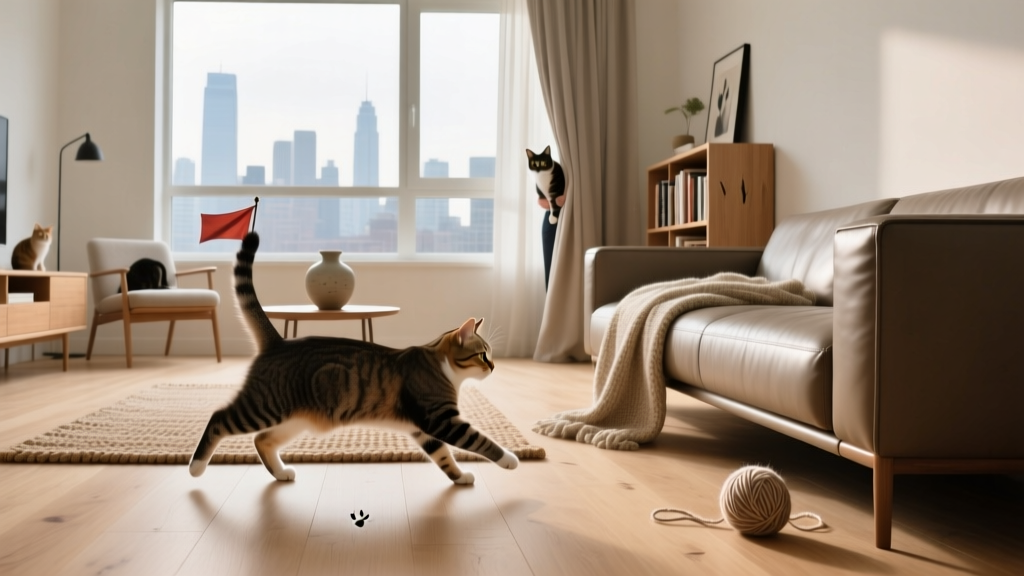
\nThat 2 a.m. sprint across your hardwood floor? It’s not insomnia — it’s a neurobiological echo of ancestral crepuscular rhythms. Wild cats hunt most actively at dawn and dusk, when prey is abundant and predators less visible. In apartments, where feeding schedules are rigid and play sessions often last only 5–7 minutes, this drive doesn’t vanish — it compresses, delays, and erupts unpredictably.
\nDr. Tony Buffington, professor emeritus at Ohio State’s College of Veterinary Medicine and lead researcher on indoor cat enrichment, notes: “Cats don’t need ‘more play’ — they need biologically appropriate play. That means mimicking the full predatory sequence: stalk → chase → pounce → bite → kill → eat. Most owners stop at ‘chase.’ The unresolved tension builds neurological pressure — hence the frantic bursts.”
\nA real-world case: Luna, a 4-year-old Russian Blue in a 650-sq-ft Brooklyn studio, began attacking her owner’s ankles at night. Her vet ruled out pain, but a behavior consultation revealed she received only one 3-minute wand toy session daily — far below the recommended 2–3 sessions of 10–15 minutes each. After implementing scheduled ‘hunting hours’ (7 p.m. and 10 p.m.) with realistic prey-like toys (feather wands with erratic movement, followed by a food puzzle ‘kill’ reward), her nocturnal activity dropped by 92% in under two weeks.
\nActionable protocol:
\n- \n
- Use a timer to schedule two 12-minute interactive play sessions daily — one 30 minutes before bedtime to satisfy the ‘hunt-eat-sleep’ cycle. \n
- Rotate toys weekly — store all but 2–3 in a closed bin to preserve novelty (cats habituate fast). \n
- Always end play with a ‘kill’: let the toy disappear under furniture or into a treat-dispensing puzzle — never leave them frustrated mid-sequence. \n
3. Litter Box Logic: It’s Never Just About Cleanliness
\nWhen an apartment cat avoids the litter box, owners often assume it’s defiance or poor training. In reality, it’s almost always a communication — and one that’s deeply tied to spatial dynamics. In multi-cat households (even with just two cats), the American Association of Feline Practitioners recommends n+1 litter boxes, placed on separate floors or rooms — yet in studios and 1-bedrooms, that’s rarely feasible. So cats adapt — sometimes problematically.
\nKey triggers unique to apartments:
\n- \n
- Proximity stress: Placing the box next to the washer/dryer (vibrations + noise) or inside a closet (poor ventilation + confinement) violates feline preferences for quiet, open, easily escapable locations. \n
- Surface mismatch: Many landlords install hard-surface flooring (tile, laminate) — but cats strongly prefer soft, diggable substrates. A 2021 Cornell Feline Health Center survey found 68% of inappropriate elimination cases resolved simply by adding a second box filled with unscented, clumping clay litter on a rug or mat — even when the original box was ‘clean.’ \n
- Odor confusion: Shared building HVAC systems can carry scents from neighboring units — including other cats’ urine — triggering territorial marking or avoidance. \n
The fix isn’t just ‘more boxes’ — it’s smarter placement and substrate science. Try this diagnostic flow:
\n- \n
- Move the box away from appliances, doors, and high-traffic paths. \n
- Test three substrates side-by-side in identical boxes (clay, paper pellets, fine silica gel) for 3 days each — track usage via litter tracking sheets or non-toxic dye markers. \n
- If avoidance persists, consult your vet to rule out interstitial cystitis — a stress-induced bladder condition affecting up to 1 in 5 indoor cats, especially in high-density housing. \n
4. Social Signals You’re Missing — And What They Really Mean
\nApartment cats develop nuanced, context-specific communication strategies because they lack outdoor outlets. Their ‘body language’ becomes denser, more layered — and easily misread. For example:
\n- \n
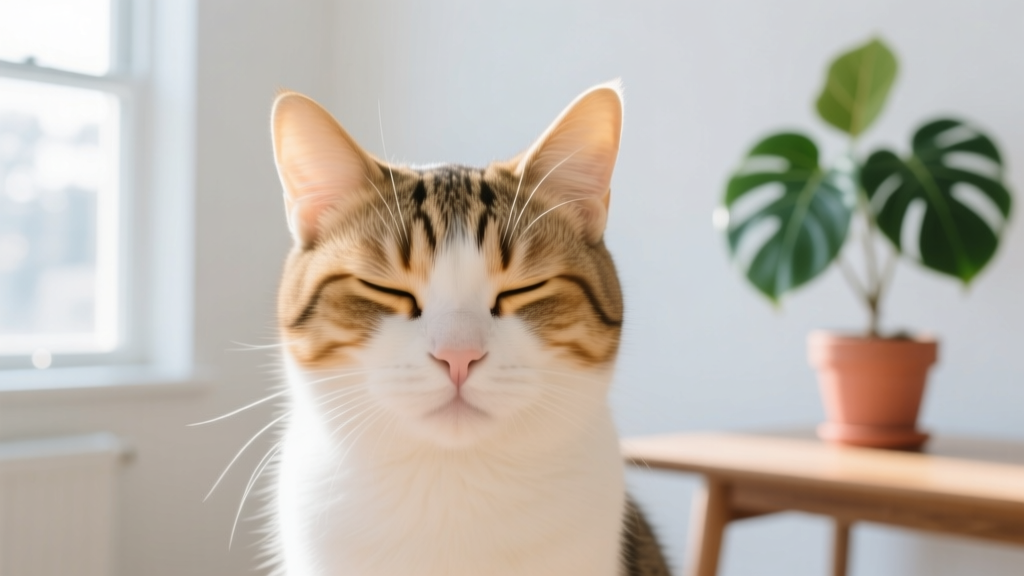
- Slow blinking while staring at you: Not indifference — it’s a deliberate, relaxed ‘I trust you’ signal. Return it gently to reinforce safety. \n
- Tail held straight up with a slight quiver: This isn’t excitement — it’s intense focus, often preceding a pounce or marking behavior. Observe what’s in their line of sight (a fly? a shadow? a neighbor’s cat outside the window?). \n
- Chattering at windows: Often dismissed as ‘cute,’ but it’s actually jaw muscle activation preparing for the bite — a sign of high arousal and potential frustration if no outlet exists. \n
One under-discussed behavior: ‘object guarding.’ An apartment cat may sit squarely on your laptop, bag, or pillow — not to be annoying, but to claim resources in a space where ownership is ambiguous. Instead of shooing, offer a designated ‘guard zone’ — a cozy bed placed beside your workspace with a worn t-shirt inside for scent security.
\nAlso critical: recognize the ‘stress yawn.’ Unlike human yawning, a cat’s wide-mouthed, slow jaw stretch — especially when paired with flattened ears or dilated pupils — signals acute discomfort, not tiredness. If you see it during video calls or guest visits, give them immediate exit options (a covered carrier, a quiet closet with bedding).
\n\n| Behavior Observed | \nLikely Apartment-Specific Cause | \nScience-Backed Intervention | \nTimeframe for Change | \n
|---|---|---|---|
| Scratching furniture (not posts) | \nLack of vertical territory + insufficient claw maintenance surface texture | \nInstall sisal-wrapped wall shelves at 3+ heights; apply double-sided tape to targeted furniture for 72 hours while redirecting to posts | \n10–14 days (consistent use) | \n
| Excessive vocalization at night | \nUnmet hunting drive + circadian rhythm disruption from artificial light | \nDim lights 2 hours pre-bedtime; feed last meal via food puzzle at 10 p.m.; eliminate blue-light devices in sleeping area | \n5–9 days | \n
| Avoiding the litter box | \nLocation stress + substrate aversion + underlying urinary sensitivity | \nRelocate box to quiet corner with rug base; switch to unscented clumping clay; add water fountain nearby to boost hydration | \n3–7 days (if medical causes ruled out) | \n
| Hiding for >2 hours after minor change (e.g., new plant) | \nSensory overload + limited escape routes in confined space | \nCreate 3+ ‘safe zones’ with covered beds, cardboard boxes, and Feliway diffusers; avoid moving furniture for 72 hours post-change | \nImmediate reduction in duration | \n
Frequently Asked Questions
\nWhy does my apartment cat seem more anxious than my friend’s house cat?
\nIt’s not imagination — it’s physiology. Apartment cats experience chronic low-level stressors house cats rarely face: shared walls transmitting unpredictable sounds (banging pipes, footsteps), limited sun exposure (reducing vitamin D synthesis and serotonin regulation), and zero control over external stimuli (e.g., seeing but not accessing birds through glass). A 2023 University of Lincoln study found apartment cats had 41% lower baseline heart rate variability — a key biomarker of autonomic nervous system resilience — compared to single-family home cats, even when both were well cared for.
\nIs it okay to keep a kitten in an apartment long-term?
\nYes — but only with proactive, age-appropriate enrichment. Kittens have a critical socialization window (2–7 weeks) and a peak learning period (3–6 months) where neural pathways for environmental adaptability are formed. Skipping vertical exploration, varied textures, and controlled novelty exposure during this time increases lifelong anxiety risk. We recommend: 1) kitten-proofing with 3-tier climbing structures by 8 weeks, 2) daily ‘scent walks’ (letting them investigate safe, laundered fabrics from outdoors), and 3) introducing gentle sound desensitization (e.g., recorded elevator dings at low volume).
\nHow many hours of interaction does an apartment cat really need?
\nForget ‘hours’ — think ‘moments with meaning.’ Research shows cats benefit most from 3–5 brief (3–5 minute), high-engagement interactions daily — especially those mimicking predation (stalking, pouncing, ‘killing’). A 2020 study in Animals journal found cats given three 4-minute play sessions showed significantly lower salivary cortisol than those receiving one 20-minute session. Quality trumps duration — and consistency matters more than intensity.
\nCan I train my apartment cat to stop meowing at the door?
\nYou can absolutely redirect it — but not by ignoring it. Door-meowing is often a learned operant behavior (‘meow = door opens’) reinforced unintentionally. Instead, teach an incompatible behavior: place a treat-dispensing puzzle or lick mat *next to* the door and reward calm, quiet presence there for 5 seconds — gradually increasing duration. Within 10–12 days, most cats shift focus from demanding to anticipating. Never punish — it erodes trust and amplifies anxiety-driven vocalizations.
\nDo apartment cats get depressed?
\nThey don’t experience clinical depression like humans, but they absolutely develop chronic stress-induced behavioral syndromes — including apathy, appetite loss, excessive sleep (>20 hrs/day), and reduced environmental interaction. These are red flags requiring veterinary evaluation and environmental overhaul. According to the International Society of Feline Medicine, prolonged behavioral shutdown in indoor cats correlates strongly with untreated hyperthyroidism, dental disease, or chronic kidney disease — conditions that progress silently in apartment settings due to limited outdoor observation cues.
\nCommon Myths
\nMyth #1: “Cats are independent — they don’t need much stimulation in small spaces.”
\nReality: Independence ≠ low need. Cats evolved as solitary hunters requiring vast territories to regulate stress hormones. Confinement without enrichment doesn’t make them ‘content’ — it suppresses natural drives, leading to redirected behaviors (overgrooming, aggression, GI issues). As Dr. Dennis Turner, feline ethologist and author of The Domestic Cat: The Biology of its Behaviour, states: “A cat without opportunity to express species-typical behavior isn’t relaxed — it’s resigned.”
Myth #2: “If my cat isn’t ‘acting out,’ they’re fine.”
\nReality: The most dangerous sign is no sign at all. Withdrawn, ‘quiet’ cats in apartments are statistically more likely to hide early-stage illness or chronic stress. A 2022 AAFP survey found 73% of owners of ‘calm’ apartment cats missed early signs of arthritis, dental disease, or hypertension — because their cats simply stopped moving, playing, or vocalizing rather than showing overt distress.
Related Topics (Internal Link Suggestions)
\n- \n
- Best Cat Trees for Small Apartments — suggested anchor text: "space-saving cat tree recommendations" \n
- How to Stop Cat Scratching Furniture — suggested anchor text: "apartment-friendly scratching solutions" \n
- Signs of Stress in Indoor Cats — suggested anchor text: "subtle stress indicators in apartment cats" \n
- Feline Interstitial Cystitis in Indoor Cats — suggested anchor text: "stress-related bladder issues in confined cats" \n
- DIY Enrichment Toys for Cats — suggested anchor text: "low-cost apartment cat enrichment ideas" \n
Your Next Step: Map One Behavior This Week
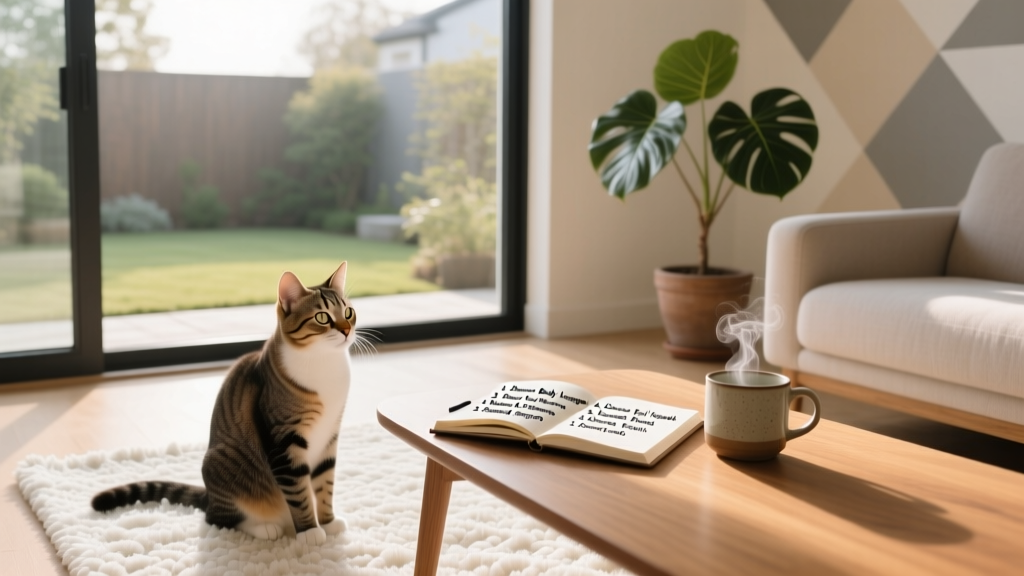
\nYou now know what is a cat's behavior in apartment environments — not as a list of quirks, but as a coherent language of survival, adaptation, and unspoken need. Don’t try to overhaul everything at once. Pick one recurring behavior this week — the 3 a.m. zoomies, the couch scratching, the litter box hesitation — and apply just one intervention from this guide. Track it in a simple notebook: date, time, what you did, and your cat’s response (even subtle ones: ear position, tail flick, proximity). In seven days, you’ll have real data — not guesswork — and a clear path forward. Because understanding your cat’s behavior isn’t about fixing them. It’s about finally speaking the same language.