Cat Stretching Sequence: Full Body Wake-Up Routine
You’re half-awake, shuffling toward the kitchen, and there’s your cat—still warm from a nap—rising like royalty from a velvet throne. First comes the long, slow front-leg reach. Then the arched back that seems to go on forever. Maybe a dramatic yawn, a tail held like a question mark, and a few deliberate steps as if they’re testing the laws of physics. You watch it and think, How can something so ordinary look so… choreographed?
That “morning routine” isn’t just cute. It’s a real behavior sequence with biological purpose, emotional nuance, and a few social cues tucked inside. Once you know what to look for, your cat’s post-nap stretch becomes a tiny window into how their body and brain work—and how they’re feeling about you, their environment, and their day.
Why Cats Do the Stretching Sequence (Science + Evolution)
Cats are built for sudden athletic bursts. Even the most couch-loving housecat is essentially a small ambush predator wearing pajamas. In the wild (and in your living room), they spend a lot of time resting to conserve energy, then switch on fast when opportunity appears—prey, play, or a suspicious noise by the door.
Stretching after rest helps them transition from “energy-saving mode” to “action-ready mode” by:
- Warming up muscles and tendons: Just like humans, cats get stiff from staying in one position. Stretching increases flexibility and primes the body for movement.
- Boosting circulation: Movement encourages blood flow to muscles and the brain, helping your cat wake up fully and coordinate smoothly.
- Resetting the nervous system: After sleep, the body needs a quick “systems check.” Stretching helps recalibrate posture, balance, and joint position (proprioception—your body’s sense of where it is in space).
- Maintaining claw and paw readiness: Many stretches involve toe splaying and claw extension, which also helps keep those claw sheaths functioning the way nature intended (even if your sofa disagrees).
There’s also a subtle evolutionary bonus: a cat that wakes up, stretches, and immediately moves with precision is more successful at hunting—and less likely to get injured. In cat terms, stretching is part warm-up, part safety check, part “I’m back online.”
What the Full-Body Wake-Up Sequence Often Looks Like
Not every cat does the exact same routine, and not every nap triggers the full performance. But many cats follow a similar pattern. Here’s what you may notice, and what each part is doing.
1) The Yawn (Often Misread as “I’m Bored”)
A yawn can be a simple oxygen-and-arousal shift—your cat transitioning from sleep to alertness. Cats also yawn during mild stress or social tension (a “calming signal”), but right after waking it’s usually just physiological rebooting. If the yawn comes with soft eyes and relaxed ears, it’s the sleepy version. If the yawn comes with tense posture, a still body, or watchful eyes, it may be a “give me a second” kind of yawn.
2) The Front-Leg Stretch (“Superman Stretch”)
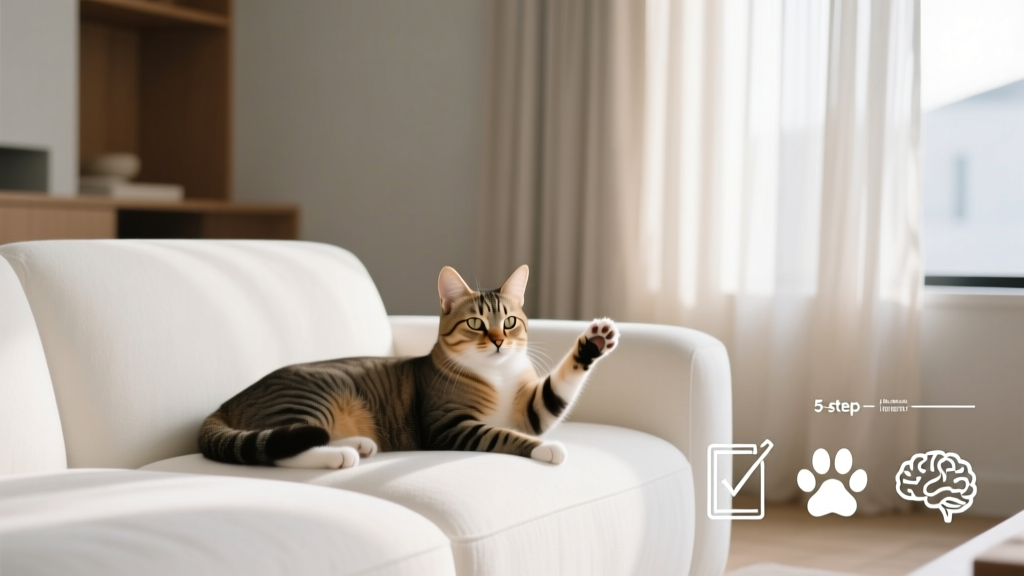
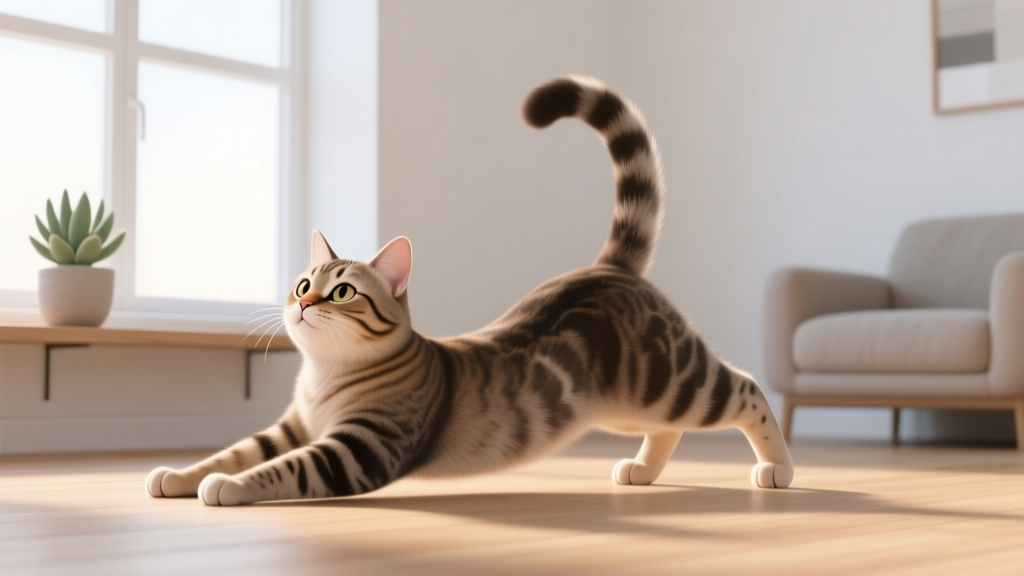
This is the classic: front paws extend forward, chest drops, shoulders lengthen, and the back begins to arc. It warms up shoulders, spine, and forelimbs—key equipment for pouncing, climbing, or sprinting down the hallway at 2 a.m.
Context clues:
- Slow and languid: Relaxed, content, not in a hurry.
- Quick and snappy: Switching into “go mode,” often followed by zoomies or a purposeful march to the food bowl.
3) The Back Arch + Full Body Lengthening
This is the spine’s moment to shine. Cats have incredibly flexible backs, and this stretch helps mobilize the vertebrae and engage core muscles. It’s also a common precursor to grooming, because a mobile spine makes it easier to twist and reach every patch of fur.
Important note: This is different from the defensive “Halloween cat” arch. In a wake-up stretch, the fur stays flat, the cat’s body looks loose, and there’s no sideways posture or puffed tail. The vibe is “ahhh,” not “stay back.”
4) The Paw Flex + Claw Extension
You might see your cat press their paws into the floor, stretch their toes, and briefly extend claws. This can look like a mini knead without the full rhythm. It’s partly about warming up the paws and partly about sensory feedback—cats learn a lot through their feet, including surface stability.
5) The Tail Statement
Tails are mood subtitles. After waking, you may see:
- Tail gently up: Friendly, curious, socially open.
- Tail relaxed and low: Still waking, neutral, calm.
- Tail flicking sharply: Overstimulated, annoyed, or focused on something (like a bird outside).
6) The “Test Steps” (AKA the Post-Nap Strut)
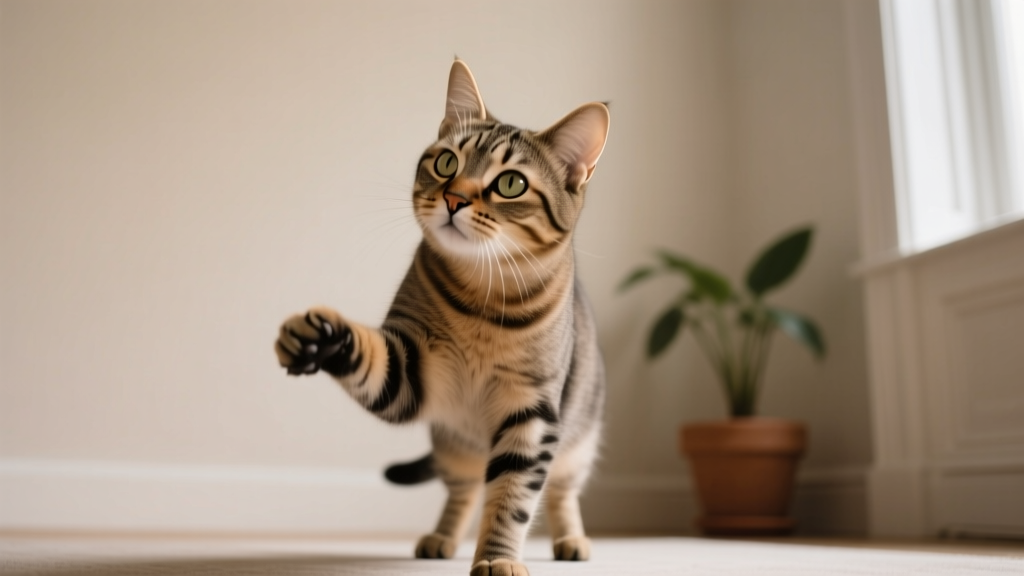
Some cats take a few slow, deliberate steps after stretching, like they’re trying out their limbs again. This is normal—especially for older cats—and often followed by grooming, seeking attention, checking the litter box, or heading toward a resource (food, water, sunny spot).
Different Contexts: Same Stretch, Different Meaning
The body mechanics are similar, but the why shifts depending on the setting.
- After a deep nap: Pure physical reset. Often slow, blissful, and followed by grooming.
- When you walk into the room: Stretching can be a “soft greeting.” Your cat may be signaling calm social intent—especially if they approach afterward with tail up.
- Before play: Some cats stretch to prepare for a burst of activity. You’ll see alert eyes, forward ears, and immediate engagement with a toy.
- Before asking for food: Many cats stretch as they rise to “request mode.” If the stretch ends with direct eye contact and a purposeful walk to the bowl, you’ve been politely scheduled for kitchen duty.
- After being startled awake: Stretching may be shorter and more guarded. Watch for tense shoulders, ears angled to the side, or a quick scan of the room.
What the Stretching Sequence Says About Your Cat’s Mood
Think of stretching as a little emotional weather report. Here are common “translations”:
- Loose body + slow stretch + soft eyes: Content, safe, relaxed. Your home feels secure.
- Stretch + immediate grooming: Settled and self-maintaining. A calm, routine-driven cat moment.
- Stretch + tail up + approach: Friendly and socially available. Great time for gentle interaction.
- Stretch + sudden zoomies: Energized, playful, and possibly under-stimulated. Time for a wand toy session.
- Stretch + ears swiveling + scanning: Alert, assessing. Something caught their attention—noise, scent, movement outside.
One subtle but lovely point: cats tend to do their most relaxed stretching where they feel safe. If your cat regularly stretches in the open rather than hidden away, that often reflects confidence in their environment.
Related Behaviors You Might Notice
The wake-up stretch often travels with a familiar entourage of “cat rituals.”
- Kneading: Especially on soft blankets or your lap. Often a comfort behavior linked to kittenhood and relaxation.
- Grooming bursts: A quick face wash, then shoulders, sides, and tail. Grooming can be hygiene, comfort, or “resetting” after sleep.
- Chirping or soft meows: Some cats vocalize as they wake up—like commentary on the state of the household.
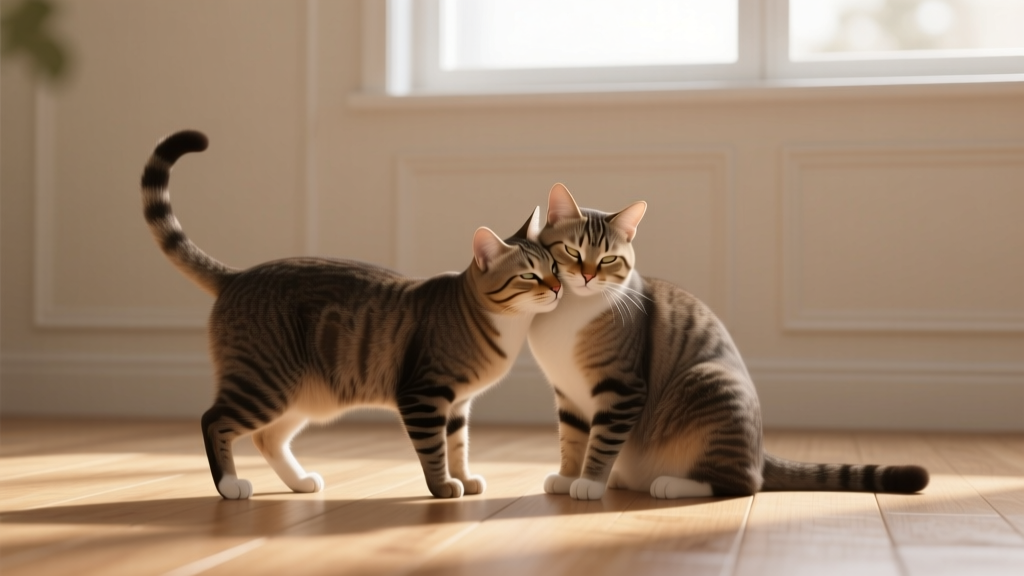
- Head bumps and cheek rubs: Social scent marking. Your cat is saying, “You’re part of my group.”
- The post-nap patrol: A slow walk around key areas—food station, litter box, windows, favorite rooms.
When Stretching Is Normal vs. When It Might Signal a Problem
Stretching is overwhelmingly normal. It becomes worth a closer look when the stretch looks less like a warm-up and more like an attempt to manage pain or discomfort.
Normal stretching tends to be:
- Symmetrical (both sides look equally strong)
- Fluid and easy
- Followed by normal walking, jumping, grooming, or play
Potential concern signs (call your vet if you notice these):
- Stiffness that lingers: Your cat stays hunched, walks gingerly, or seems “stuck” after the stretch.
- Limping or favoring a limb: Especially if it happens repeatedly after rest.
- Reluctance to jump: A big clue for arthritis or pain, particularly in older cats.
- Crying, growling, or flinching during stretching: Stretching should not look painful.
- Frequent “stretching” with a low belly posture: Sometimes cats with gastrointestinal discomfort or abdominal pain assume positions that look like stretching.
- Sudden change in routine: A cat who used to stretch openly but now avoids it, hides more, or seems tense may be uncomfortable or stressed.
When in doubt, a short video of the behavior (and your cat’s walk afterward) can be extremely helpful to a veterinarian.
How to Respond (and Encourage a Healthy Routine)
If you want to strengthen your bond and support your cat’s wellbeing, the wake-up stretch is a perfect moment—because it’s when your cat is naturally transitioning and checking in with their environment.
- Give them a beat: Many cats dislike being touched mid-stretch. Let the sequence finish before going in for pets.
- Offer a gentle greeting: Soft voice, slow blink, and calm body language. If they approach, invite contact rather than reaching over their head.
- Reward the “social stretch”: If your cat stretches and then comes to you, respond with something they like—cheek scratches, a short play session, or a small treat. This builds positive association with calm approach behaviors.
- Support joints and muscles: Provide soft, warm sleeping spots and easy access to favorite perches (pet steps can help older cats maintain confidence).
- Add a post-nap play ritual: If stretching often turns into zoomies, redirect that energy into a 5–10 minute interactive play session. You’ll see fewer “ambush the ankles” moments later.
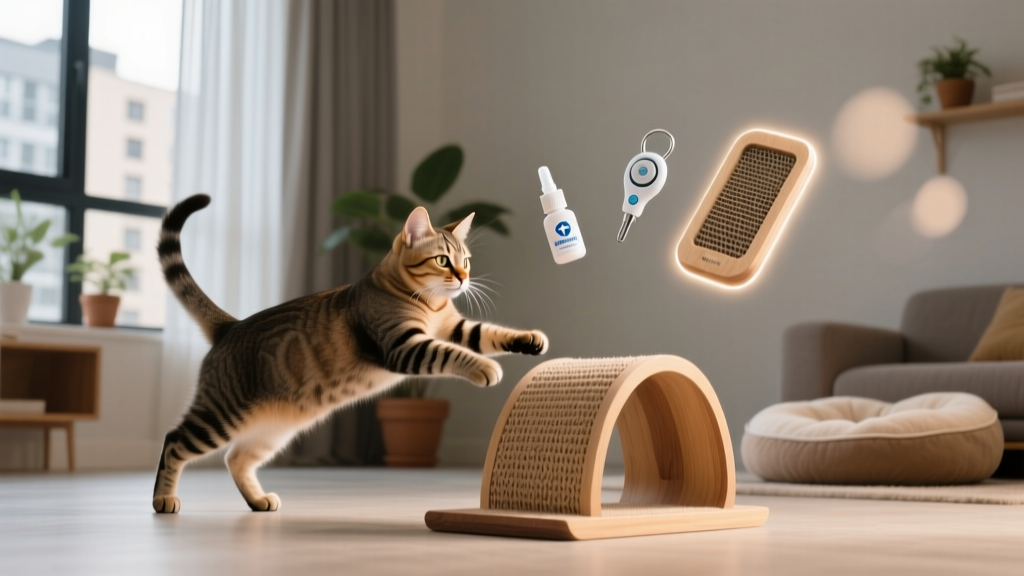
- Keep nail care in mind: Stretching often extends claws. Regular nail trims and appropriate scratchers help your cat do this naturally without snagging or breaking nails.
Fun Facts and Research-Inspired Tidbits
- Cats are crepuscular: They’re most naturally active at dawn and dusk. That means stretching sequences may be more dramatic in early morning and evening—even if your schedule disagrees.
- Stretching can be contagious (sometimes): In social species, synchronized behaviors can strengthen group cohesion. Cats aren’t pack animals, but many do respond to household rhythms—your movements can cue theirs.
- That “long cat” look is real engineering: A flexible spine and powerful shoulder structure help cats explode into action. The stretch is partly a rehearsal of that design.
- Some cats stretch to communicate peaceful intent: In multi-cat homes, a relaxed stretch in view of another cat can function like a nonverbal “I’m calm” message—especially if followed by grooming or a slow walk away.
FAQ: Cat Stretching Sequence
Why does my cat stretch when they see me?
Often it’s a mix of waking up and social signaling. Your presence can be a cue that something is about to happen—attention, food, play—so the stretch becomes part warm-up, part greeting. If your cat follows it with a tail-up approach or head bump, it’s a friendly interaction opener.
Is it okay to pet my cat while they’re stretching?
Some cats enjoy it, many don’t. A safe rule: wait until the stretch finishes, then offer a hand near their cheek level. If they lean in, great. If they pull away or twitch their skin, give them space.
My cat stretches a lot—does that mean they’re in pain?
Not necessarily. Frequent stretching can be normal, especially in cats who nap often. Watch for red flags: limping, reluctance to jump, vocalizing, stiffness that doesn’t fade, or behavior changes. If you see those, get a veterinary opinion.
Why does my cat stretch and then immediately sprint around the house?
That’s the classic “systems online” moment. Stretching preps the muscles and nervous system, then the energy comes out fast. A short interactive play session before the sprint can help channel that into healthy exercise.
Do older cats stretch differently?
They can. Older cats may stretch more slowly, more frequently, or with shorter range of motion. If your senior cat seems stiffer than usual, hesitates before jumping, or changes their routines, ask your vet about arthritis screening and comfort strategies.
What’s the difference between a stretch and a scared arch?
A stretch is fluid, relaxed, and often followed by normal movement or grooming. A fear arch comes with tension: puffed fur, sideways stance, stiff legs, wide eyes, and often a defensive or retreating behavior.
The next time your cat wakes up and performs their full-body routine, watch the details: the speed, the tail, what happens afterward. You’ll start to recognize patterns—your cat’s “I’m relaxed,” “I’m ready,” “I’m hungry,” or “I’m not sure about that noise” versions of the same basic stretch.
Noticing these small signals is one of the easiest ways to build a smoother cat-human relationship: you respond to the cat in front of you, not the cat you assume you have.
Seen a particularly theatrical “long cat” stretch in your home—complete with yawn, toe spread, and post-nap swagger? Share your cat’s wake-up routine stories (and the funny little variations) with the Cat Lovers Base community at catloversbase.com.