How to Understand Cat Behavior Best
Why Understanding Your Cat’s Behavior Isn’t Just Cute — It’s Critical for Their Well-Being
If you’ve ever wondered how to understand cat behavior best, you’re not alone — and you’re asking one of the most consequential questions in responsible cat guardianship. Unlike dogs, cats communicate primarily through nuanced body language, micro-expressions, and environmental cues — not vocalizations. Misreading these signals doesn’t just lead to confusion; it can delay recognition of pain, anxiety, or illness. In fact, a 2023 study published in Frontiers in Veterinary Science found that 68% of cats brought to vets for behavioral issues (like inappropriate urination or aggression) had underlying medical conditions that were missed for months because owners misinterpreted stress behaviors as ‘stubbornness’ or ‘spite.’ The truth? Cats aren’t mysterious — they’re meticulously expressive. And learning their language isn’t about intuition; it’s about pattern recognition, context awareness, and evidence-based observation.
The 3-Layer Decoding Framework: Posture, Expression & Context
Most cat owners focus only on one cue — like tail position — and draw sweeping conclusions. But feline communication operates across three interdependent layers: posture (whole-body orientation), expression (face, ears, eyes, whiskers), and context (environment, recent events, history). Ignoring any layer leads to dangerous misinterpretation.
Take the classic ‘tail up with quiver’: often hailed as ‘happy greeting.’ True — if the tail is relaxed, the body is loose, the ears are forward, and the cat approaches you voluntarily. But if that same tail is held high while the cat’s back is arched, pupils are dilated, and she’s backing away from another pet? That’s not joy — it’s defensive confidence masking fear. Dr. Sarah Wooten, DVM and certified feline behavior specialist, emphasizes: ‘Cats don’t have universal “happy” or “angry” poses. They have functional postures — each serving a purpose in a specific moment. Your job isn’t to memorize a dictionary — it’s to become a contextual detective.’
Here’s how to apply the framework:
- Posture first: Scan from nose to tail — is weight distributed evenly? Is muscle tension visible in shoulders or hindquarters?
- Expression second: Zoom in on eyes (dilated = arousal, not always fear), ears (rotated backward = discomfort, flattened = terror), and whisker placement (forward = engaged, swept back = stressed).
- Context third: Ask: What happened 5 minutes ago? Is there a new person, noise, or scent? Has this behavior changed recently? Is it consistent across settings?
The Truth About Purring, Kneading & ‘Love Bites’
Purring is perhaps the most misunderstood feline signal. While it can indicate contentment, research from the University of Sussex confirms cats also purr at frequencies between 25–150 Hz — vibrations proven to promote bone density and tissue repair. Translation? Your cat may be purring while injured, anxious, or giving birth. One rescue case study tracked ‘Mochi,’ a senior cat recovering from dental surgery: he purred constantly during recovery — but his tense jaw, half-closed eyes, and refusal to eat signaled pain, not peace. His caregivers adjusted his pain management only after cross-referencing purring with other stress indicators.
Likewise, kneading — often called ‘making biscuits’ — is rooted in kittenhood nursing behavior and typically signals comfort. But when paired with intense staring, low growling, or sudden biting (‘love bites’), it’s a sign of overstimulation. Neurologist Dr. Tony Buffington explains: ‘Cats have a sensory threshold. Petting feels great — until it doesn’t. That bite isn’t aggression; it’s a hard stop signal. Most owners miss the earlier warnings: tail flicking, skin twitching, ear rotation, or stillness.’
Actionable tip: Try the ‘3-Second Rule.’ Pet for 3 seconds, pause, observe. If your cat leans in or blinks slowly, continue. If she freezes, flicks her tail, or turns her head away — stop immediately. Repeat. This builds trust and teaches her you respect her boundaries.
Decoding the ‘Silent’ Signals: What Your Cat Doesn’t Say Out Loud
Cats vocalize far less than dogs — yet many owners fixate on meows, ignoring richer nonverbal data. A 2022 Cornell Feline Health Center analysis found that cats use over 16 distinct ear positions, 12 tail configurations, and 9 eye-state combinations — each carrying precise meaning. Below is a breakdown of five underused but highly reliable signals:
- Slow blink sequence: Not just ‘cat kisses’ — it’s a deliberate, voluntary release of tension. When your cat holds eye contact and slowly closes both eyes for 1–2 seconds, then reopens them, she’s signaling safety. Return it — it’s the fastest trust-builder known to veterinary behaviorists.
- Chin rubs on vertical surfaces (not just you): This deposits facial pheromones (F3), marking territory as safe and familiar. If your cat rubs the doorframe before entering a room, she’s calming herself — not claiming ownership.
- Half-tucked paws while sitting: Often mistaken for ‘relaxed,’ this posture indicates mild vigilance. Full tuck (‘loaf’) = secure; front paws tucked, hind legs extended = ready to spring.
- Head pressing against walls or furniture: Rarely affectionate — frequently linked to neurological distress or hypertension. Always warrants immediate vet evaluation.
- Excessive licking of one spot (especially flank or belly): Beyond grooming, this can indicate pain, allergies, or compulsive behavior triggered by chronic stress — not boredom.
Your Cat’s Body Language Cheat Sheet: A Vet-Validated Reference Table
| Signal | Typical Meaning | Key Context Clues to Confirm | What to Do Next |
|---|---|---|---|
| Tail held straight up, tip slightly curved | Confident greeting / social invitation | Ears forward, relaxed body, slow approach; no hissing or flattened ears | Return with gentle chin scratch or slow blink — avoid full-body petting unless invited |
| Tail rapidly flicking at base | Building frustration or overstimulation | Fixed stare, stiff posture, ears rotating backward, skin twitching | Stop all interaction immediately; offer a treat at distance to reset |
| Eyes fully closed + exposed belly | Deep trust (not invitation to rub) | No tensing, no growling, breathing steady; occurs in quiet, safe space | Observe quietly — do NOT touch belly. Reward with calm proximity or soft voice |
| Low, rumbling growl + sideways stance | Defensive threat (fear-based) | Flattened ears, dilated pupils, tail puffed, weight on hind legs | Create escape route; remove trigger; never punish — this is panic, not defiance |
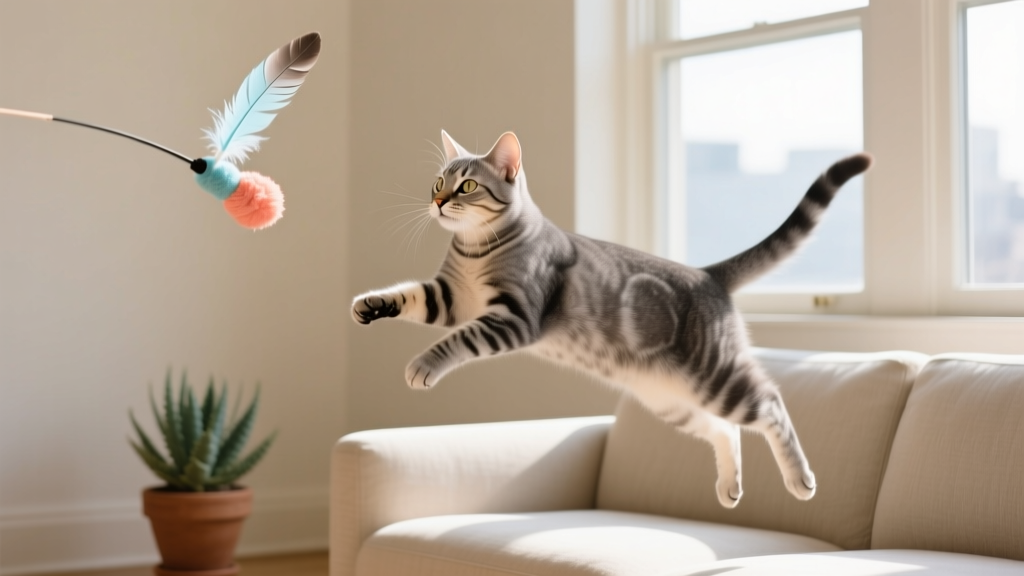
| Chattering at windows | Frustrated predatory drive | Focus locked on birds/squirrels; rapid jaw movement; tail vibrating | Redirect with interactive wand toy for 5+ minutes — satisfies hunt sequence |
Frequently Asked Questions
Do cats really ignore us, or are they just being selective?
Neither — it’s evolutionary strategy. Domestic cats retain strong prey-avoidance instincts. Ignoring a loud, fast-moving human isn’t rudeness; it’s risk assessment. Research from the University of Lincoln shows cats respond more reliably to owners who use calm tones, predictable routines, and respect withdrawal cues. They’re not ignoring you — they’re choosing when engagement feels safe.
Why does my cat stare at me without blinking?
Sustained, unblinking eye contact from a cat is a low-level threat signal — especially if combined with stiff posture or forward ears. It’s rare in bonded pairs. More commonly, what feels like ‘staring’ is actually relaxed observation. If your cat looks at you and then slowly blinks, that’s the real ‘I trust you’ signal. Try returning it — many cats will blink back within days.
Is it true that cats don’t form attachments like dogs do?
No — this is a persistent myth debunked by attachment science. A landmark 2019 study in Current Biology used the ‘secure base test’ (same method used for human infants and dogs) and found 64.3% of cats display secure attachment to their owners — seeking comfort and using them as a safe base. The rest show insecure-ambivalent or avoidant patterns, often tied to early life experiences or inconsistent caregiving — not species limitation.
My cat suddenly started peeing outside the litter box. Is it behavioral or medical?
Always rule out medical causes first — UTIs, kidney disease, arthritis, and hyperthyroidism commonly present as litter box avoidance. A 2021 Journal of Feline Medicine & Surgery review found 83% of ‘behavioral’ house-soiling cases had an undiagnosed medical component. Once cleared, assess stressors: litter type change, location shift, multi-cat tension, or household disruption. Never assume it’s ‘revenge’ — cats lack the cognitive capacity for spite.
How long does it take to truly understand my cat’s unique language?
With daily, mindful observation, most owners gain reliable baseline fluency in 4–8 weeks. But mastery is lifelong — cats evolve, age, and adapt. Keep a simple journal: note date/time, behavior observed, your action, and outcome. Patterns emerge fast. As certified cat behavior consultant Mikel Delgado notes: ‘Your cat isn’t hiding secrets. She’s speaking clearly — you just need to learn her dialect, not expect her to speak yours.’
2 Common Myths Debunked
- Myth #1: “Cats are aloof because they’re independent by nature.” — False. Independence is situational survival strategy, not emotional disposition. Feral kittens raised with humans before 7 weeks develop attachment bonds identical to dogs. Domestic cats choose closeness — but on their terms, with clear boundaries.
- Myth #2: “If my cat sleeps on me, she sees me as her mother.” — Oversimplified. While warmth and scent play roles, sleeping on you primarily signals perceived safety and resource value (you’re warm, still, and non-threatening). Mother-kitten bonding involves nursing, grooming, and vocalization — none required for co-sleeping.
Related Topics (Internal Link Suggestions)
- How to Introduce a New Cat to Your Household — suggested anchor text: "stress-free multi-cat introduction guide"
- Cat Stress Signs You’re Missing — suggested anchor text: "hidden cat stress symptoms"
- Best Interactive Toys for Indoor Cats — suggested anchor text: "vet-recommended enrichment toys"
- When to See a Feline Behaviorist — suggested anchor text: "signs you need a cat behavior specialist"
- Understanding Cat Body Language Charts — suggested anchor text: "downloadable cat communication chart"
Conclusion & Your Next Step Toward Deeper Connection
Learning how to understand cat behavior best isn’t about achieving perfection — it’s about cultivating presence, humility, and curiosity. Every flick of an ear, every shift in gaze, every pause before a leap is data. When you stop asking ‘What does this mean?’ and start asking ‘What is my cat trying to tell me right now?’ — that’s when real understanding begins. Your next step? Pick one signal from today’s table — maybe the slow blink — and practice observing it for just 5 minutes daily this week. Note what precedes it, what follows it, and how your response changes the interaction. Small, consistent attention rewires both your perception and your cat’s trust. And if uncertainty lingers? Consult a board-certified veterinary behaviorist (find one via dacvb.org) — not as a last resort, but as a proactive investment in your shared well-being.