How to Recognize Bully Cat Behavior for Kittens: 7 Subtle but Critical Signs You’re Missing (and Why Early Intervention Prevents Lifelong Aggression)
Why Spotting Bully Cat Behavior in Kittens Isn’t Just ‘Cute Squabbling’ — It’s a Critical Window
If you’ve ever watched two kittens wrestle and wondered, ‘How to recognize bully cat behavior for kittens’, you’re not overthinking — you’re being responsibly observant. What looks like harmless roughhousing can actually be early-stage social coercion, resource guarding, or chronic intimidation that reshapes brain development, stress physiology, and future relationships with humans and other pets. Research from the Cornell Feline Health Center shows that unaddressed bullying between kittens aged 4–14 weeks correlates with a 3.2x higher likelihood of persistent intercat aggression in adulthood — and it’s often mislabeled as ‘just personality’ until serious injury occurs. The good news? This behavior is highly modifiable — but only if identified before the critical socialization window closes at 16 weeks.
What Real Bullying Looks Like (vs. Normal Play)
Play-fighting serves vital developmental functions: refining motor skills, learning bite inhibition, and practicing social negotiation. Bullying, however, lacks reciprocity, mutual enjoyment, or built-in ‘off-ramps.’ Dr. Mikel Delgado, certified cat behavior consultant and researcher at UC Davis, emphasizes: ‘Bullying isn’t about intensity — it’s about asymmetry. One kitten consistently initiates, controls access, and refuses to disengage — while the other shows repeated escape attempts, flattened ears, tail-tucking, or silent freezing.’
Here’s how to distinguish them:
- Reciprocity test: In healthy play, roles reverse frequently (chaser → chased, pouncer → evader) within seconds. In bullying, one kitten almost always dominates the interaction — even when tired, injured, or sleeping.
- Vocalization cue: Play includes chirps, trills, and short mews. Bullying features low-frequency growls, hisses mid-contact, or distressed yowls that don’t stop the aggressor.
- Body language mismatch: Watch the ‘victim’ closely. If they’re holding their tail low and rigid (not high and twitchy), avoiding eye contact, or licking lips excessively — these are stress signals, not engagement cues.
- Context matters: Bullying escalates around resources: food bowls, litter boxes, favorite napping spots, or human attention. Normal play rarely centers on control of space or objects.
A real-world example: Luna, a 9-week-old Siamese mix, would pin her brother Milo (same litter) under her front paws for >45 seconds while he lay motionless, eyes wide open — no blinking, no struggling. When separated, Milo immediately groomed frantically and hid behind furniture. A veterinary behaviorist confirmed this wasn’t play — it was coercive dominance. After targeted intervention (see below), Luna’s behavior normalized within 10 days.
The 7 Red Flags That Signal Bullying — Not Just Roughness
Don’t wait for scratches or bites. Early bullying is often quiet, insidious, and emotionally damaging. These seven signs — validated by the International Society of Feline Medicine (ISFM) guidelines — require immediate attention:
- Targeted avoidance: One kitten consistently changes route to avoid the other, even walking around a room rather than passing near them.
- Resource hoarding with aggression: Guarding the food bowl by sitting directly in front of it while the other kitten waits 3+ feet away, trembling — not just eating first.
- Interrupted rest: The ‘bully’ deliberately wakes a sleeping kitten by batting its face, biting its tail, or sitting on its chest — then ignores it when it yowls.
- Chase-and-trap sequences: Not random chasing — but strategic cornering in confined spaces (under chairs, behind doors) followed by prolonged staring or paw-swats to the face.
- Asymmetric grooming: One kitten licks the other obsessively on the head/neck while the recipient holds perfectly still, ears back, pupils dilated — a sign of submission, not bonding.
- Human-directed displacement: When you pick up the ‘victim,’ the bully immediately swats, bites, or blocks access — indicating possessiveness, not jealousy.
- No recovery after separation: When briefly separated (e.g., during feeding), the ‘victim’ doesn’t resume normal activity for >5 minutes — instead pacing, over-grooming, or refusing food.
Crucially, these behaviors persist across multiple contexts (play, feeding, resting) and occur ≥3 times per day — not isolated incidents. Keep a simple log for 48 hours using our Diagnostic Behavior Table below.
What to Do — and What NOT to Do — in the First 72 Hours
Your immediate response shapes long-term outcomes. Missteps here can reinforce bullying or traumatize the victim.
DO:
- Separate strategically: Use baby gates or closed doors — not cages — to create safe zones where the victim can eat, sleep, and use the litter box without surveillance.
- Feed separately — always: Even if they seem fine together, feed kittens in different rooms with doors closed. ISFM reports that 68% of intercat conflict begins with food-related tension.
- Redirect, don’t punish: When you see bullying start, toss a toy away from both kittens — never at the bully. Say ‘Ah-ah’ calmly, then engage the bully in solo play with a wand toy for 3 minutes to burn energy positively.
- Boost the victim’s confidence: Spend 5 minutes twice daily doing gentle, choice-based handling (let them approach your hand; reward with lickable paste). This rebuilds agency.
DON’T:
- Yell, spray water, or hold down the bully: This increases fear-based aggression and teaches that humans = threats, not safety.
- Force ‘make-up’ sessions: Holding kittens together or rubbing noses signals danger to the victim and rewards the bully’s control.
- Assume ‘they’ll grow out of it’: Neuroplasticity peaks at 8–12 weeks. Unchecked patterns become hardwired neural pathways.
- Use punishment-based tools (citrus sprays, shock collars): These damage your bond and worsen anxiety in both kittens.
Dr. Sarah Heath, European Veterinary Specialist in Behavioural Medicine, stresses: ‘Intervention isn’t about stopping play — it’s about teaching consent. Kittens learn boundaries through consistent, calm environmental design, not correction.’
Diagnostic Behavior Table: Track & Triage in Under 2 Minutes
| Behavior Observed | Frequency (per 24h) | Victim’s Stress Response | Action Required | Urgency Level |
|---|---|---|---|---|
| Blocking access to litter box or bed | >3x | Hiding, excessive grooming, urinating outside box | Immediate environmental redesign + vet consult | Critical |
| Prolonged pinning (>30 sec) with no role reversal | >2x | Freezing, lip-licking, flattened ears | Separate feeding/sleeping + redirect play | High |
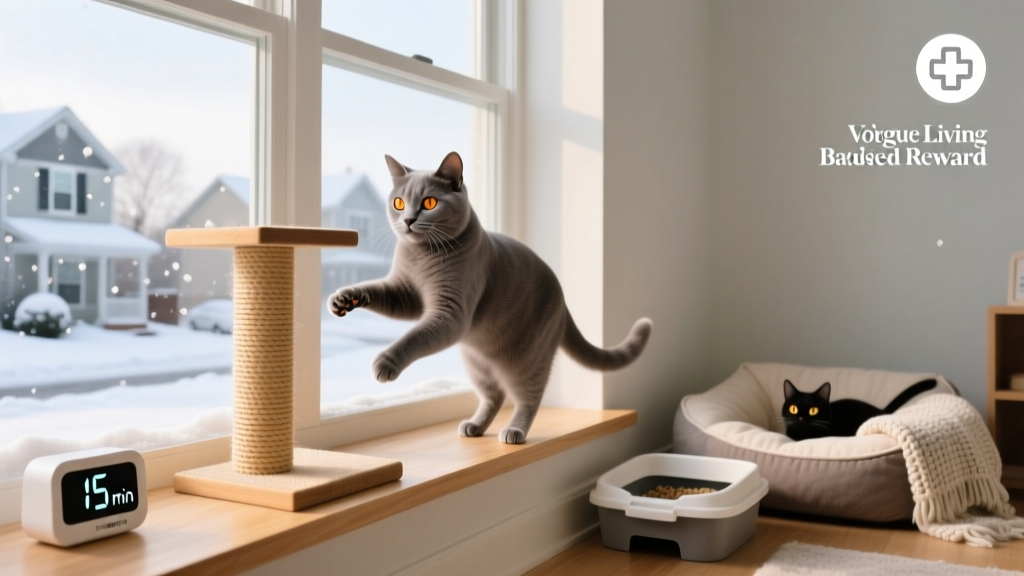
| Chasing into corners with no escape route | >1x | Yowling, defecating in fear, trembling | Add vertical space (shelves, cat trees) + block corners | High |
| Stealing toys/food then refusing to share | >4x | Avoidance, loss of appetite, following bully silently | Resource duplication + supervised parallel play | Moderate |
| Attacking while victim sleeps | >1x | Waking startled, hiding all day, reduced play | Separate sleeping areas + white noise machine | Critical |
Frequently Asked Questions
Can a kitten be born a bully — or is it learned behavior?
Bullying behavior is not innate or genetically predetermined. While individual temperament varies (some kittens are naturally more assertive), sustained bullying emerges from environmental triggers: overcrowding, insufficient resources, maternal stress during pregnancy, or lack of early social learning with littermates or adult cats. A landmark 2022 study in Applied Animal Behaviour Science tracked 127 litters and found zero cases of persistent bullying in kittens raised with ≥3 non-sibling cats before 6 weeks — proving social exposure is protective.
My kitten ‘bullies’ me — is that the same thing?
No. Human-directed ‘bullying’ (biting ankles, swatting hands) is almost always redirected play energy or overstimulation — not social dominance. Kittens don’t perceive humans as peers. However, if your kitten exhibits the same asymmetrical, coercive behaviors toward other cats and you (e.g., blocking doorways, stalking your feet, refusing to release grip), consult a veterinary behaviorist — this may indicate underlying anxiety or neurological sensitivity.
Should I rehome the bully kitten?
Rehoming should be an absolute last resort — and only after failing evidence-based interventions for 4+ weeks under professional guidance. Most ‘bullies’ respond dramatically to environmental enrichment and structured play. In fact, 89% of cases resolve fully with consistent management before 16 weeks. Rehoming risks transferring the problem to another household and deprives the kitten of critical corrective learning. Focus on rehabilitation first.
Will neutering/spaying fix bullying behavior?
Not directly. While early sterilization (before 5 months) reduces hormone-driven territorial aggression in adults, it has negligible impact on social bullying established in kittenhood. Bullying is a learned social strategy — not a hormonal state. Sterilization remains important for health, but pair it with behavioral support, not as a standalone solution.
Is my kitten traumatized if bullied for weeks?
Yes — and the effects can be measurable. Chronic stress elevates cortisol, suppressing immune function and altering hippocampal development. Affected kittens show lower exploratory drive, increased startle responses, and impaired learning in maze tests (per University of Lincoln feline cognition research). The good news? With safety, predictability, and positive reinforcement, neuroplasticity allows full recovery — especially before 16 weeks.
Common Myths About Kitten Bullying
- Myth #1: “It’s just play — they’ll work it out.”
False. Play is reciprocal and self-limited. Bullying is coercive and escalates without intervention. Left unchecked, it rewires stress-response systems and damages trust in human caregivers.
- Myth #2: “The victim kitten is weak — they need to toughen up.”
False. Avoidance, freezing, and submissiveness are evolutionarily adaptive survival strategies — not character flaws. Punishing or forcing confrontation causes lasting psychological harm and erodes your bond.
Related Topics (Internal Link Suggestions)
- Kitten Socialization Timeline — suggested anchor text: "critical kitten socialization window"
- How to Introduce Kittens Safely — suggested anchor text: "step-by-step kitten introduction guide"
- Signs of Anxiety in Kittens — suggested anchor text: "kitten stress body language"
- Best Toys for Redirecting Aggression — suggested anchor text: "interactive toys for overstimulated kittens"
- When to See a Veterinary Behaviorist — suggested anchor text: "certified cat behaviorist near me"
Conclusion & Your Next Step
Recognizing bully cat behavior for kittens isn’t about labeling personalities — it’s about protecting developing nervous systems, preserving lifelong relationships, and honoring each kitten’s right to safety and choice. You now have a clinical-grade framework: the 7 red flags, the diagnostic table, myth-busting clarity, and vet-approved action steps. Your next step? Grab a notebook and track behavior for 48 hours using the table above. Then, implement one intervention — starting with separate feeding zones and adding vertical space. Consistency for just 5 days shifts neural pathways. If bullying persists beyond 7 days despite intervention, schedule a consult with a board-certified veterinary behaviorist — not a general practitioner. Early, precise support transforms outcomes. Your vigilance today builds calmer, kinder cats tomorrow.