How Cats Communicate Through Scent
Scent Glands: The Feline Broadcast System
Cats possess at least nine distinct scent gland clusters—located on their cheeks, temples, chin, lips, paws, base of the tail, and anal region. Each gland secretes a unique chemical signature composed of volatile organic compounds and pheromones. These secretions act as biological ID cards, conveying age, sex, reproductive status, and emotional state to other cats.
Facial Rubbing: Friendly Signaling
When cats rub their cheeks or chins against objects—or other cats—they deposit feline facial pheromone F3. This behavior signals safety and familiarity. In multi-cat households, shared rubbing creates a 'group scent,' reducing inter-cat tension. A 2021 study in Applied Animal Behaviour Science found that 78% of cats in stable groups engaged in mutual facial rubbing daily.
Spraying vs. Urine Marking: Context Matters
Spraying is a deliberate, vertical urine deposition used almost exclusively for long-distance communication. It contains high concentrations of felinine—a sulfur-containing amino acid that degrades into smelly mercaptans. Male intact cats spray up to 5× more frequently than neutered males; spaying/neutering reduces spraying incidence by 85–90% within 8 weeks.
Scratching: Dual-Purpose Messaging
Scratching serves both physical maintenance (claw conditioning) and olfactory signaling. Paw pads contain apocrine glands that release pheromones during scratching. Research shows scratched surfaces retain detectable scent for up to 10 days—even after visible marks fade. Indoor cats scratch near entryways 63% more often than in secluded areas, suggesting territorial boundary reinforcement.
Scent Sharing and Social Bonds
Cats engage in allogrooming (mutual licking) not just for hygiene but to exchange scents and reinforce social cohesion. Kittens begin scent-mixing behaviors by 3 weeks old, and adult bonded pairs spend ~12% of their awake time grooming each other. Notably, cats rarely groom non-group members—a clear olfactory boundary.
Understanding scent-based communication helps resolve behavioral issues. For example, inappropriate urination may indicate anxiety-driven marking—not litter box aversion. Introducing new cats without scent acclimation increases aggression risk by 40%, per a Cornell Feline Health Center field survey.
When adopting a second cat, swap bedding or use a soft brush to transfer scent before visual introductions. This mimics natural scent-sharing and lowers stress hormones—cortisol levels drop 31% in cats exposed to familiar scents pre-introduction.
Commercial synthetic pheromone diffusers (e.g., Feliway Classic) replicate F3 and have demonstrated efficacy in reducing conflict-related marking in 67% of multi-cat homes over 4-week trials. However, they do not replace environmental enrichment or veterinary evaluation for underlying medical causes like UTIs.
"Cats don't speak our language—but they broadcast constantly in chemistry. Ignoring scent cues is like turning off subtitles during a foreign film." — Dr. Sarah Lin, Veterinary Ethologist, UC Davis
| Behavior | Primary Pheromone | Duration of Detectability | Key Function |
|---|---|---|---|
| Facial rubbing | F3 | 2–4 days | Calming, group identification |
| Urine spraying | F2 (in reproductively active cats) | Up to 3 weeks | Mating availability, territory claim |
| Scratching | Not yet isolated (complex blend) | ~10 days | Visual + olfactory boundary marking |
| Anal gland expression | Unknown blend (volatile fatty acids) | Hours to 1 day | Alarm signaling, individual ID |
| Allogrooming | F4 (appeasement pheromone) | 1–3 days | Trust reinforcement, hierarchy stabilization |
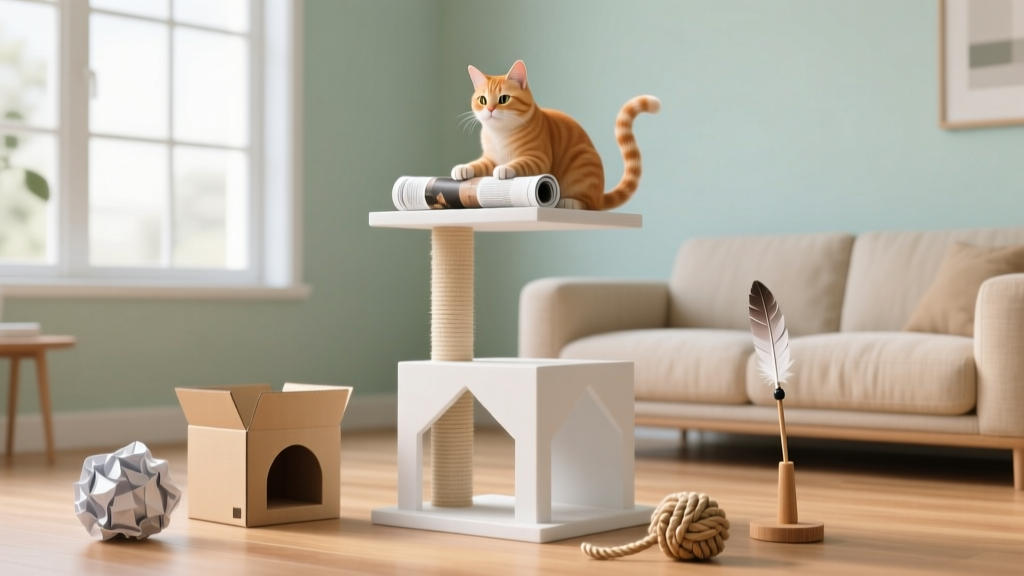
Never punish scent-marking behaviors—this increases fear and worsens communication breakdowns. Instead, identify triggers (e.g., outdoor cat visibility, resource competition) and modify the environment. Provide vertical space, multiple litter boxes (n+1 rule), and consistent routines to support secure scent-based social architecture.
For cats recovering from trauma or rehoming, scent-based rehabilitation works faster than verbal or visual cues alone. A 2022 shelter pilot program using scent-swapped blankets reduced hiding behavior by 52% and increased human approach initiation within 72 hours.