Why Cats Change Behavior Vet Recommended
When Your Cat Stops Acting Like Themselves—It’s Never Just ‘Personality’
If you’ve ever asked yourself why cats change behavior vet recommended, you’re not overreacting—you’re noticing something vital. Cats are masters of camouflage; they instinctively suppress signs of pain, stress, or illness until symptoms become severe or behaviorally disruptive. A once-affectionate cat hiding for days, a previously tidy cat urinating outside the litter box, or a calm cat suddenly hissing at family members isn’t ‘being difficult’—it’s communicating distress in the only language it has. And according to Dr. Sarah Lin, DACVB (Diplomate of the American College of Veterinary Behaviorists), ‘Over 80% of sudden behavior changes in adult cats have an underlying medical component—and nearly all others stem from unaddressed environmental stressors that mimic disease.’ Ignoring these shifts doesn’t buy time—it risks chronic suffering, irreversible habit formation, or delayed diagnosis of conditions like hyperthyroidism, dental disease, or early-stage kidney failure.
What’s Really Behind the Shift? 4 Core Categories Vets Investigate First
Veterinarians don’t start with assumptions—they follow a structured differential diagnosis framework. When you bring your cat in for behavior concerns, the vet’s first step is always to rule out or identify contributors across four interlocking domains: physical health, sensory decline, environmental stress, and neurocognitive aging. Understanding this framework helps you gather actionable observations *before* the appointment—making your visit more efficient and accurate.
1. Medical Causes: The Silent Drivers Most Owners Miss
Contrary to popular belief, behavior changes are often the *first* and *only* outward sign of serious illness. A 2023 study published in the Journal of Feline Medicine and Surgery found that 63% of cats presenting with new-onset aggression had undiagnosed painful conditions—including arthritis (most common in older cats), dental resorptive lesions (affecting ~75% of cats over age 5), and urinary tract inflammation. Even subtle issues like chronic ear infections or mild gastrointestinal discomfort can manifest as irritability, avoidance, or territorial marking.
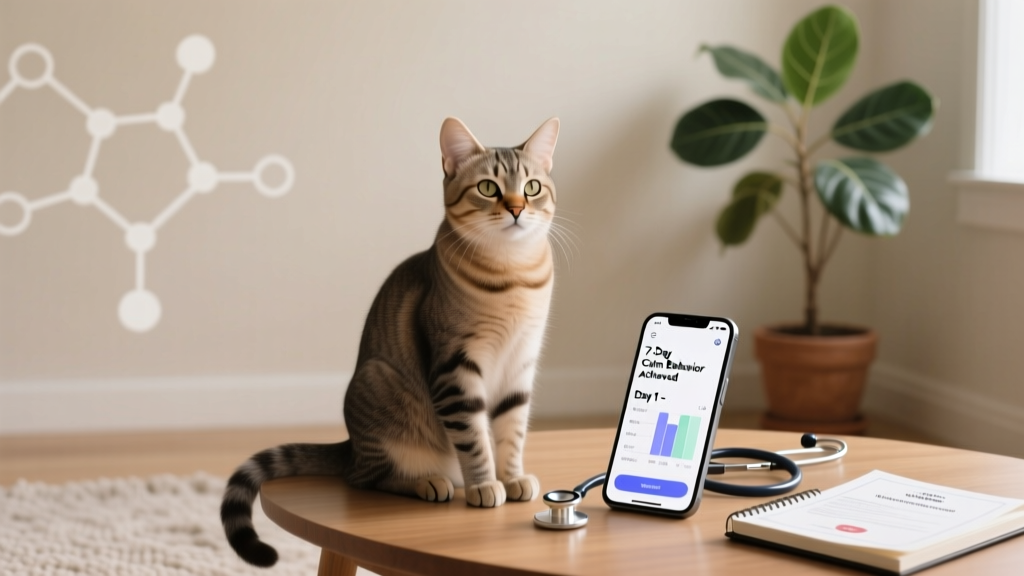
Actionable Step: Keep a 7-day ‘Behavior + Body Log.’ Note not just *what* changed (e.g., ‘stopped jumping onto bed’), but *when*, *how long it lasted*, and any physical clues: limping while descending stairs, excessive licking of one flank, reluctance to be touched near the tail base, or increased vocalization at night. These details help your vet prioritize diagnostic tests.
2. Sensory Decline: When the World Gets Confusing
Cats rely heavily on acute hearing, vision, and smell to navigate safety and predictability. Age-related vision loss (e.g., nuclear sclerosis), high-frequency hearing loss (common after age 10), or diminished olfactory sensitivity alter how they interpret their environment—leading to confusion, anxiety, and defensive reactions. A cat may hiss at a familiar person approaching from behind because it didn’t hear them coming—or avoid its favorite sunny windowsill because glare now causes discomfort.
Dr. Lin emphasizes: ‘We often mislabel “grumpiness” as personality when it’s actually sensory overload. A cat that used to greet you at the door but now hides when you enter may not be angry—it may simply not recognize your footsteps or scent profile anymore.’
Actionable Step: Conduct a ‘Sensory Safety Audit’ of your home: reduce background noise (turn off TVs/radios when possible), add non-slip mats near food/water stations, use nightlights in hallways, and place litter boxes on ground-level floors with low-entry sides. These low-cost adjustments significantly reduce stress-driven behaviors.
3. Environmental Stressors: The Invisible Triggers
Unlike dogs, cats don’t adapt well to change—even minor ones. A new air freshener, rearranged furniture, construction noise next door, or even a different brand of laundry detergent on your clothes can elevate cortisol levels enough to trigger urine marking, overgrooming, or social withdrawal. A landmark 2022 Cornell Feline Health Center survey revealed that 41% of cats exhibiting litter box avoidance had no medical cause—their issue resolved within 2 weeks of restoring environmental predictability and adding vertical space (cat trees, shelves).
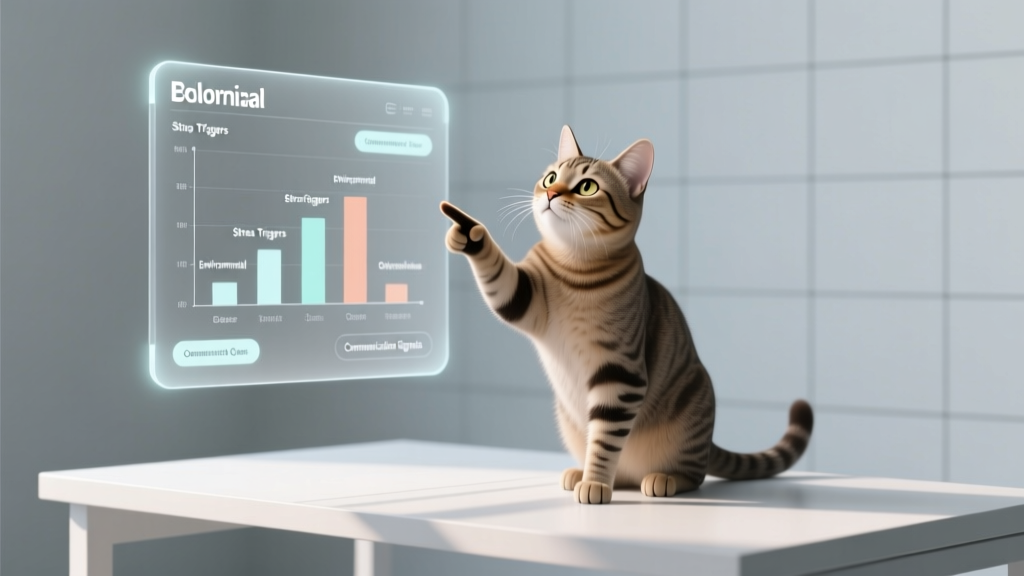
Actionable Step: Use the ‘Feline Stress Scorecard’ developed by the International Society of Feline Medicine (ISFM). Rate your cat daily on 10 observable indicators (e.g., ear position, pupil dilation, tail flicking, hiding frequency) on a 1–5 scale. Consistent scores ≥3 for >3 days signal clinically relevant stress—and warrant a vet consult, even without obvious ‘bad behavior.’
4. Cognitive Dysfunction & Aging: More Than Just ‘Getting Old’
Feline Cognitive Dysfunction Syndrome (CDS) affects up to 55% of cats aged 11–15 and 80% of those over 16. Symptoms include disorientation (staring blankly at walls, getting stuck in corners), altered sleep-wake cycles (yowling at 3 a.m.), decreased interaction, and house-soiling—not due to litter aversion, but impaired memory and spatial awareness. Crucially, CDS is *treatable*: prescription diets rich in antioxidants and mitochondrial support (e.g., Hill’s b/d, Royal Canin Neurocare), environmental enrichment, and in some cases, FDA-approved medications like selegiline can slow progression and improve quality of life.
Actionable Step: If your senior cat shows two or more CDS signs, request a ‘Senior Wellness Panel’ from your vet—including blood pressure, thyroid panel, kidney function, and cognitive screening. Early intervention doubles the window for meaningful improvement.
Vet-Recommended Diagnostic Timeline: What Happens at Each Stage
Understanding your vet’s process demystifies the journey—and helps you advocate effectively. Below is the evidence-based workflow most board-certified veterinary behaviorists and internal medicine specialists follow when evaluating behavior change. This table reflects real-world clinical practice, not theoretical ideals.
| Stage | Timeline | Key Actions | Owner’s Critical Role | Expected Outcome |
|---|---|---|---|---|
| Pre-Visit | Days 1–7 | Complete Behavior Log + Video clips (3–5 sec each) of concerning behavior; note timing, triggers, duration | Record videos *without* narrating or approaching—just capture natural context | Accurate baseline data; avoids recall bias |
| Initial Exam | Day 1 (Visit) | Full physical exam + pain assessment (palpation, gait analysis); basic bloodwork (CBC, chemistry, T4); urinalysis | Share log/videos *before* vitals are taken; describe household dynamics (other pets, recent moves, new people) | Rule out pain, infection, metabolic disease |
| Diagnostic Deep Dive | Days 2–14 | Imaging (X-rays/ultrasound if indicated); specialized tests (e.g., blood pressure, dental radiographs, thyroid scintigraphy) | Track response to initial treatments (e.g., pain meds); note any behavior shifts—even subtle ones | Confirm or exclude structural/neurological causes |
| Behavioral Assessment | Weeks 2–6 | Environmental evaluation (via photos/video tour); targeted questionnaires; trial of environmental modifications or supplements | Implement vet-recommended changes *consistently*; avoid adding new variables (e.g., new toys, visitors) | Determine if behavior improves with non-medical interventions |
| Specialist Referral | After Week 6 (if unresolved) | Referral to board-certified veterinary behaviorist or internal medicine specialist; advanced imaging (MRI), CSF analysis, or EEG if neurological concern | Provide full history packet—including all prior test results, logs, and treatment attempts | Definitive diagnosis and tailored long-term management plan |
Frequently Asked Questions
My cat suddenly started biting me—could this be medical, not behavioral?
Absolutely—and it’s one of the most common red flags vets investigate first. Sudden biting, especially during petting or handling, is frequently linked to pain: arthritis in the spine or hips, dental disease causing jaw sensitivity, or skin conditions like flea allergy dermatitis. In a 2021 UC Davis study, 72% of cats referred for ‘aggression toward owners’ were diagnosed with an identifiable painful condition. Always rule out medical causes before assuming it’s ‘dominance’ or ‘play.’
How long should I wait before taking my cat to the vet for behavior changes?
Don’t wait. The ISFM advises seeking veterinary evaluation within 48–72 hours for any *new*, *persistent*, or *intensifying* behavior change lasting more than 24–48 hours. Delaying increases the risk of the behavior becoming self-reinforcing (e.g., anxiety → hiding → less human interaction → more anxiety) and makes treatment harder. Early intervention leads to faster resolution and lower long-term costs.
Can stress really cause physical illness in cats?
Yes—profoundly. Chronic stress dysregulates the hypothalamic-pituitary-adrenal (HPA) axis, suppressing immune function and increasing susceptibility to feline herpesvirus reactivation, idiopathic cystitis (FLUTD), and even diabetes mellitus. A 2020 study in Veterinary Record showed cats in high-stress multi-cat households had 3.2x higher incidence of recurrent urinary blockages than single-cat homes. Stress isn’t ‘just emotional’—it’s a physiological threat.
My vet said ‘it’s just old age’—is that acceptable?
No. While aging brings changes, ‘just old age’ is never a sufficient diagnosis. Board-certified geriatricians emphasize that age-related decline is *manageable*, not inevitable. If your vet dismisses concerns without diagnostics or a management plan, seek a second opinion—especially from a veterinarian with Fear Free or AAHA certification, or ask for referral to a feline-only or internal medicine specialist.
Will my insurance cover behavior-related visits?
Most comprehensive pet insurance plans (e.g., Trupanion, Healthy Paws, Embrace) cover vet visits for behavior changes *if a medical cause is diagnosed or suspected*. They typically exclude purely ‘training’ services—but diagnostics, medications, and prescribed environmental modifications are covered. Always verify with your provider using CPT codes like 99000 (behavior consultation) or 85025 (CBC) before your visit.
Debunking Common Myths About Cat Behavior Changes
Myth #1: “Cats act out to get revenge or punish you.”
Fact: Cats lack the cognitive capacity for abstract concepts like revenge. What appears ‘punitive’—like peeing on your bed—is almost always a stress response (territorial insecurity, anxiety about your absence) or a medical signal (urinary discomfort). Attributing human motives delays proper care.
Myth #2: “If my cat is eating and using the litter box, it must be fine.”
Fact: Many cats with serious illness (e.g., early-stage kidney disease, hyperthyroidism, dental abscesses) maintain appetite and elimination—while showing subtle behavior shifts like reduced play, increased sleeping, or avoiding being held. Relying solely on ‘basic function’ misses critical early warnings.
Related Topics (Internal Link Suggestions)
- Feline Stress Signs Checklist — suggested anchor text: "subtle signs your cat is stressed"
- Senior Cat Wellness Exam Guide — suggested anchor text: "what to expect in a senior cat checkup"
- Litter Box Problems: Medical vs. Behavioral Causes — suggested anchor text: "why cats stop using the litter box"
- Pain Recognition in Cats: Beyond Limping — suggested anchor text: "how to tell if your cat is in pain"
- Feline Cognitive Dysfunction: Early Intervention Strategies — suggested anchor text: "signs of dementia in cats"
Your Next Step Starts With One Observation
Understanding why cats change behavior vet recommended isn’t about memorizing diagnoses—it’s about shifting your perspective from ‘What’s wrong with my cat?’ to ‘What is my cat trying to tell me?’ That shift begins with compassionate attention: pausing to notice the micro-changes—the slower blink, the hesitant jump, the extra lap around the food bowl before eating. Document them. Film them. Bring them to your vet—not as complaints, but as vital data points in your cat’s unfolding story. The most powerful tool you have isn’t medication or expensive tests—it’s your consistent, observant presence. So tonight, sit quietly with your cat for 10 minutes. Watch. Listen. Breathe. Then open your notes app and write down *one thing* you noticed that’s different from last month. That single observation could be the first thread that unravels a treatable condition—and restores your cat’s comfort, confidence, and connection with you.