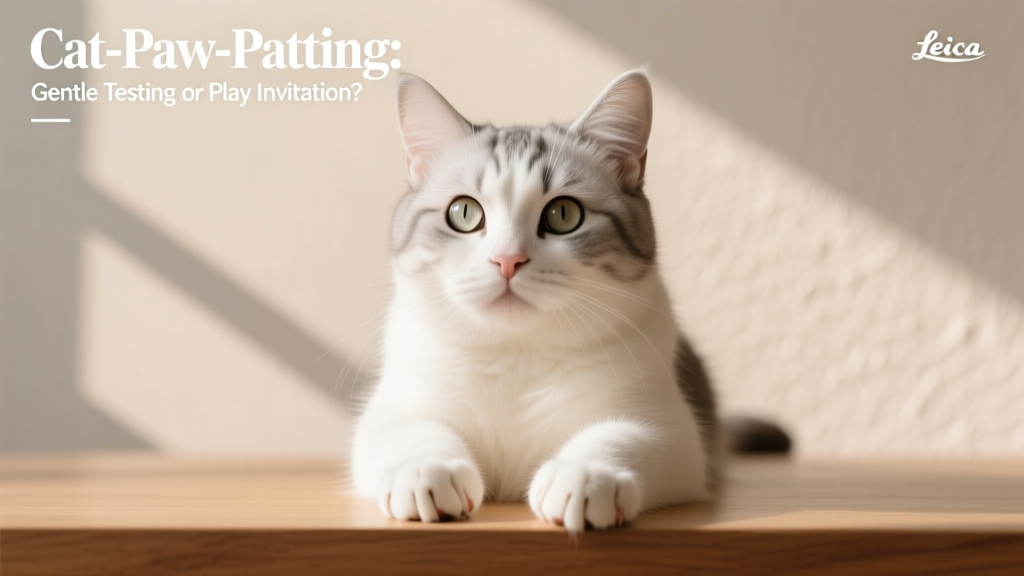
Cat Paw Patting: Gentle Testing or Play Invitation?
You’re on the couch, minding your own business, when a soft tap… tap… lands on your arm. You look down: your cat is sitting beside you like a tiny professor, one paw extended, gently patting you as if checking whether you’re real. Maybe it’s your face at 6 a.m. Maybe it’s your hand near their bowl. Maybe it’s the phone you’re paying attention to instead of them.
It’s not quite a swat. Not a full-on knead. Not a grabby “gotcha.” It’s that polite little paw pat that feels oddly deliberate—almost like a question: “Are you paying attention?” “Is this safe?” “Do you want to play?”
So what is it? A gentle test… or a play invitation? Often, it’s both—depending on the moment, the mood, and what your cat has learned works on you.
Why Cats Paw-Pat: The Evolutionary and Scientific Backstory
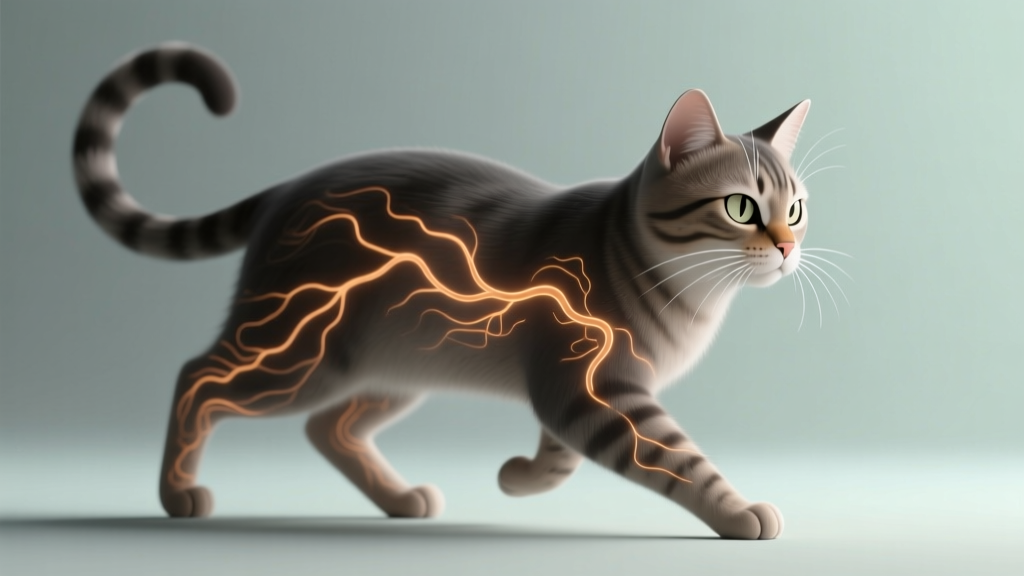
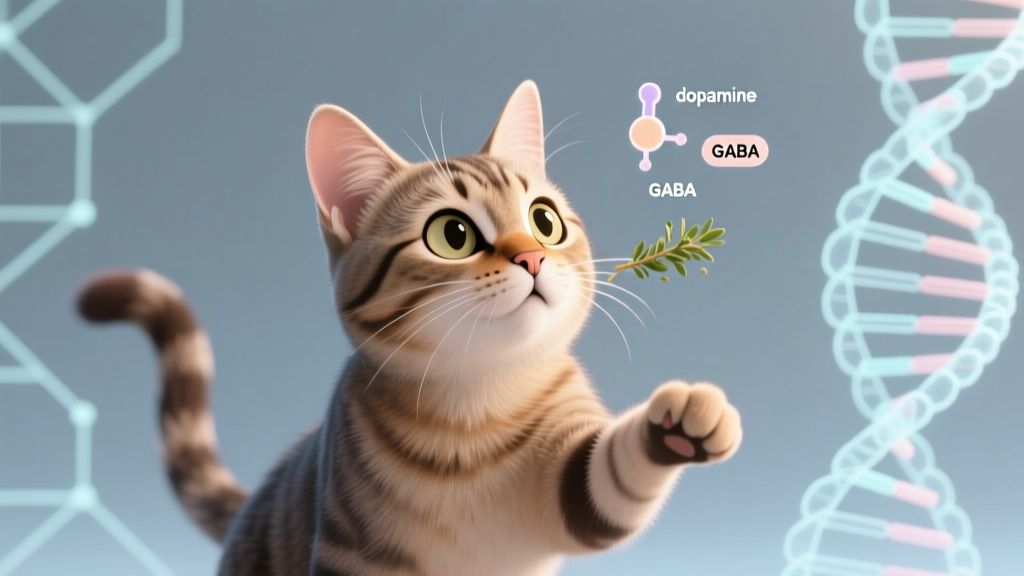
Cats are precision animals. Their paws aren’t just for walking—they’re multi-purpose sensory tools. Each paw is packed with nerve endings, and cats use their paws to gather information the way we use fingertips.
From an evolutionary perspective, paw patting is a low-risk strategy. In the wild (and in your living room), reaching out with a paw lets a cat:
- Test safety without committing their whole body
- Probe movement (Is that prey? Is that alive? Will it react?)
- Control distance (close enough to investigate, far enough to retreat)
- Practice hunting skills through play
Kittens learn early that paws can start a game, get attention, and manipulate objects. Adult cats keep the habit because it’s effective—and because it’s part of their natural “investigate with caution” style. The gentleness is often intentional: your cat can scale from feather-light taps to firmer pats depending on what response they’re aiming for.
A Detailed Breakdown: Paw Patting in Different Contexts
Same paw motion, different meaning. Context is everything. Here are the most common “paw pat” scenarios cat owners recognize immediately.
1) The “Hello, Are You Alive?” Pat
Scenario: You’re sleeping. Your cat pats your cheek or mouth. Or you’ve been sitting still for a long time and they pat your arm.
What’s going on: Your cat is checking for a response. Cats notice stillness and changes in routine. A gentle pat is a safe way to prompt movement—especially if they’ve learned you respond faster to paws than to meowing.
2) The “Pay Attention to Me” Pat
Scenario: You’re on a laptop. Your cat sits beside you and taps your hand, the keyboard, or the screen bezel like a tiny supervisor.
What’s going on: This is social attention-seeking. Many cats discover that paw contact works like a doorbell. If you consistently react (talking, petting, laughing), you’ve trained the pat to be an excellent communication tool.
3) The “Let’s Play” Invitation
Scenario: Your cat crouches, ears forward, eyes bright, and pats your moving hand under a blanket or your ankle as you walk by.
What’s going on: This is playful predatory behavior in miniature: stalk → tap → chase. The pat is the opener. Some cats do a gentle “tag” and then run away, basically saying, “Catch me!”
4) The “That’s Mine” Boundary Pat
Scenario: You reach toward your cat’s favorite toy, bed, or even another pet, and your cat lightly pats your hand.
What’s going on: A measured boundary-setting move. It’s the cat equivalent of a polite “excuse me” with a hint of “stop.” It often comes before escalation. Cats who are good at self-control may choose a soft pat instead of a swat.
5) The “I’m Not Sure About This” Test Tap
Scenario: A new object arrives—paper bag, suitcase, vacuum attachment. Your cat extends a paw and taps it, then pulls back.
What’s going on: Risk assessment. Cats investigate with their paws because paws can retreat instantly. You’ll often see whiskers forward, body slightly back, and a cautious lean-in.
6) The “Petting Negotiation” Pat
Scenario: You stop petting. Your cat pats your hand, then leans in again—or pats your hand away if you hit a “no thanks” spot.
What’s going on: Some cats use paws to manage touch. A pat toward you can mean “continue,” while a pat away can mean “that’s enough” or “not there.” Look for accompanying signals (tail, ears, skin twitching).
What Paw Patting Reveals About Your Cat’s Mood
Paw patting is like a sentence with missing words. The body language fills in the meaning. Here’s how to “read the rest of the sentence.”
- Soft eyes, slow blinks, relaxed tail: Affectionate attention-seeking. Your cat feels safe and social.
- Ears forward, playful crouch, bouncy movements: Invitation to play. The pat is a “tag” to start action.
- Body leaning back, whiskers forward, cautious sniffing: Uncertainty. They’re gathering info and staying ready to retreat.
- Tail flicking, skin twitching, ears rotating sideways: Overstimulation or irritation. The pat may be a warning shot.
- Stiff posture, hard stare, low body, claws slightly out: Tension. This can shift into a swat or bite if pressure continues.
One of the sweetest versions is the “gentle request” pat—your cat has learned to be soft because soft gets results. That’s not manipulation (okay, it’s a little manipulation). It’s communication shaped by reinforcement.
Related Behaviors You Might Notice
Cats often bundle paw patting with other “paw-based” communication. If your cat is a serial patter, you may also see:
- Kneading: Comfort behavior linked to kittenhood and relaxation
- Bapping (light swats): Fast, controlled taps used in play or mild annoyance
- Hooking with the paw: Pulling your hand or an object closer—more “insistent” than patting
- Touch-and-run: A pat followed by sprinting away, inviting chase
- Paw hovering: Holding the paw up as they decide whether to approach
- Object patting: Tapping a toy under the couch, a water dish, or a door—testing movement and cause/effect
Think of these as different “dial settings” on the same tool: the paw.
When Paw Patting Is Normal vs. When It Might Be a Concern
Most paw patting is wonderfully normal. Still, it’s smart to watch for changes—cats communicate discomfort through behavior shifts.
Normal paw patting tends to look like:
- Gentle taps with claws sheathed
- Paired with relaxed or playful body language
- Happens in predictable situations (you stop petting, you’re busy, you walk by)
- Stops when you respond appropriately (play, attention, space)
Potential concern signals include:
- Sudden increase in pawing at you, especially paired with vocalizing or restlessness (could indicate unmet needs, stress, or pain)
- Pawing at the mouth/face or rubbing the face more than usual (possible dental pain)
- Repeated pawing at the water bowl along with drinking changes (sometimes preference/curiosity, but consider a vet check if thirst changes)
- Limping, paw sensitivity, or licking/chewing a paw (injury, foreign object, allergy, nail or pad issue)
- Escalation to scratching/biting when you ignore the pat (stress, overstimulation, or learned frustration)
If the paw pat comes with obvious discomfort, hiding, appetite changes, litter box issues, or aggression that’s new for your cat, it’s worth calling your veterinarian or a qualified cat behavior professional.
How to Respond (and How to Encourage the Cute Version)
Your response teaches your cat what paw patting “does.” If you want more gentle tapping and fewer claws, you can shape the behavior kindly.
1) Reward gentle communication
If your cat pats softly, respond with what they’re asking for—if it’s reasonable. A brief pet, a calm “hi,” or a quick play session can reinforce polite requests.
2) Don’t reward painful pats
If claws come out, don’t scold or jerk away (that can escalate arousal). Instead, calmly disengage. Stand up, fold your hands, or redirect to a toy. When the claws are sheathed again, then re-engage.
3) Provide an appropriate “pat target”
If your cat wants interaction, give them a wand toy, kicker toy, or a soft ball. For cats who pat hands, teaching “pat the toy” instead of “pat human skin” can save you a lot of accidental scratches.
4) Use predictable routines
Cats love patterns. If paw patting is a “feed me now” tool, a timed feeder or consistent meal routine can reduce persistent tapping—especially early morning face-pats.
5) Practice consent-based petting
If the pat happens during petting, check your technique. Try shorter strokes, pause frequently, and watch for “yes” signals (leaning in) and “no” signals (tail flicks, skin ripples). Your cat may be using paw taps to fine-tune the interaction.
Fun Facts and Research-Adjacent Nuggets About Cat Paws
- Paws are sensory hot spots: Cats can detect subtle vibrations through their paw pads, which helps explain why tapping and patting are such natural investigative moves.
- Play is practice: The same motor patterns used in hunting—stalk, pounce, bat—show up in gentle home behaviors like paw patting and “tag” games.
- Cats learn what works on you fast: If a paw pat reliably makes you look up, talk, or move, you’ve become part of a very effective training loop.
- Some cats prefer paws over voices: While many cats meow to communicate with humans, others are more physical communicators. A paw pat can be their version of “excuse me.”
FAQ: Cat Paw Patting
Why does my cat gently pat my face when I’m sleeping?
Usually it’s attention-seeking, hunger, or a “check-in” to get you to respond. If it’s happening every morning, your cat may have learned that face pats wake you faster than meowing. A timed feeder or a bedtime play session can help.
Is paw patting a sign of affection?
It can be. If your cat looks relaxed—soft eyes, calm body, maybe a slow blink—gentle patting can be social and friendly. Think of it as a tactile “hello.”
Why does my cat pat me and then run away?
That’s often a play invitation: “Tag, you’re it.” If you want to encourage it, respond with a wand toy or a short chase of a toy (not your hands). If you don’t want to be chased, redirect immediately to an appropriate game.
My cat pats my hand when I stop petting. What does that mean?
Many cats do this as a request for more. Pause and offer your hand for a sniff—if your cat leans in or rubs, continue gently. If they turn away or flick the tail, they may be conflicted or overstimulated and need a break.
Does paw patting mean my cat is annoyed?
Sometimes. If the pat is paired with tail flicking, tense posture, ears angled sideways, or a hard stare, it can be a “please stop” signal. Respect it—give space or change what you’re doing.
How do I stop my cat from pawing me at night?
Combine routine (play + small meal before bed), environmental enrichment (evening play sessions, puzzle feeders), and boundaries (don’t reinforce night pawing with immediate big reactions). If the behavior is new and intense, consider a vet check to rule out discomfort driving restlessness.
That gentle paw pat is one of the most charming examples of how cats communicate with precision: a small motion that can mean “hi,” “play,” “I’m unsure,” “continue,” or “stop right there.” Once you start noticing the context—ears, tail, tension level—you’ll feel like you’re finally catching the subtitles.
Does your cat do the polite “tap tap,” the dramatic midnight face pat, or the mischievous tag-and-sprint? Share your funniest (or most puzzling) paw-patting stories with the Cat Lovers Base community at catloversbase.com—we’d love to hear what your cat is trying to say.