How to Discourage Cat Behavior Guide
Why This How to Discourage Cat Behavior Guide Is Your Most Important Resource Right Now
If you've ever shouted "No!" at your cat while they shredded your sofa, scooped litter onto the floor, or pounced on your laptop mid-Zoom call—you're not alone. In fact, 68% of cat owners report at least one persistent, frustrating behavior they don’t know how to stop (2023 ASPCA Behavioral Survey). But here’s the truth most online guides miss: how to discourage cat behavior guide isn’t about dominance, correction, or fear—it’s about decoding feline motivation, meeting unmet needs, and redirecting energy with precision. Cats don’t misbehave; they communicate. And when we misinterpret that language, we escalate problems instead of solving them. This guide cuts through the noise with vet-approved, ethically grounded strategies—backed by feline behavior science, not folklore.
Step 1: Diagnose the Real Cause — Not the Symptom
Before you reach for spray bottles or scolding, pause. Every unwanted behavior has a biological, emotional, or environmental root. According to Dr. Mikel Delgado, certified cat behavior consultant and researcher at UC Davis, "Cats rarely act out without reason. What looks like 'naughtiness' is usually anxiety, boredom, pain, or territorial insecurity." Ignoring this step leads to failed interventions—and damaged trust.
Start with a 48-hour behavior log. Track:
- When the behavior occurs (time of day, activity happening nearby)
- Where it happens (room, surface, proximity to windows/doors)
- What happens right before (e.g., you leave the room, another pet enters, loud noise)
- What happens right after (do you chase, pick up, give attention—even negative?)
Common root causes include:
- Medical triggers: Urinating outside the box? Could signal UTI, arthritis (making litter box entry painful), or hyperthyroidism. Always rule out health issues first with your vet.
- Sensory overload: Overstimulation from petting, children, or sudden movements often ends in biting or swatting.
- Resource competition: One litter box for two cats? One food bowl? That’s a recipe for stress-based marking or aggression.
- Unmet predatory drive: Indoor cats hunt 10–20 times per day in the wild. Without outlets, that energy targets ankles, curtains, or your hand.
Case in point: Luna, a 3-year-old Siamese, began yowling at 3 a.m. daily. Her owner assumed ‘attention-seeking’—until a veterinary behaviorist discovered her nighttime vocalizations spiked after switching to a high-protein kibble. A blood test revealed early-stage kidney stress affecting her sleep-wake cycle. Once diet was adjusted and environmental enrichment added, the yowling stopped in 5 days.
Step 2: Redirect, Don’t Repress — The Power of Positive Reinforcement
Punishment doesn’t teach cats what to do—it teaches them to fear you or hide behaviors. A landmark 2022 study in Journal of Feline Medicine and Surgery found cats subjected to spray bottles or shouting showed 3.2× higher cortisol levels and were 47% less likely to use litter boxes consistently over 8 weeks versus cats receiving reward-based training.
Instead, master the 3R Framework:
- Recognize the precursor behavior (e.g., tail flicking before biting, crouching before pouncing on feet)
- Redirect to an approved outlet (e.g., toss a wand toy *before* the pounce, offer a cardboard scratch pad *as* they approach the couch)
- Reinforce the alternative behavior *immediately* with high-value reward (freeze-dried chicken, 3 seconds of gentle chin scratches, or interactive play)
Timing matters: rewards must land within 1.5 seconds of the desired behavior. Use clicker training for precision—click = marker that ‘yes, that’s exactly what I want.’ Pair clicks with treats for 5–7 days, then fade treats to intermittent praise + play.
Pro tip: Never punish during or after the act. If you catch your cat mid-scratching the doorframe, calmly say “Oops!” and lead them to a sisal post—but only if they go willingly. Forcing creates negative associations.
Step 3: Engineer the Environment — Your Secret Weapon
Cats are creatures of place—not just personality. Their behavior is profoundly shaped by physical space. As Dr. Sarah Heath, European Veterinary Specialist in Behavioural Medicine, states: "You cannot train away poor environment design. Fix the setup first, then refine the behavior."
Here’s how to redesign key zones:
- Litter Box Zone: Minimum of n+1 boxes (where n = number of cats), placed on different floors, away from noisy appliances, with unscented clumping litter (depth: 2–3 inches), and open-top designs for easy access. Scoop twice daily—a dirty box is the #1 cause of inappropriate elimination.
- Scratching Zone: Provide vertical (sisal rope posts, tall carpeted towers) AND horizontal (corrugated cardboard pads, jute rugs) options near sleeping areas and furniture they target. Rub with catnip or silver vine to boost appeal. Place double-sided tape or aluminum foil *temporarily* on off-limit surfaces—not as punishment, but as tactile deterrents while alternatives gain traction.
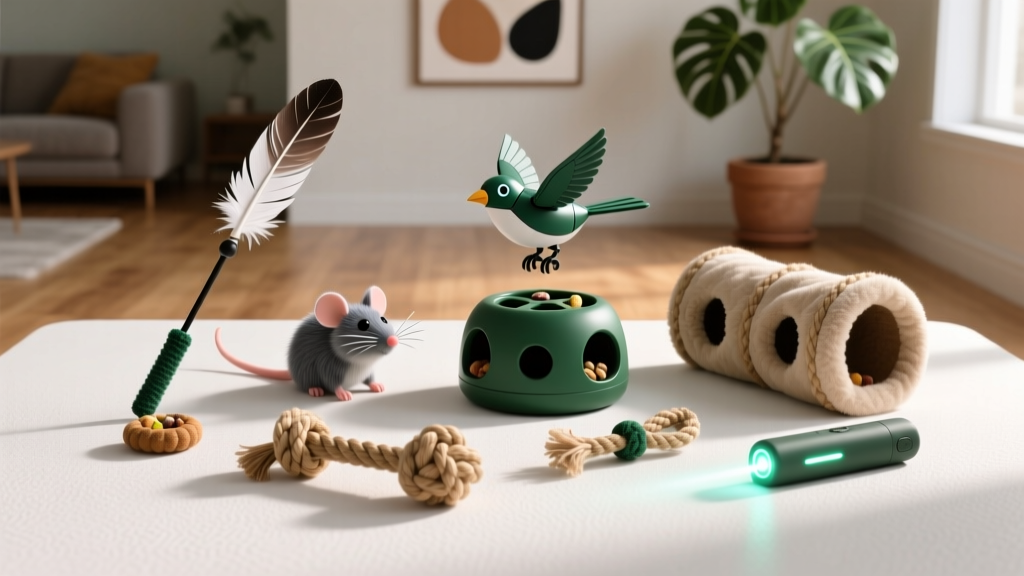
- Play & Predation Zone: Schedule two 15-minute interactive sessions daily using wand toys that mimic prey movement (erratic, darting, hiding). End each session with a ‘kill’—let them catch the toy, then feed a meal or treat. This completes their natural hunting sequence and reduces redirected aggression.
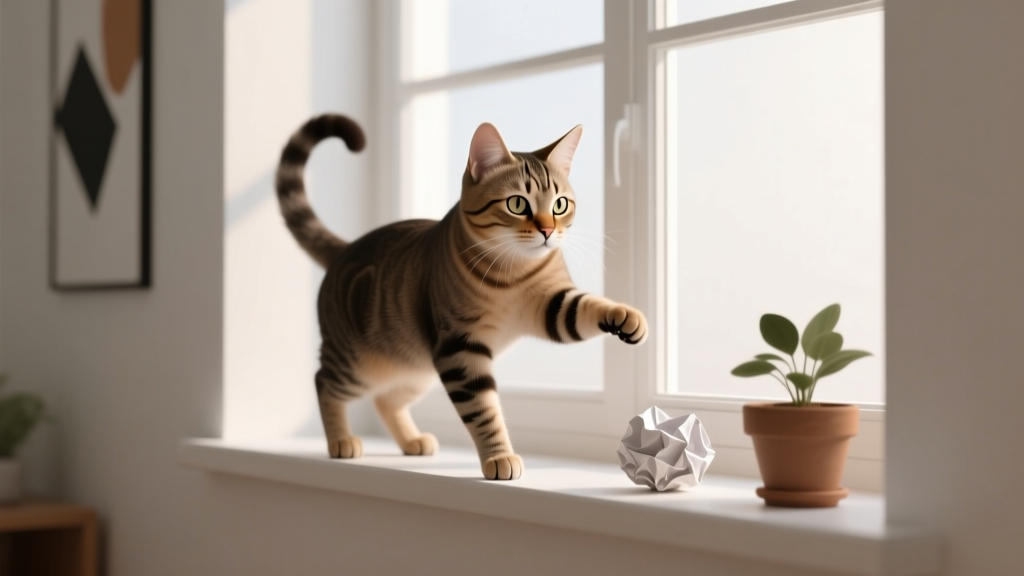
Real-world impact: When the Thompson family added a window perch with bird feeder view + daily feather wand play, their 5-year-old tabby stopped knocking items off shelves—a behavior rooted in visual frustration and under-stimulation.
Step 4: Calm Communication — Reading & Responding to Feline Signals
Cats communicate through micro-expressions, body posture, and vocal nuance—not tone of voice. Misreading these cues guarantees escalation. Below is a quick-reference table of common signals and how to respond:
| Signal | What It Likely Means | How to Respond (Not What to Do) |
|---|---|---|
| Slow blinking | Trust, relaxation, affection | Return the blink slowly. This reinforces safety—no need to touch or pick up. |
| Tail held low or tucked | Anxiety, fear, discomfort | Remove stressor if possible (e.g., close door on barking dog). Offer safe retreat (covered bed, cardboard box). |
| Ear flattening + dilated pupils | Overstimulation or defensive readiness | Stop petting immediately. Step back 3 feet. Offer quiet space—no eye contact, no reaching. |
| Chattering at windows | Frustration + predatory arousal | Redirect with laser pointer (end with physical toy catch) or provide puzzle feeder with kibble. |
| Rolling onto back exposing belly | Not always invitation to rub—often vulnerability display or stretch | Observe context. If tail is still, purring, eyes soft: gentle chin/cheek pets OK. If tail flicks, ears back: respect boundary—don’t touch belly. |
Frequently Asked Questions
Can I use citrus spray or vinegar to stop scratching?
No—and here’s why: While citrus scent deters some cats, it’s inconsistent and can irritate sensitive nasal passages or paws. More importantly, it doesn’t address *why* they’re scratching there. You’ll get temporary suppression, then relocation (e.g., to your armchair instead of sofa). Focus on providing superior alternatives (tall, stable posts with rough texture) and rewarding use—not masking the problem.
My cat bites when I pet them—will ignoring it make it worse?
Ignoring *can* help—if done correctly. But timing is critical. Stop petting *the moment* you see early signs (tail twitch, skin rippling, flattened ears)—not after the bite. Then walk away quietly for 30 seconds. This teaches them that petting stops *before* biting, not as punishment *after*. Combine with scheduled play sessions to burn excess energy that fuels overstimulation.
Is spraying water ever acceptable to discourage behavior?
Veterinary behaviorists unanimously advise against it. Water sprays create fear-based associations—not learning. Your cat may stop the behavior around you, but resume it when you’re gone—or begin avoiding you entirely. Studies show spray use correlates with increased hiding, decreased play, and higher incidence of urine marking. Positive redirection is faster, safer, and builds lasting trust.
How long until I see improvement using this how to discourage cat behavior guide?
Most owners notice subtle shifts (less frequency, shorter duration) within 3–5 days when consistently applying environmental fixes and redirection. Significant reduction in targeted behaviors typically occurs in 10–14 days. Full habit replacement (e.g., consistent litter box use, zero furniture scratching) takes 3–6 weeks—because neural pathways require repetition. Patience + consistency beats intensity every time.
Do collars with bells or citronella sprays work for stopping hunting outdoors?
Bells reduce successful kills by ~50% (University of Exeter, 2021), but don’t eliminate hunting drive—and many cats learn to stalk silently despite the bell. Citronella collars have mixed efficacy and risk skin irritation. Better solution: Keep cats indoors during peak small-mammal activity (dawn/dusk), provide daily simulated hunting via food puzzles and wand play, and consider installing a secure catio for supervised outdoor time.
Common Myths Debunked
Myth #1: “Cats don’t need training—they’re independent.”
False. Independence ≠ untrainability. Cats learn constantly through operant conditioning—they associate actions with outcomes. The difference is motivation: they respond best to food, play, or social rewards—not praise alone. Training isn’t about control; it’s about cooperation and clarity.
Myth #2: “If I don’t discipline my cat now, they’ll never respect me.”
Respect isn’t earned through authority—it’s built through reliability and predictability. Cats ‘respect’ humans who consistently meet their needs, read their signals, and respond calmly. Discipline erodes that foundation; compassionate guidance strengthens it.
Related Topics (Internal Link Suggestions)
- Understanding Cat Body Language — suggested anchor text: "cat body language decoder"
- Best Litter Box Setup for Multi-Cat Homes — suggested anchor text: "litter box solutions for multiple cats"
- Interactive Toys That Reduce Destructive Behavior — suggested anchor text: "best cat toys for mental stimulation"
- When to See a Veterinary Behaviorist — suggested anchor text: "signs your cat needs behavior help"
- Safe, Natural Calming Aids for Stressed Cats — suggested anchor text: "vet-approved calming supplements for cats"
Your Next Step Starts Today — With One Small Shift
You now hold a how to discourage cat behavior guide grounded in science, empathy, and real-world results—not quick fixes or outdated assumptions. The most powerful change you can make today? Pause before reacting. Next time your cat does something frustrating, take three slow breaths—and ask yourself: What is my cat trying to tell me? What need isn’t being met? Where can I add choice, safety, or stimulation? That shift—from correction to curiosity—is where true behavior transformation begins. Download our free Behavior Log & 7-Day Action Planner (linked below) to start tracking patterns and implementing personalized steps tomorrow. Because every cat deserves to feel understood—and every owner deserves peace, without compromise.