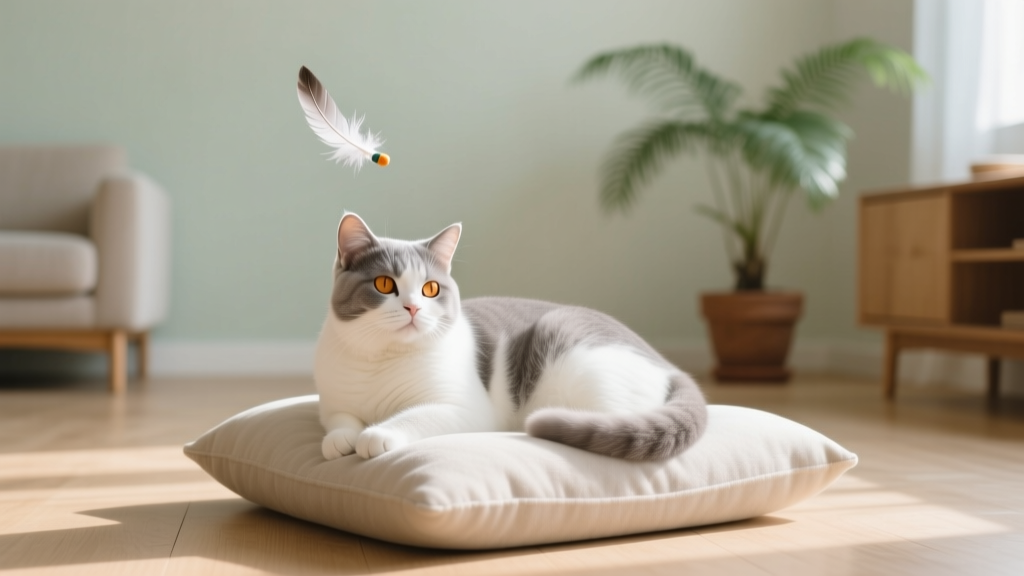
How to Discourage Cat Behavior for Senior Cats
Why 'How to Discourage Cat Behavior for Senior Cats' Isn’t About Correction — It’s About Compassionate Translation
If you’ve typed how to discourage cat behavior for senior cats into a search bar at 3 a.m. while your 16-year-old tabby howls insistently at the closet door — you’re not failing as a caregiver. You’re witnessing one of the most misunderstood transitions in feline life: cognitive and sensory decline masquerading as 'bad behavior.' Unlike kittens or adults, senior cats (typically 11+ years) rarely act out from defiance or boredom alone. Their behaviors are often urgent, biologically rooted signals — pain, anxiety, vision loss, hypertension, or early feline cognitive dysfunction syndrome (CDS). That’s why traditional 'discouragement' tactics (spray bottles, scolding, confinement) don’t just fail — they deepen distress and erode trust. This guide delivers what mainstream pet advice misses: a neurologically informed, vet-coordinated framework that replaces punishment with precision support.
Step 1: Rule Out Medical Causes — Before You Adjust a Single Litter Box
Here’s the non-negotiable first step: no behavioral intervention is ethical or effective until underlying health issues are ruled out. A 2022 study in the Journal of Feline Medicine and Surgery found that 78% of cats over age 14 exhibiting new-onset inappropriate elimination had at least one undiagnosed medical condition — most commonly chronic kidney disease (CKD), hyperthyroidism, osteoarthritis, or dental disease. Pain is the #1 driver of 'aggression' or 'irritability' in seniors; what looks like territorial hissing may be a cat guarding a sore hip joint.
Dr. Sarah Wooten, DVM and certified veterinary behaviorist, emphasizes: 'When a senior cat starts yowling at night or avoiding the litter box, your first call shouldn’t be to a trainer — it should be to your veterinarian for a geriatric panel: bloodwork (including SDMA for kidney function), urinalysis, blood pressure check, and orthopedic exam. You cannot 'train away' arthritis.'
What to request at your next visit:
- Comprehensive geriatric blood panel — including T4, creatinine, BUN, SDMA, glucose, and electrolytes
- Ophthalmic exam — to assess for cataracts, glaucoma, or retinal degeneration (common causes of disorientation)
- Orthopedic evaluation — especially for mobility changes (reluctance to jump, stiffness)
- Neurological screening — including response to stimuli, gait assessment, and cognitive testing (e.g., treat-finding maze)
If your vet dismisses changes as 'just old age,' seek a second opinion — ideally from a board-certified internal medicine specialist or veterinary behaviorist. Age isn’t a disease; it’s a risk factor for treatable conditions.
Step 2: Decode the Behavior — Not Just the Symptom
Senior cats rarely misbehave without reason. Below is a behavior decoder chart used by certified feline behavior consultants to map common 'problem' actions to likely root causes — and appropriate, non-punitive responses.
| Observed Behavior | Most Likely Underlying Cause(s) | Gentle, Evidence-Based Response |
|---|---|---|
| Nighttime vocalization (yowling, meowing) | Hypertension-induced anxiety, hearing loss (calling louder to hear self), CDS-related confusion, or unmet needs (hunger, thirst, litter access) | Install automatic timed feeders + water fountains; add nightlights near litter boxes; schedule evening vet check for BP/CKD; introduce calming pheromone diffusers (Feliway Optimum) 2 weeks pre-bedtime |
| Inappropriate elimination (outside litter box) | Osteoarthritis (pain climbing into high-sided boxes), urinary tract discomfort, reduced bladder control, vision impairment, or substrate aversion (litter texture change) | Switch to low-entry, uncovered litter boxes placed on every floor; use unscented, soft-clumping litter; add non-slip mats; offer 1.5x the number of boxes vs. cats; rule out UTI/CKD before assuming 'behavioral' |
| Increased clinginess or following | Anxiety from sensory loss (can’t locate you visually/aurally), CDS-related insecurity, or hearing/vision decline increasing dependency | Create 'safe zones' with familiar scents (your worn t-shirt); use gentle voice cues + consistent routines; avoid sudden departures; consider vet-approved anxiolytics (e.g., gabapentin) if vet confirms anxiety component |
| Aggression toward people or other pets | Pain (especially dental/oral or arthritic), redirected frustration (unable to see/track stimulus), or CDS-related irritability | Never punish — instead, identify and remove triggers (e.g., close blinds during bird activity); use positive reinforcement for calm interactions; consult vet about pain management before labeling 'aggressive' |
| Staring blankly, getting 'stuck' in corners | Feline Cognitive Dysfunction Syndrome (CDS) — affects ~55% of cats 11–15 yrs, >80% over 16 — with symptoms mirroring human dementia | Environmental enrichment: daily 5-min scent games (hide treats in paper bags); vertical space with ramps; antioxidant-rich diet (see nutrition section); consider SAM-e or apoaequorin supplements under vet guidance |
Step 3: Modify Environment — Not the Cat
Senior cats thrive on predictability and accessibility. Their declining senses mean environmental adjustments aren’t luxuries — they’re neurological necessities. Consider this real-world case: Luna, a 15-year-old Siamese, began urinating beside her litter box after her owner installed a new, taller, covered box. Her vet confirmed advanced elbow arthritis — she couldn’t lift her leg high enough to enter. Within 48 hours of switching to a shallow, open tray with carpeted ramp access, accidents stopped entirely.
Key environmental upgrades (backed by Cornell Feline Health Center guidelines):
- Litter box redesign: Minimum 1.5x cat length, entry height ≤2 inches, non-slip surface, unscented clumping litter, placed in quiet, low-traffic areas with clear sightlines (no blind corners)
- Lighting & navigation: Install motion-sensor nightlights along pathways to food, water, and litter; use contrasting tape on stair edges; avoid rearranging furniture suddenly
- Sound management: Reduce loud, unpredictable noises (vacuum, slamming doors); play low-volume classical music during peak anxiety windows (dawn/dusk)
- Comfort zones: Heated beds (thermostatically controlled to 95–100°F), raised food/water bowls for neck comfort, soft landing pads under favorite perches
One often-overlooked strategy: scent anchoring. Place items carrying your scent (a folded scarf, unwashed pillowcase) in your senior cat’s primary resting spots. As their olfactory acuity declines, familiar scents reduce spatial anxiety and reinforce safety — a technique validated in a 2023 UC Davis pilot study on feline CDS interventions.
Step 4: Support Brain & Body — Nutrition, Supplements, and Routine
You can’t discourage confusion with discipline — but you can slow its progression. According to Dr. Tony Buffington, DVM, PhD and lead researcher on feline geriatric nutrition at Ohio State University, 'Diet is the single most modifiable factor influencing cognitive aging in cats. Antioxidants, omega-3s (EPA/DHA), and B-vitamins directly protect neurons and reduce neuroinflammation.'
Practical, vet-reviewed nutritional supports:
- Prescription senior diets: Hill’s b/d, Royal Canin Neurocare, and Purina Pro Plan Veterinary Diets NC NeuroCare contain clinically studied levels of apoaequorin (a calcium-binding protein shown to improve memory recall in aged cats), antioxidants, and medium-chain triglycerides (MCTs) for alternative brain fuel
- Supplements with evidence: SAM-e (for mood/cognition), omega-3s (fish oil with ≥1,000mg combined EPA/DHA daily), and vitamin E (400 IU/day max) — always dosed under veterinary supervision
- Routine as rhythm therapy: Feed, play, and interact at the same times daily. A 2021 Journal of Veterinary Behavior study showed cats with rigid schedules exhibited 42% fewer CDS-related episodes than those with variable routines — even when cognitive scores were identical
Crucially: avoid over-the-counter 'calming chews' containing L-theanine or melatonin unless prescribed. These lack feline-specific dosing data and may interact with medications like thyroid hormone or blood pressure drugs. When in doubt, ask your vet for a referral to a boarded veterinary nutritionist.
Frequently Asked Questions
Can I use a spray bottle or loud noise to stop my senior cat from yowling?
No — and doing so risks severe harm. Startle-based corrections increase cortisol (stress hormone) levels, which accelerates cognitive decline and worsens hypertension. Worse, they break the human-animal bond, making your cat less likely to signal genuine needs (like pain or thirst). Instead, address the root cause: nighttime yowling in seniors is most often linked to hypertension, vision loss, or hunger — not attention-seeking. Consult your vet for blood pressure screening and consider timed feeders.
My 14-year-old cat suddenly started biting when I pet her — is this aggression or something else?
This is almost certainly pain-related reactivity, not aggression. Senior cats develop 'petting intolerance' when touched near painful areas — commonly arthritic shoulders, hips, or dental abscesses. Observe where she tenses or flattens ears during stroking. Stop immediately at the first sign of discomfort. Have your vet perform a full orthopedic and oral exam. Never interpret this as 'spite' — it’s her only way to say 'this hurts.'
Will medication help with my senior cat’s confusion and wandering?
Yes — but only after thorough diagnostics. Selegiline (Anipryl), originally developed for canine CDS, shows promising off-label use in cats under strict veterinary supervision. More commonly, vets prescribe gabapentin for anxiety-related pacing or trazodone for sleep-wake cycle disruption. Importantly: no drug replaces environmental management. Medication works best when paired with routine, scent anchoring, and nightlights — never as a standalone fix.
Is it okay to confine my senior cat to one room to 'manage behavior'?
Only temporarily and with extreme caution. Confinement increases stress, disorientation, and urinary tract risks — especially if litter, water, and food aren’t optimally placed within that space. If short-term confinement is medically necessary (e.g., post-surgery), ensure the room has: 2 litter boxes (low-entry), heated bed, nightlight, familiar scents, and daily interactive play (even 3 minutes of wand toy movement). Long-term confinement is contraindicated for senior cats with CDS or mobility issues.
How do I know if my cat has feline cognitive dysfunction (CDS)?
Use the 'DISHA' checklist developed by the International Society of Feline Medicine: Disorientation (staring, getting stuck), Interaction changes (increased clinginess or withdrawal), Sleep-wake cycle reversal (nighttime activity), House-soiling (new onset), Activity changes (pacing, reduced grooming). Seeing 3+ signs warrants vet evaluation. Note: CDS is diagnosed by ruling out other causes — not by symptoms alone.
Common Myths About Senior Cat Behavior
Myth #1: 'Old cats just get cranky — there’s nothing you can do.'
Reality: Irritability is rarely personality — it’s most often untreated pain, hypertension, or sensory loss. A 2020 study in Veterinary Record showed 63% of 'cranky' seniors improved significantly after pain management and environmental tweaks.
Myth #2: 'If they’re still eating and using the litter box, they must be fine.'
Reality: Cats mask illness masterfully. By the time appetite or elimination changes appear, many conditions (like CKD or hyperthyroidism) are already advanced. Subtle signs — decreased grooming, reluctance to jump, staring into space — are earlier, more reliable red flags.
Related Topics (Internal Link Suggestions)
- Feline Cognitive Dysfunction Syndrome in Cats — suggested anchor text: "signs of cat dementia"
- Best Litter Boxes for Arthritic Cats — suggested anchor text: "low-entry litter boxes for senior cats"
- Geriatric Cat Blood Work Checklist — suggested anchor text: "what blood tests does my senior cat need?"
- Safe Supplements for Older Cats — suggested anchor text: "vet-approved senior cat vitamins"
- How to Introduce a New Cat to a Senior Cat — suggested anchor text: "introducing cats when one is elderly"
Your Next Step Is Kindness — Not Correction
Learning how to discourage cat behavior for senior cats isn’t about suppressing actions — it’s about becoming a fluent interpreter of aging feline language. Every yowl, every misplaced paw, every moment of stillness holds meaning. The most powerful tool you hold isn’t a spray bottle or clicker — it’s your capacity for observation, patience, and partnership with your veterinarian. Start today: schedule that geriatric wellness exam, place one nightlight on the path to the litter box, and sit quietly beside your senior cat for five minutes — no agenda, no expectation, just presence. That’s where true behavior support begins: not in changing them, but in meeting them, exactly as they are, with unwavering compassion. Ready to build your personalized senior care plan? Download our free Senior Cat Wellness Tracker — a printable, vet-designed checklist covering nutrition, mobility, cognition, and vet visit prep.