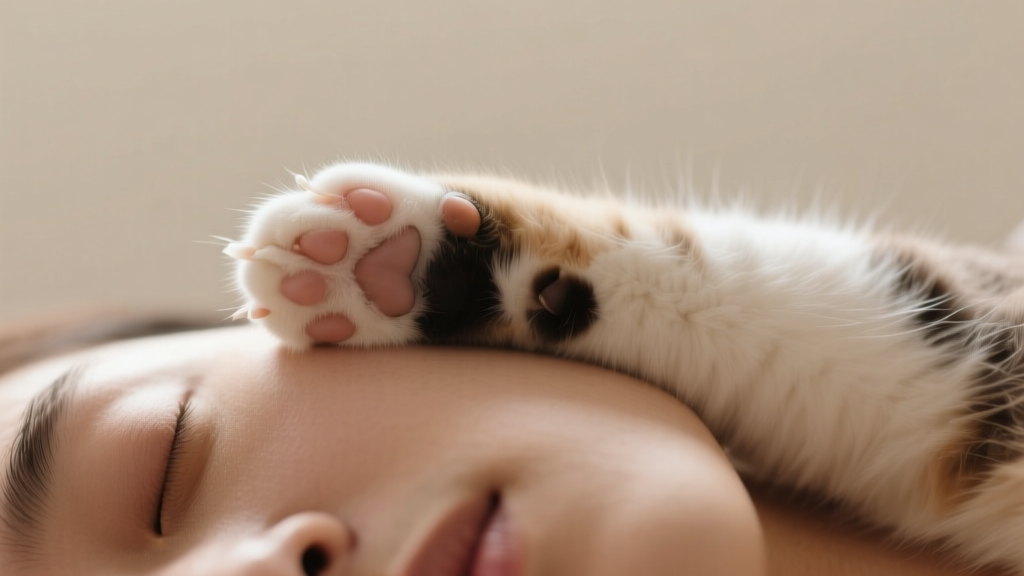
Cat Paw Touching Your Face While Sleeping
You’re fast asleep, cozy, mid-dream… and then it happens: a soft, deliberate tap on your cheek. Or a tiny paw pads across your lips like your cat is checking if you’re still “on.” Maybe a single claw catches your eyebrow hair (rude), and you jolt awake to find a pair of whiskers inches from your nose and a cat staring at you like, “Ah, good, you’re awake now.”
If your cat paw-touches your face while you’re sleeping, you’re in very good (and slightly interrupted) company. This is one of those classic cat behaviors that feels personal—sometimes sweet, sometimes annoying, always oddly specific. The good news: it usually means something, and when you understand the “why,” it’s easier to respond in a way that makes both of you happier.
Why Cats Do This: The Science and the Wildcat Logic
Cats are predators, but they’re also social creatures with strong attachment patterns. A face-touch combines several built-in feline tools: scent, touch, attention-getting, and safety-checking.
- Tactile exploration: Cats “see” a lot with their bodies. Their paws are sensitive, with nerves that help them detect texture, temperature, and movement. A gentle touch is a way of gathering information.
- Bonding through scent: Cats have scent glands around their mouth, chin, and cheeks, but they also use their paws to spread familiar scent. Touching you can mix scents—your cat’s version of “we belong together.”
- Social attention signals: In multi-cat groups (and cat-human families), cats use subtle signals to initiate interaction. A paw tap is quiet and efficient. No loud meowing required—though some cats absolutely add that, too.
- Resource and routine management: Domesticated cats quickly learn that humans control food, doors, playtime, and the mysterious device called “the treat cupboard.” Waking you up can be a strategy—one that’s accidentally reinforced when it works.
- Safety checking: In the wild, sleeping is vulnerable. Many cats are most affectionate when you’re still because you’re less unpredictable. A paw touch can be your cat’s way of checking that you’re present and okay.
So while it feels like a random midnight poke, it’s actually a very “cat” mix of affection, communication, and practical goal-setting.
Different Contexts: What the Paw Touch Usually Means
The same behavior can mean different things depending on timing, intensity, and what happens next. Here are the most common scenarios cat owners recognize immediately.
1) The Gentle Cheek Tap: “Hi. I’m Here.”
This is the softest version: a light touch on your cheek or forehead, often paired with slow blinking, purring, or curling up beside you afterward. It’s frequently an affectionate check-in. Many cats do this when they’re feeling especially bonded or when they’ve just settled into the bedroom and want a little connection.
2) The Nose/Upper Lip Touch: “Wake Up—Now.”
This one is… effective. Touching your nose or mouth is a high-success wake-up technique because it’s hard to ignore. If this happens around the same time daily (especially early morning), your cat may be running on an internal schedule and has learned that face-touching gets results: breakfast, attention, or a warm lap that begins moving.
3) The Paw-on-Eyelid or Eyebrow Hook: “I Need Something Urgently.”
If the paw touch is more insistent—repeated tapping, claws slightly out, alternating paws—it often signals urgency: a closed door, an empty water bowl, a litter box issue, or a cat who’s decided it’s playtime. Cats aren’t trying to be mean; they’re trying to be understood quickly.
4) The “Knead and Touch” Combo: “You’re My Safe Place.”
Some cats knead on your chest or blanket and occasionally reach up to touch your face. Kneading is linked to kittenhood comfort behaviors (nursing and relaxation). The face touch here can be an extra bonding cue—like holding hands, but with paws and zero respect for your alarm clock.
5) The Whisker-to-Face Hover + Paw Tap: “Are You Alive?”
If your cat stares, sniffs your breath, then taps your cheek, it can be a “status check.” Your breathing, warmth, and scent are reassuring. Cats notice subtle changes—new shampoo, stress sweat, a cold coming on—and sometimes investigate when something feels different.
What It Says About Your Cat’s Mood and Feelings
A face touch is usually intimate behavior. Cats don’t offer close-range contact to everyone. Here’s what it often signals emotionally:
- Affection and trust: Your cat feels safe approaching your face, one of the most sensitive areas. That’s a big deal in cat language.
- Seeking reassurance: Some cats touch when they’re slightly anxious—after a loud noise, a schedule change, or a new pet in the home.
- Social bonding: Cats form routines around connection. If you’ve previously responded with petting or soft talk, the behavior can become a nightly “ritual.”
- Demand and expectation: If your cat looks businesslike, leaves immediately after you move, or walks you straight to the kitchen, the mood is less “cuddle” and more “service request.”
- Playfulness: Younger cats and high-energy adults may use the paw touch as a playful trigger—especially if you’ve ever wiggled your fingers back or laughed and engaged.
The key is reading the whole cat: tail position, ear angle, body looseness, vocalizations, and what your cat does after you wake.
Related Behaviors You Might Notice, Too
If your cat face-touches you, you may also see a few other “close-contact” behaviors that come from the same emotional toolbox:
- Head-butting (bunting): Rubbing cheeks or forehead on you to exchange scent and bond.
- Sleeping on your pillow: Your head carries strong, familiar scent; it’s also warm and elevated.
- Pawing at your hair: Texture play, attention-seeking, or gentle grooming-like behavior.
- “Booping” your nose: A social greeting, especially in confident, affectionate cats.
- Meowing directly into your face: A more intense version of “I need you awake.”
- Bringing a toy to bed: Some cats combine waking behaviors with “hunt/play with me” invitations.
Normal vs. Concerning: When to Pay Closer Attention
Most face-touching is normal and sweet. But context matters. Consider a closer look if any of the following are true:
- Sudden change in behavior: If your normally independent cat starts waking you multiple times nightly, it could signal stress, pain, or a medical change.
- Signs of distress: Yowling, panting, restlessness, pacing, or inability to settle can suggest anxiety or discomfort.
- Senior cats and night waking: Older cats may wake you more due to cognitive changes, vision/hearing loss, or increased thirst/hunger from medical conditions.
- Compulsive or frantic pawing: Repetitive, agitated behavior can indicate unmet needs or a health issue.
- Aggression or fear signals: Flattened ears, dilated pupils, tense body, swatting—face-touching should be gentle. If it isn’t, look for triggers.
If you’re seeing new or intense night-time attention-seeking along with appetite changes, litter box changes, vomiting, excessive thirst, or weight change, a vet check is wise. Behavior is often the first clue that something internal has shifted.
How to Respond (Without Accidentally Training a 4 A.M. Alarm Clock)
Your response teaches your cat what works. The trick is choosing what you want to reinforce.
If you love the behavior and want to encourage it (gently)
- Offer calm affection: Soft petting, slow blinking, and quiet praise reinforce that gentle touch is welcome.
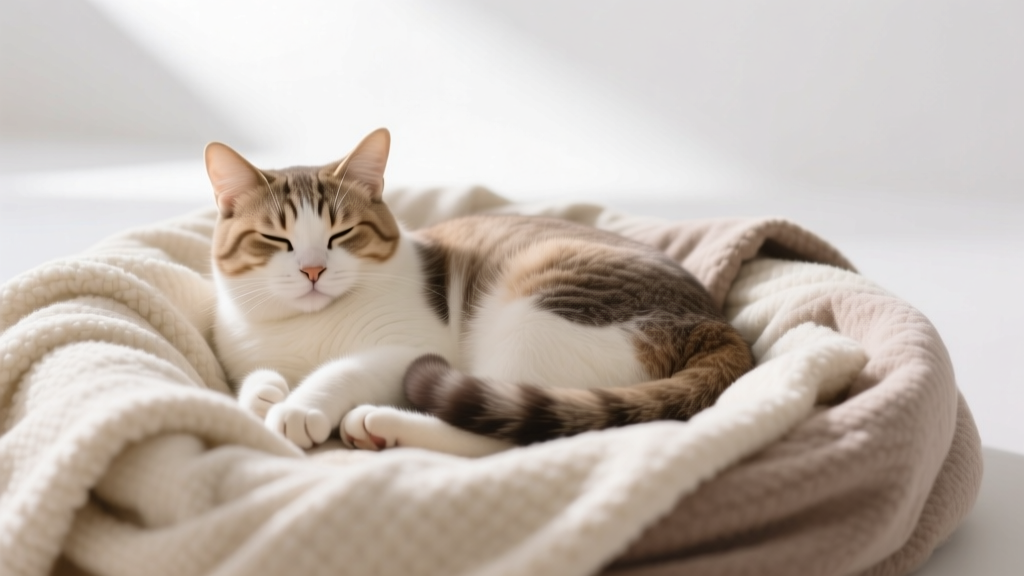
- Provide a “safe cuddle zone”: Add a soft blanket or cat bed near your pillow so your cat can settle close without stepping on your face.
- Reward calm, not pestering: If your cat taps you gently and then lies down, that’s the moment to give attention.
If it’s waking you up and you want it to stop
- Don’t reward the wake-up: If face-taps lead to immediate feeding or play, the behavior becomes a reliable strategy. Try to avoid getting up right away.
- Shift the schedule: Feed and play later in the evening. A good “hunt-play-eat-groom-sleep” routine can reduce early wake-ups.
- Use an automatic feeder: If the paw touch is all about breakfast, an automatic feeder removes you as the food dispenser. Many cats stop waking humans when humans stop being the vending machine.
- Increase daytime enrichment: Window perches, puzzle feeders, short training sessions, and wand-toy play can reduce nighttime boredom energy.
- Protect your sleep kindly: If needed, a closed door can be a temporary reset. Pair it with a comfortable setup outside the bedroom and a consistent routine.
One important note: avoid punishing your cat for touching your face. It’s close-contact behavior that usually comes from trust. Punishment can create confusion or anxiety and may increase attention-seeking in other ways.
Fun Facts and Research-Style Nuggets
- Cat paws are sensory powerhouses: The paw pads are designed for stealth and detection—helping cats feel vibrations and surface changes. Your face is warm, textured, and reactive… basically a very interesting “sample.”
- Many cat-human bonds rely on routine cues: Cats are excellent at learning patterns. If “tap face” has consistently led to “human wakes up,” it becomes a trained communication method.
- Cats prefer subtle communication: A paw touch is quiet and precise. Compared to loud vocalizing, it’s a low-energy, high-success signal—especially at night.
- Your sleeping stillness can feel inviting: Some cats are more affectionate when you’re resting because your body language is calmer and less unpredictable.
FAQ: Cat Paw Touching Your Face While Sleeping
Why does my cat touch my face specifically, not my arm or leg?
Your face is warm, expressive, and gets an immediate response. It’s also where your scent is strongest (skin oils, breath, hair). For many cats, it’s the quickest way to connect or wake you.
Is my cat trying to groom me?
Sometimes, yes. If the paw touch is paired with licking your eyebrows, hairline, or nose, your cat may be engaging in social grooming behavior. If it’s just a tap-and-stare, it’s more likely attention or checking in.
Does this mean my cat loves me?
Often it’s a sign of trust and attachment—especially if the touch is gentle and your cat stays close afterward. But it can also mean your cat has learned an effective way to get what they want. Both can be true.
How do I stop my cat from waking me up without damaging our bond?
Focus on changing the payoff. Don’t immediately feed or play after a wake-up tap, shift meals/play later, use an automatic feeder if breakfast is the trigger, and reinforce calm settling near you with attention at appropriate times.
My cat uses claws when touching my face—why?
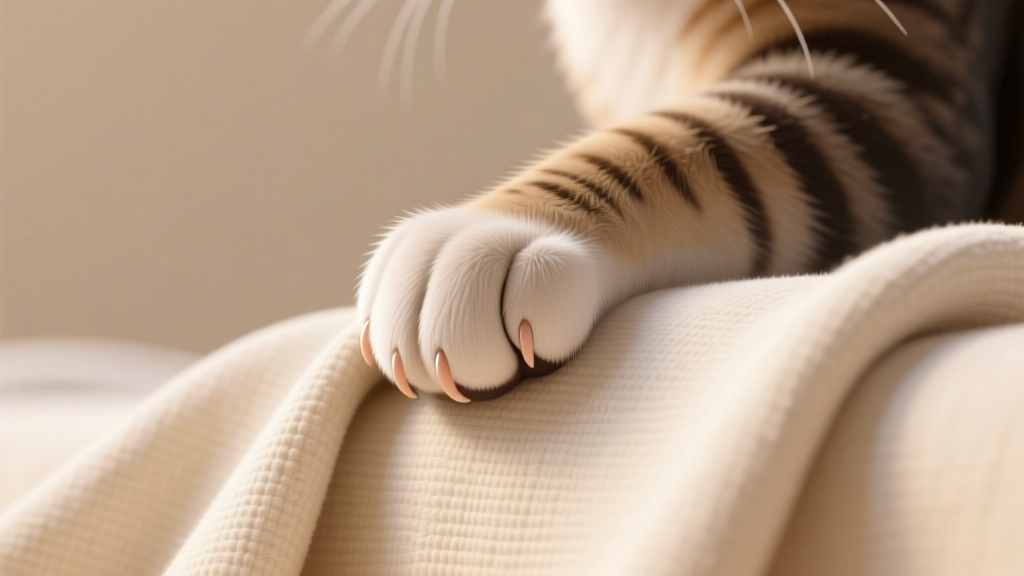
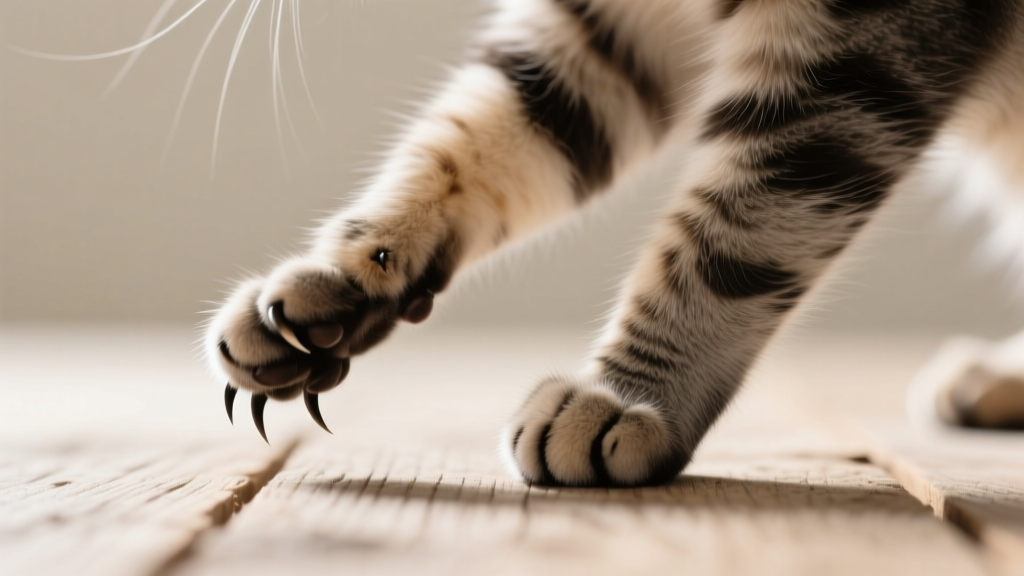
Some cats extend claws slightly for grip or because they’re excited. It can also happen if nails are long. Regular nail trimming, providing scratching outlets, and reinforcing gentle touch (and ignoring rougher attempts) usually helps.
Could my cat be waking me because something is wrong?
Yes, occasionally. If the behavior is new, intense, or paired with other changes (appetite, litter box habits, vocalization, restlessness), consider a vet visit. Cats can become clingier or more demanding when they don’t feel well.
Whether your cat’s paw-to-face move feels like a tender “goodnight” or a tiny furry alarm clock, it’s a fascinating window into how cats communicate with the humans they’ve chosen. You can shape the habit with routine, reinforcement, and a little empathy—without losing the sweetness behind it.
Has your cat ever tapped your face in the most specific, dramatic way possible? Share your story (and your cat’s quirks) with the Cat Lovers Base community at catloversbase.com—we’d love to hear what your nighttime visitor does next.