Cat Paw Holding Your Finger: Affection or Control?
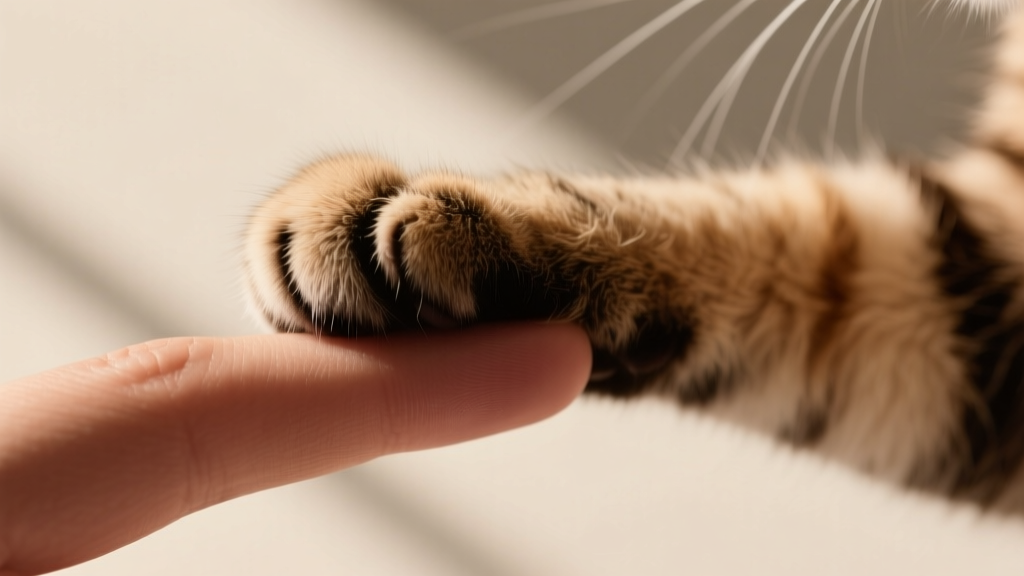
You’re on the couch, half-watching a show, half-scrolling on your phone. Your cat strolls over like they own the place (because, obviously), hops up beside you, and—very deliberately—reaches out a paw. Before you can even react, they place that soft little paw on your hand… and then curl their toes around your finger like they’re holding hands.
You freeze. Because if you move, you might break The Moment. Also because you’re wondering: is this adorable gesture pure affection… or is your cat quietly taking you hostage?
Good news: it can be both. Finger-holding is one of those wonderfully “cat” behaviors that looks simple, but can mean a whole range of things depending on context. Here’s how to read it like a behaviorist (minus the lab coat).
Why Cats Hold Your Finger: The Science and the “Wild Cat” Roots
Cats are not big “group cooperation” animals the way dogs are, but they are intensely social in the ways that matter to them. Your cat’s paw is a multi-tool: it tests, taps, claims, soothes, stops, starts, and communicates.
Finger-holding can trace back to a few evolutionary and developmental building blocks:
- Tactile communication: Cats rely heavily on touch at close range. In friendly cat-to-cat interactions, they’ll rub faces, bump heads, and occasionally place a paw on another cat to control distance or initiate play.
- Kittens and “contact comfort”: Young kittens pile together for warmth and safety. The instinct to maintain physical contact with a trusted body isn’t just sentimental—it’s survival programming.
- Scent and social bonding: Cats have scent glands in their paws. When your cat places a paw on you, they may be leaving a subtle “you’re with me” signature. It’s not the same as spraying (thankfully), but it’s part of their scent-based social world.
- Predatory precision: The paws that can catch a fast-moving toy can also gently pin your hand in place. That fine motor control is why a paw-hold can feel oddly intentional—because it is.
So yes, your cat might be being sweet. They might also be setting a boundary, gathering information, or securing a “resource” (your attention) with a polite little anchor.
Different Contexts: What “Paw on Finger” Can Look Like (and Mean)
To decode paw-holding, watch the whole scene: body posture, tail, ears, eyes, and what happened right before the paw came down.
1) The Slow, Gentle Paw Rest
What it looks like: Your cat lightly lays a paw on your hand and just… leaves it there. No claws, no tension, sometimes a slow blink.
What it often means: Comfort, trust, and connection. This is the feline version of “I like being near you.” Many cats do this when they’re relaxed, sleepy, or enjoying quiet companionship.
2) The “Hold Still” Paw Clamp
What it looks like: Your cat puts a paw on your hand right as you try to stop petting, move away, or reach for something else. Sometimes they add a second paw for emphasis.
What it often means: A gentle attempt to control the interaction. Not dominance in the dramatic sense—more like “No thank you, we are not done.”
3) The Paw + Nuzzle Combo
What it looks like: Paw on your finger, then cheek rubs, headbutts, or a purr that sounds like a tiny engine starting up.
What it often means: Social bonding and scent-sharing. Your cat is mixing touch and scent cues to reinforce, “You’re my person.”
4) The Paw Hold That Turns Into a Bite
What it looks like: Paw secures your finger, then your cat gives a quick nip. It may be gentle (“love bite”) or sharper.
What it often means: Overstimulation, play escalation, or poor bite inhibition. Sometimes it’s flirtatious play. Sometimes it’s your cat saying, “That petting is too much now.”
5) The Paw Tap-Tap With Eye Contact
What it looks like: Your cat taps your hand, retracts, taps again, staring at you like you’re missing an obvious memo.
What it often means: Attention-seeking. Common “requests” include food, playtime, or opening the door to a room they don’t even want to enter.
6) The Kneading Adjacent “Grab”
What it looks like: Your cat is kneading a blanket and then catches your finger in the rhythm, holding it as they knead.
What it often means: Comfort behavior from kittenhood. Many cats knead when they feel safe and cozy—your finger just became part of the nest.
What It Says About Your Cat’s Mood and Feelings
Think of paw-holding as a flexible signal rather than a single translation. Here are the most common emotional “flavors”:
- Affection and trust: Soft body, relaxed tail, gentle eyes, purring, slow blinks. Your cat is choosing closeness.
- Reassurance-seeking: More common in cats who are anxious, newly adopted, or sensitive to changes. They may anchor to you when the environment feels uncertain.
- Polite boundary-setting: “Stay.” Often happens when you stop petting or shift position. Not aggressive—just persuasive.
- Play drive: Dilated pupils, twitchy tail tip, quick movements. Your finger is being evaluated as potential prey (sorry).
- Overstimulation: Sudden tail swish, skin rippling, ears rotating back, tension in the body. The paw hold can be a prelude to “I need space.”
The same paw gesture can mean “I love you” or “I’m getting annoyed,” so the emotional truth lives in the rest of the body language.
Related Behaviors You Might Also Notice
If your cat holds your finger, you may also see these close-contact quirks:
- Head bunting (bunting): A friendly scent-marking behavior and social greeting.
- Gentle pawing at your face: Often a mix of attention-seeking and comfort (sometimes at 4 a.m.).
- Following you and “herding”: Walking slightly ahead, then checking if you’re still coming. Cats do this with favored humans.
- Rolling near you (not always a belly invitation): A sign of trust; the belly is vulnerable, but it’s not always a request to rub.
- Love bites: Small, controlled nips during petting. Can be affectionate or a “too much” signal depending on intensity.
- Slow blinking: A classic friendly signal; many cats pair it with gentle touch.
When Paw Holding Is Normal… and When to Worry
Most finger-holding is perfectly normal. Cats are tactile creatures with strong preferences about how interactions unfold.
It’s typically normal if:
- Your cat’s body stays relaxed and there are no claws or escalating bites.
- The behavior happens during calm bonding times (couch cuddles, bedtime, quiet petting).
- Your cat releases easily when you gently move your hand away.
It may be a concern if:
- It suddenly appears alongside other behavior changes (hiding, irritability, reduced appetite, litter box issues). Sudden clinginess or touch sensitivity can signal pain or stress.
- Your cat consistently clamps and bites hard or breaks skin. That suggests overstimulation, fear, or learned rough play habits.
- Your cat seems restless or unable to settle unless physically anchoring to you. That can point to anxiety that needs environmental support.
- There’s paw sensitivity (flinching when paws are touched, limping, excessive licking). Paw injuries, nail problems, or arthritis can make touch complicated.
If you’re seeing pain signals or a sudden shift in temperament, a vet check is worth it. Behavior is often the first place discomfort shows up.
How to Respond (and Encourage the Sweet Version)
The goal is simple: reward calm connection, avoid accidentally rewarding roughness, and respect your cat’s “consent cues.”
- Freeze for a second, then assess: Is your cat relaxed? If yes, offer a soft verbal response and slow petting in their preferred zones (often cheeks, chin, head).
- Use the “three-second rule” for petting: Pet for about three seconds, then pause. If your cat leans in, re-initiates contact, or keeps the paw there gently, continue. If they tense or look away, stop.
- If claws come out, don’t yank: Pulling away quickly can trigger a chase/grab reflex. Instead, gently support the paw, redirect with a toy, or slowly slide your finger free.
- Teach an alternative to grabbing: If paw-holding is turning into nipping, offer a kicker toy or wand toy before arousal escalates. You’re giving the predator brain a better job.
- Reinforce calm touch with tiny rewards: If your cat gently places a paw and remains relaxed, you can quietly reward with a treat or a slow blink. Cats repeat what works.
- Respect the “stop” signals: If the paw hold seems like “enough,” honor it. Cats trust you more when you listen, and trust makes affectionate behaviors more likely.
One extra tip: if your cat does this when you stop petting, try ending sessions on a positive note before they ask. Short, frequent, predictable affection is often better than long sessions that build into overstimulation.
Fun Facts and Research Notes
- Cats have scent glands between their toes. Scratching and pawing aren’t just physical actions—they can also be scent-based communication.
- Affiliative touch is a big deal in cat social life. Friendly cats often show closeness through proximity, mutual grooming, cheek rubbing, and synchronized resting. Paw contact can be part of that “we’re safe together” toolkit.
- Many “cute” behaviors have a practical function. A paw on your hand can be bonding, but it can also be a distance regulator: close enough for comfort, controlled enough for safety.
- Individual history matters. Cats who were well-socialized as kittens (handled gently, exposed to kind humans) are more likely to use soft touch rather than teeth to communicate.
FAQ: Cat Paw Holding Your Finger
Is my cat holding my finger a sign of love?
Often, yes—especially if your cat is relaxed, purring, slow blinking, or cuddling. It can be a trust-and-comfort gesture: “Stay close.”
Why does my cat grab my hand when I stop petting?
Your cat may be trying to extend the interaction. It’s usually not “dominance,” but a learned way to say, “Keep going.” Check for overstimulation cues, though—some cats grab right before they get annoyed.
Is it okay to hold my cat’s paw back like we’re holding hands?
Some cats enjoy gentle paw contact, but many dislike having their paws restrained. If your cat relaxes into it, fine. If they pull away, flick their tail, or flatten ears, let go and offer cheek rubs instead.
Why does paw holding sometimes lead to biting?
Two common reasons: play escalation (your finger becomes “prey”) or petting overstimulation. Redirect to a toy and keep petting sessions shorter with built-in pauses.
My cat only does this at night—what does that mean?
Nighttime can be when cats feel most social or most needy for reassurance. It can also be when they’re bored. Try adding an evening play session followed by a small meal to help them settle.
Can paw holding mean my cat is anxious?
It can. If the behavior increases during changes (new home, visitors, loud noises) or comes with clinginess and vigilance, your cat may be using you as a safe anchor. Consistent routines, hiding spots, and enrichment can help.
The Takeaway
When your cat holds your finger, they’re communicating in a quiet, tactile way. Sometimes it’s affection. Sometimes it’s a polite pause button. Sometimes it’s your cat’s version of signing you up for “five more minutes of petting” without asking.
Watch the context, respect the body language, and respond in a way that reinforces calm, gentle contact. The better you get at reading the paw, the more your cat will trust you—and the more often you’ll get those small, heart-melting moments that make living with cats so addictive.
Does your cat hold your finger like a tiny, furry toddler… or do they use their paw like a crafty negotiator? Share your stories (and your funniest interpretations) with the Cat Lovers Base community at catloversbase.com.